

Requisites
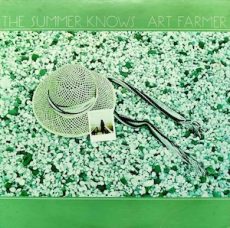
The Summer Knows ~ Art Farmer | By Eddie Carter
This past week was particularly rough, and I eagerly looked forward to the weekend. This morning’s album offered for your consideration is The Summer Knows (East Wind EW-8047). It was one of my mom’s favorites, and the music brought back fond memories of when I was younger. This underrated gem is an excellent quartet date by Art Farmer, one of five albums he released in 1977. Art’s exclusively heard on flugelhorn and shares the spotlight with a stellar rhythm section: Cedar Walton on piano, Sam Jones on bass, and Billy Higgins on drums. My copy is the Japanese Stereo release.
Side One starts with the title track, The Summer Knows, by Alan and Marilyn Bergman and Michel Legrand. A gentle piano introduction transitions to Art’s sweet melody and a captivating, touching opening statement with a nostalgic and soothing vibe. Cedar follows with a delicately heartfelt performance. Art’s final enchanting choruses flow smoothly before the ensemble’s theme is softly revisited. Manhã Do Carnaval by Luiz Bonfá, Antônio Maria, and François Llenas springs to life with the trio’s introduction. Art follows them with an infectiously charming melody and opening solo. Cedar carries the festivities into the second reading until Art’s closing statement leads to the theme’s reprise.
Alfie by Burt Bacharach and Hal David starts with a piano introduction that grows into Art’s delicately sensitive theme and opening statement. Cedar’s solo creates a deep emotional resonance that is genuinely moving. Art’s concluding thoughts are hauntingly tender, preceding the closing theme. When I Fall In Love by Victor Young and Edward Heyman gets Side Two underway with Art’s solo introduction ahead of the foursome’s exquisite melody. The leader’s first solo embraces the song’s essence and intimacy. Cedar delivers enchanting beauty in the following reading; then, Art takes over the spotlight again for a short expression of love that dissolves into nothingness.
Ditty by Art Farmer starts with an energetic introduction by Sam and Cedar, setting the stage for the ensemble’s lively melody. Art begins the opening statement with a brisk and confident lead, followed by Cedar’s impressively spirited solo. Billy concludes with a concise yet impactful comment, leading back to the restated theme and climax. The album concludes with a beloved classic, I Should Care, by Axel Stordahl, Paul Weston, and Sammy Cahn. The group’s easygoing groove sets the mood for the introduction and melody. Art commences with a beautifully rendered interpretation, and Sam’s brief yet engaging solo complements it perfectly, leading into the heartfelt closing chorus.
Kiyoshi Itoh and Yasohachi Itoh produced The Summer Knows, with David Baker and Yoshihiro Suzuki behind the dials as the recording engineers. The album boasts exceptional sound quality, capturing an outstanding soundstage that places the musicians perfectly in your listening space with crystal-clear fidelity. For jazz aficionados seeking an ideal album perfect for unwinding after a long day or those only familiar with Art’s work with the Jazztet, I highly recommend The Summer Knows by Art Farmer for your library. It’s a remarkable release no jazz lover should overlook on their next record-shopping adventure!
~ I Should Care, When I Fall In Love – Source: JazzStandards.com
~ Alfie, Manhã Do Carnaval, The Summer Knows – Source: Wikipedia.org
© 2025 by Edward Thomas Carter

More Posts: choice,classic,collectible,collector,history,instrumental,jazz,music,trumpet

Jazz Poems
CHARLES PARKER: ALMOST LIKE BEING IN LOVE
These are the shadows of water when water
is thick and no longer transparent
They are everywhere–on the walls
across the ceiling.
It was always this good.
One night you undressed me in your sleep.
Very slowly, you told me later. You said I smelled good.
The sweater i said I’d taken it
out of the drawer where I kept
my winter clothes.
It smelled of pine and a long summer.
No, you said. Not wood.
More like the inside of a saxophone case,
all velvet and sweet regrets.
All blues, I said. Blues
and whatever shadows are made of,
I said, falling on you like slow water.
DIONISIO D. MARTINEZfrom Jazz Poems ~ Selected and Edited by Kevin Young

More Posts: book,classic,collectible,history,jazz,library,poet

Requisites
Generation ~ Dexter Gordon | By Eddie Carter
Dexter Gordon, a tenor saxophonist who has always held a special place in my heart growing up, is the focus of this morning’s spotlight with his album Generation (Prestige P-10069). As a teenager, I was fortunate to witness his live performance at the 1972 Newport Jazz Festival in a fantastic jam session. This 1973 release, his eleventh with Prestige, is a reunion with Freddie Hubbard, who previously collaborated with Dexter on Doin’ Allright and Clubhouse. Freddie plays flugelhorn (tracks: A2, B1) and trumpet (A1, B2) on the album. The rhythm section, consisting of Cedar Walton on piano, Buster Williams on bass, and Billy Higgins on drums, is equally impressive. My copy is the original U.S. Stereo release.
The album opens with the first version of Milestones by Miles Davis, setting the tone with a slightly slower groove for the theme. Dexter’s opening solo is immediately captivating, and then Freddie takes over the spotlight for an inspired improvisation. Cedar follows with a well-crafted statement, and Buster contributes a final shining moment before the theme’s reprise and climax. Scared To Be Alone by André Previn is up next. Dexter and the trio initiate the first chorus of the melody, then are accompanied by Freddie to complete the theme. Dexter’s tender and gentle solo paves the way, and Freddie’s luxuriously elegant flugelhorn conveys deep emotion. Buster’s brief reading before the theme concludes touchingly provides the perfect ending to this beautiful ballad.
We See by Thelonious Monk changes the pace with a lively start to the second side. Billy’s rhythmic introduction sets the stage for the quintet’s medium-tempo melody. Dexter demonstrates his skill and precision in a delightful opening solo, followed by Freddie, whose performance displays a dazzling tone. Cedar shines in a well-crafted statement next, while Buster comfortably strolls into the ensemble’s ending theme. The Group by Dexter Gordon wraps up the session with a lively melody led by the front line. Dexter opens the solos buoyantly; then Freddie takes over with a marvelously executed statement. Cedar moves efficiently and effectively next, with Billy adding a final comment during the closing chorus.
Generation was produced by Ozzie Cadena and recorded by Rudy Van Gelder, whose expertise behind the dials ensures an exceptional soundstage. The record’s sound quality is superb; the instruments are incredibly clear, emerging from your speakers with remarkable fidelity. For tenor sax enthusiasts, this hard-bop album certainly deserves a spot in any jazz library. The next time you’re at your favorite record store, be sure to check out Generation by Dexter Gordon. It’s a hidden gem from one of jazz’s most significant musicians, and despite being lesser known in his discography, acquiring it won’t break the bank!
~ Milestones – Source: JazzStandards.com © 2025 by Edward Thomas Carter
More Posts: choice,classic,collectible,collector,history,instrumental,jazz,music,saxophone

Jazz Poems
CHARLES PARKER 1920~1955
Listen
This here
Is what
Charlie
Did
To the Blues.
Listen
That there
Is what
Charlie
Did
To the Blues.
This here,
bid-dle-dee-dee
bid-dle-dee-dee
bopshop
have you any cool?
bahdada
one horn full.
Charlie
Filled the Blues
With
Curly-cues.
That’s what
Charlie
Did
To the Blues.
Play
That again
Drop
A nickel in,
Charlie’s
Dead
Charlie’s
Gone,
But
John Birks
Carried on.
Drop
A nickel in,
Give
The platter
A spin,
Let’s listen
To what
Charlie
Did
To the Blues.
WARING CUNEY
from Jazz Poems ~ Selected and Edited by Kevin Young
More Posts: book,classic,collectible,history,jazz,library,poet

Requisites
Scenery ~ Ryo Fukui | By Eddie Carter
This morning’s record from the library holds a special place in my heart because two Christmases ago, my nephew Kyle, knowing how much I love trio albums, introduced me to pianist Ryo Fukui. A Letter From Slowboat and Mellow Dream instantly became favorites of mine. Submitted for your consideration in this discussion is his first release from 1976, Scenery (Nadja PA-7148). It initially hit the Japanese stores that year, and his bandmates on this date are Satoshi Denpo on bass and Yoshinori Fukui on drums. My copy is the 2018 We Release Jazz Swiss Half-Speed Stereo reissue (WRJ001).
Side One opens with a jazz standard from the forties, It Could Happen To You, by Jimmy Van Heusen and Johnny Burke. Ryo makes the first move with a solo introduction leading to the trio’s sprightly theme. The pianist soars cheerfully through the song’s only interpretation while his colleagues’ accompaniment keeps pace, leading to the closing chorus and ending. I Want To Talk About You is a gorgeous ballad by Billy Eckstine that starts softly with a touching piano introduction, segueing into the group’s elegant melody. As the featured soloist, Fukui delivers a reading of quiet finesse preceding the climax.
Early Summer by Hideo Ichikawa grabs the listener from the opening notes of the pianist’s introduction to the trio’s lively theme. Ryo is up first and catapults into a swinging statement. Satoshi takes flight next with an exhilarating interpretation that soars skyward until Ryo’s closing remarks lead to the theme’s restatement. Ann Ronell’s Willow Weep For Me gets the second side underway with the trio’s bluesy opening chorus. As the song’s only soloist, Fukui serves an enjoyable performance with a down-home flavor. Satoshi and Yoshinori provide the foundation before the theme’s reprise and the song’s conclusion.
I first heard Autumn Leaves by Joseph Kosma, Johnny Mercer, and Jacques Prevert many years ago on Somethin’ Else and have been captivated ever since. The trio’s version of the jazz standard opens with a brief introduction that eases into their joyous melody. Ryo’s opening statement is as comforting as a visit to an old friend. Satoshi’s contribution takes a delightful stroll toward the closing chorus. The title tune, Scenery, highlights Ryo’s ability as a composer. His gentle introduction sets the mood for the trio’s delicate melody. In the song’s only solo, Fukui creates a canvas of tender beauty complemented by Satoshi and Yoshinori’s elegant accompaniment until the theme returns.
Scenery was produced by Masataka Ito, supervised by Olivier Ducret and Stéphane Armleder, and engineered by Kunio Arai. Music Matters Mastering mastered this reissue from the original reels at half-speed. The album sounds fantastic, with a superb soundstage transporting the musicians into your listening room. The first time I listened to this album was on a rainy evening, and the music seemed to transport me to a serene, picturesque landscape. If you’re in the mood for a terrific trio album, I invite you to check out Scenery by Ryo Fukui on your next record-shopping trip. It’s worth every penny for a spot in any fan’s library and should give its owner many years of listening pleasure!
~ A Letter From Slowboat (HMV Record Shop HRLP 103), Mellow Dream (Trio Records PA-7182), Somethin’ Else (Blue Note BLP 1595/BST 81595) – Source: Discogs.com
~Autumn Leaves, It Could Happen To You – Source: JazzStandards.com
© 2025 by Edward Thomas Carter
More Posts: choice,classic,collectible,collector,history,instrumental,jazz,music,piano