

Requisites
Wes Montgomery in Paris: The Definitive ORTF Recording ~ Wes Montgomery | By Eddie Carter
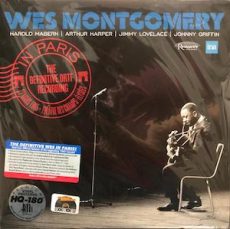
Up next from the library is a live date by Wes Montgomery from 1965, previously available only on various labels and several bootleg copies. It finally received its first official release in 2017. Wes Montgomery in Paris: The Definitive ORTF Recording (Resonance Records HLP-9032) is a two-record set recorded during the guitarist’s only trip to the city during his European tour in conjunction with Ina France. This trip was a significant moment in Montgomery’s career, allowing him to showcase his talent to new audiences and reunite with Johnny Griffin (tracks: C1, C2, D1) on tenor sax. Harold Mabern on piano, Arthur Harper on bass, and Jimmy Lovelace on drums complete the ensemble. My copy is number 1085 of the 2017 U.S. Limited Edition Record Store Day Mono Audiophile album.
The quartet begins the set with Wes Montgomery’s Four-on-Six. They lay an impressive blueprint in a lively melody, and Wes gets down to business in a dazzling opening statement. Harold meets the challenge with an aggressive interpretation preceding the group’s return to the reprise and close. Impressions by John Coltrane takes the foursome into the stratosphere during the speedy melody. Wes launches into an extended opening statement that races rapidly before Harold takes over for a furiously swinging interpretation, while Arthur and Jimmy keep it moving into the theme’s restatement and climax.
The tempo comes down for The Girl Next Door, a pretty ballad by Hugh Martin and Ralph Blane. Wes’s unaccompanied introduction is as warm as a soft summer breeze, leading to the quartet’s lovely theme. The rhythm section lays a lush accompaniment for the guitarist’s sultry solo showcase, which will touch your heart into an enchanting ending. Here’s That Rainy Day by Jimmy Van Heusen and Johhny Burke begins the second side with a Latin-tinged introduction to the ensemble’s opening chorus. Wes takes the lead and gives an exciting solo to get the listener’s toes up and dancing. Harold continues the infectious enthusiasm in the second reading before the closing chorus.
Jingles by Wes Montgomery opens with the quartet’s spirited introduction and melody. The guitarist heads out of the gate at full speed. Harold comes right behind him to give an energetic interpretation. Wes and Jimmy get together to share a lively conversation next, and then Jimmy gets the last word before the theme returns. To Wane, Harold Mabern’s tribute to Wayne Shorter comes to life with the pianist’s lively introduction; then, the quartet sets a swinging groove on the melody. Wes is up first and works his magic on the opening statement. Harold completes the solos with a real burner, preceding the reprise and climax.
The foursome becomes a quintet with the addition of Johnny Griffin to start side three. Full House by Wes Montgomery begins with the ensemble easing the melody’s throttle. Wes kicks off the solos with bluesy lines of good-hearted swing; then, Johnny showcases his energy next in a joyous performance before the theme returns amid a thunderous ovation. ‘Round Midnight by Thelonious Monk, Bernie Hanighen and Cootie Williams begins with Harold’s tender introduction segueing into Wes’s haunting melody. Johnny begins the opening interpretation gracefully; Wes follows with a solo as enjoyable as the warmth from the fireplace before the quintet softly carries the song out.
Blue ‘N Boogie by Dizzy Gillespie and Frank Paparelli begins side four with the quintet’s brisk theme, and then Wes catapults into the first spicy performance. The highlight is when Johnny takes over for an extended solo, with an unaccompanied run into the quintet’s finale. The guitarist’s theme, West Coast Blues, follows, allowing the leader to introduce his bandmates to the crowd. The quartet returns for the set’s finale, Twisted Blues by Wes Montgomery, which the group begins slowly. Wes picks up the beat and swings effortlessly in the opening solo. Harold makes a stylish impression next, and then Arthur gets to solo last, creating an absolute jewel preceding Wes’s return for the finish.
André Francis produced the original recording, Zev Feldman produced this audiophile release, and Office de Radiodiffusion-Télévision Française (ORTF) made the original recording. George Klabin and Frank Gala restored the sound, and Bernie Grundman mastered the album. The album’s sound quality is impeccable, with an excellent soundstage that will transport the listener to the Théâtre des Champs-Élysées audience as if the performance is taking place right in front of them. The records are pressed on 180-gram vinyl and are silent until the music starts. Also included in this two-record set is an eight-page booklet with rare photos by Jean-Pierre Lenoir, essays and interviews and six collector postcards.
The 2017 audiophile album was a limited edition of three thousand, but it is one of the best releases that will reward your detective work in finding a copy. Wes Montgomery in Paris: The Definitive ORTF Recording is, in my opinion, Wes’s best live album, capturing the essence of his unique style and virtuosity. This is the most authoritative and comprehensive recording of Montgomery’s performance from the French radio and television broadcaster. It’s an outstanding record with a superb supporting cast that I’m proud to have in my jazz library. If you’re also a Wes Montgomery fan or enjoy jazz guitar, it should be seriously considered for a spot in yours!
~ Here’s That Rainy Day, ‘Round Midnight – Source: JazzStandards.com
© 2024 by Edward Thomas Carter

More Posts: choice,classic,collectible,collector,guitar,history,instrumental,jazz,music
Jazz Poems
ROSE SOLITUDE
For Duke Ellington
I am essence of Rose Solitude
my cheeks are laced with cognac
my hips sealed with five satin nails
i carry dream and romance of new fools and old flames
between the musk of fat
and the side pocket of my mink tongue
Listen to champagne bubble from this solo
Essence of Rose Solitude
veteran from texas tiger from chicago that’s me
i cover the shrine of Duke
who like Satchmo like Nat (King) Cole
will never die because love they say
never dies
I tell you from stair steps of these navy blue nights
these metallic snakes
these flashing fish skins
and the melodious cry of Shango
surrounded by sorrow
by purple velvet tears
by cockhounds limping from crosses
from turtle skinned shoes
from diamond shaped skulls and canes
made from dead gazelles
wearing a face of wilting potato plants
of grey and black scissors
of bee bee shots and fifty red boils
yes the whole world loved him
I tell you from suspenders of two-timing dog odors
from inca frosted lips
nonchalant legs
i tell you from howling chant of sister Erzulie
and the exaggerated hearts of a hundred pretty
women
they loved him
this world sliding from a single flower
into a caravan of heads made into ten thousand
flowers
Ask me
Essence of Rose Solitude
chickadee from arkansas that’s me
i sleep on cotton bones
cotton tails
and mellow myself in empty ballrooms
i’m no fly by night
look at my resume
i walk through the eyes of staring lizards
i throw myneck back to floorshow on bumping goat skins
in front of my stage fright
i cover the hands of Duke who like Satchmo
like Nat (King) Cole will never die
because love they say
never dies
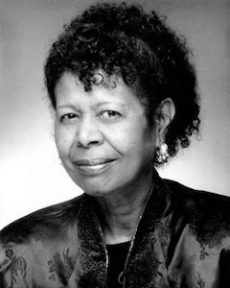
JAYNE CORTEZ
from Jazz Poems ~ Selected and Edited by Kevin Young

More Posts: book,classic,collectible,history,jazz,library,poet
Requisites
What Is This Thing Called Soul? ~ The Cannonball Adderley-Nat Adderley Quintet | By Eddie Carter
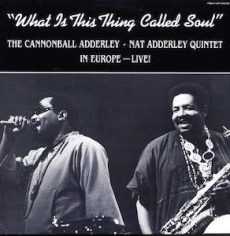
I revisited a few of my mom’s cherished albums a few nights ago. The first of them, this morning’s record from the library submitted for your approval, inspired today’s discussion. What Is This Thing Called Soul? (Pablo Live 2308-238) is a concise retrospective of three live performances by The Cannonball Adderley-Nat Adderley Quintet during their 1960 European Tour in Paris, France, Gothenburg, and Stockholm, Sweden. Released in 1984, the personnel for this live album are Nat Adderley on cornet, Cannonball Adderley on alto sax, Vic Feldman on piano, Sam Jones on bass, and Louis Hayes on drums. My copy is the original U.S. Stereo release.
Side One opens with Victor Feldman’s Azule Serape; the quintet sets things in motion with the effortlessly swinging melody. Cannonball is up first with a finger-snapping flight of pure joy. Nat provides the toe-tapping compliment in the following statement. Victor continues grabbing the listener in the third reading before the ensemble reassembles to take the song out, leaving the audience exhilarated. Cannonball takes a moment to announce the second tune, Big P, by Jimmy Heath, which turns the heat up significantly, beginning with Sam’s bass introduction to the group’s spirited theme. Cannonball is off to the races first with an inexhaustible flow of ideas. Nat follows with a solo full of energy ahead of the vigorous reprise and finale.
Cannonball quickly mentions Nat before presenting the next song, the cornetist’s One For Daddy-O, his tribute to the Chicago disc jockey, Daddy O-Daylie. The rhythm section starts with a relaxing introduction to the group’s laid-back theme. Cannonball’s opening solo is pleasant and friendly. Nat is as carefree as a day at the beach in the following reading preceding the out-chorus and ending. The second side opens with what Cannonball describes as a soul piece, The Chant by Victor Feldman. The ensemble starts the song with a happy melody, then steps aside for Cannonball’s funky opening statement. Nat emerges next with an enthusiastic performance; then Victor contributes an impressive interpretation before the quintet restates the theme.
What Is This Thing Called Love? by Cole Porter is a classic jazz standard from the thirties, or as Cannonball describes it in his introduction, What Is This Thing Called Soul? The quintet kicks off the melody vigorously; Cannonball then cooks up a storm in the opening statement so hard that the listener might need to check that their speakers aren’t on fire. Nat comes sailing in next and continues cruising down the road rapidly. Victor states his case in a furiously swinging solo, and then Louis engages in a heated exchange with Cannonball until the theme’s reappearance and climax. The ensemble launches into the melody of Cannonball’s Theme, where the saxophonist thanks the audience and reintroduces the group before the song ends as quickly as it began.
Cannonball and Nat Adderley produced What Is This Thing Called Soul? There’s no mention of who recorded these concerts, but I’m happy to say the album’s sound quality is excellent, allowing the listener to feel like they’re part of the French and Swedish audiences. My mom always loved Cannonball’s rapport with the crowd on his live albums, and his playing always possessed a soulful groove that got your fingers and toes tapping from the first note to the last. If you’re already a fan of both brothers and enjoy live hard-bop, I offer for your consideration What Is This Thing Called Soul? by The Cannonball Adderley-Nat Adderley Quintet on your next record hunt. It’s an overlooked but enjoyable album you won’t regret adding to your library!
~ What Is This Thing Called Love? – Source: JazzStandards.com
© 2024 by Edward Thomas Carter
More Posts: choice,classic,collectible,collector,history,instrumental,jazz,music,saxophone,trumpet
Jazz Poems
SOLOING
My mother tells me she dreamed
of John Coltrane, a young Trane
playing his music with such joy
and contained energy and rage
she could not hold back her tears.
And sitting awake now, her hands
crossed in her lap, the tears start
in her blind eyes. The TV set
behind her is gray, expressionless.
It is late, the neighbors quiet,
even the city–Los Angeles–quiet.
I have driven for hours down 99,
>over the Grapevine into heaven
to be here. I place my left hand
on her shoulder, and she smiles.
What a world, a mother and son
finding solace in California
just where we told it would
be, among the palm trees and all-
night super markets pushing orange
back-lighted oranges at 2 A.M.
“He was alone,” she says, and does
not say, just as I am, “soloing.”
What a world, a great man half
her age comes to my mother
in sleep to give her the gift
of song, which–shaking the tears
away–she passes on to me, for now
I can hear the music of the world
in the silence and that word:
soloing. What a world–when I
arrived the great bowl of mountains
was hidden in a cloud of exhaust,
the sea spread out like a carpet
of oil, the roses I had bought
from Fresno browned on the seat
beside me, and I could have
turned back and lost the music.
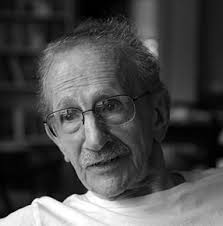
PHILIP LEVINEfrom Jazz Poems ~ Selected and Edited by Kevin Young
More Posts: book,classic,collectible,history,jazz,library,poet
Requisites
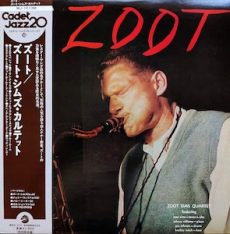
Zoot ~ Zoot Sims Quartet | By Eddie Carter
I’d just completed a long week and wanted to hear something soothing after dinner. I chose Zoot (Argo LP 608), a 1957 album by The Zoot Sims Quartet. John Haley Sims was born in Inglewood, California and began playing the clarinet and drums at an early age. By age thirteen, he started the tenor sax and later joined the big bands of Kenny Baker, Bobby Sherwood, and Benny Goodman. He got his nickname Zoot while playing with Kenny Baker and later gained attention in Woody Herman’s orchestra as one of the four brothers’ sax section. The personnel on this date are Zoot Sims on alto sax (track: B3) and tenor sax (A1 to B2, B4), Johnny Williams on piano, Knobby Totah on bass, and Gus Johnson on drums. My copy is the 1975 Japanese Mono reissue (Cadet MJ-1013M).
The first side opener, 9:20 Special by Earle Warren, begins with the quartet’s delightfully relaxing melody. Zoot is the first to whet the listener’s appetite in the opening reading. Johnny takes the baton for a light-hearted solo next. Knobby follows with a few well-placed bass notes, and Gus shares the finale with Zoot in a short conversation ahead of the theme’s reprise. The Man I Love by George and Ira Gershwin opens with the rhythm section’s tasteful background accompanying Zoot’s tenderly warm tone in the opening chorus and the saxophonist’s first reading. Johnny is equally thoughtful and sensitive in the following interpretation. Zoot adds a few soothing last thoughts, like gentle raindrops hitting the ground, into a mellow ending.
55th and State, an original by Zoot Sims, moves the beat upward to a medium bounce for the ensemble’s theme. Zoot leads off with an inspired improvisation, then passes the torch to Johnny, who follows with a rousing performance. Gus wraps up the finale, sharing a lively conversation with Zoot, leading to the theme’s return. Blue Room by Richard Rodgers and Lorenz Hart is an old show tune from the twenties. The quartet rises to the occasion, getting into an infectious groove on the melody. Zoot rolls out ideas effortlessly in the opening statement. Johnny extends the joyous mood in the following interpretation, and then Gus engages in a short exchange with Zoot, leading to the ending theme and conclusion.
Side Two begins with Gus’s Blues, an original by Gus Johnson that Johnny introduces, segueing to the foursome’s easygoing melody. Zoot sets a swinging groove on the opening performance. The pianist follows the leader with a bright, bouncy interpretation, and then the saxophonist returns for a closing presentation that disappears into nothingness. The group takes on another old chestnut with their rendition of That Old Feeling by Sammy Fain and Lew Brown. After the quartet establishes the opening ensemble, Zoot launches into one of his best solos on the album. Johnny responds with a compelling reading, and then the saxophonist delivers the last word in a short sermon before the group takes the song out.
Zoot switches to alto sax for Oscar Pettiford’s Bohemia After Dark. It’s a swinger from the word go, and this point is emphasized when the saxophonist takes charge during the foursome’s theme. Zoot continues cooking with confidence on the lead solo. Johnny meets the challenge head-on in a concise presentation, then turns it back over to Zoot, who delivers the knockout punch preceding the brisk reprise and climax. The closing track is Woody ‘n’ You, Dizzy Gillespie’s tribute to Woody Herman that takes off with the quartet’s brisk theme. Zoot opens with an enthusiastic performance. Johnny matches him in agility on the following statement. Knobby has a short stint next, and then Zoot and Gus share the exclamation point before the theme reprise and finale.
Dave Usher produced the album, but it’s unknown who the recording engineer was for the session. The album’s sound quality possesses a solid soundstage despite a minor issue during Knobby’s bass solo on Woody ‘n’ You, where the bass sounds distorted; the remainder of the album is excellent. Zoot Sims’s successful career as a leader and sideman lasted forty years, recording on various labels with many exceptional jazz musicians. He passed away from lung cancer on March 23, 1985, at the age of fifty-nine. If you’re a fan of Cool Jazz, I offer Zoot by The Zoot Sims Quartet for your consideration on your next record-shopping trip. This album of originals and standards is superbly performed and should become a welcome addition to your library!
~ That Old Feeling, The Man I Love, Woody ‘n’ You – Source: JazzStandards.com ~ Blue Room – Source: Wikipedia.org © 2024 by Edward Thomas Carter
More Posts: choice,classic,collectible,collector,history,instrumental,jazz,music,saxophone