

Requisites
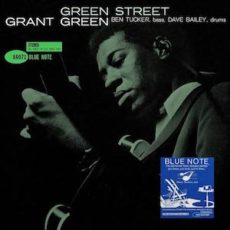
Green Street ~ Grant Green | By Eddie Carter
Grant Green steps into the spotlight with the second of four albums he released in 1961. Grant was one of the most interesting guitarists in jazz, possessing a gorgeous tone, speed of execution, and a distinctive lyricism in his playing that proved remarkably durable. He never failed to please his critics, fans, and peers throughout his career, but his time at Blue Note was particularly successful. Green Street (Blue Note BLP 4071/BST 84071) is a trio album like his label debut, Grant’s First Stand.
However, here the guitarist takes a different path than the usual organ/guitar/drums trio or a larger group featuring horns, a piano, or vibes to augment the rhythm section on later albums. His colleagues are Ben Tucker on bass, and Dave Bailey on drums. Both men provide a perfect backdrop for Grant to communicate a swinging style of jazz to the listener with rhythmic precision and finesse throughout the five-song set. My copy used in this report is the 2015 Music Matters Stereo audiophile reissue (MMBST-84071).
The first stop, No. 1 Green Street is a mid-tempo blues by the leader beginning with the trio presenting the catchy melody in unison. Grant takes over for the song’s only solo, giving him ample space to build an engaging statement that’s an ear pleaser with Ben and Dave pacing themselves behind him. ‘Round About Midnight by Bernie Hanighen, Thelonious Monk, Cootie Williams opens with a delicately tender theme by the trio continuing with an elegantly graceful showcase by the guitarist preceding a touching ending.
Green’s composition, Grant’s Dimensions ends Side One with high-spirited energy allowing Ben and Dave their first solo opportunity. Grant crafts a marvelous improvisation driving the rhythm firmly. Ben turns in a fine performance next with a bouncy bass interpretation flowing steadily into Dave’s impressive exchange with Green and Tucker ahead of the out-chorus.
Green With Envy by Grant begins Side Two affording each member a chance to speak individually with the leader giving the longest talk. After a vivacious melody by the trio, Grant delivers one of his most creative interpretations with a satisfying summation. Ben is up next, carefully selecting and bending his notes into an excellent reading with feeling. Bailey participates in an aggressive exchange with Green and Tucker for the final performance possessing a youthful intensity before a superb end theme.
Alone Together by Arthur Schwartz and Howard Dietz was written in 1932 and featured in the Broadway musical, Flying Colors. The trio’s rendition lowers the temperature by a few degrees, opening with a subdued introduction and theme evolving into a virtuoso lead solo by Grant punctuated by the inspired foundation from Ben and Dave. The bassist provides a walking bass line on the final reading that’s clearly expressed and well-defined, swinging smoothly into the theme’s return and slow fade.
Anyone who’s heard or owns a Music Matters Jazz reissue knows of the attention to the music through their remastering of the original tapes by Rudy Van Gelder. The amazing gatefold photos, and the covers themselves are worthy enough to be considered as album art plus the meticulous pressing by RTI. I listened to Green Street after hearing my 1995 Blue Note Connoisseur Series Stereo reissue, using it for comparison since both are 180-gram audiophile reissues. I was impressed by the Connoisseur LP’s sound and the detail of the instruments is clearly defined. In my opinion, it’s one of the best-remastered albums I’ve ever heard from that series by Capitol Records. However, when the stylus dropped on the MMJ 33 1/3 reissue, I discovered an extraordinary soundstage across the treble, midrange, and bass spectrum that’s absolutely mind-blowing.
There’s only one error on the LP, it appears on the Side Two label. Track Two is incorrectly listed as the 1937 song, Where Are You? by Jimmy McHugh and Harold Adamson. That tiny issue aside, if you’re a fan of jazz guitar by Kenny Burrell, Pat Martino, Wes Montgomery, Jimmy Raney, and Joe Pass, I enthusiastically invite you to take a trip to Green Street on your next record hunt. There you will find a jazz album that’s a real pleasure to listen to and sounds just as fresh today as when first released by one of the elite guitarists of Hard-Bop, Grant Green at the peak of his creativity! ~ Grant’s First Stand (Blue Note BLP 4064/BST 84064); Green Street (Blue Note Connoisseur B1-32088) – Source: Discogs.com ~ ‘Round About Midnight, Alone Together – Source: JazzStandards.com © 2020 by Edward Thomas Carter

More Posts: choice,classic,collectible,collector,guitar,history,instrumental,jazz,music

Requisites
Flute Fever ~ The Jeremy Steig Quartet | By Eddie Carter
The word impossible as defined in the Merriam-Webster Dictionary is “something that’s incapable of being or of occurring”. In the annals of music, some amazing musicians and vocalists have met the challenge of their disabilities head-on and in doing so, changed the word impossible to I’m possible instead! Jeremy Steig was an artist, graphic designer, and musician who began playing the flute at twelve and jazz at fifteen. At age nineteen, a motorcycle accident paralyzed one side of his face that might have ended his music career. It didn’t, because he used the paralysis within his mouth to blow air into the flute with the help of a special blinder-like mouthpiece that was placed inside his cheek, allowing him to play.
This morning’s album from my library is titled Flute Fever (Columbia CL 2136/CS 8936) by The Jeremy Steig Quartet. The other members are Denny Zeitlin on piano, Ben Tucker on bass, and Ben Riley on drums. An example of Jeremy’s artistic talent appears on the front cover. He also penned four drawings of the group on the back cover, and my copy used in this report is the 1964 Stereo LP.
Side One opens with Oleo by Sonny Rollins, he wrote it in 1954 and premiered it on the album, Miles Davis With Sonny Rollins. Jeremy and Tucker start the song as a duet with a strong rhythmic beat that takes off by leaps and bounds when Denny and Riley come in for the collective theme. Jeremy infuses the opening reading with zestful virtuosity as he vocalizes along on a vigorously swinging interpretation. Denny revs up the short and sweet closing statement with a soaring, exhilarating lyricism ahead of the leader’s ending theme and abrupt climax.
Lover Man (Oh, Where Can You Be?) by Jimmy Davis, Roger Ramirez, and Jimmy Sherman was composed in 1941 for singer-songwriter Billie Holiday. The quartet’s rendition opens with Steig leading a delicately gentle melody. Zeitlin gives a very touching performance on the song’s only solo preceding the foursome’s haunting tenderness on the coda. Sadly, omitted from this version are two elegant performances by Steig and Tucker, and a well-deserved compliment from the engineer at the song’s end that appears on the CD-album.
What Is This Thing Called Love?The Cole Porter song from the 1930 Broadway musical, Wake Up and Dream takes the foursome back to uptempo. After an effervescent melody, Jeremy begins with an exhilarating reading. Denny answers the flutist with an electrifying solo that excites intensely until the foursome’s coda. Miles Davis’ So What begins with Steig wailing on the opening, then continuing with a lengthy adrenaline rush of energy on the first interpretation. Zeitlin takes the next reading for a sizzling rollercoaster ride, then Tucker briskly walks on the closer.
The quartet takes on Thelonious Monk’sWell You Needn’t to begin Side Two. Monk wrote the tune in 1944 and was going to name it after jazz vocalist, Charlie Beamon, who upon hearing that replied, “Well, you need not”. The song starts at medium-fast speed for the quartet’s collective opening chorus. Jeremy steps into the spotlight first, igniting his solo with the brightness of an incandescent sun. Denny begins the final statement with no accompaniment for one chorus, before settling into a dazzling performance that’s a bebopper’s dream.
The beautiful 1932 song Willow Weep For Me by Ann Ronell is enchantingly rendered collectively with Jeremy’s flute conversing her lyrics daintily over a politely subdued supplement from the rhythm section. Denny contributes a brief interlude that’s beautifully constructed in between the opening and ending melodies by Jeremy culminating with a heart-warming finale. The LP ends with the album’s longest tune, Blue Seven by Sonny Rollins. The guys have fun right out of the gate with Steig and Tucker starting an easy-flowing duet that develops into a bluesy mid tempo opening chorus when Zeitlin and Riley join them. Jeremy and Denny have the two lengthiest statements and both men provide two meticulous but playful performances that take no prisoners. Tucker lays down some new soil on the next reading with a laid-back lyricism shadowed closely by Riley who doesn’t solo but contributes some bouncy brushwork that’s infectiously light-hearted and complements the soloists very well.
Jeremy Steig is the son of cartoonist William Steig whose work appeared in the weekly magazine, The New Yorker. His father also created the character Shrek, and Jeremy played the role of The Pied Piper on flute for the film, Shrek Forever After (2010). His mother, Elizabeth Mead Steig is the head of the fine arts department at Lesley University in Cambridge, Massachusetts. He recorded with pianist Bill Evans on the album, What’s New (1969), a critical success for both musicians. Steig became even more successful in the jazz-rock fusion genre in the seventies, recording a total of twenty-two albums during his career. Jeremy lived with his wife Asako in Japan and passed away from cancer at age seventy-three on April 13, 2016.
Pianist Denny Zeitlin, the lone survivor of the quartet, impressed producer John Hammond so much with his performance on Flute Fever, he also produced his debut album, Cathexis (1964). He recorded three more LP’s over the next three years, Carnival (1964), Shining Hour – Live at The Trident (1966), and Zeitgeist (1967). Denny recorded thirty-five albums over his five-decade career playing with some of the greatest names in jazz. He’s currently a clinical professor of psychiatry at the University of California in San Francisco, and also has a private practice there and in Marin County.
Bassist Ben Tucker has a very lengthy resume of the albums he appeared on and the musicians he played with. Ben worked with The Dave Bailey Quintet in 1961 and composed the song Comin’ Home Baby. It became a hit for Bailey on 2 Feet In The Gutter that year, and flutist Herbie Mann on Herbie Mann at The Village Gate (1962). Tucker owned two stations in his hometown of Savannah, Georgia, WSOK-AM and WLVH-FM. He passed away at age eighty-two in a traffic collision on June 4, 2013.
It might be easier to tell you who Ben Riley didn’t play with because his list of recordings is also enormous. He’s most known as the drummer in The Thelonious Monk Quartet. He was also a member of The New York Quartet and in the group Sphere. He passed away on November 18, 2017, at the age of eighty-four.
The album was produced by John Hammond but does not offer any other information on the recording engineer. However, the sound quality is absolutely sensational with a superb soundstage that’s startingly clear from your speakers to your sweet spot. If you’re a fan of jazz flute, I submit for your consideration on your next vinyl hunt, Flute Fever by The Jeremy Steig Quartet. It’s one illness, you won’t mind catching and requires only one listen to make you feel much better!
~ Carnival (Columbia CL 2340/CS 9140); Cathexis (Columbia CL 2182/CS 8982); Herbie Mann at The Village Gate (Atlantic 1380/SD 1380); Miles Davis With Sonny Rollins (Prestige PRLP 187); Shining Hour – Live at The Trident (Columbia CL 2463/CS 9263); 2 Feet In The Gutter (Epic LA 16021/BA 17021); What’s New (Verve Records V6-8777); Zeitgeist (Columbia CL 2748/CS 9548) – Source: Discogs.com ~ Oleo, Well You Needn’t, What Is This Thing Called Love? – Source: JazzStandards.com
~ John Hammond, Ben Riley, Ann Ronell, Jeremy Steig, William Steig, Elizabeth Mead Steig, Ben Tucker, Denny Zeitlin – Source: Wikipedia.org
~ Oleo – https://www.youtube.com/watch?v=t1bX-9Q6Qsc ~ So What – https://www.youtube.com/watch?v=jsBruIp_qnI © 2021 by Edward Thomas Carter
More Posts: choice,classic,collectible,collector,flute,history,instrumental,jazz,music
Requisites
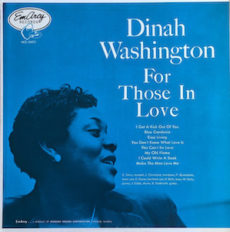
For Those In Love ~ Dinah Washington | By Eddie Carter
To the singer of jazz ballads, standards, or contemporary hits, a song is comprised of three essential parts, melody, harmony, and rhythm. When all three elements are mixed, and enhanced by great arrangements and musicians, the result is an enriching music experience. This morning’s choice from the library is by Dinah Washington, a vocalist who sang the blues, jazz, pop, and R&B proficiently. The album is For Those In Love (EmArcy MG 36011), recorded and released in 1955. She’s joined on this date by Clark Terry on trumpet, Jimmy Cleveland on trombone, Paul Quinichette on tenor sax, Cecil Payne on baritone sax, Wynton Kelly on piano, Barry Galbraith on guitar, Keter Betts on bass, and Jimmy Cobb on drums. The arrangements are by Quincy Jones and my copy used in this report is the second 1955 US Mono release featuring the silver Mercury Records oval at the noon position of the label with EmArcy Jazz appearing in the bottom of the oval.
The opener is I Get a Kick Out of You, written by Cole Porter for the 1934 Broadway musical, Anything Goes, and the octet gets right to work on this swinger. Dinah has the spotlight first and gives a splendidly entertaining improvisation. Jimmy follows, having a ball on a spirited statement, then Kelly displays impeccable chops on a relaxed reading. Clark comes in for some savory swinging with a mute on the closing solo, and Dinah handles the finale with great effectiveness leading the group into a slow fade. Blue Gardenia by Lester Lee and Bob Russell was composed for the 1953 crime drama, The Blue Gardenia. It became a signature song for Dinah and the octet offers a supporting role behind her delicately subtle narrative. Quinichette gives a brief statement of tenderness, then Galbraith offers a solo of soft tranquility. Payne has a moment in the spotlight adding a dreamlike softness to the closing solo. Dinah wraps up the song with emotional sensitivity on the climax.
Easy Living by Ralph Rainger and Leo Robin was the main theme of the 1937 comedy of the same name. The group provides a perfect complement to Dinah’s luxurious vocals on the opening chorus, and the solo order is Paul, Clark, and Jimmy. The first two readings are like delicate porcelain figurines, perfectly proportioned and translucent. The pace picks up slightly for the trombonist who plays the next interpretation with sensual beauty. Ms. Washington is especially attractive on the reprise with a velvety, smooth timbre in her voice that’s gorgeous. You Don’t Know What Love Is by Gene de Paul and Don Raye is a perfect song for film-noir. The haunting lyrics describe the hurt and sadness at the end of a love affair. It opens with a solemn introduction by Dinah and Galbraith. She captures the subtle pathos of the song with the octet’s soft supplement. Cleveland provides the song’s only solo with a graceful and elegant interpretation before Dinah returns to the melancholy mood of the beginning.
This Can’t Be Love by Richard Rodgers and Lorenz Hart was written in 1938 and featured in the Broadway musical, The Boys From Syracuse. The mood is jubilant, and Dinah rises to the occasion with a vivacious vocal treatment. Clark’s muted trumpet sets a lively mood on the first solo. Cecil is up next with an energetic performance of his own. Jimmy mines a vein of unsuspected riches on the third statement, then Paul delivers a delightful interpretation. Kelly cooks up a mesmerizing musical brew before Dinah sings the closing chorus. My Old Flame by Arthur Johnston and Sam Coslow made its debut in the 1934 film, Belle of The Nineties. Dinah begins this tune as a duet with Galbraith preceding the rhythm section’s slow-tempo theme. She’s the dominant presence here and presides with authority, as she recounts her lost love some time ago in a reflective flashback. The horns make their presence known for the closing chorus with Dinah giving it the recognition it deserves.
The 1940 show tune by Rodgers and Hart, I Could Write A Book gets taken for a mid~tempo spin by Ms. Washington and the ensemble. The octet starts the song in unison for the introduction, then Dinah treats the listener to an effervescent vocal performance on the melody. Paul starts with a passionately playful lead solo. Terry adds some fire on the muted trumpet, then Cleveland ends the solos on an upbeat note. The album’s finale, Make The Man Love Me is by Arthur Schwartz and Dorothy Fields. Quinichette opens with a seductive introduction, then Dinah makes a passionate romantic plea with the lyrics. Paul takes the lead with a remarkably graceful solo, then Terry turns in a beguilingly beautiful statement. Kelly approaches the next performance with affective empathy and Cleveland soothes the soul on the closer. Dinah sings two verses of the Duke Ellington–Paul Francis Webster classic, I Got It Bad (and That Ain’t Good) before returning to the original lyrics for the coda.
It’s a solid summation to an album sparkling with marvelous music, exciting, evocative solos, excellent arrangements, and the extraordinary vocals by Dinah Washington that are exceptionally presented. She brought the lyrics she sang to life in each song. The Queen of The Blues, a title she gave herself, recorded a total of thirty-three LP’s for EmArcy, Mercury, and Roulette during her short recording career that began in 1952 and lasted only eleven years. Though her greatest hit, What a Difference a Day Makes came four years later in 1959, For Those In Love would become one of the strongest albums of her career. Dinah passed away from a drug overdose on February 14, 1963, at the age of thirty-nine. This is a gorgeous recording with a splendid soundstage that’ll take your breath away each time you listen. I found For Those In Love to be thoroughly enjoyable and recommend it as a wonderful starting point for any fan interested in exploring the music of Dinah Washington. After one audition, I’m sure you will too! ~ What a Difference a Day Makes (Mercury MG 20479/SR-60158) – Source: Discogs.com
~ I Get a Kick Out of You, Easy Living, My Old Flame, I Could Write a Book, I Got It Bad (and That Ain’t Good) – Source: JazzStandards.com ~ Blue Gardenia, Dinah Washington, Make The Man Love Me – Source: Wikipedia.org © 2021 by Edward Thomas
More Posts: choice,classic,collectible,collector,history,instrumental,jazz,music,vocal
Requisites
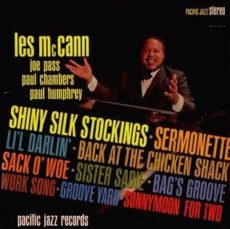
Soul Hits ~ Les McCann | By Eddie Carter
In 1972, I was in my senior year at Glenville High School and starting my first year at Cuyahoga Community College’s Metro Campus in Cleveland, Ohio. I studied radio and had an hour-long program titled Edward Carter and All That Jazz playing albums from my library for the students and faculty on school stations, WGHS and WCCC. My goals at that time were to work at Record Rendezvous once I graduated, get my broadcast license, and become a disc jockey at Cleveland’s then jazz station, WCUY 92.3 FM. Sadly, neither of these came to fruition, but I mention it because a few nights ago, I listened to the album that became the inspiration for this morning’s discussion, and it brought back some great memories. Soul Hits (Pacific Jazz PJ-78/ST-78) by pianist Les McCann hit the stores in 1964 and is his ninth record for Richard Bock and Roy Harte’s label. His bandmates are Joe Pass on guitar, Paul Chambers on bass, and Paul Humphrey on drums. My copy used in this report is the original Stereo album.
Jimmy Smith’s Soul-Jazz classic, Back At The Chicken Shack starts Side One at a lively tempo for the quartet’s melody. Joe kicks off the solos swinging easily, then Les gives the next performance a carefree groove ahead of the closing chorus and slow fade. The beat moves upward for Sack O’ Woe by Julian Cannonball Adderley. I first heard it on The Cannonball Adderley Quintet at The Lighthouse. The ensemble crackles with energy on the opening chorus, then Pass swings like mad on an invigorating solo. McCann takes over, fanning the flames with fire on the closing statement into the out-chorus and quick fadeout. Groove Yard is by pianist Carl Perkins and was the song I used to end each radio show with. It’s a very pretty melody that’s a centerpiece for Joe on the melody, reprise, and the respectful grace he demonstrates on the song’s only solo. The trio’s interaction behind him is subtle and beautifully detailed.
Sermonette by Nat Adderley is an infectious tune with an attractive gospel-flavored rhythm by the foursome in unison. The solo order is Pass, Humphrey, and McCann, and each musician preaches an irresistible abbreviated lesson designed to have the listener clap their hands and tap their toes before a soft fade into nothingness. The first side concludes with a brisk workout of Sonnymoon For Two by Sonny Rollins. The quartet’s collective opening chorus is a sheer delight for the ears. Joe is first in the spotlight with an emotionally charged interpretation, then Les performs impressively on a brief closing statement with Chambers and Humphrey providing firm support into the coda.
Milt Jackson’s 1954 standard, Bags’ Groove (pronounced Bag’s Groove here) opens Side Two with McCann opening the song with a spirited statement of optimistic joy. Joe cruises into the melody at a comfortable speed, then the foursome disappears into darkness on a short ending. Shiny Silk Stockings aka Shiny Stockings was written by Frank Foster in 1955 and the quartet treats this young lady to a lovely night on the town with Joe delivering a relaxing theme treatment. Les takes over for a delightfully, dazzling performance preceding the foursome’s reprise and affectionate finale.
The beat moves to mid tempo for Horace Silver’s 1959 standard, Sister Sadie that premiered on Blowin’ The Blues Away that year. The quartet’s rendition is pure fun from first note to last with a danceable beat that compels you to move your feet. Joe is up first and engages the ear with a delightful performance of vivacious licks that’s a pleasure to listen to. Les gets down to business on the second solo with some home cooking that builds nicely into the closing chorus by Paul who executes a flawless interpretation convincingly before the quartet takes the tune out.
The final two tracks on the album are Neal Hefti’s 1957 timeless standard Li’l Darlin’ and Nat Adderley’s contemporary classic Work Song. On Li’l Darlin’, McCann is the featured soloist, and he delivers a deeply thoughtful presentation of warm beauty with Pass providing the perfect punctuation culminating into an intimate ending. Work Song was written in 1960 and is one of Nat Adderley’s finest works as a composer. It’s also the title tune for what many feel is his best studio album. Oscar Brown, Jr. added lyrics to the instrumental and recorded it on his LP, Sin & Soul, making the song a favorite jazz standard among musicians and vocalists around the world. Pass leads the foursome through a very strong opening chorus raising the temperature to a cooking tempo on Joe’s lead solo. Paul’s bass is impeccable on the second reading and Les wraps up the album with a robust exuberance that you can move to.
Richard Bock produced and engineered Soul Hits and the sound is stunning with the incredible definition of each instrument that surrounds your perfect place to listen with sweet sounds throughout the treble, midrange, and low end. The quartet communicates a wonderful sense of delight and sheer pleasure in the music they’re making. Though out of print since the 1981 US reissue by Liberty Records, Soul Hits by Les McCann is an album of great music that’ll delight the fan discovering his music for the first time, the seasoned collector who’s a fan of piano jazz, or if you already own the record as I do, it’ll bring back some great memories!
~ Back at The Chicken Shack (Blue Note BLP 4117/BST 84117); Blowin’ The Blues Away (Blue Note BLP 4017/BST 84017); Sin & Soul (Columbia CL 1577/CS 8377); Soul Hits (Liberty Records LN-10079); The Cannonball Adderley Quintet at The Lighthouse (Riverside RLP 344/RLP 9344); Work Song (Riverside RLP 12-318/RLP-1167) – Source: Discogs.com
~ Shiny Stockings, Li’l Darlin’ – Source: JazzStandards.com
~ Bags’ Groove, Work Song – Source: Wikipedia.org
© 2021 by Edward Thomas Carter
More Posts: choice,classic,collectible,collector,history,instrumental,jazz,music,piano

Requisites
Dr. Jeckyle ~ Art Blakey & The Jazz Messengers | By Eddie Carter
Art Blakey’s impact on the jazz world as a bandleader and drummer offered a creative and unique perspective that helped shape the artistic style of Hard-Bop and Post-Bop for more than three decades. It was this vision that enabled The Jazz Messengers to become one of the greatest ensembles worldwide. Up next from the library is a recent acquisition titled Dr. Jeckyle (Paddle Wheel K28P 6462). Blakey and the band are performing the second of two performances that were recorded on the final two days of 1985 at Sweet Basil in Greenwich Village. Sharing the spotlight with the drummer is Terence Blanchard on trumpet, Tim Williams on trombone, Donald Harrison on alto sax, Jean Toussiant on tenor sax, Mulgrew Miller on piano, and Lonnie Plaxico on bass. My copy used in this report is the 1987 King Record Company Japanese Stereo album.
Fuller Love (also known as In Case You Missed It) by alto saxophonist Bobby Watson opens the album with an aggressive attack by Blakey preceding the speedy melody by the ensemble. Tim begins the solos with an exciting performance. Donald swings with a robust beat on the second statement. Jean takes the reins next for a rousing reading. Mulgrew charges into the last solo with an impeccably hip contribution before the ensemble takes the song out. Dr. Jeckyle comes next with the propulsive power of Blakey’s drums in full effect on the introduction leading to the melody. Blanchard sizzles on the lead solo, then Harrison gives an equally fierce statement. Williams heats things up on the following reading, then Toussiant contributes considerable energy on the fourth scintillating statement. Miller wraps it up with a tidal wave of compelling emotion.
81 by Ron Carter begins Side Two cooking at an easy groove during the ensemble’s opening chorus. Donald kicks off the solos laying down a lively rhythm. Tim moves into the second statement with an easy swing, followed by Jean who gives an intriguing improvisation. Mulgrew strolls into an enjoyable performance on the next reading. Lonnie takes the final spot with an exquisite solo before the close. One By One by Wayne Shorter picks up the pace one final time with the septet at an optimum level on the melody. Harrison flies right out of the gate with a speedy lead statement. Williams steps up next for a heated interpretation, then Toussiant responds with radiant intensity. Blanchard drives into the next reading ferociously, and Miller delivers a closing chorus of incandescent fury ahead of the ensemble’s finale and audience’s ovation.
Dr. Jeckyle was produced by Shigeyuki Kawashima and Horst Liepolt. It was recorded by Kazunori Sugiyama and the album was mixed at King Studio, Japan by Hatsuro Takanami and mastered by Akira Makino. This is a digital recording with a superb soundstage possessing a bright treble, vibrant midrange, and deep bass that’s fun to listen to. Though released three years before Art’s passing in 1990, Dr. Jeckyle is an exhilarating, exciting live album by Art Blakey & The Jazz Messengers that still stands up very well over three decades later and belongs in every jazz fan’s library!
More Posts: choice,classic,collectible,collector,drums,history,instrumental,jazz,music