

Requisites
The Meeting, Vol. 1 ~ Jackie McLean Featuring Dexter Gordon | By Eddie Carter
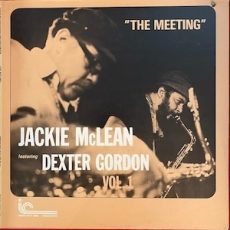
I was looking for something to listen to after dinner a few nights ago when I came across a title I hadn’t heard in a while by two of my favorite saxophonists, Jackie McLean and Dexter Gordon. This morning’s record from the library is The Meeting, Vol. 1 (SteepleChase SCS-1006). It hit the Danish and Japanese stores in 1974 and is the first of two live albums recorded a year earlier on July 20 and 21 at Montmartre Jazzhus in Copenhagen. The front line is Jackie McLean on the alto sax and Dexter Gordon on the tenor sax. The supporting cast for both sets is a magical rhythm section: Kenny Drew on piano, Niels-Henning Ørsted Pedersen on bass, and Alex Riel on drums. My copy is the 1976 U.S. Stereo reissue (Inner City IC 2006).
Side One opens with Jackie’s introduction of the quintet ahead of the rhythm section’s introduction to All Clean by Dexter Gordon. Both horns enter next to introduce the vibrant melody. Dexter goes to work first on a lengthy opening solo. Jackie checks in next and keeps the flame burning. Kenny makes a vigorous contribution next, and then Niels-Henning takes a brisk walk in the following reading. Dexter and Jackie return to have a spirited conversation, leading to the song’s conclusion. Rue De La Harpe by Sahib Shihab begins with the ensemble’s mid-tempo theme. Jackie has the opening chorus and takes command effectively. Dexter flies straight ahead into the following solo, and Kenny keeps things moving with considerable passion until the theme’s climax.
Side Two starts with Sunset, a hauntingly beautiful ballad by Kenny Drew that he initially recorded on Everything I Love. Both horns introduce the song, proceeding to the ensemble’s delicately tender melody. Jackie begins the opening statement gently. Dexter follows with an extremely personal interpretation, and Kenny adds a meaningful comment preceding the theme’s restatement. On The Trail by Ferdé Grofé is the third of five movements in his Grand Canyon Suite. Jackie kicks off the theme’s first chorus. Dexter takes the baton in the second chorus and then makes a distinctive impression on the first solo. Jackie speaks with captivating inspiration in the following reading. Kenny executes a rewarding performance in the closer ahead of the finale.
Nils Winther did double duty on this release. He produced and recorded The Meeting, Vol. 1. The reissue’s sound quality is excellent, with a superb soundstage that transports the listener to a front-row seat in the Montmartre audience as the musicians are performing. Since I have this album in my library, I’ll be on the lookout for its companion, The Source, Vol. 2. If you’re a fan of Jackie McLean and Dexter Gordon, I invite you to attend The Meeting, Vol. 1 on your next record shopping trip. It’s a stellar lineup with great playing from each member of the quintet and a wonderful document of a live set that anyone can revisit anytime the album is on the turntable!
~ Everything I Love (SteepleChase Records SCS-1007), The Source, Vol. 2 (SteepleChase Records SCS-1020) – Source: Discogs.com ~ On The Trail – Source: Wikipedia.org © 2024 by Edward Thomas Carter
More Posts: choice,classic,collectible,collector,history,instrumental,jazz,music,saxophone
Requisites
A Letter From Slowboat ~ Ryo Fukui | By Eddie Carter
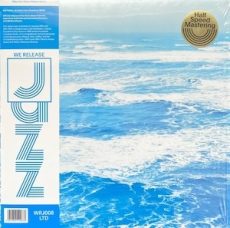
My nephew Kyle introduced me to this morning’s album by Ryo Fukui. A Letter From Slowboat (Sapporo Jazz Create SJC-1501) was initially released as a CD album in 2015. It was his final release and recorded with no audience on January 25 and 26 at the Sapporo Jazz Club that he owned with his wife, Yasuko. Ryo Fukui was born in Biratori, Hokkaido, Japan and at eighteen, learned the accordion. Four years later, he taught himself the piano and moved to Tokyo in 1970. His first album, Scenery, was released in 1976, and as his skills improved, he often performed at Shinjuku Pit Inn in Kichijōji and Jazz Inn Lovely in Nagoya. Takumi Awaya on bass and Ittetsu Takemura on drums complete the trio. My copy is the 2020 We Release Jazz Switzerland Stereo audiophile reissue (WRJ008LTD).
The album opener, Sonoro by Ryo Fukui, swings at a lively pace, beginning with the trio’s introduction ahead of their melody. Ryo takes the lead and stretches out on a cheerfully bright opening statement. Takumi takes over and walks effectively in the second reading. Ryo shares the final conversation with Ittetsu, preceding the theme’s restatement and lovely ending. Stella By Starlight, by Victor Young and Ned Washington, starts with a beautiful solo introduction by Fukui until his colleagues join him for the opening chorus. Ryo is the song’s only soloist, and he delivers an elegantly tender interpretation before the song’s gentle climax.
The tempo moves upward for Speak Low by Kurt Weill and Ogden Dash, opening at a fast clip with the trio’s brisk introduction and speedy theme. Ryo launches the first solo, exhibiting great energy, followed by the vigorous workout Ittetsu gives his drums ahead of the quick closing chorus and ending. Nobody Knows The Trouble I’ve Seen is an African American spiritual song from the 1800s. Their rendition opens with a gorgeous piano introduction that blossoms into a bluesy theme. Fukui stirs the soul with a tasteful interpretation. Awaya and Takemura compliment the pianist with their support into the elegant reprise and close.
Side Two starts with the trio’s visit to the Old Country by Nat Adderley and Curtis Lewis. It gets underway with a mid-tempo stroll through the melody. Ryo speaks prominently in the opening statement, and then Takumi builds the next reading efficiently. Ittetsu gets down to business last, until the group says goodbye in their closing chorus. Soultrane by Tadd Dameron is a pretty song that Fukui begins with a gentle introduction leading to a softly subdued melody. Ryo’s opening statement possesses all the warmth and feeling that one could ask for. Awaya answers with a response of haunting beauty in Fukui’s return for a tranquil finale.
Chasin’ The Bird by Charlie Parker is a lively tune with an irresistible groove as the melody unfolds. Ryo leads the way with an excellent interpretation. Takumi has a lot to say in the following reading. The pianist then blends beautifully with Ittetsu in an exchange of closing remarks before the theme resurfaces. Be My Love by Nicholas Brodszky and Sammy Cahn brings the album to a close with a showcase for one of Fukui’s prettiest performances. As the song’s only soloist, he provides an exquisite presentation that shows off his lyrical side, shadowed by Awaya and Takemura, leading to the lovely ending.
Masato Komatsu produced the original session of A Letter From Slowboat. It is unknown who recorded the original session, but Stephen Armleder and Oliver Ducret supervised this half-speed mastered audiophile reissue. The sound quality on this limited edition album is excellent with an impressive soundstage that’s very detailed. The record is pressed on one hundred eighty grams of audiophile vinyl and is quiet until the music starts. The front and rear cover is printed on three hundred fifty GSM (grams per square meter) of heavy card stock that despite not being a glossy cover, is still quite sturdy.
Ryo Fukui’s professional career lasted forty years, and, in that time, he only recorded five albums, but he did travel to and perform live in America and France. Fukui also taught jazz piano to students internationally. In 1995, Ryo opened the Slowboat Jazz Club with his wife and hosted local and international jazz musicians. He passed away on March 15, 2016, at age sixty-seven. After his death, Yasuko took over the day-to-day operations of the club, and it’s still going strong with live jazz daily. I thoroughly enjoyed listening to A Letter From Slowboat by Ryo Fukui. If you’re a fan of jazz piano, it’s a great discovery that I recommend you check out for a spot in your library!
~ Scenery (Nadja PA-7148) – Source: Discogs.com ~ Speak Low, Stella By Starlight – Source: JazzStandards.com ~ Be My Love, Chasin’ The Bird, Nobody Knows The Trouble I’ve Seen, Old Country, Ryo Fukui – Source: Wikipedia.org © 2024 by Edward Thomas Carter
More Posts: choice,classic,collectible,collector,history,instrumental,jazz,music,piano
Requisites
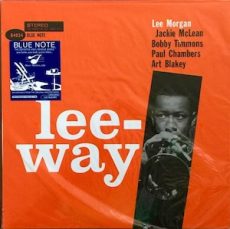
A few nights ago, I spent the evening listening to records by Howard McGhee, Freddie Hubbard and Woody Shaw and was still in the mood to hear another trumpet player, so I picked one of my favorite albums by Lee Morgan. This morning’s record submitted for your approval is Leeway (Blue Note BLP 4034/BST 84034), an excellent 1961 quintet session. I’ve always loved Lee’s tone, articulation, energy, and imagination since first hearing him on A Night In Tunisia, Blue Train, Candy, Houseparty, Introducing Wayne Shorter, The Cooker and The Sermon. An exceptional supporting cast backs Lee on this date: Jackie McLean on alto sax, Bobby Timmons on piano, Paul Chambers on bass and Art Blakey on drums. My copy is the 2016 Music Matters Stereo audiophile reissue (MMBST-84034).
These Are Soulful Days by Cal Massey opens Side One at an easy pace for the quintet’s bluesy melody. Paul leads off the solos with an immensely soothing interpretation. Bobby follows with an attractive performance. Jackie enters next with a satisfying statement, and Lee makes a brief point in the closing solo ahead of the theme’s return. Lee Morgan’s The Lion And The Wolff is his tribute to label founders Alfred Lion and Francis Wolff. The rhythm section’s introduction gets it started for the front line’s collective melody. Jackie leads the way with a relaxing solo; then Lee comes in for a carefree reading. Bobby delivers a delightful statement next, followed by Paul’s bouncy bass lines and Art’s concise comment until the closing chorus fades out slowly.
The quintet dives into Jackie McLean’s Midtown Blues to begin Side Two. The group’s leisurely-paced theme gets things off to a good start. Lee begins the opening solo in a happy vein. Jackie responds with a lightly swinging reading. Bobby keeps the ideas flowing in the third statement, and Paul puts together a satisfying conclusion preceding the ensemble’s reprise and exit. Nakatini Suite by Cal Massey was composed in 1948 and is dedicated to a columnist of The Pittsburgh Courier. The rhythm section sets the tone with their introduction to the quintet’s vibrant melody. Lee leads off the solos with a spirited statement. Bobby follows the leader and gets a chance to stretch out next. Art is right on the mark, with a brisk workout leading to the theme’s restatement.
Alfred Lion produced the original session, and Rudy Van Gelder was the recording engineer. Kevin Gray of Cohearent Audio mastered this audiophile reissue, and the album’s sound quality is simply breathtaking. If you close your eyes while listening, you’ll swear that the quintet is in your listening room playing. The record is pressed on 180 grams of audiophile vinyl and is dead silent until the music starts. The album cover is worthy of hanging on your listening room wall, and the gatefold photos from the session are gorgeous. Lee Morgan recorded thirty albums as a leader and appeared on some of the greatest jazz albums as a sideman. Leeway is sadly overlooked in his discography, but in my opinion, it’s one of his best releases of the sixties. If you’re in the mood for hard bop, I happily recommend Leeway by Lee Morgan. It’s an excellent introduction to his music and a terrific album you shouldn’t miss when record-shopping!
~ A Night In Tunisia (Blue Note BLP 4049/BST 84049), Blue Train (Blue Note BLP 1577/BST 1577), Candy (Blue Note BLP 1590/BNST 1590), Houseparty (Blue Note BLP 4002/BST 84002), Introducing Wayne Shorter (Vee Jay VJLP 3006/SR 3006), The Cooker (Blue Note BLP 1578/BST 81578), The Sermon (Blue Note BLP 4011/BST 84011) – Source: Discogs.com
© 2024 by Edward Thomas Carter
More Posts: choice,classic,collectible,collector,history,instrumental,jazz,music,trumpet
Requisites
Intermission Riff ~ Sonny Criss | By Eddie Carter
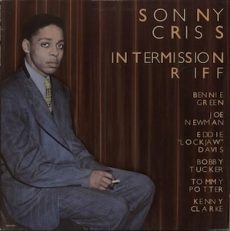
In 1951, producer Norman Granz, the founder of several jazz labels and the chief architect behind the Jazz at The Philharmonic concerts, began a tour featuring Billy Eckstine at the Shrine Auditorium in Los Angeles, California. During the intermission, an all-star septet led by alto saxophonist William “Sonny” Criss took the stage. The result of their performance is this morning’s album from the library, Intermission Riff (Pablo Records 2310-929), released in 1988 after archivist Eric Miller discovered the tapes. His bandmates are Joe Newman on trumpet, Bennie Green on trombone, Eddie “Lockjaw” Davis on tenor sax, Bobby Tucker on piano, Tommy Potter on bass and Kenny Clarke on drums. My copy is the original U.S. Mono release.
Intermission Riff by Ray Wetzel and Michael H. Goldsen opens the set. Eddie begins with a robust introduction before the ensemble’s lively melody. “Lockjaw” gets busy first in the opening solo. Joe motors along in the next spirited statement, and then Sonny follows with an electrifying reading that receives a huge ovation from the audience at its climax. Green provides an exclamation point with an exhilarating solo into a thrilling ending. How High The Moon by Nancy Hamilton and Morgan Lewis starts with the trio’s calypso introduction preceding the high-spirited theme. Newman starts things off, and then Davis is remarkably assured on the next solo. Potter gives an impressive reading next. Green excels on the following reading, and Criss cooks with passionate enthusiasm on the closer.
A rocking version of Perdido by Juan Tizol, Ervin Drake and Hans Lengsfelder starts with the septet’s vigorous melody. Criss makes a strong impression on the first solo. Newman shows assurance and confidence in the second reading. Tucker takes over with an energetic performance, followed by Davis’ unrestrained enthusiasm. Green enters the next solo with a vengeance, then Clarke closes with a brisk workout into the reprise and ending. Body and Soul by Johnny Green, Edward Heyman, Robert Sour and Frank Eyton begins with Green’s soothing introduction before the pace moves to mid-tempo for the ensemble’s melody. Newman, Tucker, Criss, and Davis all contribute concise readings that are expressed very well.
High Jump by E. Greene culminates the set in a blowing session as fast as the Road Runner after the septet’s joyous exuberance in the melody. Bennie speaks his piece first with the added horsepower of the front line in one chorus. Sonny meets the challenge on the second statement, and then Newman gives an aggressive reading that dares the rhythm section to keep up with him. Davis infuses his solo with a few bars of Wild Blue Yonder while exchanging a few thoughts with Kenny, who responds in explosive form preceding the closing chorus. George Horn initially mastered Intermission Riff and it was digitally remixed by Danny Kopelson. The album’s sound quality does have a few momentary sound dropouts, but Eric Miller thought the music was too important to be edited, so he didn’t remove them.
Intermission Riff gives a glimpse of Sonny Criss, who possessed a beautiful sound that was capable of creating emotional solos. He had much to offer the jazz world, as demonstrated on his albums for Imperial, Impulse, Muse Peacock, Prestige and Xanadu. In 1977, he was diagnosed with stomach cancer, and on November 19 of that year, at age fifty, he took his own life as a result of the constant pain. Whether you’re just discovering his music or are already familiar with his discography, I offer for your consideration on your next record shopping trip, Intermission Riff. It’s a remarkable live performance by
Sonny Criss that swings with the best of them and is recommended for a spot in any jazz library!
~ Body and Soul, How High The Moon, Perdido – Source: JazzStandards.com ~ Sonny Criss – Source: Wikipedia.org © 2024 by Edward Thomas Carter
More Posts: choice,classic,collectible,collector,history,instrumental,jazz,music,saxophone
Requisites
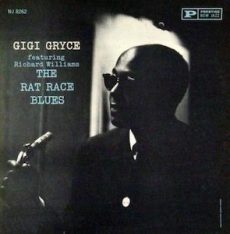
The Rat Race Blues ~ Gigi Gryce | By Eddie Carter
Multi-instrumentalist Gigi Gryce was one of the most exciting jazz musicians during the hard-bop era. In addition to the alto sax, he also played the flute and clarinet. He was also known as a brilliant arranger and composer. This morning’s record from the library, The Rat Race Blues (Prestige New Jazz NJLP 8262), is a splendid 1960 session that was one of the best records he recorded between 1955 and 1960. It’s the quintet’s second appearance together following their previous release, The Hap’nin’s. The ensemble consists of Richard Williams on trumpet, Gigi Gryce on alto sax, Richard Wyands on piano, Julian Euell on bass, and Mickey Roker on drums. My copy is the 1983 U.S. Original Jazz Classics Mono reissue (Prestige New Jazz OJC-081).
Side One opens with The Rat Race Blues by Gigi Gryce. A fiery uptempo smoker that begins with a scintillating introduction by Gigi and Richard soaring over the rhythm section. Wyands begins the first solo with his fingers flying fiercely over the keys. Williams opens the throttle on the muted trumpet next, and Gryce heightens the excitement in the finale. Strange Feelin’ by Sam Finch slows the speed to a medium pace for the ensemble’s relaxing melody. Williams steps up first for a carefree solo. Gryce gets into something good in the following reading. Wyands concludes with a charming interpretation, leading to a perfect climax.
Boxer’s Blues by Gigi Gryce begins with a two-instrument dialogue between Richard and Wyands. Gigi, Julian, and Mickey join them for a mellow theme. Gigi starts the solos with a lovely melodic line. Williams lays down the next elegant groove. Wyands takes over to give a graceful performance ahead of the reprise and slow fade. Blues In Bloom by Norman Mapp begins Side Two with a soft-voiced bass solo by Euell that segues into the quintet’s melody. Gryce goes to work first with an exceptionally tender tone, and then Williams carefully caresses the second reading with sensitivity. Richard delivers the closer with plenty of heart and soul into the theme’s restatement.
Monday Thru Sunday, also by Norman Mapp, is a slow blues that reaches a medium beat for the ensemble’s melody. Gigi solos first with a beautifully conceived interpretation. Williams maintains the therapeutic tempo in the second reading. Wyands is entirely at ease in the third statement, and Euell makes an impeccably polite comment during the ending theme. Esmond Edwards supervised The Rat Race Blues, and Rudy Van Gelder was the recording engineer. Gary Hobish mastered this Original Jazz Classics reissue. The album’s sound quality is excellent, with a superb soundstage placing the listener’s sweet spot in the center, surrounded by the quintet as they’re playing.
The Rat Race Blues is the next to last record Gigi Gryce would make before leaving the music scene to become a beloved music teacher in the Bronx. He continued teaching until just before his death at age fifty-seven on March 14, 1983. Of the eleven albums he recorded in those five years, The Rat Race Blues by Gigi Gryce is one of the gems that hard-bop fans shouldn’t miss on their next record shopping trip. It’s also a superb listening experience I’m sure you won’t be able to listen to just once!
~ The Hap’nin’s (Prestige New Jazz NJLP 8246) – Source: Discogs.com © 2024 by Edward Thomas Carter
More Posts: choice,classic,collectible,collector,history,instrumental,jazz,music,saxophone