

Requisites
The Eternal Triangle ~ Freddie Hubbard and Woody Shaw | By Eddie Carter
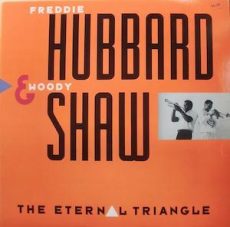
Freddie Hubbard and Woody Shaw enter this morning’s spotlight with a superb 1987 sextet album, The Eternal Triangle (Blue Note B1-48017). I’m a long-time fan of both trumpet players and have been listening to their albums recently. The Eternal Triangle is their second collaboration after Double Take, recorded and released two years earlier. Freddie is heard on the left channel, and Woody is heard on the right channel. Returning from the earlier session are Kenny Garrett on alto sax, Mulgrew Miller on piano and Carl Allen on drums. Ray Drummond takes over on bass for this date. My copy is the original U.S. Stereo release.
Down Under by Freddie Hubbard starts Side One with the rhythm section’s infectious introduction to the sextet’s danceable theme. Freddie kicks off the opening line with a strong tone. Mulgrew continues the effortless swing in the following reading. Woody makes quick work of the third solo, and then Kenny has a fine spot ahead of the ensemble’s return that fades out slowly. The Eternal Triangle by Sonny Stitt comes at you fast and furious from the sextet’s rapid-fire melody. Hubbard takes us for a high-speed ride first, and then Garrett heats things up in the second statement. Shaw steps up next for an aggressive reading. Miller gives a spirited presentation, and Carl ends the solos with a brisk workout into the reprise and quick stop.
The Moontrane by Woody Shaw takes off with him leading the ensemble in a lively melody. Woody is the first soloist, and he comes out swinging. Kenny gives a brisk reading in the second spot. Freddie adds a bit more fuel to the fire in the following statement, and Mulgrew leads us to a swinging conclusion with an inspired interpretation. Side Two gets underway with the sextet keeping its foot on the gas for Calling Miss Khadija by Lee Morgan. It begins with the rhythm section’s introduction; then, the front line joins in for the melody. Shaw ignites the song’s first brightly burning flame. Miller whets our appetite further in the second statement, and then Hubbard has a few memorable moments next. Garrett comes in to give a sizzling solo, and Carl gets the last word in a vigorous finale before the ensemble returns.
I first heard Freddie Hubbard’s Nostrand and Fulton on an earlier album, Here To Stay. The song’s title comes from a Brooklyn intersection, and the sextet begins the melody vibrantly. Freddie dives into the opening solo and wails, then Kenny follows with some heated sax play. Woody tackles the next reading with passionate fire, and Mulgrew closes with a very enthusiastic statement ahead of the theme’s reprise and conclusion. Tomorrow’s Destiny by Woody Shaw is off to the races from the sextet’s opening chorus. Miller is up first with a solo of high-spirited delight. Shaw goes to work next on a swift reading, then comes Hubbard’s exhilarating statement. Garrett builds the song’s final interpretation into an impressive conclusion preceding the ensemble’s ending theme and exit.
Michael Cuscuna and Don Sickler produced The Eternal Triangle. The recording engineer was Rudy Van Gelder. It is a full digital recording that emerges from your speakers with a stunning soundstage. The musicians are transported to your listening room with excellent fidelity. The pressing is also quite good, and the record is noticeably quiet until the music starts. If you are a fan of Freddie Hubbard and Woody Shaw, I hope you will consider The Eternal Triangle on your next record shopping trip. In my opinion, it’s one of the best albums in both musician’s discographies and a terrific release worthy of a spot in any jazz lover’s library!
~ Double Take (Blue Note BT-85121), Here To Stay (Blue Note BST-84135) – Source: Discogs.com © 2024 by Edward Thomas Carter For the serious collector of jazz… #Jazz #Classic #Collectible #Music #Notorious
More Posts: choice,classic,collectible,collector,history,instrumental,jazz,music,trumpet
Requisites
Steal Away ~ Larry Willis | By Eddie Carter
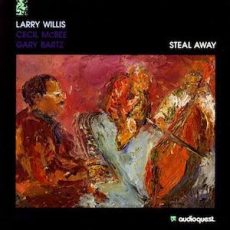
This morning’s album from the library is Steal Away (AudioQuest Music AQ-LP 1009), a little-known release by pianist Larry Willis. It’s the first of two records Willis made for the label and his seventh as a leader. He’s joined on this date by Gary Bartz (tracks: A2, B1) on alto sax and Cecil McBee (A2, B1, B2) on bass. My copy is the 1992 U.S. Stereo audiophile album.
Side One opens with Valdosta Blues by Larry Willis, the first of three solo piano performances. The title comes from the city in Georgia and begins with the pianist’s tranquil introduction that builds to a breezy melody. His ensuing solo is a superb performance that moves easily toward an exquisite ending.
The title tune, Steal Away, is an American Negro spiritual by Wallace Willis. It has been with Larry since age three and was a favorite song of his Mother’s to sing. Willis opens with a delicately gentle introduction to Bartz and McBee’s very pretty melody. Gary’s opening solo is imaginative and confident. Larry follows with sweet notes that shine like the rays of the sun, and Cecil breezes blissfully through the closing statement into a gentle climax. Fallen Hero is Larry’s tribute to his brother Victor. He tells an intimate story that reveals his love and affection for his brother with reflective inspiration and tenderness.
“D” Bass-ic Blues by Cecil McBee starts with the bassist’s bowed introduction, setting up Bartz and Willis to join him in a medium-tempo theme. Larry eases into the first solo with joyful vitality. Gary keeps the ball rolling with a remarkable reading of melodic lines. Cecil lets his bass do the talking in the finale preceding the theme’s reprise and conclusion. Ethiopia is a hauntingly beautiful song by Larry Willis that’s presented as a duet with Cecil McBee. The duo starts with a tender melody, and then Larry’s opening statement is as gentle as a light summer rain. Cecil comes in next with a graceful interpretation ahead of the duo’s delicately pretty ending.
The Meaning of The Blues by Bobby Troup and Leah Worth is given a tasteful treatment by Willis. He makes the song his own in a solo showcase that’s warm and nostalgic, thoughtful and heartfelt into a serene finale of haunting dreaminess. Joe Harley produced Steal Away, Pierre M. Sprey was the recording engineer, and Bernie Grundman mastered the album. It’s a pure analog recording with a stunning soundstage that was pressed on 180 grams of audiophile vinyl and is a perfect demonstration record for any quality audio system. Larry Willis recorded twenty-one albums as a leader and many more as a sideman. If you’re a fan of piano jazz, I invite you to consider Steal Away by Larry Willis on your next record-shopping trip. It’s an excellent place to start your discovery of his music and a welcome addition to any jazz fan’s library!
~ Fallen Hero, Ethiopia, “D” Bass-ic Blues – Source: Album Liner Notes by Bill Kohihasse
~ American Negro Spirituals were songs that contained hidden codes and messages for enslaved people to escape on their own or through the Underground Railroad – Source: Wikipedia.org © 2023 by Edward Thomas Carter

More Posts: choice,classic,collectible,collector,history,instrumental,jazz,music,piano
Requisites
Maggie’s Back In Town ~ Howard McGhee | By Eddie Carter
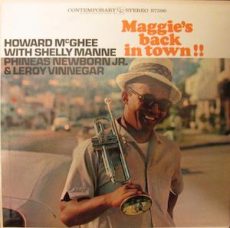
Howard McGhee opens this morning’s discussion with a superb 1961 album, Maggie’s Back In Town (Contemporary Records M3596/S7596). He was one of the earliest jazz musicians to begin playing bebop and became a leading trumpet player during the Forties. Howard was also an excellent arranger and composer who performed with some of the elite musicians during that era. Drug problems derailed his career during the fifties, but he returned in 1960 and recorded two impressive albums for Lester Koenig’s label. A first-class trio joins him on this studio session: Phineas Newborn Jr. on piano, Leroy Vinnegar on bass, and Shelly Manne on drums. My copy is the 1975 US Stereo reissue.
Side One opens with a Howard McGhee original, Demon Chase. The quartet swings easily into the melody; then, Howard gets to the song’s core first. Phineas follows happily along in the second reading. McGhee returns on muted horn with a solo that’s sheer heaven. Leroy closes things out ahead of the finale. Willow Weep For Me by Ann Ronell is one of the most beautiful and recorded song’s from The Great American Songbook. Newborn makes the introduction segueing into McGhee’s muted slow-tempo theme and mellow opening statement. Phineas demonstrates tenderness and intimacy next, and then Howard takes the song out thoughtfully with the mute removed.
Softly, As In a Morning Sunrise by Sigmund Romberg and Oscar Hammerstein II is taken at a brisk clip, with the leader’s mute building the melody effectively. Howard delivers the song’s only solo with joyful vitality fueled by the trio’s exceptional support ahead of the closing chorus and climax. Sunset Eyes by Teddy Edwards ends the first side. The rhythm section sets the scene for McGhee’s easygoing melody. The tempo moves upward for a fascinating interpretation by the leader. Newborn also puts together a well-constructed offering preceding the closing chorus and gentle fadeout.
Side Two starts with Maggie’s Back In Town, by Teddy Edwards. The title refers to Howard’s nickname and his return to the jazz scene after battling drug addiction. The quartet’s bluesy theme gets things underway, followed by Howard’s warm welcome in the first solo. Newborn’s second statement is as delicious as a good meal. McGhee returns for a short reading, and then Vinnegar takes a relaxing walk. Manne shares the closing statement with Howard ahead of the ending theme. Summertime by George and Ira Gershwin and DuBose Heyward starts at mid-tempo, with the leader back on a muted trumpet. McGhee’s solo is as enjoyable as a day at the seaside until the close.
Brownie Speaks by Clifford Brown takes off with the foursome’s vigorous uptempo workout. Howard generates plenty of heat in the first solo. Phineas takes a scintillating statement next. Leroy follows with a short, robust comment, and the leader’s finale flows vibrantly toward the climax. Lester Koenig produced Maggie’s Back In Town, and Roy DuNann was the recording engineer. It’s a great-sounding reissue with an outstanding soundstage that brings the quartet to your listening room with stunning fidelity. If you’re in the mood for a hard-bop album with great tunes and tight musicianship, I invite you to check out Maggie’s Back In Town by Howard McGhee on your next record shopping trip. It’s an excellent introduction to his music and a terrific album that’s sure to give you many hours of listening pleasure!
~ Together Again! (Contemporary Records M3588/S7588) – Source: Discogs.com ~ Softly, As In A Morning Sunrise, Summertime, Willow Weep For Me – Source: JazzStandards.com © 2023 by Edward Thomas Carter
More Posts: choice,classic,collectible,collector,history,instrumental,jazz,music,trumpet
Requisites
Pannonica ~ Horace Parlan Trio | By Eddie Carter
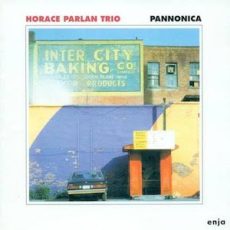
This morning’s album is by Horace Parlan, a pianist whose roots were deep in hard bop. I fell in love with his playing after hearing Movin’ & Groovin’ and The Complete Horace Parlan Blue Note Sessions. Pannonica (Enja Records 4076) is a 1984 release capturing The Horace Parlan Trio in performance at the Munich jazz club, The Domicile, on February 11,1981. Horace was stricken with polio as a child, resulting in the partial crippling of his right hand. It contributed to his developing a left-hand chord-voicing style and an ability to play rhythmic phrases with the right. He’s joined on stage by Reggie Johnson on bass and Alvin Queen on drums. My copy is the original German Stereo album.
No Greater Love, an abbreviation of the title There Is No Greater Love by Isham Jones and Marty Symes, begins the set with the trio’s energetic melody. Horace launches into a highly satisfying opening solo. Reggie comes in behind him with a vigorous statement. Alvin engages in an aggressive exchange with the pianist before the reprise and climax. The title tune, Pannonica, by Thelonious Monk, is one of his most beautiful compositions and opens with a solo piano introduction, segueing into the threesome’s delicately soft theme. Parlan treats the standard tenderly in the only solo, complemented by Johnson and Queen’s lush foundation into a gentle ending.
The first side closes with an enthusiastic rendition of C Jam Blues by Duke Ellington and Barney Bigard. The trio goes right to work with a lively melody. Horace leads the way with a vigorous solo. Reggie says his piece in the following reading. Alvin adds a bit of excitement in a spirited interpretation leading to the ensemble’s splendid finale. Randy Weston’s Hi-Fly starts Side Two with the trio’s inspired theme. Parlan is up first and stretches out in a beautifully constructed opening statement. Johnson takes the next turn, displaying an exemplary flow of ideas that builds to an effective climax.
The album closes with an old thirties song by George and Ira Gershwin, Who Cares? The trio opens with a medium-tempo melody as fresh as the fragrance after a summer rain shower. Horace takes the lead and brings out the sun in the first solo. Reggie responds with a compelling reading that flows nicely into the theme’s reprise and finish. Horst Weber and Matthias Winckelman produced Pannonica, and Carlos Albrecht recorded the album. This digital recording has an impressive soundstage that makes the instruments come alive through your speakers and places the listener in The Domicile audience as the musicians are performing.
Horace Parlan was one of jazz’s elder statesmen who constantly explored the individual possibilities of each tune he played with a sureness in his approach, which fueled his ability to improve with each new album continually. He, Reggie Johnson, and Alvin Queen make a fine team and demonstrate what a piano, bass, and drums could accomplish when firing on all cylinders. If you’re a fan of trio jazz, I invite you to consider Pannonica by The Horace Parlan Trio on your next record hunt. It’s one of the pianist’s best records and a very entertaining set that shouldn’t be missed for a spot in your library!
More Posts: choice,classic,collectible,collector,history,instrumental,jazz,music,piano
Requisites
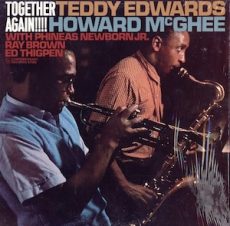
Together Again!!!! ~ Teddy Edwards and Howard McGhee | By Eddie Carter
Teddy Edwards and Howard McGhee enter this morning’s spotlight with their excellent 1961 collaboration, Together Again!!!! (Contemporary Records M3588/S7588). The tenor saxophonist and trumpeter initially worked together from 1945 to 1947 when Edwards was a member of McGhee’s sextet. It’s their second collaboration since the Bebop era, but the first time the duo recorded together. The supporting cast is a magical rhythm section: Phineas Newborn Jr. on piano, Ray Brown on bass, and Ed Thigpen on drums. My copy is the 1975 U.S. Stereo reissue, sharing the original catalog number.
The album opener is the title track, Together Again, by Teddy Edwards. The quintet begins the melody harmonizing in perfect agreement. Howard takes the wheel and cruises leisurely on the opening statement. Teddy wails with a vibrant voice in the following solo. Phineas heightens the excitement with an impressive reading; then Ray adds a brisk footnote leading to the theme’s return and summation. McGhee introduces You Stepped Out Of A Dream by Nacio Herb Brown and Gus Kahn on the muted trumpet. He showcases the horn’s warm, lyrical tone in a lighthearted setting during two solos. In between them, Edwards gives a charming reading that bounces along over the rhythm section.
Up There by Ray Brown opens briskly from the pianist’s introduction, which evolves into the ensemble’s aggressive theme. Teddy tackles the first solo with fleet agility, and then Howard flies swiftly in the second statement. Phineas swings with a vengeance until the group’s theme restatement and abrupt finish. Side Two begins with Perhaps by Charlie Parker, featuring McGhee on muted trumpet during the opening and closing chorus. Edwards builds the opening solo exquisitely. Newborn follows with an exceptional interpretation. McGhee opens the horn for a passionately nimble reading, and Ray delivers the exclamation point into the group’s exit.
Teddy and the trio have the honors next on Misty by Erroll Garner and Johnny Burke. The quartet starts with a bass and piano duet. Teddy and Ed join them for the song’s very pretty melody. Edwards is the song’s only soloist and delivers an intimately personal interpretation that, to these ears, is one of the album’s highlights. Sandy by Howard McGhee begins with the quintet’s energetic theme. Howard is off to a rousing start on the lead solo. Edwards follows him with a reading of confident assurance. Newborn goes for the jugular next with vigorous enthusiasm. Brown wraps up the solos with dazzling bass lines preceding the quintet’s return to take the song out.
Lester Koenig produced Together Again!!!!, and Roy DuNann was the recording engineer. The reissue sounds great and possesses a vibrant soundstage, allowing the musicians to emerge from your speakers into your listening room with superb fidelity! Throughout the album, the quintet demonstrates how good West Coast jazz could sound in the right hands. The music is great from start to finish, and the musicians complement each other skillfully. If you’re a fan of Cool Jazz or Post Bop, I invite you to consider Together Again!!!! by Teddy Edwards and Howard McGhee on your next record-shopping trip. It offers the opportunity to appreciate two jazz giants who, after an absence of sixteen years, prove that great music doesn’t have an expiration date and can provide listening pleasure endlessly!
~ You Stepped Out of a Dream, Misty – Source: JazzStandards.com
~ Perhaps – Source: Wikipedia.org
© 2023 by Edward Thomas Carter
More Posts: choice,classic,collectible,collector,history,instrumental,jazz,music,saxophone,trumpet