

Requisites
Workout! ~ Greg Marvin Quintet | By Eddie Carter
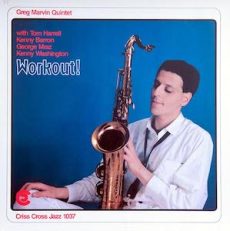
I’ve loved the tenor sax since childhood, and this morning’s record from the library is Workout! (Criss 1037), a recent discovery and acquisition on Criss Cross Jazz by The Greg Marvin Quintet. Greg was born in 1956 and began playing the guitar at age seven. He later took up the soprano sax at age seventeen, then graduated to his primary instrument, the tenor sax. Workout is his third album, following two on his label, Hi-Hat Records. Here, he’s working with an excellent supporting cast: Tom Harrell on trumpet, Kenny Barron on piano, George Mraz on bass, and Kenny Washington on drums. My copy is the original 1988 Netherlands Stereo release.
The album opens with Zip, the leader’s toe-tapping melody that the front line states in unison. Marvin leads off with a lively opening statement, followed by a short, brisk walk by Mraz. Harrell keeps right on swinging in the third solo. Barron strolls into the following reading seamlessly, and Washington finishes the solos before the song’s ending. The ensemble shifts into second gear for Everything I Have Is Yours by Burton Lane and Harold Adamson. The front line delivers the melody briskly; then, Barron sets the table; next, Marvin goes to work. Harrell takes the third bite of this juicy tune, and Washington serves the finale with his brushwork into the theme’s restatement.
The quintet starts the melody of Dickie’s Dream by Count Basie and Lester Young swiftly. Barron opens the first solo rapidly. Marvin follows him just as quickly in the second statement, and then Harrell moves like mad next. Mraz and Washington share a vigorous conversation, followed by the front line’s swift finale ahead of the climax. Side Two continues the upbeat mood with the ensemble’s theme of Subconscious-Lee by Lee Konitz. Marvin takes off like a rocket in the opening statement. Harrell continues motoring along quickly in the following reading. Barron’s fingers flow with equal intensity next; Mraz gives an exciting performance preceding the group’s return.
Lover Man by Jimmy Davis, Roger Ramirez, and Jimmy Sherman begins with the front line’s bewitching introduction, which blossoms into the quintet’s melody. Kenny displays a tender touch of grace and beauty in the opening solo; next, George adds a seductive sensuality to the finale into the ensemble’s gentle conclusion. Gentle Giant is Greg Marvin’s lively tribute to Warne Marsh. The quintet swings from the start of the front line’s collective melody. The leader kicks off the opening statement, and Harrell follows with a splendid performance. Barron moves smoothly through the following reading, and then Mraz dazzles one final time into the theme’s reprise and exit.
Greg Marvin did triple duty as leader, composer and producer of Workout, and Jim Anderson was the album’s recording engineer. The sound quality is excellent, with a gorgeous soundstage that brings the musicians to your listening room with exceptional clarity. I was also very impressed with what I’ve heard from Greg Marvin and his colleagues. The music itself is excellent, as are the solos on every track. I would have loved to hear more from the saxophonist, and I’ll be hunting for his other releases. If you’re a tenor sax fan, I recommend Workout! by The Greg Marvin Quintet on your next vinyl hunt. It’s an easy album to listen to and perfect to enjoy while relaxing during the day or evening!
~ The Greg Marvin Quartet (Hi-Hat Records GM-1), I’ll Get By (Hi-Hat Records GM-2) – Source: Discogs.com ~ Lover Man – Source: JazzStandards.com ~ Everything I Have Is Yours – Source: Wikipedia.org © 2023 by Edward Thomas Carter

More Posts: choice,classic,collectible,collector,history,instrumental,jazz,music,saxophone
Requisites
Standing Ovation at Newport ~ Herbie Mann | By Eddie Carter
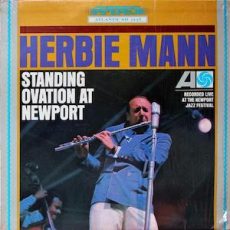
After an exceptionally long week, I was ready to unwind and relax for the evening. So, I began listening to one of Herbie Mann‘s best live performances from the sixties, Standing Ovation at Newport (Atlantic 1445/SD 1445). Three tracks were recorded at the 1965 Newport Jazz Festival, while the fourth is from an earlier date at the Village Gate. The musicians joining the flutist on stage are John Hitchcock and Mark Weinstein on trombone, Dave Pike on vibraphone, Chick Corea on piano, Earl May (tracks: A1, A2, B1), and Ben Tucker (B2) on bass, Bruno Carr on drums, and Carlos “Patato” Valdes on congas. My copy is the 1971 US Stereo reissue.
The set opens with Patato, Dave Pike’s tribute to Carlos Valdes. The rhythm section sets the mood for the ensemble’s festive theme with a lively introduction. Herbie launches the opener energetically; Dave works wonders in the following solo. Carlos answers them with authority next. John and Mike bring the heat in the finale before the octet’s big finish. Stolen Moments by Oliver Nelson begins with the ensemble’s collective introduction, leading to Herbie’s carefree melody. Chick takes charge with a breezy opening statement; next, Herbie goes to work in an enjoyable performance. Dave tickles your ears in the closing chorus before the climax.
Herbie Mann’s Mushi Mushi starts Side Two with a perfect beat for a neighborhood block party. The title’s definition in Japanese means humid and begins with the ensemble’s joyously happy theme. Herbie’s opening solo will put everyone in a festive mood, but the song’s highlight comes with John and Mark’s sensational exchange ahead of the group’s upbeat finale. Herbie introduces the group’s finale, Comin’ Home Baby, by Ben Tucker and Bob Dorough. Ben takes over on bass, with Herbie and Dave as the featured soloists. Both musicians give electrifying performances that bring the crowd to their feet until the song’s upbeat conclusion calls for a well-deserved encore with player introductions.
Buddy Graham and Frank Laico were the recording engineers at The Newport Jazz Festival. Joe Atkinson, Tom Dowd, and Phil Lehle were behind the dials at The Village Gate. The album has a solid soundstage that reflects the enthusiastic energy of both audiences. It’s also a good pressing for a seventies reissue and quiet until the set begins. If you’re in the mood for an outstanding live album with lively performances and tight musicianship, I invite you to check out Standing Ovation at Newport by Herbie Mann on your next record-shopping trip. It’s a wonderful document of two great shows with Herbie at his best that sparkles from start to finish and is a high point in his list of albums!
~ Comin’ Home Baby, Stolen Moments – Source: Wikipedia.org © 2023 by Edward Thomas Carter
More Posts: choice,classic,collectible,collector,flute,history,instrumental,jazz,music
Requisites
Mean What You Say ~ Thad Jones-Pepper Adams Quintet | By Eddie Carter
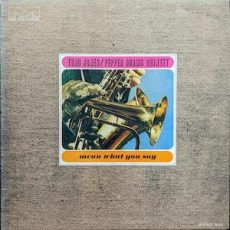
This morning’s album offered for your consideration brings together two of my favorite musicians, Thad Jones and Pepper Adams, for their only quintet release. Mean What You Say (Milestone MSP-9001) is their only collaborative effort and was recorded around the same time as The Thad Jones-Mel Lewis Orchestra album. Both titles hit the stores in 1966. Thad is heard exclusively on flugelhorn, and Pepper is on baritone sax. The supporting cast is a first-class rhythm section: Duke Pearson on piano, Ron Carter on bass, and Mel Lewis on drums. The program consists of six originals and two popular songs. My copy is the original US Stereo pressing.
Side One opens with the title tune, Mean What You Say, the first of four originals by Thad Jones and one of his prettiest tunes from Presenting Thad Jones-Mel Lewis & The Jazz Orchestra. The quintet opens with a wonderful melody. Duke has the first solo and states his case comfortably. Mel makes a brief comment before Thad’s relaxing statement. Pepper provides the song’s happy ending in the closer ahead of the reprise and the ending. H and T Blues begins with the ensemble’s smooth theme. Pepper takes the lead on the opening solo and cooks, then Thad thrives on the following reading. Duke swings with a smooth tone next, and Ron has a brief word before the closing chorus.
The group takes a spirited turn on Wives and Lovers by Burt Bacharach and Hal David with a lively melody. Thad launches the first reading slowly, then picks up speed to a brisk conclusion. Pepper answers him passionately, and Duke serves up a sparkling statement preceding the closing chorus and quick stop. Bossa Nova Ova is a festive tune with an infectious melody that’s sure to have your toes tapping along to the beat. Pepper is up first; his bubbling enthusiasm lets us know we’re in for a treat. Thad takes a gorgeous solo next; then Duke provides a perfect ending in a well-constructed performance into the song’s reprise and climax.
Side Two gets underway with No Refill. It’s a pretty song that flows like a summer breeze, beginning with the quintet’s theme. Ron starts with a beautiful first reading, and then Thad follows with a leisurely statement. Pepper shines brightly like the sun next, and Duke gives an interpretation as sweet as honey ahead of the theme’s reprise. Little Waltz by Ron Carter is a haunting ballad that opens with the front line’s melancholy melody. Pepper opens with a deeply moving interpretation, followed by Thad’s wonderfully warm statement. Duke is equally polite and respectful next, then Ron walks in last with a lovely finale before the theme’s restatement and tender ending.
Up next is Duke Pearson’s Chant, the pianist first performed on Donald Byrd’s A New Perspective. The ensemble starts slowly for their melody, but the pace picks up for the hearty opening statement by Pepper. Thad comes in next and delivers the second solo efficiently, then Duke delivers the knockout with a splendid performance, leading to the reprise and close. Yes Sir, That’s My Baby by Walter Donaldson and Gus Kahn is an old song from the twenties that the quintet has fun with in the opening and closing choruses with a ragtime feel. In between are three great solos by Thad, Pepper, and Duke, who are all having a blast playing.
Orrin Keepnews produced Mean What You Say, and Elvin Campbell was the recording engineer. The sound quality is exceptional, with a stunning soundstage that transports listeners to the studio as the quintet works. It’s a pity that this group didn’t get to record again because it’s a terrific studio session worthy of adorning a spot in any jazz library. Thad and Mel would assemble The Jazz Orchestra and Pepper Adams would become a significant member of the band’s early Solid State albums. Duke Pearson was a wonderful bandleader and composer who made his home on Blue Note, and Ron Carter was a member of the Miles Davis Quintet before branching out on his own in the seventies.
If you’re in the mood for an excellent Hard-Bop album and are a fan of either musician, I invite you to consider Mean What You Say by The Thad Jones-Pepper Adams Quintet for a spot in your library. It’s an absolute gem in their discography and a terrific release I’m sure you’ll enjoy!
~ A New Perspective (Blue Note BLP 4124/BST 84124), Presenting Thad Jones-Mel Lewis and The Jazz Orchestra (Solid State SS 18003) – Source: Discogs.com ~ Wives and Lovers, Yes Sir, That’s My Baby – Source: Wikipedia.org © 2023 by Edward Thomas Carter
More Posts: choice,classic,collectible,collector,flugelhorn,history,instrumental,jazz,music,saxophone

Requisites
The Lost Melody ~ Joe Bonner Quartet | By Eddie Carter
The Joe Bonner Quartet begins this morning’s discussion with their 1987 release, The Lost Melody (SteepleChase Records SCS-1227). It was the pianist’s sixth album for Nils Winther’s label and ninth as a leader. Joe was born in Rocky Mount, North Carolina and attended Virginia State College. His style was Hard-Bop and Modal, and he learned from the musicians he worked with. Bonner’s influences include Art Tatum and McCoy Tyner, and his resume includes playing with several jazz greats. On this date, Bob Rockwell on tenor sax, Jesper Lundgaard on bass, and Jukkis Uotila on drums complete the ensemble. My copy is the original European Stereo album.
You and The Night and The Music, by Arthur Schwartz and Howard Dietz, kicks off Side One at a breakneck pace, with Bob unleashing a jolt of energy in the melody and first solo. Joe maintains the fierce intensity in the following performance; next, Jukkis closes with a short workout into the theme’s brisk ending. Easy Living by Ralph Rainger and Leo Robin begins with Bonner’s gentle introduction, segueing into the group’s lovely theme. Bob opens with an exceptionally beautiful interpretation. Joe continues to cast a spell over the listener in the second solo. Bob returns to add a few more thoughts ahead of a gorgeous climax.
Vibeke, the first of three tunes by Joe Bonner, brings the tempo upward for the ensemble’s medium theme. Rockwell and Bonner effectively demonstrate their excellent playing in the first two statements. Things take an adventurous turn when the saxophonist becomes more exploratory in a second solo before the theme’s restatement. Side Two opens with the title tune. The Lost Melody is a pretty ballad by the pianist that he introduces softly. Bob enriches the opening chorus and song’s opening solo with sensitivity and warmth; Joe comes in next and gets to the song’s heart with an elegantly tender performance leading to the finale.
The Song Is You by Jerome Kern and Oscar Hammerstein II comes from their 1932 musical Music In The Air. The quartet flies out of the gate with a speedy melody. Bob blows blistering notes in the first reading; then Joe is off to the races next. Bob reappears for a rapid exchange with Jukkis, preceding the climax. The album wraps up with Bonner’s Manuella, with the foursome taking it easy on the melody. The leader glides comfortably into the opening statement. Rockwell follows with a bluesy tone in the second reading. Lundgaard keeps the groove flowing in his only interpretation until the group slowly dissolves into nothingness.
Nils Winther produced The Lost Melody, and Flemming Rasmussen was the man behind the dials of this digital recording. The album’s sound quality is excellent, with a wide soundstage and excellent dynamics. It’s also a superb pressing that’s drop-dead quiet. I wasn’t aware of Joe Bonner until this album, but I’m delighted I’ve discovered him and will look for his other releases. If you’re a jazz piano fan like me and are in the mood for Hard-Bop, I invite you to seek out The Lost Melody by The Joe Bonner Quartet on your next record hunt. It’s an enjoyable way to begin your journey into his music and a terrific album that should not be missed for a spot in your library!
~ Easy Living, The Song Is You, You and The Night and The Music – Source: JazzStandards.com ~ Joe Bonner – Source: Wikipedia.org © 2023 by Edward Thomas Carter

More Posts: choice,classic,collectible,collector,history,instrumental,jazz,music,piano
Requisites
Prancin’ ~ Louis Smith Quintet | By Eddie Carter
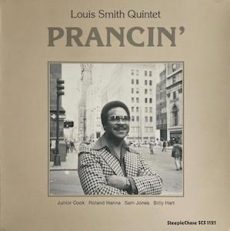
The Louis Smith Quintet provides this morning’s subject with their 1979 album, Prancin’ (SteepleChase Records SCS 1121). It was Smith’s second release for the label and his fourth as a leader. This session also marks a reunion with Junior Cook, who he played with briefly in The Horace Silver Quintet twenty-one years earlier. Their only recorded appearance together is on Blue Lights, Volumes 1 and 2 by Kenny Burrell. Here, Louis Smith is featured on flugelhorn (tracks: A2, B2) and trumpet (A1, A3, B1, B3), alongside Junior Cook on tenor sax, Roland Hanna on piano, Sam Jones on bass and Billy Hart on drums. My copy is the original Danish Stereo album.
One For Nils, Smith’s first of five originals, is a tune written for producer and label founder Nils Winther. The quintet sets the beat in its opening chorus. Louis gets right to the point first; then Junior comes in with a smooth, relaxed reading. Roland feeds the finale with fresh ideas ahead of the theme’s reprise and exit. Chanson De Louise is Smith’s beautiful tribute to his wife, Harriet Louise. Hanna introduces this ballad softly, leading to a delicately tender theme by Smith and Cook. The leader’s opening solo is affectionate and touching; next, Hanna provides serene beauty to a short statement into the ensemble’s gentle ending.
Ryan’s Groove is dedicated to a friend and fellow teaching colleague and takes off from the quintet’s rousing theme. Junior gets things off to a sizzling start; then Louis slices through the second reading like a hot knife through butter. Roland comes in next, followed by Sam’s brisk bass, leading to the climax. The title tune, Prancin’, starts Side Two with Hanna’s introduction segueing into the group’s lively melody. In the opening solo, Cook immediately gets the listener’s attention; then Smith keeps the temperature up in the following statement. Hanna makes the third solo come alive with a nice, happy feeling. Hart closes with a quick exchange between both horns preceding the finish.
I Can’t Get Started by Vernon Duke and Ira Gershwin is one of the timeless jazz standards. Louis is the only horn, and the rhythm section works in perfect symmetry on the opening chorus. The leader’s flugelhorn brings out the song’s lyrical beauty in a gorgeous interpretation that’s the icing on the cake into a gentle conclusion. Fats is Smith’s tribute to trumpeter Theodore “Fats” Navarro. The album’s closer gets off to a good start with the front line’s introduction and melody. Hanna, Cook, Smith, and Jones give four solos that provide a perfect exclamation point to this enjoyable blowing session.
Nils Winther produced Prancin’, and Elvin Campbell was the recording engineer. The album sounds incredible from start to finish. It has a breathtaking soundstage that brings the musicians to your listening room with exceptional clarity. The record is also a great pressing that’s silent until the music starts. Louis was an equally excellent composer, as the tunes here demonstrate. If you’re in the mood for Hard-Bop and Modal Jazz, I offer Prancin’ by The Louis Smith Quintet for your consideration on your next record shopping trip. It’s a terrific album with tight musicianship that hits it out of the park and is an absolute delight!
~ Blue Lights, Volume 1 (Blue Note BLP 1596/BST 81596), Blue Lights, Volume 2 (Blue Note BLP 1597/BST 81597) – Source: Discogs.com ~ I Can’t Get Started – Source: JazzStandards.com © 2023 by Edward Thomas Carter
More Posts: choice,classic,collectible,collector,flugelhorn,history,instrumental,jazz,music