


Requisites
Perdido ~ The JATP All-Stars | By Eddie Carter
This morning’s column features some of the best musicians in jazz. Jazz At The Philharmonic was a series of concerts organized by Norman Granz. From 1944 to 1949, this revolving ensemble of all-stars made one of the greatest impacts on the public since the heyday of Swing. Perdido (VSP-Verve VSP-16/VSPS-16) is a 1966 reissue highlighting two performances by The JATP All-Stars from September 27, 1947. The song debuted on Norman Granz’s Jazz At The Philharmonic, Volume Eight. The personnel is Howard McGhee on trumpet, Bill Harris on trombone, Illinois Jacquet, Flip Phillips on tenor sax, Hank Jones on piano, Ray Brown on bass, and Jo Jones on drums. My copy used in this report is the 1966 US Mono reissue.
Side One gets underway with Perdido, a jazz standard written by Juan Tizol in 1941. Ervin Drake and Hans Lengsfelder added lyrics three years later. In Spanish, Perdido means lost and the song refers to the street in New Orleans. The rhythm section introduces the tune, segueing into the ensemble’s mid-tempo melody. Flip opens the solos at a deceptively relaxed groove, before elevating to a joyous swing that captures the enthusiasm of the crowd. Howard adds drive and excitement to the second reading. Illinois energizes the third statement with an invigorating power supply. Next, Hank has a good deal to say, then Bill captivates the audience in the closing statement with a mix of poise and fire ahead of the ensemble’s finish.
Side Two opens with Mordido, a jaunty tune occupying the second side. The composer is listed as Norman Shrdlu but is Norman Granz. Everyone gets an opportunity to solo, and the song gets underway with the septet’s collective melody. Illinois is up first with jubilant shouts of joy in the opening statement. Howard takes over and romps through the second solo with great passion. Hank takes the reins next and cooks with conviction. Bill follows and has an exceptionally brisk conversation with the rhythm section. Ray takes his bass for a very spirited walk, then Flip provides a scintillating statement of concentrated heat. Jo fuels the finale with energetic brushwork leading to the closing chorus and appreciative applause from the crowd.
Val Valentin engineered the concert’s original recording, and the remastering was done by Dave Greene. The sound quality of this reissue is a little bright with no distortion during the highs, midrange, and low end. However, there’s a little noise during the first few moments of the opening track. Norman Granz was one of the most successful jazz promoters and produced Jazz At The Philharmonic concerts in the US, Canada, Europe, and Japan from 1944 to 1983. He also founded five record labels, Clef, Down Home, Norgran, Pablo, and Verve. The roster of musicians and vocalists he toured with is the definitive Who’s Who in Jazz. Granz also fought for equal rights for the black musicians who worked for him, paying them the same wage as white musicians, and providing the same lodging as well.
I chose Perdido for this week’s discussion to honor one of my favorite tenor saxophonists, Illinois Jacquet whose birthday was recently observed on October 31. This album also suspends in time one of the best jazz concerts by The JATP All-Stars during the forties with an enthusiastic audience at one of the greatest concert venues in the world, Carnegie Hall. While it may not be considered an essential record for your library, I hope I’ve piqued your curiosity enough to check out Perdido by The JATP All-Stars on your next vinyl shopping trip. It’s a great introduction to the Jazz At The Philharmonic concerts, and you’ll be rewarded with some of the best live jazz albums you’ll hear that still swing today!
~ Postscript – The date of the recording on my reissue of Perdido is listed as November 1947. However, when checking further in the booklet of my Japanese box set, Norman Granz’ Jazz At The Philharmonic – 1940s (1981), Perdido was recorded on September 27, 1947. Likewise, Mordido and Endido were also recorded that night. – Source: jazzdisco.org ~ Norman Granz’ Jazz At The Philharmonic, Volume Eight (Mercury Records 11000, 11001, 11002), Norman Granz’ Jazz At The Philharmonic – 1940s (Verve Records UMV 9070, 9071, 9072) – Source: Discogs.com ~ Perdido – Source: JazzStandards.com ~ Norman Granz – Wikipedia.org © 2022 by Edward Thomas Carter

More Posts: choice,classic,collectible,collector,history,instrumental,jazz,music,orchestra
Requisites
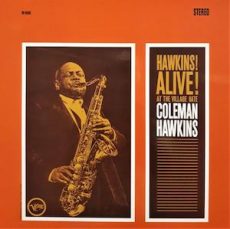
Hawkins! Alive! At The Village Gate ~ Coleman Hawkins | By Eddie Carter
This morning’s choice from the library takes us to The Village Gate for two performances on August 13 and 15, 1962 by The Coleman Hawkins Quartet. Hawkins! Alive! At The Village Gate (Verve Records V-8509/V6-8509) hit the stores in 1963 and is the companion to Hawkins! Eldridge! Hodges! Alive! At The Village Gate. It was also recorded on August 15 with special guests Roy Eldridge and Johnny Hodges. Hawk was one of the greatest musicians during the Swing Era and a commanding presence on the tenor sax throughout his career. Hawk’s joined on stage by Tommy Flanagan on piano, Major Holley on bass, and Ed Locke on drums. My copy used in this report is the 1995 Classic Records US Stereo Audiophile reissue sharing the original catalog number.
Side One opens with All The Things You Are by Jerome Kern and Oscar Hammerstein II. Tommy lays the foundation on a concise introduction leading to Coleman’s melody and lively lead solo possessing one imaginative idea after another. Tommy matches him in agility on a spirited reading. Major follows with a splendid statement leading to Coleman’s return for the theme’s reprise. Hawkins introduces the next tune to the audience, the African American spiritual, Joshua Fit The Battle of Jericho. Hawk takes the lead on the theme, stepping aside for Flanagan who gives a marvelous first solo. Holley makes his presence felt on a strong, personal interpretation vocally accompanying his bass playing. Hawkins puts an exclamation point on the finale preceding the group’s climax.
The quartet starts Side Two with the old favorite, Mack The Knife by Kurt Weill, Bertolt Brecht, and Marc Blitzstein. After the ensemble’s melody presentation, Coleman lets us know we’re in for a treat with a joyful opening solo. Tommy delivers a cheerful interpretation next, then Major gets a chance to shine on a charming reading ahead of the closing chorus. The album ends with a lovely ballad, It’s The Talk of The Town by Jerry Livingston, Al J. Neiburg, and Marty Symes. Hawk opens this standard with a warm, moving melody that continues in the poignant beauty of his opening statement. Flanagan follows with a touching interpretation of his own, and Holley manages the next reading with great delicacy. Hawk reappears and gently takes the group home to appreciative applause from the crowd.
Hawkins! Alive! At The Village Gate was produced by Creed Taylor. Frank Greenwald and Tom Hidley were the men behind the dials of the original recording. This Classic Records reissue was mastered by Bernie Grundman and pressed on 180 grams of audiophile vinyl that’s dead silent until the music starts. The sound quality is breathtaking with a stunning soundstage placing the listener in the Village Gate crowd while the musicians are performing. Coleman Hawkins recorded forty albums as a leader for various labels and appeared as a sideman with some of the elite musicians in jazz. He passed away at age sixty-four from liver disease on May 19, 1969. If you’re a fan of his LPs, the tenor sax, or just love good jazz, I invite you to check out Hawkins! Alive! At The Village Gate the next time you’re out searching for vinyl treasure. Like its companion, it’s a great album that’s perfect to enjoy with your favorite beverage after a long day or week, and a record any jazz aficionado or novice fan can enjoy!
~ Hawkins! Eldridge! Hodges! Alive! At The Village Gate (Verve Records V-8504/V6-8504) – Source: Discogs.com ~ All The Things You Are, It’s The Talk of The Town, Mack The Knife – Source: JazzStandards.com © 2022 by Edward Thomas Carter
More Posts: choice,classic,collectible,collector,history,instrumental,jazz,music,saxophone
Requisites
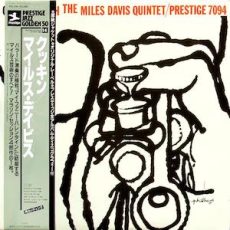
Cookin’ With The Miles Davis Quintet ~ The Miles Davis Quintet | By Eddie Carter
This morning’s choice from the library is the first of four albums Miles Davis recorded to complete his contract obligations with Prestige before moving on to Columbia Records. It took only two days for all four to be made but resulted in Relaxin’ (1958), Workin’ (1959), Steamin’ (1961), and Cookin’ With The Miles Davis Quintet (Prestige PRLP 7094), released in 1957. The group consists of Miles Davis (track: A1) on muted trumpet, (tracks: A2, B1, B2) on trumpet, John Coltrane (tracks: A2, B1, B2) on tenor sax, Red Garland on piano, Paul Chambers on bass, and Philly Joe Jones on drums. My copy used in this report is the 1984 Prestige Jazz Golden 50 Series Japanese Mono reissue (Prestige SMJ-6534M) by Victor Musical Industries, Inc.
Side One begins with the date’s only quartet performance, a gorgeous rendition of My Funny Valentine by Richard Rodgers and Lorenz Hart. Red introduces the standard with a brief introduction, segueing into the trumpeter’s sublimely beautiful, muted melody over the rhythm section’s soft accompaniment. Miles then expresses his thoughts and feelings in a heartwarming performance. Red comes in with a compelling interpretation preceding the trumpet’s sensual beauty at the end. The quintet picks up the pace for an original by Miles, affording everyone solo space, Blues By Five. The trio introduces this tune with an infectious groove. Davis steps up first for a vivacious opening solo, next Coltrane follows with a swinging statement. Garland creates a mood of cheerfulness in the third reading, then Chambers makes a strong impression next. Philly shares an intriguing conversation with Garland who leads the trio to the finish line.
Side Two starts at a fast clip with a speedy rendition of Airegin by Sonny Rollins. John opens with a lively introduction that sets the tone for the ensemble’s vigorous melody. Miles kicks off the solos with fierce intensity, then John fuels the second statement with plenty of heat into the ensemble’s return for the reprise and abrupt stop. Tune-Up by Miles Davis opens with a brisk introduction by Philly ahead of the quintet’s spirited melody. Davis is captivating from the opening notes of his exhilarating reading. Coltrane comes next and surges upward toward the stratosphere. Garland gets a brief moment to shine, then Miles and Philly have a short exchange into the close. The quintet wraps the album with When Lights Are Low by Benny Carter and Spencer Williams. The solo order is Miles, Coltrane, and Garland. All three take their readings at a leisurely pace leading to the group’s exit and a brief word from Miles.
Bob Weinstock supervised the original session of Cookin’ With The Miles Davis Quintet, and Rudy Van Gelder was the recording engineer. The remastering of his tapes by Victor Musical Industries is outstanding, and this reissue is a sonic treat. The sound is spacious, natural, and well-balanced. The vinyl is dead silent until the music starts and each track on this album and its companions were all done in just one take. If you’ve listened to or own any of the other three records in this series, get ready to like Cookin’ With The Miles Davis Quintet just as much. I highly recommend this album to anyone who loves jazz and is a fan of Miles Davis’s work during the fifties. This version of the quintet lasted just two years, but they made an indelible impression by creating music that can be played repeatedly and enjoyed endlessly!
~ Relaxin’ With The Miles Davis Quintet (Prestige PRLP 7129), Steamin’ With The Miles Davis Quintet (Prestige PRLP 7200), Workin’ With The Miles Davis Quintet (Prestige PRLP 7166) – Source: Discogs.com ~ My Funny Valentine – Source: JazzStandards.com © 2022 by Edward Thomas Carter
More Posts: choice,classic,collectible,collector,history,instrumental,jazz,music,trumpet
Requisites
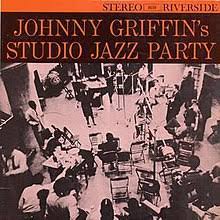
Johnny Griffin’s Studio Jazz Party ~ Johnny Griffin | Eddie Carter
This title from the library brings renown jazzman Johnny Griffin into the spotlight for his only live album as a leader on Riverside Records. Submitted now for your approval is the 1961 LP, Johnny Griffin’s Studio Jazz Party (RLP-9338), recorded before a live audience that was invited to the recording session inside Plaza Sounds Studios. Joining the saxophonist are Dave Burns on trumpet; Norman Simmons on piano; Victor Sproles on bass and Ben Riley on drums. My copy is The Riverside Original Recording Series Japanese Stereo reissue (SMJ-6145), released in 1976 by Victor Musical Industries, Inc.
The performance is hosted by Babs Gonzales who welcomes the crowd to the session on the opening track, Party Time and introduces the first song, Good Bait by Count Basie and Tadd Dameron. This standard was written in 1944, becoming a feature in Basie’s and Dizzy Gillespie’s Orchestra. Griffin and the trio introduce the song slowly, picking up immensely when the melody moves to a medium-fast tempo. Dave sets the pattern for the song on the opening statement with punchy rhythms, crisp lines, and a crackling tone. Simmons strolls into the next reading for an impressive interpretation which shows no strain as each phrase unfolds. Both horns share a few more statements before the ensemble returns for a march-like closing chorus and amusing ending.
The first side ends on an uptempo note with the 1942 popular song, There Will Never Be Another You, written by Harry Warren and Mack Gordon for the musical film Iceland, which premiered that same year. The first recording outside the film was a 78-rpm single (B-11574) by vocalist Joan Merrill recorded for the RCA subsidiary, Bluebird. The trio opens with an abridged introduction, stepping aside as Burns begins the opening chorus and the lead solo ambitiously with a drive which generates its own excitement. Simmons is dazzling on the next reading with choruses which illustrate a mature sound that swings freely. Griffin romps through the next statement of this cheery bouncer with long, flowing lines that are rewarding in every respect to the delight of one fan who urges him on as his solo progresses. Sproles is up next to give a brief statement with an agility that shows he is much more than a solid foundation and sets up the front line to share a few final thoughts before the ensemble brings the song to a close to the delight of the crowd.
Babs opens the second side with a message to the crowd, then the group tears into Dave Burns’ Toe-Tappin” which possesses great speed from the start and the interaction between the front line during the main theme is marvelous. Dave kicks off the lead solo with a passionate presentation which launches its own fireworks in perfect harmony on each note to the equally incandescent foundation by the rhythm section. Norman sustains the ferocious pace with a knockout performance on the next statement, then Johnny charges ahead with enthusiastic phrases on the tune’s longest interpretation which are constructed marvelously. Victor fuels the final reading with pure adrenalin for an exclamation point that will have your fingers popping and your toes tapping to the contagious beat until the quintet’s soft fade finale and audience’s fervent expression of approval.
The LP’s only standard is a classic from The Great American Songbook which Babs introduces in French. You’ve Changed was written in 1942 by Carl Fischer and Bill Carey and has been covered by many vocalists in the jazz and pop genres. The definitive vocal of this popular song, in my opinion, was sung by Billie Holiday on the 1958 Columbia album, Lady In Satin (CL 1157/CS 8048). After a brief introduction by the trio, Burns plays the first half of the opening chorus with Johnny playing the second half to ng, amiable final presentation that leads back to the closing chorus and a gentle ending as the applause fades to mark the end of this very enjoyable Studio Jazz Party.
The original recording was engineered by Ray Fowler, the man behind some of the greatest jazz albums on Riverside and Jazzland with the mastering done by Jack Matthews of Components Corporation for this Japanese LP. Both men have done their job well because the sound is vivid with each instrument providing a realistic soundstage that surrounds your sweet spot, placing you in the best seat to enjoy the performance along with the crowd. The music which makes up the program is equally enjoyable, and I even found Gonzales’ comments throughout the album colorful and its crystal-clear Babs was in a party mood as the set progressed. In short, Johnny Griffin’s Studio Jazz Party is a pleasurable program of music which still stands up well nearly six decades later and at nearly forty-six minutes, offers a benefit to the novice or knowledgeable listener that he or she will get their money’s worth from a performance they can revisit anytime.
~ Good Bait, There Will Never Be Another You, You’ve Changed – Source: JazzStandards.com, Wikipedia.org © 2020 by Edward Thomas Carter
More Posts: choice,classic,collectible,collector,history,instrumental,jazz,music,saxophone
Requisites
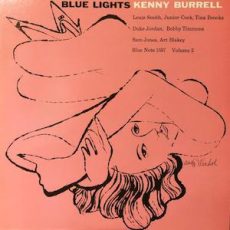
Blue Lights, Volume 2 ~ Kenny Burrell | By Eddie Carter
This morning’s subject offered for your consideration is a recent acquisition to my library. Blue Lights, Volume 2 (Blue Note BLP 1597/BST 81597) by Kenny Burrell was recorded in 1958 but hit the stores in 1961. The guitarist is back to work on this bluesy blowing session with Louis Smith on trumpet, Tina Brooks (tracks: A1, B1), Junior Cook (tracks: A1, B1, B2) on tenor sax, Duke Jordan (tracks: A2, B2), Bobby Timmons (tracks: A1, B1) on piano, Sam Jones on bass, and Art Blakey on drums. My copy used in this report is the Toshiba-EMI Limited Japanese Mono reissue sharing the original catalog number.
Side One opens with Kenny’s Rock Salt, a soothing blues that the septet opens with a relaxing melody. Louis takes the lead solo like a breath of fresh air, then Junior comes in with a solid, irresistible swing. Kenny keeps it going with a few easy-going licks ahead of Tina’s tasty statement next. Bobby’s fingers run smoothly over the keys on the following reading. Sam brings us back to the closing chorus with a brief solo matched by Art’s perfect timekeeping. The Man I Love by George and Ira Gershwin begins as a conversation between Jones and Blakey. Sam states the theme accented by Kenny’s comments, then the bassist gives a fine opening statement. Louis follows with a jubilant solo and Duke turns in a refreshing reading leading to Sam and Art’s closing chorus.
Side Two starts with Chuckin’ by Sam Jones, a lively little tune allowing everyone a solo opportunity. Kenny and the rhythm section establish the dialogue for the melody. Bobby takes the lead this time and moves into a swinging groove. Kenny follows in his footsteps with a fulfilling solo, and Tina also provides a pleasant improvisation. Louis comes in next with a well-constructed statement. Junior and Sam speak effectively in the next two readings, and Art has a conversation with Bobby and the front line into the climax. Burrell’s Phinupi takes off at a fast clip on the ensemble’s theme. Cook and Smith kick off the solos with some spirited blowing. Burrell comes straight to the point on the next reading, then Jordan takes an enthusiastic turn. Blakey gets the last word preceding the ending theme.
Like its companion, Blue Lights, Volume 2 was produced by Alfred Lion and Rudy Van Gelder was again at the controls for the recording. Toshiba-EMI Limited has done another superb job with the remastering of this reissue. The album has an excellent soundstage with all the instruments emerging vividly from your speakers. The vinyl is also silent until the music starts. Kenny’s playing throughout the album is easy on the ears and his bandmates swing along perfectly when soloing. If you’re a fan of straight-ahead jazz guitar, I hope you’ll consider Blue Lights, Volume 2 by Kenny Burrell on your next vinyl treasure hunt. It’s a splendid example of his work and a perfect companion to Volume 1 that’s sure to be a welcome addition to any library!
~ Blue Lights, Volume 1 (Blue Note BLP 1596/BST 81596) – Source: Discogs.com ~ The Man I Love – Source: JazzStandards.com © 2022 by Edward Thomas Carter
More Posts: choice,classic,collectible,collector,guitar,history,instrumental,jazz,music