

Requisites
Sonny’s Crib ~ Sonny Clark | By Eddie Carter
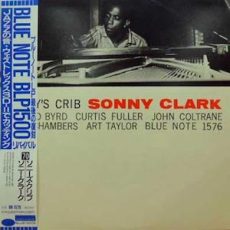
Sonny Clark steps into the spotlight with his third LP as a leader, Sonny’s Crib (Blue Note BLP 1576/BST 81576), released in 1957. He was considered the label’s house pianist appearing on many albums with some incredible musicians. On this date, he heads a stellar sextet of heavy hitters; Donald Byrd on trumpet; Curtis Fuller on trombone; John Coltrane on tenor sax; Paul Chambers on bass; and Art Taylor on drums. My copy used in this report is the 1990 Toshiba-EMI Limited Japanese Mono reissue (Blue Note BLP 1576 – BN 1576).
Side One starts with a rapid burner; the 1929 show tune With a Song In My Heart by Richard Rodgers and Lorenz Hart. The sextet takes off on a brisk run through the melody stepping aside for Byrd who gives an electrifying first solo. Coltrane emerges with a vengeance delivering passionate fire at a high velocity on the next reading. Fuller responds with a robust, resonant tone releasing plenty of energy during his turn. Afterward, Clark offers an exhilarating reading that cooks and swings into the climax.
Speak Low by Kurt Weill and Ogden Nash is a popular song from 1943 that starts at mid-tempo. John takes the lead on the Latin-flavored melody with the ensemble manufacturing a firm foundation behind him. He continues with a fervent opening statement that heightens the trio’s flawless accompaniment. Curtis and Donald share the next reading; both men bring out the best in each other with two presentations showcasing their technical chops. Sonny steps in last, summing up the song with a captivating solo before the close. Come Rain or Come Shine by Harold Arlen and Johnny Mercer brings the first side to a close as a beautiful slow-tempo ballad. Fuller opens the melody with a simple statement that’s seductively tender. Clark guides his way sensuously through the next reading presenting an ardently touching interpretation. Coltrane follows with a beautifully constructed, elegant reading and Byrd takes the ensemble home on the ending theme into a gentle climax.
The final two tracks are by the leader Clark and occupy Side Two. Sonny’s Crib is a blues with everyone laid-back and taking it easy on the carefree melody. John goes first swinging expressively with rhythmic verses that are enjoyable listening; Curtis comes in next also contributing some fine solo work. Donald takes the next turn, making his mark with an easy swing that’s cheerfully bright. Sonny is artfully tasteful on the next solo with nimble piano lines that affirm his capability as a great interpreter of Hard-Bop. Paul cuts into the final reading with an exceptionally articulate statement that says plenty about the ensemble’s exit.
Sonny’s News For Lulu closes out the album giving everyone a solo opportunity except Art. The song opens with a brief introduction by the trio followed by a collective midtempo melody presentation and the solo order is piano, trumpet, tenor sax, trombone, and bass. The leader’s opening statement shows his rhythmic vitality on spirited lines that move freely and confidently. Donald reciprocates with a happy, infectious groove on the next solo that shows the workings of a very creative mind. John comes in next, infusing his performance with an energetic effervescence that’s bold, and assertive. Curtis sparkles on the fourth reading with a flow of musical ideas that are brimming with vitality. The finale is a delectable dish served up by Paul anchored by just Art’s tranquil brushwork that swings very nicely into the sextet’s closing chorus and the album’s climax concluding an enjoyable album.
The original recording by Rudy Van Gelder has been lovingly remastered by Toshiba-EMI Limited with a superb soundstage that surrounds your listening spot as if you’re in the studio with the musicians. In addition to Sonny’s Crib, Clark recorded eight more albums for Blue Note as a leader and with many other stars on the label as a sideman. He passed away on January 13, 1963, at the age of thirty-one from a heroin overdose in New York City although the official cause was listed as a heart attack. On this album, Clark and his colleagues leave a lasting impression on the listener through their outstanding interplay together that makes the music come alive. If you’re seeking some Hard-Bop on your next vinyl hunt, I offer for your consideration, Sonny’s Crib by Sonny Clark. It’s an excellent album of good tunes with great solos by six remarkable musicians who together, make highly delectable listening that should appeal to any jazz collector who’s also a fan of jazz piano!
~ Come Rain or Come Shine, Speak Low – Source: JazzStandards.com ~ Sonny Clark, With a Song In My Heart – Source: Wikipedia.org © 2022 by Edward Thomas Carter

More Posts: choice,classic,collectible,collector,history,instrumental,jazz,music,piano
Requisites
Something For Lester ~ Ray Brown | Carl Anthony
This week I am standing in for our regular Requisites host and writer Eddie Carter, who is on an anniversary vacation. He will return next Sunday with another prolific review of an album for your collection.
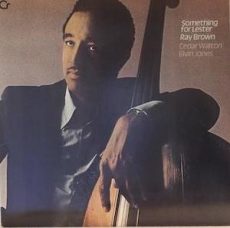
This week I have selected Something for Lester, an album by bassist Ray Brown that was recorded on June 22, 23 & 24 1977 at Contemporary’s Studio in Los Angeles, California. The session was recorded in the bop and cool jazz genres and was released on the Contemporary label the following year.
The producers on the sessions were John Koenig and Lester Koenig. The photograph was taken by Bret Lopez, the design was provided by George Kershaw, with liner notes by Leonard Feather and the recording and sound was performed by the Koenig brothers and Roy DuNann.
Of the seven compositions presented here by the trio, four are classics, two are by Cedar Walton and one was composed by Brown. The conversation between the players is easy and comfortable as they navigate through each song. If you enjoy small group sessions you’ll find these consummate musicians will deliver what you like.
Tracks | 41:10
- Ojos de Rojo (Cedar Walton) – 5:16
- Slippery – 7:27 (Ray Brown)
- Something in Common (Walton) – 4:50
- Love Walked In (George Gershwin, Ira Gershwin) – 5:25
- Georgia on My Mind (Hoagy Carmichael, Stuart Gorrell) – 7:11
- Little Girl Blue (Richard Rodgers, Lorenz Hart) – 6:17
- Sister Sadie (Horace Silver) – 4:54
- Ray Brown – bass
- Cedar Walton – piano
- Elvin Jones – drums
More Posts: bass,choice,classic,collectible,collector,history,instrumental,jazz,music
Requisites
A Date With Jimmy Smith, Volume Two ~ Jimmy Smith | By Eddie Carter
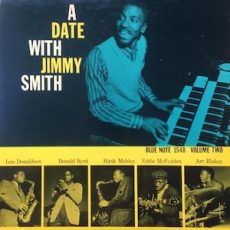
This morning’s subject brings us back to The Manhattan Towers Hotel Ballroom for A Date With Jimmy Smith, Volume Two (Blue Note BLP 1548/BST 81548). Jimmy Smith was an accomplished pianist who began playing the organ at the age of twenty-eight. He made the instrument popular for jazz improvisation and would lead me to discover the other organists who followed him. Joining the organist again are Donald Byrd (tracks: A1, B2) on trumpet, Lou Donaldson (tracks: A1, B1, B2) on alto sax, Hank Mobley (tracks: A1, B2) on tenor sax, Eddie McFadden (tracks: A1, B2) on guitar, and Art Blakey (tracks: A1, B2) on drums. The copy used in this report is a friend’s 1984 Toshiba-EMI Limited Japanese Mono reissue sharing the original catalog number.
Side One is occupied by an extended version of I Let A Song Go Out Of My Heart by Duke Ellington, Irving Mills, Henry Nemo, and John Redmond. The rhythm section swings easily into the melody stated by Lou. Donald sets the pace with a relaxed attitude on the first solo, next Hank gives a cheerfully buoyant reading. Eddie follows with a simple, bluesy statement, then Lou brings a good deal of enthusiasm to his interpretation. Jimmy is just a pleasure in the finale leading to Lou’s closing chorus and Jimmy’s ending. Side Two opens with I’m Getting Sentimental Over You by George Bassman and Ned Washington. This is a duet by Donaldson and Smith who embrace the jazz standard with elegant simplicity on the melody and during two touching interpretations before a pretty finale.
Hank Mobley’s Groovy Date is a blowing session that coaxes everyone to great heights and allows each member a chance to shine. Lou wastes no time getting down to business on the first solo, then Donald takes us on an eventful ride. Hank makes an indelible imprint on the third interpretation. Eddie responds with a spirited contribution and Jimmy offers a zestful joy on the next reading. Art gets the last word in a lively conversation with the front line into the close. A Date With Jimmy Smith, Volume Two was produced by Alfred Lion and the man behind the dials was Rudy Van Gelder. This Toshiba-EMI reissue is a wonderful recording with an impressive soundstage that brings the group to your listening room with superb definition. If you’re a fan of jazz organ, make A Date With Jimmy Smith, Volume Two on your next vinyl hunt. Like its companion, it’s a solid album with a superb ensemble that gives a glimpse into what was to come from Jimmy Smith in the next few years!
~ A Date With Jimmy Smith, Volume One (Blue Note BLP 1547/BST 81547) – Source: Discogs.com ~ I Let a Song Go Out of My Heart, I’m Getting Sentimental Over You – Source: JazzStandards.com © 2022 by Edward Thomas Carter
More Posts: choice,classic,collectible,collector,history,instrumental,jazz,music,organ
Requisites
Motor City Scene ~ Thad Jones Sextet | By Eddie Carter
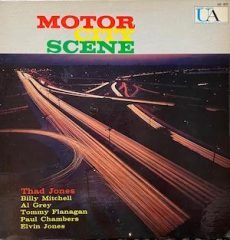
This morning’s record submitted for your consideration is Motor City Scene (United Artists UAL 4025/UAS 5025) by The Thad Jones Sextet. It hit the stores in 1959 and consists of tunes composed by the leader. Thad comes from a musical family; both his brothers were excellent musicians. His older brother Hank was a consummate pianist, and his younger brother Elvin was a dynamic drummer whose birthday was recently observed on September 9. The ensemble is Thad Jones on cornet (tracks: A1, B1, B2), and flugelhorn (track: A2), Al Grey on trombone, Billy Mitchell on tenor sax, Tommy Flanagan on piano, Paul Chambers on bass, and Elvin Jones on drums. The copy used in this report is a friend’s US original Mono deep groove album.
Side One gets underway with Let’s Play One, an easy-going blues that Tommy opens with a brief introduction that evolves into the sextet’s collective theme. Tommy starts the solos with a relaxing presentation, next Al comes in for a laid-back statement. Billy steps up next to give a marvelous reading, then Thad contributes a very pleasant presentation. Paul walks leisurely into the finale preceding the ensemble’s finish. Minor on Top picks up the pace gradually on the group’s lightly-swinging melody. Thad leads off with a charming flugelhorn statement, then Billy hits a relaxed groove on the next solo. Paul constructs a delicious bass performance next. Al delivers the next reading with absolute assurance, followed by Tommy and Elvin who share an attractive exchange into the closing chorus.
Like Old Times takes the tempo up a few notches to start Side Two with the front line leading a brisk melody. Billy takes the lead this time with a swinging solo. Tommy says his piece next in a rollicking reading. Al romps through a lively presentation next. Elvin makes a brief appearance, followed by Paul who puts together a passionate performance. Thad gets the last word and cooks on muted cornet leading to the sextet’s ending. No Refill begins with a soft introduction by Elvin segueing into the sextet’s soothing opening chorus. Thad’s first solo on muted cornet is restrained in its mood of gentle warmth and graciousness. Billy handles the second statement discreetly, and Tommy adds the exclamation point with a thoughtful performance ahead of the sextet’s ending theme and slowly fades into silence.
Motor City Scene was produced by Tom Wilson, and the man behind the dials was Lewis Merritt. I was impressed with the sound quality of the recording. The album has a superb soundstage with vivid sonics. The instruments emerge from your speakers as if the sextet’s playing in front of your favorite chair and the record is quiet for its age. Thad and his colleagues are in excellent form throughout, and this album highlights Thad’s ability as a composer. If you’re a Hard-Bop fan, I invite you to check out Motor City Scene by The Thad Jones Sextet, the next time you’re out shopping for records. It may be hard to find, as the few LPs I’ve seen online are already at collector’s prices, but your diligence will be rewarded with a great album for your library that’s highly recommended!
© 2022 by Edward Thomas Carter
More Posts: choice,classic,collectible,collector,cornet,history,instrumental,jazz,music
Requisites
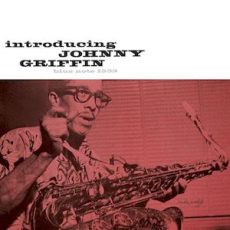
Introducing Johnny Griffin ~ Johnny Griffin | By Eddie Carter
Submitted for your approval this morning is the 1956 debut by tenor saxophonist, Johnny Griffin. Introducing Johnny Griffin aka Chicago Calling (Blue Note BLP 1533/BST 81533) is the first of three releases he made as a leader for Alfred Lion’s label. The other two are A Blowing Session (1957) and The Congregation (1958). Johnny was nicknamed The Little Giant for his small size, but he possessed a robust sound and dazzling technique that kept him recording and in demand as a leader and sideman for over sixty years. For his first album, Griff’s working with three of the best musicians in the business, Wynton Kelly on piano, Curly Russell on bass, and Max Roach on drums. My copy used in this report is the 2002 Classic Records Mono audiophile deep groove reissue sharing the original catalog number.
Side One opens briskly with Mil Dew, the first of three tunes by Johnny Griffin. Max begins the fireworks with a brief introduction. Johnny grips you right away from a fast-moving opening chorus and a wild ride on the first solo. Wynton stokes the fire with fierce heat next, then Max aggressively exchanges notes with Griff ahead of Curly’s vigorous comment during the closing chorus. Chicago Calling, also by the leader, is listed as the album’s title tune and the quintet begins the melody in a relaxed groove. Johnny eases into the opening statement leisurely, then takes the tempo up for the remainder of his reading. Wynton meets the challenge with a nimble solo that’s absolutely stunning; next Griff returns with a delightfully carefree interpretation leading to the climax.
These Foolish Things by Harry Link, Eric Maschwitz (using the pseudonym Holt Marvell), and Jack Strachey made its debut in the British musical comedy, Spread It Abroad (1936). Wynton introduces the song tenderly, segueing into a heart-warming opening chorus and lead solo by Griff. Kelly delivers a delicate interpretation that’s beautifully constructed to match Russell and Roach’s sultry support preceding Johnny’s beautiful finale. The Boy Next Door by Ralph Blaine and Hugh Martin begins with a light-hearted theme by the quartet. Griff opens the solos expressing great joy on the first interpretation. Wynton steps up next with a very satisfying performance. Griff swings soulfully for a few more verses before the foursome reassembles for the ending.
Side Two starts with the group inviting us to get comfortable and enjoy a breezy blues by Griffin that’s Nice and Easy. The saxophonist takes the listener to a notably relaxed atmosphere on the melody and opening statement. Wynton offers a carefree interpretation that’s just right, followed by Curly who gives a delightfully mellow performance into the ensemble’s finale. It’s All Right With Me by Cole Porter takes off at a blistering pace from the quartet’s opening chorus into Griffin’s ferociously speedy first flight that ascends to a peak of intensity. Kelly continues soaring into the stratosphere with equally explosive verses, then Griff comes back with a few final fiery choruses leading to the melody’s reprise and abrupt conclusion.
Lover Man by Jimmy Davis, Roger Ramirez, and James Sherman opens with a sensitive introduction by Kelly that blossoms into Johnny’s hauntingly beautiful melody. Griff swings gently on the opening solo, then Wynton enhances the song’s intimacy with a lovely reading. Johnny adds a few tenderly expressed thoughts into the close.
Introducing Johnny Griffin was remastered by Bernie Grundman who knocks it out of the park with a breathtaking soundstage from Rudy Van Gelder’s original tapes. The highs sparkle, the midrange is clean and crisp, and the bass is deep. The album is pressed on 200 grams of Quiex SV-P Super Vinyl and is quiet until the music starts. If you’re a fan of tenor sax or are new to the music of Johnny Griffin, I highly recommend Introducing Johnny Griffin for a spot in your library. It’s a great album for anyone who loves jazz that gets better with repeated listening!
~ A Blowing Session (Blue Note BLP 1559), The Congregation (Blue Note BLP 1580) – Source: Discogs.com ~ These Foolish Things, Lover Man – Source: JazzStandards.com ~ The Boy Next Door – Source: Wikipedia.org © 2022 by Edward Thomas Carter
More Posts: choice,classic,collectible,collector,history,instrumental,jazz,music,saxophone