

Requisites
Swiss Nights, Vol. 2 ~ Dexter Gordon Quartet | By Eddie Carter
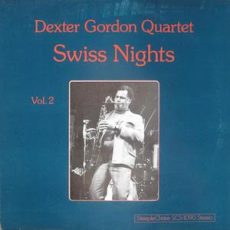
I begin September with a return to The Zürich Jazz Festival ’75 for this morning’s discussion of Swiss Nights, Vol. 2 (SteepleChase Records SCS-1090) by The Dexter Gordon Quartet. The tenor saxophonist’s back on stage with Kenny Drew on piano, Niels-Henning Ørsted Pedersen on bass, and Alex Riel on drums. My copy used in this report is the 1978 SteepleChase Records German Stereo Audiophile release.
Dexter opens the set introducing There’s No Greater Love by Isham Jones and Marty Symes. The quartet launches into an exciting melody, stepping aside for Dexter who leads off the first solo vigorously. Kenny shows off his creative powers in the second reading, next Niels-Henning walks the bass enthusiastically. Dexter trades thoughts with Alex leading to his final solo ahead of the reprise and finish.
Sticky Wicket, the first of two tunes by Dexter eases the throttle back to a comfortable pace on the foursome’s opening chorus. Gordon leads off the solos with a relaxed statement. Drew continues cruising to a carefree beat, then Pedersen takes a laid-back stroll with his bass. Gordon and Riel share a brief exchange preceding the reprise and the audience’s approval.
Side Two opens to a timeless standard from The Great American Songbook, Darn That Dream by Jimmy Van Heusen and Eddie Lange. Dexter and the trio introduce the song with a delicately gentle theme. Dexter’s tenor sax is the epitome of graceful elegance on the opening solo, next Kenny compliments him with a mellow reading of soft warmth. Niels-Henning and Alex hold everything together as Dexter returns for the climax.
Montmartre is Dexter Gordon’s tribute to the Copenhagen jazz club and is off to the races from the foursome’s opening theme. The leader kicks off the solos with a robust performance that gains momentum as it unfolds. Drew has a very good time on the second statement, next Gordon and Riel exchange a few ideas, then the drummer gets the spotlight briefly. The quartet returns to take the song out with an abrupt finish, followed by the group’s theme and musician introductions to great applause.
Nils Winther produced Swiss Nights, Vol. 2, and Helmuth Kolbe recorded and mixed the album. The soundstage is excellent, placing the listener in a front row seat to enjoy the quartet at work. The record is pressed on 180 grams of audiophile vinyl and is very quiet until the music starts. Like its two companions, Swiss Nights, Vol. 2 is a great live album by The Dexter Gordon Quartet with tight musicianship and outstanding sound. If you’re a fan of Dexter Gordon, it’s definitely worth adding to your library!
~ Swiss Nights, Vol. 1 (SteepleChase Records SCS-1050), Swiss Nights, Vol. 3 (SteepleChase Records SCS-1110) – Source: Discogs.com ~ There’s No Greater Love, Darn That Dream – Source: JazzStandards.com © 2022 by Edward Thomas Carter

More Posts: choice,classic,collectible,collector,history,instrumental,jazz,music,saxophone
Requisites
Saturday Night at The Montmartre ~ Ben Webster | By Eddie Carter
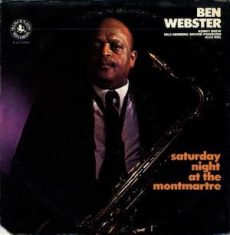
This morning’s subject submitted for your consideration is a delightful live date by tenor saxophonist, Ben Webster. Saturday Night at The Montmartre (Black Lion Records BLP 30155) is the first of three LPs chronicling his quartet’s January 30 performance at the renowned club shortly after Ben moved to Europe. Midnight at The Montmartre and Sunday Morning at The Montmartre (1977) complete the evening’s concert. He’s joined on stage by Kenny Drew on piano, Niels-Henning Ørsted Pedersen on bass, and Alex Riel on drums. My copy used in this report is the 1974 US Stereo release (Black Lion Records BL-302).
The rhythm section begins the evening with a bit of relaxed cooking on the introduction to Our Love Is Here To Stay by George and Ira Gershwin. Ben takes the lead on the theme and swings effortlessly on the first interpretation. Kenny and Niels-Henning are completely at ease in the next two readings. Alex and Ben engage in a delightful conversation preceding the theme’s reprise and finish. The pace slows down for a gorgeous rendition of My Romance by Richard Rodgers and Lorenz Hart. A brief introduction by Kenny opens the way for Ben’s richly toned, emotional expression on the melody. The pianist starts the solos with an enchanting presentation, next Webster gives an incredibly beautiful performance ahead of the song ending quietly.
Blues For Herluf is Ben Webster’s uptempo tribute to Jazzhus Montmartre’s manager, Herluf Kamp-Larsen. Kenny kicks off this tune with a brief introduction that evolves into the foursome’s invigorating theme. Ben opens with a hard-blowing swinger. Kenny tells a vigorously spirited story on the second solo. Niels-Henning goes for a short walk in the third spot and Alex’s drums dance briefly with the leader into the finale. The quartet slows the tempo again to begin Side Two with a very pretty song, Londonderry Air. The trio begins their introduction gracefully, then Webster touches a soft spot in everyone’s heart on the theme and provides a wonderful feeling of peaceful serenity as the song’s only soloist into a lovely finale.
Mack The Knife by Kurt Weill, Mark Blitzstein, and Bertolt Brecht first appeared in The Threepenny Opera (1928). The rhythm section introduces this song at midtempo leading to the collective melody led by Ben who also sparkles on the first reading. Kenny and Niels-Henning contribute something fun on the next two solos. Alex and Ben exchange a few riffs before the conclusion. I Can’t Get Started by Vernon Duke and Ira Gershwin is one of the most beautiful standards in The Great American Songbook. The trio introduces the song leading to a sincerely poignant theme by Webster. Drew speaks to the listener intimately in the opening statement. Webster’s passion for ballad interpretation is abundantly evident in a delicately pretty reading perfectly matched to the trio’s sensuous support.
The Theme by Miles Davis brings this set to a close in rapid fashion. The foursome launches the theme collectively, next Ben, Kenny, Niels-Henning, and Alex give four quick statements ahead of the melody’s reprise and the audience’s approval. Saturday Night at The Montmartre and its companions were produced by Alan Bates, and Birger Svan was the recording engineer. The album’s sound quality is amazing with a breathtaking soundstage placing the listener in a seat among the audience as the quartet performs. If you’re a fan of Ben Webster and like your jazz swinging and soulful, I invite you to check out Saturday Night at The Montmartre on your next search for vinyl treasure. It sets the mood for a great evening of jazz that’s perfect to enjoy with the lights dimmed and your favorite drink as you listen!
~ Midnight at The Montmartre (Black Lion Records BLP 30173), Sunday Morning at The Montmartre (Black Lion Records BLP 30182) – Source: Discogs.com ~ I Can’t Get Started, Mack The Knife, My Romance, Our Love Is Here To Stay – Source: JazzStandards.com © 2022 by Edward Thomas Carter
More Posts: choice,classic,collectible,collector,history,instrumental,jazz,music,saxophone
Requisites
Blue Train ~ John Coltrane | By Eddie Carter
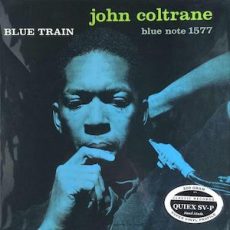
John Coltrane steps into the spotlight for this morning’s discussion with his only release for Alfred Lion’s label, Blue Train (Blue Note BLP 1577/BST 81577). It was recorded in 1957 and released a year later, has stood the test of time, and is considered one of the essential records to own in the tenor saxophonist’s discography. Blue Train is his third album as a leader and also highlights his compositions, he wrote four of the five selections and personally picked the musicians who accompany him on this date. Lee Morgan on trumpet, Curtis Fuller on trombone, Kenny Drew on piano, Paul Chambers on bass, and “Philly” Joe Jones on drums round out the sextet. My copy used in this report is the Classic Records Mono audiophile reissue sharing the original catalog number.
Side One leaves the station with Blue Train, a mid tempo blues that the sextet sets in motion to an easy-going beat. John soars effortlessly through the rhythm section in the first solo. Lee follows with a happy, relaxed groove, then Curtis gives a perfectly crafted, full-toned reading. Kenny shapes the next statement with some bluesy dialogue and Paul covers plenty of ground in the finale preceding the ensemble’s reprise and climax. Moment’s Notice is next and it’s ablaze from the start of the melody. Coltrane takes the lead with a pulse-quickening performance. Fuller comes in for an energetic excursion next, then Morgan swings vibrantly into the third reading. Chambers goes for a short walk and Drew gets a scintillating presentation on the closer leading to the ending theme.
Locomotion speeds down the track to begin Side Two and the sextet gives the uptempo melody a workout. John takes a swift run on the opening solo; next Curtis jumps into the second reading aggressively, then Lee follows with a stunning showpiece. Kenny raises the energy level of the following interpretation. Philly closes the proceedings on a few fiery phrases before the sextet takes it out. I’m Old Fashioned by Jerome Kern and Johnny Mercer starts with a tender melody by Coltrane who continues caressing the first solo with sultry notes. Fuller brings out breathtaking beauty in the next statement. Drew compliments them with sincere elegance subtly supported by Chambers and Jones. Morgan closes with a great delicacy that’s beautifully executed.
The sextet steps back into high gear on Lazy Bird with a nimble opening chorus. Lee leads the charge with electric energy. Curtis follows with fiery passion on the second statement, then John swings with fierce intensity. Kenny tears into the next reading enthusiastically, next Paul does a brief bit of bass walking. “Philly” adds a fitting closer with an exhilarating drum solo ahead of the ensemble’s finish. Blue Train was originally produced by Alfred Lion, and Rudy Van Gelder was the recording engineer. Bernie Grundman mastered the album from the original analog tapes. This reissue was pressed on 200-gram Quiex SV-P audiophile vinyl. The sound quality is sensational with a superb soundstage that’s a sonic treat, and the record is absolutely quiet until the music starts. If you like jazz, I can’t think of a better choice for your library than Blue Train by John Coltrane. The album is a bona fide classic that you can enjoy endlessly and a must-have for any jazz fan!
~ I’m Old Fashioned – Source: JazzStandards.com © 2022 by Edward Thomas Carter
More Posts: choice,classic,collectible,collector,history,instrumental,jazz,music,saxophone

Requisites
Cherry ~ Stanley Turrentine With Milt Jackson | By Eddie Carter
Two of my favorite musicians are the subject of this morning’s discussion, Stanley Turrentine With Milt Jackson. Cherry (CTI Records CTI 6017) hit the stores in 1972 and was Turrentine’s fourth album on CTI. On this date, the tenor saxophonist’s leading an all-star sextet. Milt Jackson on vibes, Bob James on piano (track: A2), electric piano (tracks: A1, A3, B1 to B3), Cornell Dupree on guitar, Ron Carter on bass, and Bill Cobham on drums. My copy used in this report is the original US Stereo release.
Side One starts with the rhythm section’s spirited introduction to Speedball by Lee Morgan. The ensemble’s theme leads off this happy swinger, then Stanley cruises into the opening solo. Milt gets into a bluesy groove next, and Bill exchanges the finale with Stanley, Milt, and Bob ahead of the climax.
I Remember You by Johnny Mercer and Victor Schertzinger is a beautiful 1941 ballad that was first heard in the film, The Fleet’s In, a year later. Milt and the rhythm section introduce the song discreetly, segueing into a gentle opening chorus. Jackson is up first with a tender reading, then Turrentine gives an elegant presentation leading to a serene ending. The Revs by Milt Jackson swings at a leisurely tempo with the sextet in unison during the melody. Stanley steers a nice course for everyone with a carefree, bouncy first solo. Milt follows with melodic lines that emerge effortlessly from his vibes. Bob and Cornell close out the statements with two lightly swinging readings preceding the sextet taking the song out.
Side Two starts with Sister Sanctified by Weldon Irvine Jr who also arranged this tune. The sextet starts this swinging jazz service with a funky groove on the melody that’s sure to get the listener snapping their fingers and tapping their toes. Turrentine sets the tone on the opening statement with a soulful sermon. Jackson preaches the second solo rocking all the way. Dupree hits the sweet spot on the next reading and Cobham makes a brief comment leading to the theme’s reprise and fade-out. Cherry by Ray Gilbert and Don Redman begins with the vibist setting down a subtle theme at a slow tempo. Stanley opens with a wonderful expression of incredible beauty, then Milt responds with a delicately pretty performance moving towards a gorgeous finale.
Weldon Irvine Jr. also composed and arranged the album’s closer, Introspective. This is a mid tempo jaunt of pure pleasure leading off with Turrentine’s cheerful theme and lighthearted opening solo. Jackson comes in next for a delightful interpretation. James follows with a fine reading and Cobham swings the door shut with his brushwork. Cherry was produced by Creed Taylor and the man behind the dials was Rudy Van Gelder. This is a great recording and an excellent vinyl pressing for a 1970s album with a splendid soundstage. The instruments come through your speakers vividly and surround your sweet spot with music that’s sure to make you smile. Both Stanley Turrentine and Milt Jackson are a joy to hear together with a wonderful supporting cast. If you’re a fan of either musician, I recommend and invite you to check out Cherry on your next vinyl hunt. It’s a great album that still stands up fifty years later and your ears will thank you for adding it to your library!
~ I Remember You – Source: JazzStandards.com © 2022 by Edward Thomas Carter
More Posts: choice,classic,collectible,collector,history,instrumental,jazz,music,saxophone,vibraphone
Requisites
Ready For Freddie ~ Freddie Hubbard | By Eddie Carter
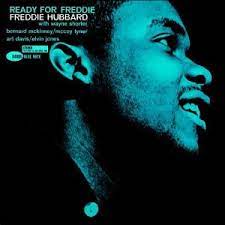
Freddie Hubbard steps into the spotlight of this morning’s discussion with an excellent 1962 blowing session titled Ready For Freddie (Blue Note BLP 4085/BST 84085). This choice from the library is the trumpeter’s fourth album as a leader and he’s working with a stellar supporting cast. Bernard McKinney on euphonium, Wayne Shorter on tenor sax, McCoy Tyner on piano, Art Davis on bass, and Elvin Jones on drums complete the sextet. For those who don’t know about the euphonium, it’s a medium-sized, tenor-voiced brass instrument that’s usually featured in a brass band and is a member of the tuba family. My copy used in this report is the 1995 Blue Note Connoisseur Series US Stereo Audiophile reissue (B1-32094).
Arietis by Freddie Hubbard starts Side One with the sextet grabbing the listener’s attention from the opening notes of their swinging melody. Freddie takes us on an exuberant joyride in the opening solo. Wayne continues surging ahead on the second statement, then Bernard digs into the third reading with agility. McCoy soars into a satisfying summation ahead of the song’s finale. Weaver of Dreams by Jack Elliot and Victor Young begins at a deceptively slow tempo with McKinney and Shorter’s introduction segueing into Hubbard’s sensitive theme. The pace picks up for a beautifully delicate opening statement by Freddie. McCoy comes in next for an affectionate interpretation leading to Hubbard’s haunting climax.
Wayne Shorter’s Marie Antoinette affords everyone except Elvin a solo opportunity beginning with the group establishing a relaxed mood in the opening chorus. Wayne begins with an easy-going toe-tapper. Freddie infuses an optimistic spirit into the second solo. Bernard moves things along at a comfortable pace, then McCoy gives us a few compelling moments. Art adds to the fun with a few airy bass notes leading to the closing chorus that dissolves into nothingness. Birdlike by Freddie Hubbard begins Side Two at a brisk beat with the group’s collective melody. Hubbard gets things going first, then Shorter puts together a mesmerizing performance. McKinney has a few attractive lines in the third spot. Tyner and Davis keep the energy going with two quick readings into the quintet’s finale.
Freddie Hubbard’s Crisis opens with the trio’s simple introduction segueing into a soothing melody. Freddie, Wayne, Bernard, and McCoy all make their point in four enchanting interpretations. Elvin offers an impressive climax into the sextet’s reprise and fadeout. Ready For Freddie was produced by Alfred Lion and Rudy Van Gelder was the recording engineer. The reissue producer is Michael Cuscuna and Larry Walsh did the mastering from the original analog tapes. The sound quality is excellent with a spacious soundstage and the instruments come through your speakers vibrantly as if the musicians are playing in front of you. The record is pressed on 180-gram Virgin Vinyl and is silent until the music starts. If you’re in the mood for an excellent Hard-Bop album, I invite you to check out Ready For Freddie by Freddie Hubbard. It’s sure to occupy a proud place in any novice or seasoned jazz fan’s library for years to come!
~ Euphonium – Source: Wikipedia.org ~ © 2022 by Edward Thomas Carter
More Posts: choice,classic,collectible,collector,history,instrumental,jazz,music,trumpet