

Requisites
The Cannonball Adderley Quintet at The Lighthouse | By Eddie Carter
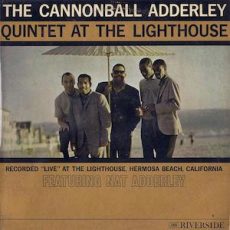
One of the things I’ve always loved about alto saxophonist Cannonball Adderley was his uncanny rapport with an audience during the group’s live performances. Those who were in attendance could feel they were about to hear something special. This morning’s choice from the library is a 1960 album, The Cannonball Adderley Quintet at The Lighthouse (Riverside RLP 344/RLP 9344). It’s the ensemble’s second live album following their successful date in San Francisco a year earlier. Cannonball’s joined on stage by Nat Adderley on cornet, Victor Feldman on piano, Sam Jones on bass, and Louis Hayes on drums. My copy used in this report is the original US deep groove Mono release.
Side One opens with Cannonball’s Sack O’ Woe, a catchy little number that starts this jazz party on the quintet’s infectious theme. The leader takes the first bite of this juicy tune. Nat comes in next, clicking on all cylinders. Victor serves up a solidly swinging solo, then Sam gets into a soulful groove leading to the reprise and fadeout. Big P by Jimmy Heath is dedicated to his big brother, Percy. After Cannon’s introduction, the quintet gets busy with the front line leading the charge on the melody. Cannonball lights a fuse of creative inspiration on the lead solo, then Nat works his magic on the second statement. Victor follows with a reading that’s just plain fun, then the front line speaks in succession ahead of the ensemble’s exit.
The first side finale is Blue Daniel, a pretty waltz by trombonist Frank Rosolino that comes to life with the group’s beautiful theme in unison. Cannonball begins with a charming interpretation of graceful elegance. Nat responds with a wonderful feeling of peaceful serenity. Victor delivers a delicately gentle finale before the ensemble reappears for the ending. Side Two begins on an upbeat note with a tune from the pen of Victor Feldman, Azule Serape. The rhythm section provides a brisk foundation for the front line to state the melody. Cannonball takes flight first with a happy opening statement. Nat’s cornet is right on the money on the following solo. Victor cooks on the climax leading to the closing chorus.
Exodus is credited to Vic Stanley, but it’s Victor Feldman’s tune. It turns the temperature upward a few notches with the ensemble’s spirited theme. Cannonball starts with an enthusiastic opening interpretation. Nat takes the next solo aggressively, and Victor is equal to the task on the closer preceding the quintet’s exit. The set closes on one of Cole Porter’s most recorded songs, What Is This Thing Called Love? The song gets underway with the ensemble’s quick melody. Cannonball kicks off the solos with a rapid reading. Nat shifts into high gear on the second solo. Victor has his say next with an exciting statement of concentrated heat, and Louis shares a lively exchange with Cannonball leading to the climax.
The Cannonball Adderley Quintet at The Lighthouse was produced by Orrin Keepnews. Wally Heider was the recording engineer, and the album was mastered by Jack Matthews. The sound quality is exquisite with an impressive soundstage placing the listener in the club audience as the quintet performs. During his time at Riverside, the quintet and later sextet released three other live albums. All are excellent in my opinion, and if you’re a fan of Cannonball or Nat Adderley, they’re well worth the effort for a spot in your library. If you’re in the mood for a great live album, and only know of their work on Mercy, Mercy, Mercy, I invite you to check out The Cannonball Adderley Quintet at The Lighthouse. It’s a wonderful performance where the band’s on fire and the audience is enjoying every moment!
~ Jazz Workshop Revisited (Riverside RM 444/RS 9444), Mercy, Mercy, Mercy (Capitol Records T 2663/ST 2663), The Cannonball Adderley Sextet In New York (Riverside RLP 404/RLP 9404), The Cannonball Adderley Quintet In San Francisco (Riverside RLP 311/RLP 1157) – Source: Discogs.com ~ What Is This Thing Called Love? – Source: JazzStandards.com © 2022 by Edward Thomas Carter

More Posts: choice,classic,collectible,collector,history,instrumental,jazz,music,saxophone
Requisites
Setting The Pace ~ Booker Ervin | By Eddie Carter
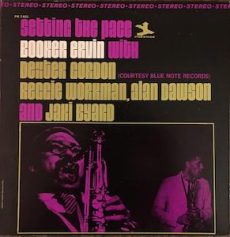
I love a good blowing session, especially one featuring a tenor sax. I became a fan of Booker Ervin after hearing That’s It! (1961), Exultation! (1963), and Back From The Gig (1976). This morning’s album submitted for your approval is a 1967 release by the saxophonist, Setting The Pace (Prestige PR 7455/PRST 7455). Booker was born in Denison, Texas, and began playing the trombone as a youngster. He taught himself the tenor sax while serving in the Air Force and stationed in Okinawa. He later attended Berklee College of Music after completing his service and began playing with trombonist Ernie Fields. Ervin moved to New York a few years later and worked with Charles Mingus. Sharing the spotlight with him on this date is Dexter Gordon on tenor sax, Jaki Byard on piano, Reggie Workman on bass, and Alan Dawson on drums. My copy used in this report is the 1973 US Stereo reissue (Prestige PRT-7455).
The quintet dives straight into the first of two tunes by Dexter Gordon. Setting The Pace occupies the entire first side and both horns begin with an ear-opening introduction evolving into the ensemble’s lively melody. Dexter is up first with a lengthy performance of high-spirited delight. Booker keeps his foot on the pedal with long phrases soaring ambitiously to the stratosphere. Reggie makes a brief bass comment, then Jaki gets into something interesting on the next reading. Dex and Book return to share a brisk conversation. Alan concludes the solos with a short workout into the song’s climax. Side Two takes off with the rhythm section’s introduction and quintet’s theme to Dexter’s Deck. Booker starts things off vigorously in his opening statement. Dexter takes charge next on an enthusiastic nine-and-a-half-minute reading. Reggie responds with an inspired bit of bass walking preceding the song’s conclusion.
Setting The Pace was produced by Don Schlitten and Willy Schmidt was the man behind the dials. This reissue is a gorgeous recording possessing a very impressive soundstage. The instruments emerge from your speakers with crystal-clear clarity. Booker recorded a total of nine albums for Prestige, and seven more for Bethlehem, Blue Note, Candid, Pacific Jazz, and Savoy. He also made quite a few recordings as a sideman working with some of the best jazz musicians. He passed away at age thirty-nine from kidney failure on August 31, 1970. If you’re a fan of either Booker Ervin or Dexter Gordon and are in the mood for some adventurous Hard-Bop, I invite you to check out Setting The Pace on your next vinyl shopping spree. It’s forty-two-and-a-half minutes of splendid jazz that’s sure to have the listener hungering for more!
~ Back From The Gig (The Blue Note Reissue Series BN-LA488-H2), Exultation! (Prestige PRLP 7293/PRST 7293), That’s It! (Candid CJM-8014/CJS-9014) – Source: Discogs.com ~ Booker Ervin – Source: Wikipedia.org © 2022 by Edward Thomas Carter
More Posts: choice,classic,collectible,collector,history,instrumental,jazz,music,saxophone
Requisites
Harold In The Land of Jazz ~ Harold Land | By Eddie Carter
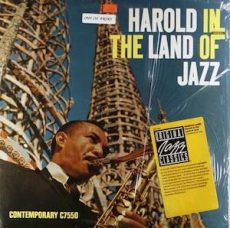
Harold Land steps into the spotlight this morning with his 1958 album, Harold In The Land of Jazz (Contemporary Records C7550/S7550). Harold was one of the best West Coast tenor saxophonists with fifteen albums as a leader and an extensive discography as a sideman to his credit. He was on track for more success in some of the best small jazz groups when an illness in his family caused him to leave the East Coast and return to Los Angeles in 1956. For his first date as a leader, Land’s assembled a splendid supporting cast; Rolf Ericson on trumpet, Carl Perkins on piano, Leroy Vinnegar on bass, and Frank Butler on drums. My copy used in this report is the 1984 Contemporary Records Original Jazz Classics US Stereo reissue (OJC-162 – C-7550).
Side One kicks off this trip with Speak Low by Kurt Weill and Ogden Dash. This jazz standard was introduced in the Broadway musical, One Touch of Venus (1943), and the quintet gets busy quickly with the melody. Harold heats up the lead solo vigorously. Rolf keeps up the exhilarating pace on the second statement. Carl enters next with enthusiastic energy, then Frank exhibits his wizardry ahead of the ensemble’s rousing finale. Up next is Delirium, a medium swinger by Harold Land. The trio makes the introduction, succeeded by the quintet’s theme. Harold begins cruising down the road at a comfortable speed, then Rolf picks up the journey at an unhurried pace. Carl gets the next spot for an impressive presentation that flows vibrantly, and Frank adds a brief footnote leading to the group’s exit.
You Don’t Know What Love Is by Don Raye and Gene De Paul was written for an Abbott and Costello comedy, Keep ‘Em Flying (1941). It didn’t appear in the film but became a jazz standard after Miles Davis recorded it a few years later on All-Star Sextet (1954). It’s a beautiful quartet performance by Harold and the trio. As the song’s only soloist, the tenor sax tells a poignant, bittersweet story reinforced by the rhythm’s serene support. Nieta by Elmo Hope takes us to a tropical climate with a cheerful introduction ahead of the ensemble’s happy theme. Harold partakes in the festivities on the first solo. Carl adds to the celebratory spirit in the next reading, and Rolf sinks his teeth into a spicy statement. Frank gets a brief moment to shine before the reprise.
Side Two opens with Grooveyard, a breezy blues by Carl Perkins who passed away two months later from a drug overdose on March 16, 1958. As a tribute to the pianist, Harold changed the album’s title to Grooveyard for the Stereo release. After the trio’s introduction, the quintet begins the charming melody. Carl opens with a delightfully mellow groove. Rolf takes over on the muted horn with a solo as relaxing as a cup of Chamomile Tea. Harold is up next with an exquisite display that builds to a satisfying peak. Leroy puts the cherry on top with a gorgeous reading. Lydia’s Lament is Harold’s tune named for his wife. It starts with a sublimely solemn collective melody. Harold is the only soloist, and he delivers a touching performance reminiscent of a faint and lamentable cry of sadness.
Smack Up by Harold Land wraps up our seven-song journey with Butler’s brisk introduction ahead of the ensemble’s theme. Harold sets the table with a spirited lead solo; next Rolf follows with a reading of pure delight. Carl shows off his impeccable chops then gives way to Frank’s rousing exchange with the front line into the close. Harold In The Land of Jazz was originally produced by Lester Koenig, and the engineers are Roy DuNann and Howard Holzer. Their work clearly shows in this OJC reissue because it possesses an excellent soundstage that transports the listener’s sweet spot to the studio surrounded by the musicians. Elmo Hope and Harold worked together on the arrangements of all seven tracks.
Harold Land had a lengthy career lasting nearly five decades and also taught jazz studies at the University of California. He passed away at age seventy-two from a stroke on July 27, 2001; but is still remembered for his robust tone and his skill as an improviser. If you’re in the mood for Hard-Bop, I offer for your consideration, Harold In The Land of Jazz by Harold Land. It’s a terrific album of wonderful performances that I happily recommend to anyone who loves jazz and should not be overlooked the next time you’re shopping for vinyl treasure!
~ Miles Davis All-Star Sextet (Prestige PRLP 182) – Source: Discogs.com ~ Speak Low, You Don’t Know What Love Is – Source: JazzStandards.com ~ Harold Land, Carl Perkins – Source: Wikipedia.org © 2022 by Edward Thomas Carter
More Posts: choice,classic,collectible,collector,history,instrumental,jazz,music,saxophone
Requisites
Minor Move ~ Tina Brooks | By Eddie Carter
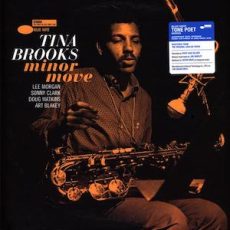
This morning’s choice from the library is Minor Move (Blue Note GXF 3072), a 1958 recording by tenor saxophonist Tina Brooks. It was his first session as a leader and should have resulted in his debut but remained shelved until 1980 when it hit the stores in Japan. He’s joined here by Lee Morgan on trumpet, Sonny Clark on piano, Doug Watkins on bass, and Art Blakey on drums. My copy used in this report is the 2019 Blue Note Tone Poet Series Stereo reissue (B0030487-01). Nutville by Tina Brooks opens Side One with the quintet’s blissfully happy theme. Sonny offers a welcoming smile on the opening statement, then Lee invites us to make ourselves at home next. Tina continues the lighthearted mood with an easy-going interpretation. Doug adds a few cool notes leading to the group’s finale.
The Way You Look Tonight by Jerome Kern and Dorothy Fields debuted in the film, Swing Time (1936). Tina and Lee accelerate the beat to uptempo for the melody, then Brooks dives straight into an invigorating lead solo. Morgan moves through the second interpretation with surgical precision, followed by Clark who applies infectious enthusiasm to the third reading. Blakey engages in a brief exchange with the front line before everyone reassembles for the ending. Side Two starts with Star Eyes by Gene De Paul and Don Raye from the musical-comedy, I Dood It! (1943). Lee begins with a brief muted intro preceding the midtempo theme. Tina steps up first with a relaxing performance, then Sonny and Lee follow with two satisfying performances of sheer delight.
Minor Move by Tina Brooks gets underway with the quintet’s collective theme, then Brooks settles into a bluesy groove on the lead solo. Lee and Sonny follow with two interpretations that will have your fingers popping and toes tapping to the inviting beat before the ensemble’s closing chorus dissolves into nothingness. Everything Happens To Me by Matt Dennis and Thomas Adair is one of the most beautiful songs from The Great American Songbook. This is a showcase for Tina who gives two emotionally touching performances of lyricism and poignancy. Sandwiched between them is a gorgeous presentation of reflective beauty by Lee and a warm insightful interpretation by Sonny leading to the tenor’s soft conclusion.
Minor Move was produced by Alfred Lion and Rudy Van Gelder was the recording engineer. Joe Harley supervised the reissue and Kevin Gray did the mastering. The packaging is superb with great photos of the session. The recording is fantastic with an exceptional soundstage and outstanding detail that comes through your speakers as clear as Waterford Crystal. The record was pressed on 180-gram audiophile vinyl and is very quiet until the music starts. Tina Brooks released only one album during his lifetime and appeared on several Blue Note sessions. Sadly, he never got the recognition he deserved. He passed away from liver failure at age forty-two on August 13, 1974. If you’re a fan of tenor sax and don’t already own the Mosaic box set, I offer for your consideration, Minor Move by Tina Brooks. It’s a terrific recording by one of the underrated jazz musicians and an album I highly recommend for your library!
~ The Complete Blue Note Recordings of The Tina Brooks Quintets (Mosaic Records MR4-106), True Blue (Blue Note BLP 4041/BST 84041) – Source: Discogs.com ~ The Way You Look Tonight, Star Eyes, Everything Happens To Me – Source: JazzStandards.com © 2022 by Edward Thomas Carter
More Posts: choice,classic,collectible,collector,history,instrumental,jazz,music,saxophone
Requisites
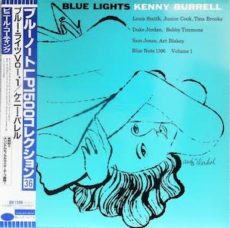
Blue Lights, Volume 1 ~ Kenny Burrell | By Eddie Carter
I became a fan of guitarist Kenny Burrell at an early age, enjoying him on Houseparty (1958), The Sermon (1959), Midnight Special (1961), Back At The Chicken Shack (1963), Organ Grinder’s Swing (1965), All Day Long, and All Night Long (1957), and Steamin’ (1963). He steps into the spotlight this morning with a superb 1958 album, Blue Lights, Volume 1 (Blue Note BLP 1596/BST 81596). It’s a straight-ahead blowing session anchored by a superlative supporting cast, Louis Smith on trumpet, Tina Brooks, Junior Cook (tracks: A1, A2, B2) on tenor sax, Duke Jordan (tracks: A1, A2), Bobby Timmons (tracks: B1, B2) on piano, Sam Jones on bass, and Art Blakey on drums. My copy used in this report is the 1996 Toshiba-EMI Limited Japanese Mono reissue sharing the original catalog number.
Side One begins with Yes Baby, an easy-going blues by Kenny Burrell. The sextet’s relaxing melody gets things off to a good start. Kenny goes to work first with a solo as smooth as satin, then Tina comes in for a deliciously mellow statement. Louis takes a carefree drive next, followed by Junior and Duke who gather good notes during their turns. Sam delivers the payoff by walking leisurely into the ensemble’s slow fading closing chorus. Scotch Blues by Duke Jordan gives the group an extremely fun tune to play with a Scottish flavor in the opening and ending theme. The solo order is Burrell, Brooks, Smith, Cook, Jordan, and Blakey. Each musician develops their readings cheerfully sustained by the rhythm section’s infectiously laid-back vibe.
Autumn In New York by Vernon Duke starts Side Two offering Burrell in a quartet setting with Bobby Timmons taking over the piano duties. Kenny begins with a brief solo introduction that evolves into the ensemble’s attractive melody. Burrell is the song’s only soloist and presents a beautifully elegant reading ahead of the quartet’s thoughtfully polite ending. The album concludes with Caravan, an uptempo swinger by Duke Ellington, Irving Mills, and Juan Tizol. It begins briskly with the opening chorus. Smith is off to the races quickly, then Cook and Brooks follow with two examples of splendid solo work. Burrell simply sizzles on the next reading ahead of Timmons’ fingers flying over the keys. Blakey has the last word preceding the sextet’s reprise and disappearance in a fadeout.
Blue Lights, Volume 1 was produced by Alfred Lion and Rudy Van Gelder was the recording engineer. Toshiba-EMI Limited has done a wonderful job with this reissue’s remastering. The soundstage is stunning, and the musicians jump out of your speakers as if they’re playing in front of you. The vinyl is also flat and silent until the music starts. Kenny Burrell is one of those rare musicians who play with a distinctive blend of explosive and punchy rhythms. His discography as a leader and sideman is extensive and his career has lasted seven decades. Here, he’s completely at ease and perfectly at home playing the blues. If you’re a fan of jazz guitar and only know his album, Midnight Blue, I invite you to check out Blue Lights, Volume 1 by Kenny Burrell. It’s an album of great jazz that doesn’t disappoint, and I’ve already added its companion, Blue Lights, Volume 2 to my Want and Wishlist!
~ All Day Long (Prestige PRLP 7081/PRST 7277), All Night Long (Prestige PRLP 7073/PRST 7289), Back At The Chicken Shack (Blue Note BLP 4117/BST 84117), Blue Lights, Volume 2 (Blue Note BLP 1597/BST 81597), Houseparty (Blue Note BLP 4002/BST 84002), Midnight Blue (Blue Note BLP 4123/BST 84123), Midnight Special (Blue Note BLP 4078/BST 84078), Organ Grinder’s Swing (Verve Records V-8628/V6-8628), Steamin’ (Prestige PRLP 7278/PRST 7278), The Sermon (Blue Note BLP 4011/BST 84011) – Source: Discogs.com ~ Autumn In New York, Caravan – Source: Discogs.com © 2022 by Edward Thomas Carter
More Posts: choice,classic,collectible,collector,guitar,history,instrumental,jazz,music