

Requisites
Curtain Call ~ Hank Mobley | By Eddie Carter
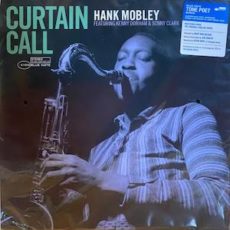
Hank Mobley was one of the most productive musicians on Blue Note during the fifties, recording as a leader and with some of the label’s best artists. This morning’s subject is a recent acquisition to the library that was originally recorded in 1957 but remained shelved until a 1984 Japanese release. Curtain Call (Blue Note BST 61006) is an excellent quintet session by the tenor saxophonist featuring Kenny Dorham on trumpet, Sonny Clark on piano, Jimmy Rowser on bass, and Art Taylor on drums. My copy used in this report is the 2022 Blue Note Tone Poet Series Stereo audiophile reissue, the first US vinyl release.
Side One starts with the first of four tunes by Hank Mobley. Don’t Get Too Hip is an easy-flowing midtempo blues that Clark introduces preceding the quintet’s collective theme. Sonny is up first with an easygoing attitude on the first statement. Kenny continues this pleasant exercise with a lengthy solo spot. Hank takes center stage next and sails smoothly through the third reading. Jimmy applies the finishing touch on a short statement ahead of the group’s reprise and ending. Curtain Call is off to the races on the ensemble’s speedy melody. Hank moves with astonishing velocity in the opening statement. Kenny drives the second reading with intense emotion, then Sonny takes an exhilarating turn. Art shares the final solo with the front line briefly before the close.
Deep In a Dream by Eddie DeLange and Jimmy Van Heusen is a gorgeous quartet performance illustrating Hank’s ability to interpret a ballad. Mobley and the trio begin with a delicately tasteful melody. He continues with an exquisitely beautiful opening statement. Clark expresses great warmth to the second solo, then Hank adds the exclamation point with sensitive delicacy into the foursome’s luscious ending. The quintet raises the curtain on Side Two with The Mobe. The ensemble begins the happy theme in unison, then Hank takes off on a terrifically agile first solo. Kenny takes over, feeling right at home on the second reading. Sonny spreads some joyful enthusiasm on the next statement. The front-line reappears to exchange a few final verses leading to the finish.
My Reverie by Claude Debussy and Larry Clinton is one of the delights of the set. Dorham has the spotlight to himself on the melody and first solo, handling both with equal effectiveness. Clark comes on next with an intriguing interpretation, followed by Mobley who delivers the next statement confidently. Dorham returns to take the song out with Mobley shadowing him in the background. On The Bright Side ends the album on a cheerful note beginning with the quintet’s brisk melody. Kenny draws us into the song with a lively opening statement. Sonny gives a sterling account on the second solo. Hank endows the third interpretation with a feisty spirit, and Taylor sparkles in a brief exchange with Dorham and Mobley into the closing theme.
Curtain Call was originally produced by Alfred Lion and Rudy Van Gelder was the man behind the dials. Joe Harley supervised this reissue and Kevin Gray did the mastering. The sound quality is breathtaking with a terrific soundstage that transports the musicians to your listening room as you enjoy the album. The cover’s worthy of hanging on your wall and the gatefold photos are gorgeous. The record is pressed on 180-gram audiophile vinyl and is incredibly quiet until the music starts. If you enjoy Hank Mobley and love good Hard-Bop, I invite you to check out Curtain Call on your next vinyl treasure hunt. In my opinion, it’s one of his best fifties recordings and one listen is sure to hook you, just as one listen sold me!
~ Hank Mobley Quintet Featuring Sonny Clark (Blue Note BNJ 61006) – Source: Discogs.com ~ My Reverie – Source: Wikipedia.org © 2022 by Edward Thomas Carter

More Posts: choice,classic,collectible,collector,history,instrumental,jazz,music,saxophone
Requisites
Live At The Village Gate ~ Milt Jackson Quintet | By Eddie Carter
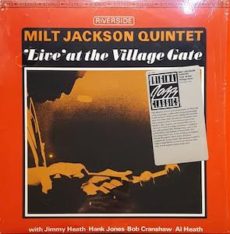
I’ve been a huge fan of Milt Jackson ever since seeing him in concert with The 1972 Newport Jazz All-Stars at Music Hall in New York City. He swung effortlessly that evening with solos that were exciting and spirited, and I began collecting all his albums. A few nights ago, I was listening to this morning’s choice from the library and that’s what prompted this discussion. Live at The Village Gate (Riverside RM 495/RS-9495) is a 1967 release documenting the vibraphonist leading a wonderful quintet, Jimmy Heath on tenor sax, Hank Jones on piano, Bob Cranshaw on bass, and Albert “Tootie” Heath (Jimmy’s brother) on drums. My copy used in this report is the 1987 Original Jazz Classics Stereo reissue (Riverside OJC-309 – RLP-9495).
Side One starts with the first of three tunes by Bags, a nickname given to Milt by a Detroit bass player that he would be called the rest of his life. Bags of Blue is a tune that’ll have you tapping your toes from the quintet’s lively melody. Milt opens with a peppy first solo, then Jimmy takes a sprightly reading. Hank makes everyone feel good on the next statement. Milt and Jimmy split the finale with a few verses ahead of the ensemble’s ending and club’s applause. Little Girl Blue by Richard Rodgers and Lorenz Hart is one of their prettiest compositions from the Broadway musical, Jumbo (1935). Bags and Hank make a dainty introduction, then Bob and Albert come in for the tender theme. As the song’s only soloist, Milt gives a gorgeous performance complemented by the trio’s delicately sensitive support.
Up next is an upbeat original by Jimmy Heath, Gemini. It made its first appearance on his album, Triple Threat (1962). The group begins the melody briskly, then Milt leads off the opening statement with high-spirited energy. Jimmy applies some vigorous passion to the second presentation. Hank closes with a dazzling reading before the quintet takes their exit. Jackson’s light-hearted Gerri’s Blues begins Side Two with the first of two sparkling solos by Hank preceding the ensemble’s theme. Bags takes the first solo and constructs an infectious interpretation that’s perfectly suitable for dancing. Hank keeps the happy beat alive on the next reading, followed by Jimmy’s extremely nimble solo. The leader and saxophonist engage in a three-way conversation with Albert leading to a very satisfying conclusion.
Time After Time by Sammy Cahn and Jule Styne is a beautiful jazz standard and the second quartet presentation featuring Bags as the lone soloist. The quartet states a delicately pretty melody, then Milt seamlessly moves into a statement of great tenderness and intimacy capable of melting even the coldest heart. The quintet ends the set with Jackson’s Ignunt Oil that Bags first recorded on Plenty, Plenty, Soul (1957). The group struts their stuff on the opening chorus in unison. Milt starts off the solos with a joyous workout. Jimmy follows with some inspired ideas. Hank comes in next and cooks at a nice momentum. Bags leads toward the close with a few final thoughts preceding the quintet’s perfect ending to a great set.
Live at The Village Gate was originally recorded by Ray Fowler. The remastering by Phil DeLancie delivers a spacious soundstage transporting the listener to the club with all the intimacy and ambiance of being there in person. The result is a great recording of swinging jazz by one of the consummate musicians, Milt Jackson. It’s also a good place to discover his immense discography as a leader, sideman, and principal member of The Modern Jazz Quartet in an illustrious career lasting forty years. If you’re a fan of Bags, Jimmy Heath, or Hank Jones, I invite you to check out Live at The Village Gate by The Milt Jackson Quintet on your next vinyl hunt. It’s a nice way to unwind after a long day with your favorite drink and in my opinion, would make a great addition to any jazzophile’s library!
~ Plenty, Plenty, Soul (Atlantic 1269/SD 1269), Triple Threat (Riverside RLP 400/RLP 9400) – Source: Discogs.com ~ Little Girl Blue, Time After Time – Source: JazzStandards.com © 2022 by Edward Thomas Carter
More Posts: choice,classic,collectible,collector,history,instrumental,jazz,music,vibraphone
Requisites
Miles Davis In Europe ~ Miles Davis | By Eddie Carter
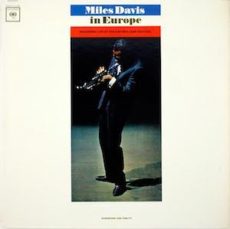
This morning’s choice from the library is a 1964 live album by Miles Davis that’s an overlooked gem, in my opinion, Miles Davis In Europe (Columbia CL 2183/CS 8983). It documents the trumpeter in concert at the 1963 Antibes International Jazz Festival during a successful European tour that was also broadcast over RTF (Radiodiffusion-Télévision Française). He’s joined on stage by George Coleman on tenor sax, Herbie Hancock on piano, Ron Carter on bass, and Tony Williams on drums who also appeared on Seven Steps To Heaven recorded a few months earlier. My copy used in this report is the original US Mono album and Side One opens with the introduction of the quintet by Master of Ceremonies, André Francis.
Autumn Leaves by Joseph Kosma, Johnny Mercer, and Jacques Prévert opens with Miles’ muted introduction and excellent support by the rhythm section. They begin with a deceptively easy melody; he then picks up the pace on the opening chorus with a carefree swing. George steps up next with a buoyant statement that cooks, then Herbie takes flight for a scintillating interpretation. Ron walks with assurance briefly on the closer ahead of the group’s ending theme. The leader’s Milestones is off to the races on the quintet’s speedy melody. Davis soars into the stratosphere on the lead solo. Coleman shows he’s equally adept for speed on the second statement, and Hancock closes with a highly energetic performance leading to the group’s vigorous ending.
The quintet turns up the temperature a little more on Joshua by Victor Feldman with a torrid opening chorus. Miles takes off like a speedy gazelle on the first statement. George comes in next, dispensing a fierce intensity on the second reading, then Herbie goes on a high-spirited flight in the closer preceding the ensemble’s lively summation. Side Two gets underway with Miles returning to the mute for Cole Porter’s All of You. It first appeared in the Broadway musical, Silk Stockings (1955). He and the trio begin the song with an attractive melody. Davis starts the solos with a charmingly articulate interpretation. Coleman offers some cheerful notes in the second performance. Hancock takes the final solo swinging easily into the trumpeter’s closing chorus and soft climax.
Walkin’ by Richard Carpenter opens with a quick melody and a furious opening statement by Miles. Tony takes the stage next and sparkles on an energetic interpretation. George swings with a fiery flavor in the third reading and Herbie closes the solos with a thoroughly entertaining performance leading to the theme’s reprise and finish. Miles Davis In Europe was produced by Teo Macero and RTF was behind the dials for the broadcast recording. The sound quality is superb, placing the listener in the festival audience to enjoy the quintet’s set. Everyone is in top form throughout, this album captures the quintet’s fire during their performance, and the music cooks from start to finish. If you’re in the mood for some swinging live jazz, I offer for your consideration, Miles Davis In Europe. It’s worthy of wider recognition and makes a perfect complement to the group’s other live albums, My Funny Valentine and ‘Four’ & More!
~ ‘Four’ & More (Columbia CL 2453/CS 9253), My Funny Valentine (Columbia CL 2306/CS 9106), Seven Steps To Heaven (Columbia CL 2051/CS 8851) – Source: Discogs.com ~ Autumn Leaves – Source: JazzStandards.com ~ All of You – Source: Wikipedia.org © 2022 by Edward Thomas Carter
More Posts: choice,classic,collectible,collector,history,instrumental,jazz,music,trumpet
Requisites
Wanted To Do One Together ~ Ben Webster and Sweets Edison | By Eddie Carter
Benjamin Francis Webster and Harry “Sweets” Edison were two of jazz’s most beloved and respected musicians. Ben was affectionately known as “The Brute” for his sometimes coarse, harsh, or rough sound by his Ellington bandmates. However, he could also express deep feelings on any ballad or standard with a quiet intensity that always amazed fans listening to one of his albums or during his live performances. Webster was also an essential part of Duke Ellington’s orchestra before having a successful solo career. Johnny Hodges was a huge influence on Ben, and he credits the altoist with teaching him how to play the saxophone.
Harry was one of the most sought-after musicians in jazz and became a proficient trumpet accompanist and soloist for nearly twenty-five years. “Sweets” performed with Count Basie, toured with the Jazz at The Philharmonic All-Stars, and led his own orchestra. He also played in bands led by Gil Fuller, Dizzy Gillespie, Quincy Jones, Buddy Rich, and Shorty Rogers. Lester Young gave him the nickname “Sweets”, and his artistic proficiency and willingness to develop as jazz itself progressed made him one of the best trumpet players ever. Edison also possessed a bright, buoyant sound that could also be soft-spoken and serene.
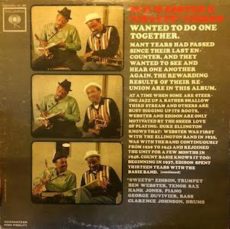
In 1962, the two friends wanted to record an album together. The joyous result of their collaboration is Wanted To Do One Together (Columbia CL 1891/CS 8691), this morning’s choice from the library. The front line is fortified by Hank Jones on piano, George Duvivier on bass, and Clarence Johnson on drums. My copy used in this report is the original Mono album. Ben Webster’s Better Go opens Side One with a bouncy, upbeat melody by both horns. “Sweets” is off and running with an exhilarating muted performance. George delivers an enjoyable statement next, then Ben provides some enchantingly melodic lines on the third reading. Hank injects some vigorous passion into the finale ahead of the reprise and close.
Up next is George and Ira Gershwin’s evergreen from the musical, Funny Face (1928), How Long Has This Been Going On? Ben makes this song his own as if the duo wrote it, especially for him. After a soft duet introduction by the pianist and tenor man, the ensemble states the theme. As the sole horn and featured soloist, Ben tells an intimate story of delicacy and sensitivity in a tender performance. The trio backs him with elegant groundwork into a dainty climax. Harry Edison’s Kitty strolls casually into view on the ensemble’s mischievous theme. “Sweets” switches to a mute for the easy-going opening statement, then Ben displays a cheerfully playful personality next. Hank follows with a leisurely walk on the closing chorus that sends the kitty sauntering out of the room as the first side ends.
My Romance by Richard Rodgers and Lorenz Hart begins Side Two with a lovely introduction by Hank. Ben, George, and Clarence join him for a respectfully polite and nostalgic melody of sensual beauty. The saxophonist continues with a pretty performance that’s so deeply moving, even if you’re intimately acquainted with this song, you’ll feel as if you’re hearing it for the very first time. The beat moves back to mid tempo on the Ben Webster original, Did You Call Her Today? After the rhythm section’s introduction, both horns deliver the melody with a relaxed attitude. “Sweets” opens with a cheerfully pleasant performance. Ben keeps the beat alive with flawless execution in the next reading. Hank swings smoothly on the finale preceding the quintet’s perky ending.
Embraceable You by George and Ira Gershwin is one of their prettiest songs from the Broadway musical, Girl Crazy (1930). “Sweets” is the only horn featured here and his opening chorus with Hank is an oasis of calm and serenity. George and Clarence come in to complete the melody, then “Sweets” beautifully renders the song’s only solo into a tenderhearted ending. The album was produced by Mike Berniker and recorded at Columbia 30th Street Studio. The sound quality is absolutely amazing with a stunning soundstage surrounding your sweet spot. If you’re a fan of Ben Webster or Harry “Sweets” Edison, I offer for your consideration Wanted To Do One Together. It’s an album with tight musicianship and marvelous music that belongs in every jazz library and pays big dividends with every listen!
~ My Romance, Embraceable You – Source: JazzStandards.com ~ How Long Has This Been Going On? – Source: Wikipedia.org © 2022 by Edward Thomas Carter
More Posts: choice,classic,collectible,collector,history,instrumental,jazz,music,saxophone,trumpet
Requisites
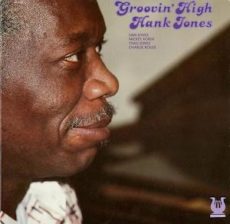
Groovin’ High ~ Hank Jones | By Eddie Carter
This morning’s discussion begins with a 1979 album by Hank Jones recalling the music of Bebop, Groovin’ High (Muse Records MR 5169). Hank was born in 1918 and was one of seven children. His mom sang, and his two older sisters also played piano. His two younger brothers, Thad and Elvin would also become successful jazz musicians. A pianist of great versatility, Hank recorded over sixty albums as a leader and appeared on numerous others as a sideman. The musicians he worked with over his extensive career reads like an Encyclopedia Britannica of Jazz. Hank’s backed by brother Thad Jones (tracks: A2, A3, B1 to B3) on cornet, Charlie Rouse (tracks: A2, A3, B2, B3) on tenor sax, Sam Jones on bass, and Mickey Roker on drums. My copy used in this report is the original US Stereo album.
Side One opens with a tune by Dizzy Gillespie titled Algo Bueno. If you don’t recognize the name, it’s better known as the jazz standard, Woody‘n You. The trio is firing on all cylinders from the start of the brightly swinging melody. Hank is up first and delivers evident enjoyment on the keys. Sam walks the bass next in a cheerful and lively performance before the threesome regroups for the ending. Anthropology by Dizzy Gillespie and Charlie Parker takes the tempo upward on the quintet’s melody. Charlie and Thad share solo duties on the lead solo, then each gives an individual statement. Hank responds with some vivacious notes next, followed by Sam and Mickey who contribute two concise comments ahead of the closing chorus.
Sippin’ at Bells by Miles Davis is up next and receives a samba treatment beginning with the quintet’s danceable theme after a brief trio introduction. Charlie takes the lead and displays incredible warmth in the opening statement. Sam steps up next for an attractive performance, followed by Thad who offers a superb example of choice notes in the third solo. Hank has the final word and closes with an especially lovely interpretation into the group’s exit. Blue Monk is the first of three tunes by Thelonious Monk in this set. The first side finale opens with the ensemble paying homage to a tune Monk recorded the most. Hank begins with an alluring reading, then Sam’s closing statement adds some gentle lines leading to the climax.
Dizzy Gillespie’s jazz standard, Groovin’ High begins Side Two as a quartet performance with Thad establishing a nice momentum on the theme using a mute. He continues with an endearing opening performance that winks to Dizzy as it unfolds. Hank breezes into the second reading making a profound impression, and Mickey exchanges a brief conversation with Thad and Hank before the close. Monk’s second contribution, I Mean You is a lively little jam affording everyone a solo opportunity and gets underway with the ensemble’s spirited theme. Rouse gets into a vivacious groove on the first reading. Thad swings sprightly on the second solo, then Hank comes next with an impressive interpretation. Sam follows with some solid bass lines and Mickey fuels the finale with some brisk brushwork.
Monk’s Jackie-ing starts deceptively at a relaxed tempo with the quintet playing a march, then Thad delivers some exciting fireworks on the first solo. Charlie cooks for a few scintillating choruses next. Hank shifts into high gear on the third reading and Mickey takes us home with a fiery finale culminating with the group’s reprise and slow fade. Groovin’ High was produced by Fred Seibert and Rudy Van Gelder was the man behind the dials. The sound quality of this album is first-rate. The instruments come alive with an impressive soundstage for an album that’s over four decades old. If you enjoy jazz piano, are a Bebop fan, or are just discovering this talented musician, I invite you to audition Groovin’ High by Hank Jones for a spot in your library. It’s a thoroughly entertaining album that’s a pleasure to hear any time of the day or evening!
~ Blue Monk, Groovin’ High, Woody’n You – Source: JazzStandards.com ~ Anthropology – Source: Wikipedia.org © 2022 by Edward Thomas Carter
More Posts: choice,classic,collectible,collector,history,instrumental,jazz,music,piano