

Requisites
Eastern Rebellion ~ Cedar Walton, George Coleman, Sam Jones, Billy Higgins | By Eddie Carter
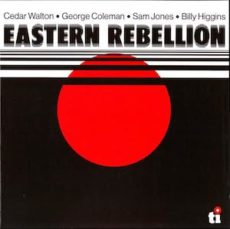
This morning’s subject submitted for your examination was released in 1976 by a quartet who had been playing together for a year before recording their first collaborative album. Eastern Rebellion (Timeless Records SJP 101) is the record that launched the Netherlands label, and also marked the first-time pianist Cedar Walton doubled as a producer. The group is a first-rate ensemble featuring George Coleman on tenor sax, Sam Jones on bass, and Billy Higgins on drums. 2021 marked the 45th Anniversary of its debut, so to commemorate this event, Music on Vinyl launched the Timeless Jazz 45th Anniversary Series. My copy used in this report is their 2022 European Stereo Audiophile reissue (Music on Vinyl MOVLP2950).
The album opener, Bolivia by Cedar Walton begins with the trio’s infectious introduction that gets the listener’s foot moving immediately, setting up the quartet’s spirited theme with Coleman leading the charge. George is up first, taking no prisoners with a heated performance. Cedar tackles the second interpretation exuberantly. Sam keeps it going with a joyful finale preceding the quartet’s conclusion. Naima by John Coltrane starts with a sparkling example of sensitivity and delicacy by Walton that shifts upward for Coleman’s melody. The saxophonist leads off with a radiantly beautiful presentation, followed by Walton who answers with a tenderly passionate interpretation leading to the group’s gorgeous finale.
5/4 Thing by George Coleman starts Side Two with the tenor’s warm introduction that softly evolves to the quartet’s collective melody. George takes the lead and dazzles on the opening statement, then Cedar excels with meticulous strokes on the second solo. Billy wraps up everything in splendid style before Coleman takes the group gently out. Bittersweet by Sam Jones offers everyone solo space and is anything but. Jones begins this cheery, uptempo tune with an enthusiastic exercise. Coleman keeps the tension up with an energetic reading that bounces off the rhythm section effectively. Walton gets a good thing going in the next performance and Higgins provides a perfect summation culminating with the theme’s reprise and an abrupt stop.
Cedar Walton’s Mode For Joe is dedicated to Joe Henderson and was the title tune of the saxophonist’s 1966 album which Cedar played on as well. The quartet begins the melody, then Cedar shines like a beacon on the opening statement. Billy gives a delightful solo next, followed by George who moves with agility. Jones’ bass is the exclamation point before the quartet’s lively exit. Elvin Campbell was the recording engineer for Eastern Rebellion. This audiophile reissue was pressed on 180-gram silver vinyl and is incredibly quiet until the music begins. It’s also an excellent-sounding album that fills your listening room with superb definition. If you’re in the mood for swinging jazz and tight musicianship, I invite you to check out Eastern Rebellion, the next time you go vinyl shopping. It’s an engaging set by Cedar Walton, George Coleman, Sam Jones, and Billy Higgins that’s worth every penny for a spot in your library!
~ Mode For Joe (Blue Note BLP 4227/BST 84227) – Source: Discogs.com © 2022 by Edward Thomas Carter

More Posts: choice,classic,collectible,collector,history,instrumental,jazz,music,piano
Requisites
On The Spur Of The Moment ~ Horace Parlan | By Eddie Carter
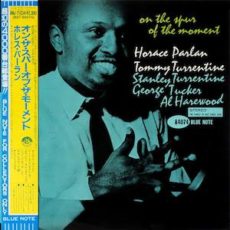
Any album by pianist Horace Parlan is always a delightful listen for yours truly. This morning’s choice from the library offered for your consideration is his 1961 release, On The Spur of The Moment (Blue Note BLP 4074/BST 84074). As a child, Horace was stricken with polio, resulting in the partial crippling of his right hand. He managed to develop a left-hand chord-voicing style and also learned to improvise with detailed comping using the right. Horace is supported on this date by Tommy Turrentine on trumpet, Stanley Turrentine (Tommy’s brother) on tenor sax, George Tucker on bass, and Al Harewood on drums. My copy used in this report is the 1984 Toshiba-EMI Japanese Stereo reissue (Blue Note BST 84074 – BNJ 71034).
Side One starts with an original by the leader, On The Spur of The Moment. Horace opens with a brief introduction segueing into the ensemble’s mid tempo melody. Tommy is up first and makes his mark with a gorgeous tone. Horace follows with some light-hearted swinging, then Stanley adds some soulful cooking to the third reading. George does some solid walking on the next solo and Al has a brief exchange with the front line ahead of the quintet’s closing chorus. Skoo Chee by Booker Ervin raises the energy level a few notches on the group’s collective melody. Stanley leads the way with a swinging opener, then Tommy attacks the second statement with spirited energy. Horace delivers a splendid solo next preceding Stanley’s vigorous closing statement and shouts during a slow fade.
And That I Am So In Love by Harold Ousley slows the pace down to midtempo with Stanley and the trio delivering a happy opening chorus. Stanley starts things off with a pleasant opening solo. Tommy follows with some thoughtfully interesting lines and Horace continues to mesmerize with a gorgeous finale before Stanley returns for the gentle dissolve into oblivion. Al’s Tune by Booker Ervin begins Side Two with the quintet’s easy-flowing melody. Tommy takes the lead this time with an exquisite opening statement. Stanley’s tenor brightens the second interpretation like the sun following the rain on a summer day. Horace serves up a sparkling reading next, followed by George who walks with authority on the finale into the ensemble’s conclusion.
Ray C. by Leon Mitchell is a slow blues that would be a perfect tribute to Ray Charles although this isn’t known according to Ira Gitler’s liner notes. The quintet creates a relaxed atmosphere on the bluesy theme, and Stanley, Tommy, Horace, and George all cruise at a comfortable speed before the quintet takes the song out. Roger Williams who wrote the album closer, Pyramid is a jazz pianist from Pittsburgh and the quintet begins the melody of this pretty song deceptively slowly. The pace picks up for Stanley who opens with an impressive interpretation. Tommy holds his own on the second statement with an exceptional performance and Horace puts the final stamp on the album with a sprightly finale leading to the ensemble’s out-chorus.
On The Spur of The Moment was produced by Alfred Lion and recorded by Rudy Van Gelder. This reissue was the first Stereo release of this album, and the sound quality is exceptional with a stunning soundstage. The musicians jump out of your speakers as if they’re playing in front of you. Tommy is on the left channel; Stanley is on the right channel, and the trio occupies both. Toshiba-EMI Limited has done an excellent job with the mastering of Rudy’s original tapes. This is one of three albums this group recorded together, the other two are Speakin’ My Piece (1960) and Comin’ Your Way (1987). If you’re in the mood for some Hard-Bop that swings, I offer for your next vinyl hunt, On The Spur of The Moment by Horace Parlan. It’s a great find for anyone who enjoys jazz and should fit nicely in any library!
~ Comin’ Your Way (Blue Note BLJ 84065), Speakin’ My Piece (Blue Note BLP 4043/BST 84043) – Source: Discogs.com © 2022 by Edward Thomas Carter
More Posts: choice,classic,collectible,collector,history,instrumental,jazz,music,piano
Requisites
The Kicker ~ Bobby Hutcherson | By Eddie Carter
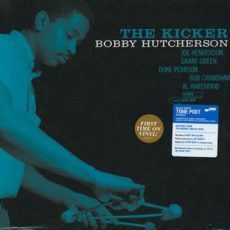
In 1963, vibraphonist Bobby Hutcherson recorded his first album as a leader which was supposed to be his debut on Blue Note. Sadly, it wasn’t released, and the session remained in the vaults for thirty-six years until it hit the stores in 1999 as a CD album. The Kicker (Blue Note BST 21437), this morning’s choice from the library submitted for your inspection reunites the musicians that recorded Idle Moments by Grant Green six weeks earlier in November. Joe Henderson on tenor sax, Duke Pearson on piano, Grant Green on guitar (tracks: A3 to B2), Bob Cranshaw on bass, and Al Harewood on drums. My copy used in this report is the 2020 Blue Note Tone Poet Series Stereo audiophile reissue.
Side One commences with Mirrors by Joe Chambers, a very pretty song beginning with a brief introduction by Duke opening the way for Hutcherson and the rhythm section’s delicately gentle theme supported by Henderson. Bobby starts with a stunning showcase that’s intimately passionate and very moving. Joe continues expressing deep feelings on the second statement ahead of the ensemble’s thoughtfully polite ending. For Duke P. Bobby’s swinging dedication to Duke Pearson takes off with a brisk opening chorus in unison. Hutcherson gets right down to business on the first interpretation with a spirited reading. Henderson gets into a vibrant workout next and Pearson swings into the closer confidently before the ensemble reprise and close.
The Kicker by Joe Henderson brings Grant Green to the group with an effervescent opening chorus led by the composer. Henderson begins this swinging affair with a swiftly paced solo, then Bobby launches into the next reading vigorously. Grant brings a lot of joy to the third statement and Duke finds some invigorating things to say ahead of the closing chorus and quick climax. Side Two starts with Henderson’s, Step Lightly, an easygoing blues that the ensemble gets underway with a collectively calm theme. Pearson starts the opening solo with easy, unhurried strokes. Hutcherson is smooth as velvet on the second statement. Green swings with a light, refreshing beat next and Henderson provides a fitting summation with a soulful groove preceding the sextet’s ending theme disappearing into a slow fade.
Bedouin by Duke Pearson possesses a Middle Eastern flavor that begins at a snappier tempo than Duke recorded a year later on Wahoo! The solo order is Joe, Grant, Bobby, and Duke, and each gives charming, articulate performances into an ending theme that dissolves into emptiness. The Kicker was originally produced by Alfred Lion and recorded by Rudy Van Gelder. Joe Harley supervised this reissue, and Kevin Gray did the remastering. The sound quality is outstanding with a breathtaking soundstage. The front and rear covers are high-quality with stunning gatefold photos. The vinyl is 180-gram and incredibly quiet until the music starts. If you enjoy good vibes and are looking for a perfect album to enjoy after a long day or week, I highly recommend and offer for a spot in your library, The Kicker by Bobby Hutcherson. It’s a wonderful companion to Idle Moments that’ll reward its owner with many hours of listening pleasure!
~ Idle Moments (Blue Note BLP 4154/BST 84154), The Kicker (Blue Note Connoisseur Series 7243 5 21437 2 6), Wahoo! (Blue Note BLP 4191/BST 84191) – Source: Discogs.com © 2022 by Edward Thomas Carter
More Posts: choice,classic,collectible,collector,history,instrumental,jazz,music,vibraphone
Requisites
The Great Jazz Trio At The Village Vanguard | By Eddie Carter
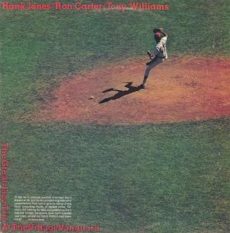
This morning’s subject submitted for your consideration is a recent addition to the library by one of the quintessential small groups in jazz. The Great Jazz Trio At The Village Vanguard (East Wind EW-8053) is the first of three live albums by Hank Jones on piano, Ron Carter on bass, and Tony Williams on drums recorded over two nights at the venue in 1977. My copy used in this report is the 1978 US Stereo release (Inner City Records IC 6013).
Side One starts the set with a speedy rendition of Moose The Mooche by Charlie Parker. The trio takes off on a lively opening chorus, succeeded by Hank who accelerates quickly on the first solo. Tony takes over for the closing statement with a fierce attack of intense heat preceding the trio’s swift climax.
Up next is Naima, John Coltrane’s beautiful ballad named for his first wife. The trio’s rendition begins with a delicately graceful piano introduction segueing into a breathtaking collective theme. Jones opens the first solo luxuriously, gaining momentum into an enticing ending. Carter displays his abundant skills on a delightful finale complemented by Williams’ gentle brushwork leading to a warm, expressive exit.
Side Two gets underway with a pretty tune by Claus Ogerman, Favors. The ensemble begins with an easygoing midtempo opening chorus. Hank is up first and lets his ideas unfold at a leisurely pace. Ron follows with a relaxing message on the second solo, then Hank and Tony share a carefree conversation leading to the ensemble’s theme reprise and soft close.
The set closes with a blues by Ron Carter, 12 + 12. After the ensemble’s happy melody, Jones kicks off the solos with an utterly joyful performance. Carter also says plenty on an impressively buoyant statement, followed by Williams who speaks last in an exchange with Jones into the theme’s reprise and Tony’s introductions of the group. The album was produced by Kiyoshi Itoh and Yasohachi Itoh. Co-Producer David Baker also was the recording engineer. He’s done a phenomenal job because the sound quality is splendid with an exquisite soundstage placing the listener’s sweet spot in the crowd as the trio’s performing. The only issue is a small typo appearing on the back cover and the Side Two record label of both the Japanese and US releases, Claus Ogerman’s name is mispronounced.
Hank Jones was regarded by critics and fans alike as one of the most gifted musicians in jazz with an extensive discography and a career lasting sixty-six years including thirty-six as a member of The Great Jazz Trio. He passed away on May 16, 2010, at age ninety-one. Ron Carter is a living legend and the most recorded jazz bassist in history. He also plays the cello, is still performing and recording, and just celebrated his eighty-fifth birthday. Tony Williams was one of the best drummers in jazz and for five years provided the power behind The Miles Davis Quintet. He passed away at age fifty-one on February 23, 1997; but leaves a lasting legacy of music as a leader and sideman. If you enjoy live jazz and are a fan of these great musicians, I invite you to check out The Great Jazz Trio At The Village Vanguard. It’s a terrific jazz album with superb performances that is sure to please novice and seasoned jazz fans alike!
~ The Great Jazz Trio At The Village Vanguard, Volume 2 (East Wind EW-8055), ~ The Great Jazz Trio At The Village Vanguard Again (East Wind UCCJ-4001) – Source: Discogs.com ~ Naima – Source: JazzStandards.com ~ Moose The Mooche – Source: Wikipedia.org © 2022 by Edward Thomas Carter
More Posts: bass,choice,classic,collectible,collector,drums,history,instrumental,jazz,music,piano
Requisites
My Laurie ~ Art Pepper | By Eddie Carter
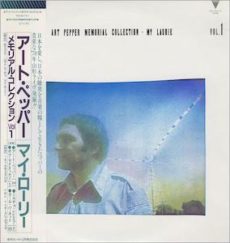
I’ve listened to and enjoyed the music of Art Pepper for many years. Despite his drug addiction and times spent in prison that interrupted his career, he recorded some great live and studio albums. My Laurie (Trio Records PAP-25037) is a 1978 live performance documenting the final part of a twenty-one-day, nineteen concert Japanese tour by the quartet. It was also the alto saxophonist’s first tour with his group, Milcho Leviev on piano, Bob Magnusson, on bass, and Carl Burnett on drums. My copy used in this report is the 1983 Japanese Mono release.
Side One starts with an original tune from Art’s pen, Ophelia. The quartet gets our fingers popping on the collective melody. Art is up first and sparkles brightly on the opening solo, then Milcho takes an infectiously swinging turn next. Bob comes in and has his say on a lively reading. Carl shares a feisty finale with Art ahead of the ending and the trio’s introductions.
Bésame Mucho by Consuelo Velázquez and Sunny Skylar is one of the most popular and recorded songs in jazz. Pepper stretches himself ambitiously on the vivacious introduction preceding the song’s theme. Art then tugs at our emotions with a heartfelt first solo. Leviev begins the second reading with a tender lyricism that soars briskly to a satisfying finish. Magnusson has a short say next leading to the foursome’s gorgeous exit and the crowd expressing their approval.
My Laurie is Art’s loving tribute to his wife occupying the second side. The ensemble makes a regal introduction into a gentle melody by the altoist. He makes a compelling case with two beautifully expressed readings culminating with appreciative applause from the audience at the song’s end. Sandwiched between Art’s solos is a tender interpretation by Milcho.
The concert was produced by Haruo Serikawa, the recording engineer was Morio Shoya, and the remastering for My Laurie is by James Mooney. The sound quality on Side One is excellent with a vibrant soundstage across the highs, midrange, and low end. On Side Two, there’s a slight bit of harshness during Pepper’s second solo on My Laurie. That said, I hope that won’t dissuade you from seeking out this album for a spot in your library. The highlight for me personally is Bésame Mucho, the quartet gives this old favorite new life with an exceptionally fresh and creative approach. There are three other live records in The Art Pepper Memorial Collection, and I’ll be on the lookout for them. If you’re a longtime fan of his or are just discovering his music, I hope you’ll consider My Laurie by Art Pepper on your next vinyl expedition. He’s in great form here and the rhythm section compliments him splendidly!
~ The Summer Knows, Vol. 2 (Trio Records PAP-25038), I’ll Remember April, Vol. 3 (Trio Records PAP-25041), A Night In Tunisia, Vol. 4 (Trio Records PAP-25044) – Source: Discogs.com ~ Bésame Mucho – Source: JazzStandards.com © 2022 by Edward Thomas Carter
More Posts: choice,classic,collectible,collector,history,instrumental,jazz,music,saxophone