

Requisites
Nights At The Keystone ~ Dexter Gordon | By Eddie Carter
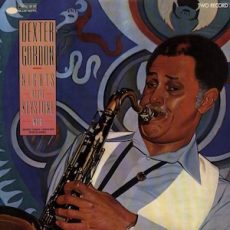
Dexter Gordon’s return to the United States generated significant excitement among his fans. After his triumphant return to the Village Vanguard and his 1976 performance, which produced the album Homecoming, he began touring regularly. This morning’s album from the library features the tenor saxophonist and his quartet at one of San Francisco’s notable jazz clubs. Nights At The Keystone (Blue Note BABB-85112) is a two-record set documenting his performances over several nights in 1978 and 1979 at the Keystone Korner. George Cables on piano, Rufus Reid on bass, and Eddie Gladden on drums round out the group. The copy I own is the 1985 U.S. stereo release.
The album opens with the quartet’s tender rendition of Sophisticated Lady by Duke Ellington. Dexter introduces the song with a dreamy melody, which he sustains with remarkable sensitivity in his opening statement. George’s subsequent solo evokes a bygone era of innocence and joy. Dexter returns to add a few final gentle thoughts before the closing ensemble and audience’s applause. Gordon speaks to the audience and introduces It’s You or No One by Jule Styne and Sammy Cahn. The quartet launches into a spirited theme, then Gordon takes charge on the first solo, soaring into the stratosphere. Cables tackles the following solo at a brisk pace, then Gordon trades lively choruses with Gladden, paving the way for a swift return to the theme and a spirited finish.
The rhythm section opens Dexter Gordon’s Antabus with an energetic introduction. The quartet then is off to the races with a brisk melody. Dexter ignites the opening interpretation with fiery tenor saxophone lines. George continues cooking with agility in the following statement, then Dex takes the reins again briefly before the quartet takes the song out. Easy Living by Ralph Rainger and Leo Robin comes from the 1937 film of the same name and slows the ensemble down for the pianist’s introduction, segueing to the quartet’s gentle theme. Dexter’s opening statement is sure to melt all the tension in your body away with delicacy and tender warmth. Cables responds with a deceptively elegant approach that picks up the pace to midtempo ahead of Gordon’s return for the theme’ restatement and ending.
The tempo moves upward again to begin side three with the quartet’s lively version of Tangerine by Johnny Mercer and Victor Schertzinger. The rhythm section provides a lush foundation for Dexter’s melody to flow comfortably at an easy beat. Dexter takes the spotlight first with a down-home, soulful flavor that swings from the first note to the finale. George has the next spot and makes his presence felt preceding the closing chorus. More Than You Know by Vincent Youmans, Edward Eliscu, and Billy Rose begins with the group’s elegantly graceful introduction and melody. Gordon again shows off his sentimental side with a hauntingly tender lead solo. Cables steps up next for a short, serene statement that builds as it unfolds. Gordon has the final say ahead of the group’s gorgeous finale.
Side Four concludes the album with Come Rain or Come Shine, by Harold Arlen and Johnny Mercer, giving everyone a lengthy solo. The quartet’s medium tempo sets the song’s introduction and opening chorus in motion. Dexter is up first with a neatly paced stroll, then George delivers a splendid performance. Rufus walks with a soulful groove next, and Dexter and Eddie engage in a brief exchange before the quartet’s return and finale. Todd Barkan produced Nights at the Keystone, and Rich McKean managed the recording console. Malcolm Addey was the mixing engineer, and Rudy Van Gelder mastered the album.
The sound quality of this live album is exceptional, truly capturing the ambiance of Keystone Korner and offering an impressive soundstage that highlights The Dexter Gordon Quartet at their finest. If you’re searching for a top-notch live performance by one of jazz’s legendary tenor saxophonists, Nights at the Keystone by Dexter Gordon is well worth checking out during your next visit to the record store. It spotlights the tenor saxophonist in peak form, blending technical brilliance, improvisational flair, and deep musical chemistry throughout the set!
~ Homecoming (Columbia PG 34650) – Source: Discogs.com ~ Come Rain or Come Shine, Easy Living, More Than You Know, Tangerine – Source: JazzStandards.com © 2026 by Edward Thomas Carter

More Posts: choice,classic,collectible,collector,history,instrumental,jazz,music,saxophone
Requisites
Tubby Hayes and The Jazz Couriers Featuring Ronnie Scott | By Eddie Carter
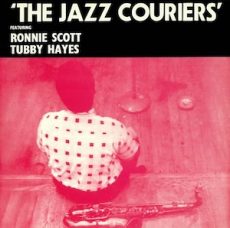
This morning’s album from the library is Tubby Hayes and The Jazz Couriers (Tempo TP 15), a 1958 release by a British quintet inspired by Art Blakey and The Jazz Messengers. The group lasted only two years, but in that time, they produced some of the best hard-bop jazz in the United Kingdom. The ensemble on this date consists of Jimmy Deuchar (tracks A1, B3) on trumpet; Tubby Hayes on tenor saxophone and vibraphone (tracks A2 to A4, B3); Ronnie Scott on tenor saxophone; Terry Shannon on piano; Phil Bates on bass; and Bill Eyden on drums. The copy I own is a 1982 U.K. mono reissue (Jasmine JASM 2004).
The album kicks off and wraps up with a quick burst of Sonny Stitt’s The Theme, driven by both saxes and ends as quickly as it starts. The opener is “Through The Night Roared The Overland Express,” by Tubby Hayes. A happy original that opens with a steady beat and splendid work by the ensemble during the melody. Tubby is up first and gives an enthusiastic lead solo, then Jimmy takes a robust turn. Ronnie brings a rush of excitement to the third reading, and Terry swings joyfully before the sextet reunites for the closing chorus. The quintet introduces On A Misty Night, by Tadd Dameron, with a gentle melody. Ronnie embraces the opening solo warmly, then Tubby radiates heartfelt sincerity with his vibes. Terry and Phil share a thoughtful reading of refined elegance that gently leads to a loving finish.
“Plebus, by Tubby Hayes, is dedicated to Tony Hall and shifts the beat to a medium groove, allowing the front line to state the melody. Ronnie takes the lead this time, cruising at a comfortable speed. Tubby’s vibraphone flows effortlessly through the second reading next. Terry keeps the infectious beat going with finesse, followed by Tubby on tenor sax, who has a short say, then both horns engage in a brief exchange ahead of the close. Hank Mobley’s Reunion sets the beat to an uptempo pace for the quintet’s brisk theme, with Hayes on vibes during the opening melody and the out-chorus. Ronnie charges into the lead solo first; next, Tubby delivers a torrent of electrifying notes. Terry follows his colleague with feisty agility, and Bill has a spirited exchange with both horns ahead of the reprise and close.
Oh, My! by Allan Ganley opens Side Two with a lively ensemble theme that conveys the joy and pleasure the horns feel as it unfolds. Tubby launches into the opening solo vigorously. Terry comes right behind him with a spirited performance. Ronnie next takes center stage with a series of fiery verses, then both saxophonists share a vibrant finale, leading to the closing chorus. A Foggy Day, by George and Ira Gershwin, begins with a tender melody led by the front line. Tubby strolls into the opening solo with a beautifully sincere performance, then Ronnie builds the following statement gently. Terry evokes a warm glow of elegant sincerity next, and Phil takes a delicately intimate walk before the alluring theme returns.
Tubby Hayes’ Royal Ascot takes its name from Ascot Racecourse, and brings back Jimmy Deuchar to the group with Hayes, back on vibes. The infectiously charming tune begins with the ensemble’s lively opening chorus. Tubby is up first with an energetic bounce, then Jimmy responds with an invigorating reading that is sadly over before you know it. Ronnie takes the next spot with a brisk statement, and Terry follows with a swift chorus ahead of the theme’s return. Cheek To Cheek by Irving Berlin takes off at breakneck speed from the ensemble’s melody. Tubby leads off with passionate intensity. Ronnie then delivers a dazzling, high-octane solo. Bill wraps up this exhilarating ride with a fiery conversation between both saxophones, leading to a powerful finish with The Theme’s reprise.
Tony Hall supervised the initial session, and Bert Steffans and Cyril Windobanks are the talented individuals at the recording console. The sound quality is crisp with an impressive soundstage emerging from your speakers with stunning fidelity. The album recaptures the spirit of hard bop at its best by two of Britain’s top saxophonists, Tubby Hayes and Ronnie Scott, alongside the excellent rhythm section. My only issue with this reissue is Jasmine’s choice to apply a pink filter to the original black-and-white photo of Hayes sitting at the bandstand that Tempo used for the original release. That issue aside, “Tubby Hayes and The Jazz Couriers” is an album that still stands up over six decades later and is well worth adding to your jazz library!
~ A Foggy Day, Cheek To Cheek – Source: JazzStandards.com © 2026 by Edward Thomas Carter
More Posts: choice,classic,collectible,collector,history,instrumental,jazz,music,saxophone
Requisites
Swingin’ Till The Girls Come Home ~ Eddie ‘Lockjaw’ Davis Quartet | By Eddie Carter
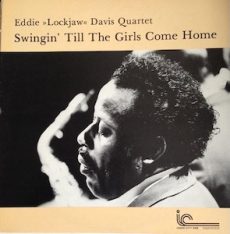
Submitted for your approval this morning from the library is an album that was recorded during Eddie ‘Lockjaw’ Davis’s 1976 tour of Denmark. While there, the tenor saxophonist was so taken with the Danish trio led by drummer Alex Riel, who was well known for performing with many American jazz artists at Jazzhus Montmartre. Both musicians went into the studio to record Swingin’ Till The Girls Come Home (SteepleChase Records SCS 1058). Rounding out the ensemble are Thomas Clausen on piano and Bo Stief on drums. The copy I own is the 1977 U.S. stereo reissue (Inner City Records IC 2058).
The album opener, Swingin’ Till The Girls Come Home by Oscar Pettiford, begins with Stief’s brief introduction ahead of the quartet’s easygoing theme. Eddie soars into a lively opening solo, driving the groove. Bo takes the reins next in a short walk, then Thomas adds the exclamation point, leading back into the melody’s reprise and ending. The tempo moves upward significantly for Cole Porter’s Love for Sale, beginning with the foursome’s upbeat melody. Davis is firing on all cylinders with a brisk opening statement. Clausen then dives into the following interpretation. The leader returns to deliver a few final comments in a short exchange with Riel before the foursome’s reprise fades out slowly.
Out of Nowhere by Johnny Green and Edward Heyman takes the temperature down to a medium tempo for the ensemble’s opening chorus. Eddie is off to a fine advantage with a consistently effective first solo. Thomas is at the top of his game in the succeeding statement, and Eddie and Bo share a concise and perfectly delivered finale, leading to the reprise and climax. Ghost of a Chance by Victor Young and Ned Washington becomes the centerpiece of ‘Lockjaw’ in a hauntingly beautiful version. Davis’s solo is a melodic beauty, underscored by the rhythm section’s accompaniment, culminating in an elegant ending.
Side Two starts with Locks, by Eddie ‘Lockjaw’ Davis. The rhythm section brings the song to life, segueing to the quartet’s theme. Eddie takes the opening with an infectious and bouncy beat. Thomas echoes the leader with a bustling solo, then gives way to Bo, who expresses joy in the third reading. Eddie returns to swing solidly toward the climax. Wave by Antonio Carlos Jobim begins with Davis gliding efficiently over the Latin melody. Davis takes the first of two bites out of this jazzy apple first, then Clausen puts together an impressive reading. The saxophonist reappears for a few final comments preceding the quartet’s reprise and fadeout.
Indiana by James Henley and Ballard MacDonald takes off at a fast gallop from the foursome’s opening notes of Riel’s introduction to the quartet’s melody. Eddie’s opening solo begins aggressively; he then shares the spotlight with Alex in a concise exchange before the theme is restated and the song concludes. Bye Bye Blackbird by Ray Henderson and Mort Dixon also swings at a comfortable pace, beginning with the quartet’s happy theme. Davis gets right to work wailing on the opening statement, then Clausen follows the leader enthusiastically, preceding the ensemble’s closing chorus and exit.
Nils Winther produced Swingin’ Till The Girls Come Home, with Ove Sørensen delivering a fantastic recording. The album’s sound quality is exceptional, from vibrant highs to warm lows, as the quartet creates a bright, clean, richly detailed soundstage that draws you in. If you’re a fan of the tenor saxophone, I highly recommend and invite you to explore Swingin’ Till The Girls Come Home by the Eddie ‘Lockjaw’ Davis Quartet on your next record-shopping adventure. It’s an excellent album featuring one of jazz’s great musicians, and I believe it will become a cherished addition to the libraries of both newcomers and seasoned jazz aficionados!
~ Bye Bye Blackbird, Ghost of a Chance, Indiana, Love for Sale, Out of Nowhere, Wave – Source: JazzStandards.com
© 2026 by Edward Thomas Carter
More Posts: choice,classic,collectible,collector,history,instrumental,jazz,music,saxophone
Requisites
The Jazz Messengers at The Café Bohemia, Volume 2 | By Eddie Carter
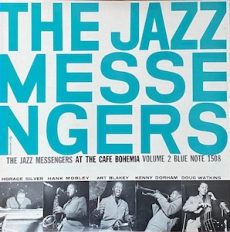
Submitted for your approval this morning, we’re returning to the little jazz club at 15 Barrow Street to see The Jazz Messengers at The Café Bohemia, Volume 2 (Blue Note BLP 1508). Returning to the stage are Kenny Dorham on trumpet, Hank Mobley on tenor saxophone, Horace Silver on piano, Doug Watkins on bass, and Art Blakey on drums. The copy I own is the 1978 King Record Company Japanese mono reissue, sharing the original catalog number. Just as he did to start the evening, Art once again greeted the audience, encouraging any latecomers to settle in and enjoy themselves as The Jazz Messengers got things rolling.
The opening selection, Sporting Crowd, is a lively Hank Mobley original that’s off to the races with Blakey and the rhythm section’s rocking introduction, leading into the ensemble’s swinging, cohesive theme. Kenny kicks off his opening statement with a brass bite in a fiery performance that displays his impeccable chops. Hank launches into a scintillating solo that builds intensity before passing the spotlight to Horace, who impresses in an energetic interpretation. Art has the last word and delivers an electrifying display before the ensemble returns to take the song out.
Art introduces the 1944 jazz standard, Like Someone In Love by Jimmy Van Heusen and Johnny Burke. It first appeared in the film “Belle of the Yukon,” and Blakey would re-record it in 1960, but it remained shelved until 1967, when it was released as the title track of The Jazz Messengers album. The ensemble lovingly honors this beloved tune with a relaxing melody. Kenny retakes the lead, delivering a fine example of delicacy and sensitivity. Hank brings the second solo off in charming style, then Horace wraps up with an easygoing reading before the melody’s reprise and warm applause from the audience.
Art turns the microphone over to Kenny Dorham, who gets the spotlight to himself when he introduces Yesterdays, the beautiful 1933 ballad by Jerome Kern and Otto Harbach. It first appeared in the Broadway musical, “Roberta,” that year and was featured again in the 1935 film. Over the past ninety years, it’s become a beloved jazz standard, cherished and reinterpreted by countless artists. The trumpeter’s performance is a model of thoughtful sensitivity as he delivers a melody of serene beauty. As the song’s only soloist, his interpretation shines with gentle sensitivity, each phrase rendered with graceful elegance and culminating in a thoughtful, reflective conclusion.
Avila and Tequila by Hank Mobley injects renewed energy into the quintet with an uptempo beat, with Art’s Latin-inspired, lively, lengthy percussive introduction leading into the vigorous melody. Hank launches into a searing opening statement that creates a lot of heat. Kenny follows him closely, keeping the fires burning in a robust performance. Horace continues cooking hard with a brisk interpretation, inspiring Doug and Art to propel the beat to a vibrant, swinging peak. The drummer rounds out the solos with a brisk workout, joined by Mobley, Silver, and Watkins, before the ensemble comes together for the swift reprise and enthusiastic ovation.
The album closes with I Waited For You, a 1946 ballad by Dizzy Gillespie and Gil Fuller that hasn’t been over-recorded. Hank opens with a delicately pretty introduction, leading into Kenny’s heartwarming melody. The trumpeter continues embracing a touch of refined artistry in the opening statement. Hank follows, gently navigating the song’s nostalgic beauty in the following interpretation. Horace provides the song’s exclamation point in a beautifully crafted finale, exquisitely conceived and presented, leading into the quintet’s breathtaking climax and a slow fadeout as the group reprises their theme.
Alfred Lion produced The Jazz Messengers at Café Bohemia, Volume 2, along with its companion, while Rudy Van Gelder took care of the recording during the group’s live performance. The King Japanese mono reissue offers fantastic sound quality—clean and lively. It’s truly a delightful listening experience from The Jazz Messengers, showcasing some of the finest in Hard-Bop, just as its companion does. If you’re new to jazz or a longtime fan of the group, I wholeheartedly recommend adding The Jazz Messengers at Café Bohemia, Volume 2 to your library. It’san album that promises a rich and enjoyable musical journey.
~ Like Someone In Love, Yesterdays – Source: JazzStandards.com © 2026 by Edward Thomas Carter
More Posts: choice,classic,collectible,collector,drums,history,instrumental,jazz,music
Requisites
The Jazz Messengers at The Café Bohemia, Volume 1 | By Eddie Carter
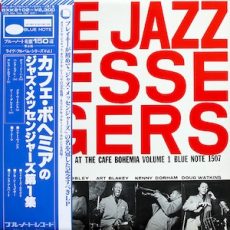
The year 1955 was a remarkable one for Art Blakey, following his group’s performance at Birdland the previous year, which resulted in A Night at Birdland, Volumes 1, 2, and 3. All three releases were a triumph for the drummer, allowing him to establish a lasting band, The Jazz Messengers, which he co-led with Horace Silver. The inaugural lineup showcased some of the era’s brightest rising stars. Kenny Dorham on trumpet, Hank Mobley on tenor saxophone, Horace Silver on piano, and Doug Watkins on bass. The Jazz Messengers at The Café Bohemia, Volume 1 (Blue Note BLP 1507) documents the quintet’s performance at the jazz club on November 23, 1955. The copy I own is the 1978 King Record Company Japanese mono reissue, sharing the original catalog number.
Art greets the audience at the opening of the set, letting them know they’re in for a memorable cooking session, then cheerfully introduces The Jazz Messengers to everyone in attendance. The quintet starts the set with Soft Winds by Benny Goodman and Fred Royal. The song opens smoothly, with the ensemble’s melody at a relaxed pace. Hank leads the way, confidently captivating the audience and delivering each note of the opening statement efficiently. Kenny follows with a charming performance of lively agility, then Horace brings the solos to a rousing finish, ahead of the theme’s restatement and conclusion.
Kenny Dorham not only played trumpet on this album, but he also arranged every song the group performed. The Theme ends the first side on a thrilling note, with Blakey launching the song with a dazzling introduction before the ensemble’s brisk opening chorus. Dorham leads the charge first with surgical precision, then Silver enters next, building on the excitement in a performance that swings with a happy lift. Mobley takes the baton and lays down a fiery groove of intense heat. Silver returns for a second spirited reading, then Blakey delivers a powerful closing statement before the group’s return for the reprise and climax.
The second side kicks off with Kenny Dorham’s Minor’s Holiday, maintaining the high-spirited energy set by the previous tune. Blakey’s vigorous introduction sets the stage for the ensemble’s speedy theme. Dorham is again the first soloist and really cooks, cleverly weaving in hints of Sing, Sing, Sing throughout his performance. Mobley steps up enthusiastically with an energetic reading next. Silver follows with an exhilarating interpretation that races through each line with intense drive. Dorham then trades spirited riffs with Blakey’s speedy workout, culminating in the theme’s reprise and an electrifying finish.
Alone Together, by Arthur Schwartz and Howard Dietz, is a showcase for Hank, who introduces the song and leads the rhythm section in the pensively beautiful melody. As the song’s only soloist, he delivers an enchanting performance of gentle sensitivity ahead of the quartet’s reprise and soft summation. Prince Albert by Kenny Dorham and Max Roach closes the album and opens with a relaxed, inviting ensemble melody. Kenny takes the lead and gives a captivating solo. Hank follows with an easygoing groove that’s velvety smooth. Both horns share a brief dialogue with Art before the theme’s return.
Rudy Van Gelder oversaw the recording duties for this album and the companion volume two, ensuring that those who couldn’t be present at The Café Bohemia that evening could still enjoy an extraordinary listening experience. The reissue’s sound quality is superb, with an exceptional soundstage transporting the listener to the club’s cozy, vibrant atmosphere. The Jazz Messengers at The Café Bohemia, Volume 1 stands as a testament to the quintet’s outstanding performance on that special night. Every solo is inspired, and for those eager to expand their musical tastes, I highly recommend this album as an excellent addition to any jazz enthusiast’s library!
~ A Night at Birdland, Volume 1 (Blue Note BLP 5037), A Night at Birdland, Volume 2 (Blue Note BLP 5038), A Night at Birdland, Volume 3 (Blue Note BLP 5039) – Source: Discogs.com ~ Alone Together – Source: JazzStandards.com © 2026 by Edward Thomas Carter
The Jazz Messengers At The Cafe Bohemia: 1955 | The Jazz Messengers For the serious collector of jazz… #Jazz #Classic #Collectible #Music #Notorious
More Posts: choice,classic,collectible,collector,drums,ensemble,history,instrumental,jazz,music