

Daily Dose Of Jazz…
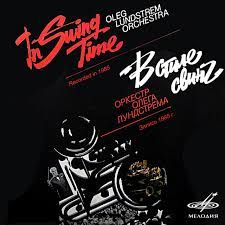
Oleg Leonidovich Lundstrem was born April 2, 1916 into a family of musicians in Chita, Transbaikal Oblast. His family moved to Harbin, China when he was five. By 1935, inspired by Duke Ellington’s Dear Old Southland record which he purchased, he joined forces with eight other young Russian amateur musicians and formed the Oleg Lundstrem Orchestra. The following year the band moved to Shanghai, China where they immediately became popular among the public. The band was an important part of Shanghai’s jazz scene until 1947, along with Buck Clayton Orchestra.
After World War II, in 1947 Oleg returned to the Soviet Union and settled in Kazan, where he worked as a violinist in the opera and ballet theatre, while keeping his jazz orchestra as a side act. 1956 saw the Oleg Lundstrem Orchestra moving to Moscow where he was appointed by the Soviet cultural authorities as the orchestra’s art director and conductor.
His orchestra was recognized by the Guinness Book of Records as the oldest continuously existing jazz band in the world, the official name being The State Oleg Lundstrem Chamber Orchestra of Jazz Music.
Composer and conductor Oleg Lundstrem, also spelled Lundstroem or Lundström, transitioned from natural causes at his home on October 14, 2005 in Korolyov, Moscow Oblast at the age of 89.
More Posts: bandleader,composer,conductor,history,instrumental,jazz,music,violin
Daily Dose Of Jazz…
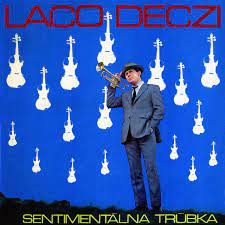
Ladislav Déczi was born on March 29, 1938 in Bernolákovo, Czechoslovakia and showed an interest in the trumpet while in elementary school. He went through several music ensembles in high school and during his military service performed in Prague, Czechoslovakia. After his discharge he remained in Prague and started performing with the Rokoko Theater Sextet and then with the Jazz Outsiders. He then went on to work with Karel Velebny’s S+HQ and as the frontman for the Reduta Quartet.
By the mid-Sixties he founded Jazz Celulla, joined the Czechoslovak All Star Band, the Jazz Orchestra of the Czechoslovak Radio, and the Dance Orchestra of the Czechoslovak Radio. He recorded several solo albums, composed orchestral compositions.
Emigrating to America in 1986 he again took the frontman space for Celula New York. He performed with Elvin Jones, Bill Watrous, Junior Cook, Dave Weckl and Sonny Costanzo. He recorded several duo albums with Sarka Dvorak and composed an abundance of music for film and television productions. He has won several awards during his career and has toured Eastern Europe especially his homeland, Germany and Austria.
Trumpeter, composer, and bandleader Laco Déczi, who also paints, continues to perform, compose and record.

More Posts: composer,history,instrumental,jazz,music,trumpet
Three Wishes
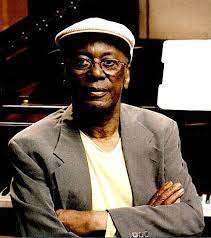
Nica threw out the question to Andrew Hill what his three wishes would be and after careful thought replied:
- “To be able to take care of my family the way I want to be able to take care of them.”
- “To be able to play six months out of the year, and to be able to woodshed six months out of the year..”
- “To learn how to be a man.”
*Excerpt from Three Wishes: An Intimate Look at Jazz Greats ~ Compiled and Photographed by Pannonica de Koenigswarter

More Posts: baroness,composer,history,instrumental,jazz,music,pannonica,piano,three,wishes
Daily Dose Of Jazz…
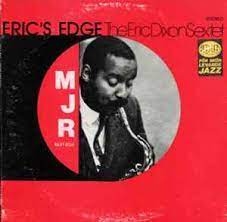
Eric “Big Daddy” Dixon was born on March 28, 1930 in New York City, New York. Although he played bugle as a child,he switched to the tenor saxophone at the age of 12. Following a stint as a musician in the US Army from 1951 to 1953 he played in groups that sometimes included Mal Waldron, with whom he would later record.
In 1954, he played with Cootie Williams and the following year with Johnny Hodges. In 1956, he performed and recorded with Bennie Green and also took up the flute.
The late Fifties had him spending four years in the house band led by Reuben Phillips at the Apollo Theatre in New York. At the end of the decade he toured Europe and recorded with the Cooper Brothers.
He also worked with Paul Gonsalves, Ahmed Abdul-Malik, Oliver Nelson, Quincy Jones, Jack McDuff, Joe Williams, Frank Foster, and Eddie “Lockjaw” Davis, but is probably best known for his tenure in Count Basie’s band, which lasted almost two decades. Dixon continued to play in the ghost band after Basie’s death.
Tenor saxophonist, flautist, composer, and arranger Eric Dixon, who has been credited on as many as 200 recordings, transitioned on October 19, 1989 in New York City.
More Posts: arranger,composer,flute,history,instrumental,jazz,music,saxophone
Daily Dose Of Jazz…
David Owen Mackay was born on March 24, 1932 in Syracuse, New York. He attended Trinity College in Hartford, Connecticut from 1950 to 1954, where he was the first blind student to graduate. He then attended Boston University from 1956 to 1958, where he studied with Margaret Charloff. He also studied with Lennie Tristano in New York City, then at the Lenox School of Jazz where he studied with Bill Evans, and lastly at The Hartford School of Music where he studied with Asher Zlotnik.
By the mid-1960s, Mackay joined the Hindustani Jazz Sextet with Don Ellis, Harihar Rao, Emil Richards, Steve Bohannon, Chuck Domanico and Ray Neapolitan. During this period he played with the Don Ellis Orchestra. The late Sixties saw him and Vicky Hamilton formed a duo and produced two recordings together with instrumentation including flute and saxes from Ira Schulman and guitar from Joe Pass.
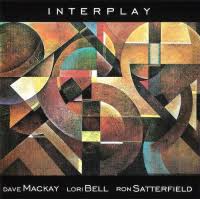
In the mid-1970s, Dave along with Bill Henderson, and Joyce Collins formed a unique trio which toured the northwest, recorded two Grammy nominated albums for Discovery, and by 1981 they were performing on the television show Ad Lib. By the end of the decade with Lori Bell, and Ron Satterfield he formed the group Interplay, which garnered them four Grammy npominations. In the 1990s, he teamed up with Stephanie Haynes.
By the turn of the century he teamed with John Giannelli on bass and Joe Correro on drums performing Bill Evans tunes in a celebration of the Life and Music of bassist Scott LaFaro. He then hooked up with bassist Kenny Wild and singer Tierney Sutton. He would go on to perform with Serge Chaloff, Sonny Stitt, Bob Wilber, Bobby Hackett, Jim Hall, Don Ellis, Emil Richards, Shelly Manne, Chet Baker, Joe Pass, Warne Marsh, Kai Winding, Stephanie Haynes, and Tierney Sutton.
As a composer a couple of Mackay’s original compositions were later recorded by Cal Tjader, and by the Baja Marimba Band. He wrote a majority of the music with lyricist Barbara Schill for a hit stage musical comedy titled Is It Just Me, Or Is It Hot In Here?
Pianist, vocalist and composer Dave Mackay, with roots in the works of Art Tatum, Bud Powell, and Bill Evans, who favored the standards of the 1940s and 1950s and the bossa novas of Luíz Eça, Antonio Carlos Jobim, and João Gilberto, transitioned on July 29, 2020.
More Posts: composer,history,instrumental,jazz,music,piano,vocal