

Daily Dose Of Jazz…
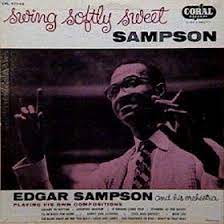
Edgar Melvin Sampson was born on October 31, 1907 in New York City, New York. He began playing violin aged six and picked up the saxophone in high school, then started his professional career in 1924 in a violin piano duo with Joe Colman. Through the rest of the 1920s and early 1930s, he played with many big bands, including those of Charlie “Fess” Johnson, Duke Ellington, Rex Stewart and Fletcher Henderson.
In 1934, Sampson joined the Chick Webb outfit and during his period he created his most enduring work as a composer, writing Stompin’ at the Savoy and Don’t Be That Way. Leaving Webb in 1936, his reputation as a composer and arranger led to freelance work with Benny Goodman, Artie Shaw, Red Norvo, Teddy Hill, Teddy Wilson and Webb.
Becoming a student of the Schillinger System in the early 1940s, Edgar continued to play saxophone through the late 1940s and started his own band at the end of the decade. He worked with Latin performers such as Marcelino Guerra, Tito Rodríguez and Tito Puente as an arranger.
He recorded one album under his own name, Swing Softly Sweet Sampson, in 1956. Due to illness, he stopped working in the late Sixties. Composer, arranger, saxophonist, and violinist Edgar Sampson, nicknamed The Lamb, transitioned on January 16, 1973.

More Posts: arranger,bandleader,composer,history,instrumental,jazz,music,saxophone,violin
MARIA SCHNEIDER ORCHESTRA
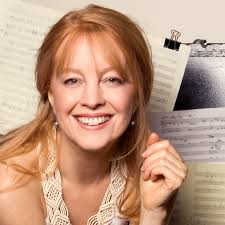
NEA Jazz Master Maria Schneider returns to NJPAC with her genre-defying orchestra. Widely acclaimed for her sophisticated large-ensemble recordings, Schneider is a gifted arranger and composer whose highly original work often blurs the lines between post-bop, classical and the avant-garde. Her GRAMMY® winning albums include 2005’s Concert in the Garden, 2008’s Sky Blue, and 2015’s The Thompson Fields. Schneider’s dedicated passion for artist’s rights informed her GRAMMY® winning album Data Lords, which was also a finalist for the 2021 Pulitzer Prize.
More Posts: adventure,album,bandleader,club,composer,festival,genius,jazz,museum,music,preserving,restaurant,travel
MALA WALDRON
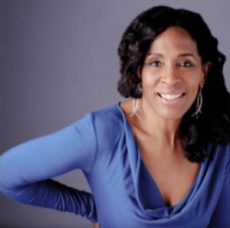
Mala’s music career has taken her all over the world, performing for international tours and festivals, as well in some of NYC’s most prestigious stages, including the Iridium Jazz Club, the Blue Note, the Jazz Standard, the 55 Bar, and Brooklyn’s BAM Café. Most recently she performed in Washington DC at the Kennedy Center.
Mala was a featured performer at the first annual Coltrane Day Festival, was featured in the book, Giving Birth to Sound: Women in Creative Music (Renate da Rin and & William Parker editors) and can be seen in the documentary film, ‘The Girls in the Band,” directed by Judy Chaikin.
More Posts: adventure,album,club,composer,festival,genius,jazz,museum,music,piano,preserving,restaurant,travel,vocal
Daily Dose Of Jazz…
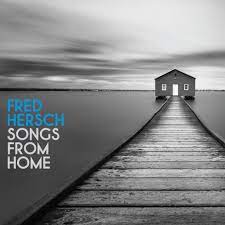
Fred Hersch was born October 21, 1955 in Cincinnati, Ohio to Jewish parents and began playing the piano at the age of four, composing music by eight. By ten he won national piano competitions.
Hersch first became interested in jazz while at Grinnell College in Iowa. He dropped out of school and started playing jazz in Cincinnati, continuing his studies at the New England Conservatory under Jaki Byard and attracting attention from the press in a college recital. Upon graduation, he became a jazz piano instructor at the college.
1977 saw Fred moving to New York City, then gigged with Art Farmer in Los Angeles, California in 1978. He would play with Farmer again three years later, played for singer Chris Connor, then with Joe Henderson. He would go on to perform with Jane Ira Bloom, Jamie Baum, Toots Thielemans, Eddie Daniels, and Janis Siegel. A fortuitous firing of his pianist by Art Pepper gave Hersch the launch of his career when he filled in for the pianist.
In 1986, he taught at Berklee College of Music, performed and recorded sixty-four albums as a leader or co-leader, seventy-nine as a sideman and wrote an autobiography, Good Things Happen Slowly: A Life In and Out of Jazz.
In 1993, Hersch came out as gay and has been treated for HIV since 1984. He fell into a coma in 2008 for two months but when he regained consciousness, he had lost all muscular function as a result of his long inactivity and could not play the piano. After rehabilitation, he was able to play again. He continues to compose, perform and record.
More Posts: bandleader,composer,educator,history,instrumental,jazz,music,piano
Daily Dose Of Jazz…
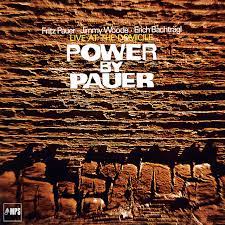
Fritz Pauer was born on October 14, 1943 in Vienna, Austria and began his professional playing career as a teenager, performing with Hans Koller for two years beginning in 1960 before leading his own ensembles in Berlin, Germany. In the 1960s he played with Don Byas, Booker Ervin, Dexter Gordon, Friedrich Gulda, Annie Ross and Art Farmer, recording three albums with the latter as a sideman.
As an educator he taught at the Vienna Municipal Conservatory from 1968-1970, after which he became a member of the ORF-Big Band. The 1970s saw Fritz recording as a leader as well as with Klaus Weiss and Peter Herbolzheimer.
By the mid-1980s Pauer was living in Peru for a brief period, then moved to Switzerland in 1986. Later in life education once again entered his life and he became a university professor. An early 2000s collaboration with Jay Clayton and Ed Neumeister was released as the album 3 for the Road.
Pianist, composer and bandleader Fritz Pauer transitioned on July 1, 2012.
More Posts: bandleader,composer,history,instrumental,jazz,music,piano