

Daily Dose Of Jazz…
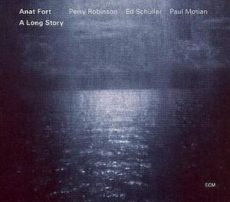
Anat Fort was born March 8, 1970 near Tel Aviv, Israel. She studied music at William Paterson University in Wayne, New Jersey and moved to New York City in 1996 to develop her skills in jazz improvisation under the guidance of pianist Paul Bley and study composition with Harold Seletsky before releasing her debut self-produced album Peel in 1999.
Signing with ECM Records, her first album A Long Story, released in 2007 arose from an association with drummer Paul Motian. This was followed by And If in 2010, the first album with her regular working group, the Anat Fort Trio.
Pianist and composer Anat Fort has recorded several acclaimed albums, has performed across Europe and the United States, and continues to pursue her jazz endeavors.

More Posts: bandleader,composer,history,instrumental,jazz,music,piano
Daily Dose Of Jazz…
James Edward Davis was born in 1915 in Madison, Georgia. He and his family moved to Gary, Illinois, and then to Englewood, New Jersey, where he completed his high school education. Being musically gifted, he was accepted into the Juilliard School in New York City to study piano and composition, his fees being paid by a benefactress.
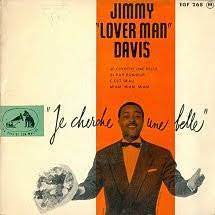
In the late 1930s he wrote the song Lover Man (Oh, Where Can You Be?) with Ram Ramirez but could not initially place it, until he offered it to Billie Holiday in 1942. However, due to the 1942–44 musicians’ strike Holiday didn’t record the song until 1944. Although at first it was only a minor hit, it soon achieved widespread success and went on to become a jazz standard.
During the early 1940s Davis struggled to make a living as a songwriter and supplemented his meagre royalties by giving piano lessons. Drafted in 1942, but as a member of the NAACP, refused enlistment into the segregated regiment, was ultimately imprisoned for thirteen days, then inducted into the army, serving three and a half years. By 1945, as a warrant officer, he was sent to France for six months, and learned the language. Back home, upon his discharge he left for Hollywood, joined the Actors’ Laboratory Theatre, however his acting career only offered stereotypical racial roles. At the end of 1947 he emigrated to France.
Warmly welcomed in Paris, in part, due to the fame of the song Lover Man, he styled himself Jimmy “Lover Man” Davis and entered a highly creative period, writing a number of songs and placing them with major French performers, such as Yves Montand, Maurice Chevalier, and Joséphine Baker. His songwriting royalties were still insufficient to live on, so he began singing his own songs in solo performances, touring through France, Italy, Holland, Spain, Switzerland and other countries.
Composer, songwriter, vocalist, pianist and actor Jimmy Davis, whose birth and death dates are currently unknown, and who was a close friend of Langston Hughes, transitioned in Paris, France in 1997. His biography, In Search of Jimmy ‘Lover Man’ Davis, was written by Professor François Grosjean.
More Posts: composer,history,instrumental,jazz,music,piano,songwriter,vocal

Daily Dose Of Jazz…
Clotilde Rullaud was born March 1, 1978 in Reims, France and was immersed in the performing arts of music, theatre and dance from early childhood. At five, she began studying flute and singing at the conservatoire, before going on to complete her studies in jazz and improvised music at IACP in Paris, France and EDIM in Cachan, France. She explored opera singing with the tenor singer, Peterson Cowan.
Her musical identity developed through her travels through the Balkans, Ireland, Lebanon, the United States. Clotilde’s study of vocal techniques, inspired by Meredith Monk, fado, tango, Romani music, Turkish music, Persian music, Inuit throat singing and Bulgarian voices were also great influences.
She has recorded three albums as a vocalist and flutist, her 2007 debut with Hugo Lippi, Live au 7 Lézards She has also directed and produced a short film, and written and directed a multidisciplinary performance. With a repertoire spanning jazz, free improvisation and folk music, her career as a musician has led her to perform in France, Germany, Australia, Burkina Faso, China, South Korea, Japan, Luxembourg, the Netherlands, Switzerland, Taiwan, the United Kingdom and the United States.
Since 2007, Rullaud has taught at Martina A. Catella’s school, Les Glotte-Trotters in Paris, and conducted workshops for the festival Les Suds in Arles and for the Ateliers d’ethnomusicologie (ADEM) in Geneva, Switzerland. Moving to New York City in 2017 she collaborated with American pianist Chris McCarthy, producing Pieces of a Song, a repertoire of dark and beautiful pieces based on the writings of Diane di Prima, poetess of the Beat Generation.
She has performed with Olivier Hutman, Dano Haider, Antoine Paganotti, Tristan Macé, Albin Lebossé, Emmanuel Bex, Yann Cléry, Laurent Salzard, Gautier Garrigue, and Alexandre Saada, the latter collaboration produced A Woman’s Journey, a homage to American female protest songstresses.
She has received numerous awards for her work in both jazz and film. Vocalist, flutist and composer Clotilde Rulllaud, who is also an artistic director, filmmaker, producer and facilitator, continues to pursue the limits of her creativity.
More Posts: composer,flute,history,instrumental,jazz,music,vocal
Daily Dose Of Jazz…
James Reese Europe was born on February 22, 1881 in Mobile, Alabama and in 1891 his family moved to Washington, D.C. In 1904 he moved to New York City and six years later he organized the Clef Club, a society for Black Americans in the music industry. In 1912, the club, with its 125 members who played in various configurations, made history when they became the first band to play a proto-jazza concert at Carnegie Hall for the benefit of the Colored Music Settlement School.
The importance of this historic concert is that it took place 12 years before the Paul Whiteman and George Gershwin concert at Aeolian Hall, and 26 years before Benny Goodman’s famed concert at Carnegie. The Clef Club’s performances played music written solely by Black composers, including Harry T. Burleigh and Samuel Coleridge-Taylor.
In 1913 and 1914 Jim made a series of phonograph records for the Victor Talking Machine Company. These recordings are some of the best examples of the pre-jazz hot ragtime style of the U.S. Northeast of the 1910s, predating and protecting the idea that the Original Dixieland Jass Band recorded the first jazz pieces in 1917 for Victor.
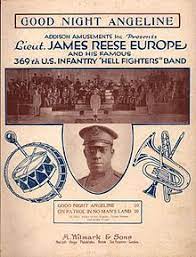
Europe was known for his outspoken personality and unwillingness to bend to musical conventions, particularly in his insistence on playing his own style of music. During World War I, Europe obtained a commission in the New York Army National Guard, where he fought as a lieutenant with the 369th Infantry Regiment otherwise known as the “Harlem Hellfighters” when it was assigned to the French Army. He went on to direct the regimental band to great acclaim. They made their first recordings in France for the Pathé Brothers.
Returning home in 1919 he made more records for Pathé with Noble Sissle and continued to lead his band. During a talk backstage with two of his drummers, Steve and Herbert Wright about their stage behavior, Herbert got agitated and stabbed Europe in the neck with a pen knife. The show went on, Jim went to the hospital but doctors were unable to stem the flow of blood.
Arranger, composer and bandleader Jim Europe, who also played piano and violin, and was the leading ragtime and early jazz figure on the Negro music scene of New York City in the 1910s, transitioned on May 9, 1919.

More Posts: arranger,bandleader,composer,history,instrumental,jazz,music,piano,violin
Daily Dose Of Jazz…
James Graham Collier OBE was born on February 21, 1937 in Tynemouth, Northumberland, England. After leaving school he joined the British Army as a musician, spending three years in Hong Kong, China. He subsequently won a Down Beat magazine scholarship to the Berklee School of Music, in Boston, Massachusetts studying with Herb Pomeroy.
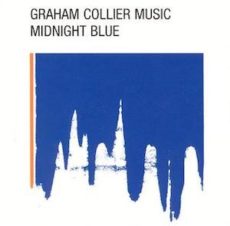
After graduating in 1963 he returned to Britain and founded the first version of an ensemble devoted to his own compositions, Graham Collier Music, which included Kenny Wheeler, Harry Beckett and John Surman. Later configurations included Karl Jenkins, Mike Gibbs, Art Themen and many other notable musicians.
As the first recipient of an Arts Council bursary for jazz, Graham was commissioned by festivals, groups and broadcasters across Europe, North America, Australia and the Far East. He recorded nineteen albums, worked on stage plays, musicals, documentary and fiction film, and radio drama productions.
Collier was an author and educator, writing seven books on jazz, giving lectures and workshops around the world. He launched the jazz degree course at London’s Royal Academy of Music and was its artistic director until he resigned in 1999, so he could concentrate on his own music.
Bassist, composer and bandleader Graham Collier, who along with a group of jazz educators formed the International Association of Schools of Jazz, transitioned from heart failure on September 9, 2011.
More Posts: bandleader,bass,composer,history,instrumental,jazz,music