

Daily Dose Of Jazz…
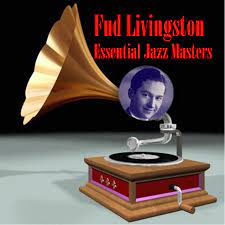
Joseph Anthony Livingston, better known by his peers as Fud, was born April 10, 1906 in Charleston, South Carolina and started out on accordion and piano before settling on saxophone. At seventeen he was playing with Tal Henry in Greensboro, North Carolina in 1923, then worked with Ben Pollack, the California Ramblers, Jean Goldkette, Nat Shilkret, Don Voorhees, and Jan Garber. He recorded freelance with musicians such as Joe Venuti, Red Nichols, and Miff Mole.
He did some arrangement work for Frankie Trumbauer and Bix Beiderbecke, including the nursery rhyme Humpty Dumpty. Livingston played on the 1928 Brunswick recording of “Room 1411” as a member of Bennie Goodman and His Boys, which also featured Glenn Miller, Jimmy McPartland, Bud Freeman, and Ben Pollack.
A stint in London,England in 1929 had him working with Fred Elizalde, then returned to New York City to play with Paul Whiteman. His time with Whiteman lasted from 1930 to 1933, and was mainly as an arranger, though he played occasionally. By the mid 1930s he worked with Benny Goodman, Jimmy Dorsey, Bob Zurke, and Pinky Tomlin as the country entered into the Forties. Essentially stopping his writing and arranging at this point, Fud would occasionally perform in small-time venues in New York in the 1950s.
His compositions included Feelin’ No Pain, Imagination, Humpty Dumpty, Harlem Twist, Sax Appeal, are well known but the jazz standard, I’m Thru With Love, written with Matty Malneck and Gus Kahn, has been recorded by over sixty musicians and vocalists, but a short list is Bing Crosby, Dizzy Gillespie, Arthur Prysock, Coleman Hawkins, Lorez Alexandria, John Pizzarelli, Joe Williams Marilyn Monroe, Maxine Sullivan and Steve Tyrell.
It has been sung in the films Everyone Says I Love You, Some Like It Hot, The Affairs Of Dobie Gillis and Spider~Man 3. Even Alfalfa from The Little Rascals had added it to his repertoire.
Clarinetist, saxophonist, arranger, and composer Fud Livingston, who never recorded as a leader, transitioned on March 25, 1957 in New York City.
More Posts: arranger,clarinet,composer,history,instrumental,jazz,music,saxophone
Daily Dose Of Jazz…
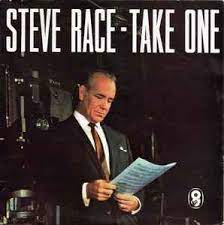
Stephen Russell Race was born April 1, 1921 in Lincoln, England and learned the piano from the age of five. His education from 1932 to 1937 was at Lincoln School, where he formed his first jazz group. At sixteen, he attended the Royal Academy of Music, studying composition under Harry Farjeon and William Alwyn. After leaving the academy, he wrote occasional dance band reviews for Melody Maker and, in 1939, joined the Harry Leader dance band as pianist, succeeding Norrie Paramor.
Race joined the Royal Air Force in 1941, and formed a jazz/dance quintet. After World War II, he began a long and productive career with the BBC, where his ready wit, musicianship and broad musical knowledge made him a much sought after musical accompanist for panel games and magazine shows, such as Whirligig and Many a Slip.
Simultaneously he played in the Lew Stone and Cyril Stapleton bands, and arranged material for Ted Heath. By 1949 The Steve Race Bop Group recorded some of the first British bebop records for the Paxton label. These included four sides with Leon Calvert, Johnny Dankworth, Peter Chilver, Norman Burns, Jack Fulton. He also developed a sideline arranging player piano rolls for the Artona company.
the 1950s to the 1980s, he presented numerous music programs on radio and television. Steve was the chairman of the long-running light-hearted radio and TV panel game My Music which ran for 520 episodes from 1967 to 1994. He also presented Jazz For Moderns and Jazz 625 for the BBC in the 1960s.
As a composer, he produced a number of pieces in the jazz, classical and popular idioms. Blue Acara, Esteban Cera, Faraway Music, Nicola, Ring Ding and Pied Piper aer just a few of his well known compositions. He appeared as pianist/bandleader in the 1948 film Calling Paul Temple and with Sid Colin wrote two of the songs performed by Celia Lipton. He also wrote other scores for films. His autobiography, Musician at Large, was published in 1979, and was inducted into the Order of the British Empire (OBE). Pianist, composer, radio and television presenter Steve Race had his first heart attack in 1965 and transitioned from a second attack at his home in Great Missenden, Buckinghamshire, on June 22, 2009.
More Posts: bandleader,composer,history,instrumental,jazz,music,piano
Daily Dose Of Jazz…
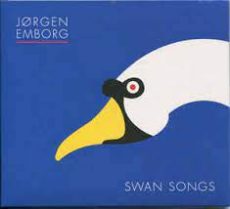
Jørgen Emborg was born in Copenhagen, Denmark on March 29, 1953 and was influenced by Bill Evans, Herbie Hancock and Keith Jarrett.
He has played at international festivals since 1975, releasing his first album, Sargasso in 1979 on the Kong Pære label. In the following years he belonged to Six Winds with Marilyn Mazur, Uffe Markussen and Alex Riel and formed with Palle Mikkelborg, Bjarne Roupé, Bo Stief and Ole Theill the ensemble Alpha Centauri.
By1986 he recorded with Bjarne Rostvold and through the Nineties he performed and/or recorded with Thomas Hass and Tomas Franck. Emborg teamed up with Alex Riel again and recorded Over The Rainbow on the Storyville label, with the saxophonist Fredrik Lundin, the bassist Steve Swallow. He played in the Tolvan Big Band and the Per Carsten Quintet.
Jørgen has also composed music for children, rhythmic choir music, big band, a cappella work, ironworks and piano quizzes. He taught piano, theory and composition at the Rytmisk Conservatory of Music from 1988 to 2016.
In 1981, his LP en 20:33 with Alpha Centauri received an award from Statens Kunstfond, the State Art Foundation. He received the Ben Webster Prize with the Frontline Fusion Group as well as others.
Pianist and composer Jørgen Emborg, who ensures there is a Nordic feel to his compositions, continues to perform and compose.

More Posts: bandleader,composer,history,instrumental,jazz,music,piano
Daily Dose Of Jazz…
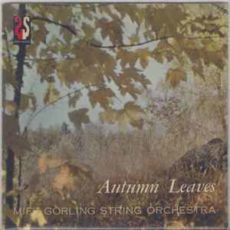
Miff Görling was born Uno Görling on March 21, 1909 in Stockholm, Sweden. He took his nickname from trombonist Miff Mole and got his start late in the 1920s with the Frank Vernon Orchestra, where he played until 1932.
He then worked with Arne Hülphers, Gösta Jonsson, Seymour Österwall, and Gösta Säfbom before organizing his own ensemble in 1938 and led bands well into the 1950s. He also did arrangement and composition work for other jazz groups as well as for popular Swedish musicians.
Bandleader, trombonist, arranger, and composer Miff Görling transitioned on February 24, 1988 in Stockholm.
More Posts: arranger,bandleader,composer,history,instrumental,jazz,music,trombone
Daily Dose Of Jazz…
Jerry Ross was born Jerold Rosenberg on March 9, 1926 in Bronx, New York to Russian parents of the Jewish faith. Growing up, he was a professional singer and actor in the Yiddish theater. Following high school, he studied at New York University under Rudolph Schramm and introductions to singer Eddie Fisher and others brought him into contact with music publishers at the Brill Building, the center of songwriting activity in New York.
Ross met Richard Adler in 1950 and as a duo they became protégés of composer, lyricist, and publisher Frank Loesser. They began their career in the Broadway theater with John Murray Anderson’s Almanac, a revue for which they provided most of the songs, resulting in recordings of Acorn in the Meadow by Harry Belafonte and Fini by Polly Bergen.
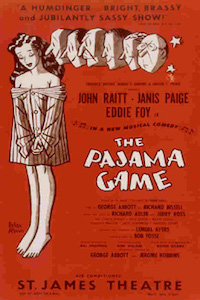
Their second effort, The Pajama Game, opened on Broadway in May 1954. It ran for 1063 performances, produced the jazz standard Hey There, won a Tony Award, Donaldson Award and the Variety Drama Critics Award. Two songs from the show,
Their next musical, Damn Yankees, opened on Broadway in 1955, starring Gwen Verdon. It ran for 1019 performances and produced the jazz standard Whatever Lola Wants, and won the Tony Award for Composer/Lyricist and Musical.
Composer and lyricist Jerry Ross, who wrote, alone or in collaboration more than 250 songs and was entered posthumously into the Songwriters Hall of Fame, transitioned on November 11, 1955, at the age of 29, from complications related to the lung disease bronchiectasis.
More Posts: composer,history,instrumental,jazz,lyricist,music,vocal