

Daily Dose Of Jazz…
Leslie Bricusse was born on January 29, 1931 in Pinner, Middlesex, England. He was educated at University College School in London, England and then at Gonville and Caius College, Cambridge. While at Cambridge, he was Secretary then President of Footlights and during his college drama career he began working for actress, singer and comedian Beatrice Lillie.
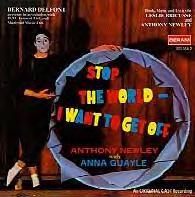
In the 1960s and 1970s, Bricusse enjoyed a fruitful partnership with Anthony Newley. They wrote the musical Stop the World – I Want to Get Off in 1961,that became a film in 1966. In 1965 they wrote the show The Roar of the Greasepaint – The Smell of the Crowd and music for the film Willy Wonka & the Chocolate Factory in 1971. For the latter, they received an Academy Award nomination for Best Original Song Score.
Solely as a lyricist, Leslie collaborated with composer Cyril Ornadel on Pickwick, Henry Mancini on Victor/Victoria, Tom and Jerry: The Movie, and with John Williams on Hook. As composer and lyricist he scored the film, Doctor Dolittle and received a 1967 Academy Award for Best Original Song for Talk To The Animals, and Goodbye, Mr. Chips in 1969.
Of his many songs a few that have become jazz standards are What Kind of Fool Am I?, Who Can I Turn To?, Feeling Good, My Kind of Girl, Two For The Road, If I Ruled the World, Can You Read My Mind, When I Look in Your Eyes, and Pure Imagination.
In 2015, he released his memoir, Pure Imagination: A Sorta-Biography, with a foreword by Elton John. Composer, lyricist, and playwright Leslie Bricusse, who was awarded the Order of the British Empire, transitioned on October 19, 2021 in Saint-Paul-de-Vence, France at the age of 90.
More Posts: composer,history,instrumental,jazz,lyricist,music,playwright
Daily Dose Of Jazz…
Zilner Trenton Randolph was born in Dermott, Arkansas on January 28, 1899 and matriculated at Biddle University, the Kreuger Conservatory, and the Wisconsin Conservatory of Music.
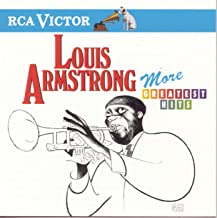
Randolph played in St. Louis, Missouri in the early 1920s, then in Bernie Young’s band in Milwaukee, Wisconsin from 1927 to 1930. A move to Chicago, Illinois in 1931 and was a trumpeter and arranger with Louis Armstrong until 1932 and again in 1933 and 1935.
He played trumpet on a number of Armstrong’s recordings and composed the tune Old Man Mose. In 1934 he played with Carroll Dickerson and Dave Peyton, and led his own Chicago band later in the decade. He arranged for bandleaders Earl Hines, Woody Herman, Fletcher Henderson, and Duke Ellington, and led a quartet in the 1940s.
From the 1940s Zilner devoted himself mainly to teaching, but recorded as a pianist in 1951. Trumpeter, arranger, composer and music educator Zilner Randolph, whose children Hattie and Lucious were part of Sun Ra’s band in the Fifties, transitioned on February 2, 1994.
More Posts: arranger,bandleader,composer,educator,history,instrumental,jazz,music,trumpet
Daily Dose Of Jazz…
Aki Takase (高瀬 アキ) was born January 26, 1948 in Osaka, Japan and started to play piano at age 3. Raised in Tokyo, she studied classical piano at Toho Gakuen School of Music. Starting in 1978, he began performing and recording in the United States.
She has collaborated with Lester Bowie, Sheila Jordan, David Liebman, and John Zorn. Her first European appearance was in 1981 at the Berlin Jazz Festival in Germany. For many years, she has worked with her husband Alexander von Schlippenbach, as well as with Eugene Chadbourne, Han Bennink, Evan Parker, Paul Lovens, Fred Frith and many others, and in duets with Maria João, Louis Sclavis, David Murray and Rudi Mahall.
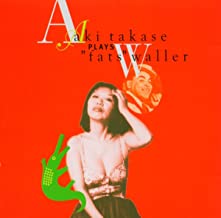
Through her constant touring and appearances at international jazz festivals, Takase quickly became one of the most sought-after musicians for recording and collaboration. In various projects, Takase has dealt with the respective oeuvres of numerous famous jazz musicians, including the works of Duke Ellington, Thelonious Monk, Eric Dolphy, W.C. Handy, Fats Waller, and Ornette Coleman.
Pianist and composer Aki Takase, who lives in Berlin, Germany and fuses rap, jazz and improvisation, landing between contemporary and jazz, continues to push the boundaries of her music.
More Posts: bandleader,composer,history,instrumental,jazz,music,piano
Daily Dose Of Jazz…
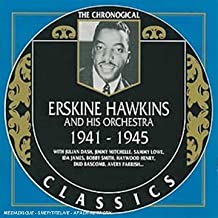
James Avery Parrish was born on January 24, 1917 in Birmingham, Alabama. Graduating from Parker High School he went on to matriculate Alabama State Teachers College, where he played in the Bama State Collegians, an ensemble led by Erskine Hawkins. He remained in Hawkins’s employ performing and arranging until 1942 and recorded with him extensively. Composing the music to After Hours, a 1940 recording of the tune with Hawkins’s orchestra resulted in its becoming a jazz standard.
Driving to gigs between Pittsburgh and Chattanooga in 1942 he was injured in an overturned car crash that killed Hawkin’s trumpeter Marcellus Green, one of the five men in the vehicle. Avery left Hawkins later that year and moved to California, where hebecame a commercially successful solo pianist. Hit in the head by a bar stool during a bar fight in 1943l put him in hospital for a few months. His injuries left him partly paralyzed, thus ending his career and ability to play music for the rest of his life.
Pianist, composer and arranger Avery Parrish transitioned of unknown causes on December 10, 1959. He was posthumously inducted twenty years later into the Alabama Jazz Hall of Fame.
More Posts: arranger,composer,history,instrumental,jazz,music,piano
Daily Dose Of Jazz…
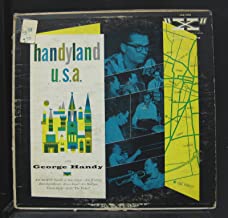
George Handy, born George Joseph Hendleman on January 17, 1920 in New York City, where his musical beginnings were fostered under the tutelage of composer Aaron Copland.
He first worked professionally as a swing pianist for Michael Loring in 1938. Soon afterward George was drafted into the United States Army in 1940. Post WWII, from 1944 to 1946 he became a member of the Boyd Raeburn Orchestra, composing and performing on piano. This was during a time when many big bands were transforming their musical tendencies toward bebop. Leaving the orchestra briefly to work for Paramount Studios, he returned to Raeburn quickly. During this period he entered one of his most creative periods, doing arrangements of older standards with a distinctly bebop quality.
A rift between him and Raeburn, just as he was entering his prime, forced him to depart the group. Handy continued to arrange for other musicians in his later career.
Pianist, arranger and composer George Handy, best remembered in retrospect for his bebop arrangements, transitioned in Harris, New York, on January 8, 1997 at the age of 76, from heart disease.
More Posts: arranger,composer,history,instrumental,jazz,music,piano