


Daily Dose Of Jazz…
Mike Jackson was born on December 23, 1888 in Louisville, Kentucky. The details of his early life are not known, however, in 1921 he began composing songs for publisher Joe Davis. Soon after he became an accompanist playing piano for a number of early jazz and blues recordings, with Clara Smith, Alberta Hunter, Laura Smith, Thomas Morris, the New Orleans Blue Five, the Dixie Jazzers Washboard Band, Perry Bradford, and Buddy Christian.
He also recorded under his own name as Jackson and His Southern Stompers. With Morris, he worked in the vaudeville show The Wicked Age in 1927. He emigrated to Montreal, Canada in 1928, but returned to New York City in 1930, where he continued working as a composer.
His compositions included The Louisville Blues, written with Bob Ricketts in 1921 and recorded by W.C. Handy in 1923; Scandal Blues and Black Hearse Blues, both written in 1925; and Slender, Tender and Tall and Hey, Knock Me a Kiss, both of which were recorded by Jimmie Lunceford and Louis Jordan among others.
Pianist and composer Mike Jackson passed away on June 21, 1945 in New York City.
Daily Dose Of Jazz…
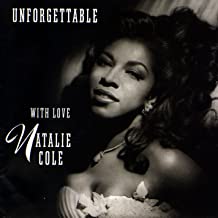
Michael Lang was born on December 10, 1941 in Los Angeles, California. He obtained a bachelor of music at the University of Michigan in 1963, and studied under Leonard Stein, George Tremblay, Pearl Kaufman and Lalo Schifrin.
Well versed in various music forms, including jazz, classical, pop and R&B, he has collaborated and recorded more than two-dozen albums with Sarah Vaughan, Peggy Lee, Natalie Cole, Robbie Williams, Dusty Springfield, Solomon Burke, Tom Waits,, José Feliciano, Vince Gill, Bette Midler, Kenny Rogers, Aretha Franklin, Willie Nelson, Amy Grant, Paul Anka, Melissa Manchester, Neil Diamond, Michael Bolton, Barry Manilow, Carole Bayer Sager, and Barbra Streisand.
Pianist and composer Michael Lang, who has composed more than 2000 film scores, continues to play and compose.
Daily Dose Of Jazz…
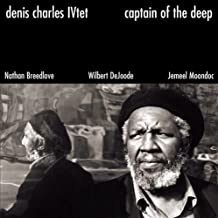
Denis Charles was born in St. Croix, Virgin Islands on December 4, 1933 and first played bongos at age seven with local ensembles in the Virgin Islands. Moving to New York City in 1945, he gigged frequently around town and in 1954 began working with Cecil Taylor, and the pair collaborated for the next four years. Following his work with Taylor, he played with Steve Lacy, Gil Evans, and Jimmy Giuffre. He befriended Ed Blackwell, and the two influenced each other.
Recording with Sonny Rollins on a calypso-tinged set, Denis then returned to play with Lacy until 1964. He worked with Archie Shepp and Don Cherry in ‘67 and then disappeared from the jazz scene until 1971. In the 1970s and 1980s he played regularly on the New York jazz scene with Frank Lowe, David Murray, Charles Tyler, Billy Bang, and others, and also played funk, rock, and traditional Caribbean music.
Between 1989~1992 drummer Denis Charles released three albums as a leader before passing away of pneumonia in his sleep on March 26, 1998 in New York City in 1998, four days after a five-week European tour with the Borgmann/Morris/Charles (BMC) Trio, with Wilber Morris and Thomas Borgmann. In 2002 Veronique N. Doumbe released a film documentary Denis A. Charles: An Interrupted Conversation about his life.
More Posts: bandleader,composer,drums,history,instrumental,jazz,music
Daily Dose Of Jazz…
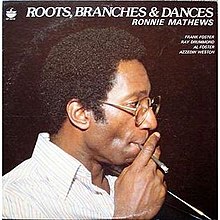
Ronald Mathews was born on December 2, 1935 in New York City and in his twenties, he toured internationally and recorded with Max Roach, Freddie Hubbard and Roy Haynes. He was a member of Art Blakey’s Jazz Messengers in the late Fifties through the 1960s. By age thirty, he was teaching jazz piano and leading workshops, clinics and master classes at Long Island University in New York City.
During the 1970s Ronnie recorded with Dexter Gordon and Clark Terry, toured and recorded on two Louis Hayes projects, the Louis Hayes~Woody Shaw Quintet and the Louis Hayes~Junior Cook Quintet. One of his longest associations and a highlight of his career was with the Johnny Griffin Quartet. For almost five years, from 1978~1982, he was an integral part of this band, forging lasting relationships with Griffin, drummer Kenny Washington, and bassist Ray Drummond.
The Eighties saw Mathews honing his role as a frontman, performing as a leader in duo, trio, and quartet configurations around the world. He again toured with Freddie Hubbard and Dizzy Gillespie’s United Nations Band, was the pianist for the Tony Award~winning Broadway musical, Black and Blue in 1989, and, in 1990, he was one of the artists who recorded for Spike Lee’s movie, Mo’ Better Blues.
After a stint touring and recording with the Clifford Jordan Big Band in the early 1990s, Mathews joined T.S. Monk for eight years of touring and recording three albums with the band. In 1998, Hal Leonard Books published his collection of student arrangements: Easy Piano of Thelonious Monk.
As both a mentor and musician with Generations, a group of jazz musicians headed by veteran drummer Jimmy Cobb, he contributed two new compositions for the album that was released posthumously to his death by San Francisco State University’s International Center for the Arts on September 15, 2008.
Pianist Ronnie Matthews recorded 14 albums as a leader and more than three dozen as a sideman during his career, passing away on June 28, 2008 in Brooklyn, New York.
More Posts: bandleader,composer,educator,history,instrumental,jazz,music,piano
Daily Dose Of Jazz…
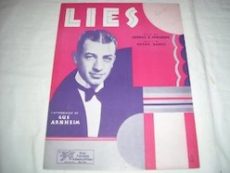
Harry Barris was born on November 24, 1905 in New York City to Jewish parents. Educated in Denver, Colorado. he became a professional pianist at the age of 14. He led a band that toured the Far East at the age of 17.
The same year, he played the piano and occasionally sang in the Paul Ash Orchestra, while Al Rinker and Bing Crosby became members of the Paul Whiteman Orchestra as a singing duo. However, while the duo was appearing at the vast New York Paramount in 1927, sans microphones, they could not be heard by the audience. They were promptly dropped from the bill. However, a band member who knew Barris suggested that they add him to make a trio and The Rhythm Boys was formed in April 1927.
In 1930, The Rhythm Boys left Whiteman and joined Gus Arnheim’s Cocoanut Grove Orchestra. They made one more recording together, Them There Eyes but the boys decided to quit in 1931 agoing their separate ways. Harry however, changed his mind and returned to the Cocoanut Grove to complete his contract. Joining Arnheim’s singing group The Three Ambassadors.
Barris appeared in 57 films between 1931 and 1950, usually as a band member, pianist or singer. Seven of those films had Bing Crosby as the star. In 1932, Barris signed a contract to star in six shorts for Educational Pictures.
During World War II, along with Joe E. Brown, he went overseas to entertain troops. Having a lifelong drinking problem, sustaining a fall that fractured his hip in 1961, and despite a series of operations, he developed a cancerous tumor. Vocalist, pianist, and composer Harry Barris, who was one of the earliest to utilize scat singing in recordings passed away on December 13, 1962 at the age of 57 in Burbank, California.
Share a dose of a New York City composer to inspire inquisitive minds to learn about musicians whose legacy lends their genius to the jazz catalog…
More Posts: composer,history,instrumental,jazz,music,piano,vocal