

Daily Dose Of Jazz…
Edgar Melvin Sampson, born October 31, 1907 in New York City, he started playing violin at the age of six and picked up the saxophone in high school. He started his professional career in 1924 with a violin-piano duo with Joe Colman and through the rest of the 1920s and early ’30s, he played with many bands, including those of Charlie “Fess” Johnson, Duke Ellington, Rex Stewart and Fletcher Henderson.
1933 saw him joining Chick Webb’s band. It was during his tenure with Webb that he created his most enduring work as a composer, writing Stompin’ at the Savoy and “Don’t Be That Way“. Leaving the Webb band in 1936 with a reputation as a composer and arranger, he was able to freelance with Benny Goodman, Artie Shaw, Red Norvo, Teddy Hill, Teddy Wilson, and Chick Webb.
Becoming a student of the Schillinger System in the early 1940s, Edgar continued to play saxophone through the late ’40s and led his own band from 1949 to 1951. Through the Fifties, he worked as an arranger for Latin performers Marcelino Guerra, Tito Rodríguez and Tito Puente.
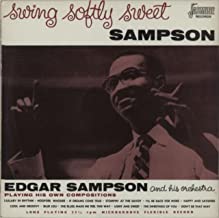
He recorded one album under his own name, Swing Softly Sweet Sampson, in 1956. Due to illness, he stopped working by the late 1960s. Saxophonist, violinist, composer, arranger Edgar Sampson passed away on January 16, 1973 at the age of 65 in Englewood, New Jersey.

More Posts: arranger,composer,history,instrumental,jazz,music,saxophone,violin

Daily Dose Of Jazz…
Jacques Loussier was born on October 26, 1934 in Angers, France. Starting piano lessons there aged ten, the following year he heard a piece from the Notebook for Anna Magdalena Bach. He fell in love with the music and began adding his own notes and expanding the harmonies. By 13, he met the pianist Yves Nat in Paris, who regularly gave him projects for three months, after which he returned for another lesson.
While studying at the Conservatoire National Musique, Loussier began composing music, having moved by then to Paris, with Nat, from the age of 16. He played jazz in Paris bars to finance his studies, and fusing Bach and jazz was unique at the time. After six years of studies, he traveled to the Middle East and Latin America, where he was inspired by different sounds. He stayed in Cuba for a year.
Early in his career, he was an accompanist for the singers Frank Alamo, Charles Aznavour, Léo Ferré, and Catherine Sauvage, before forming a trio in 1959 with string bass player Pierre Michelot, a Reinhardt alum, and percussionist Christian Garros. The trio began with Decca Records then moved to Philips/Phonogram in 1973, selling over six million albums in 15 years.
By the mid-1970s, the trio dissolved and Jacques set up his own recording studio, Studio Miraval, where he composed for acoustic and electric instruments. He recorded with musicians such as Pink Floyd, Elton John, Sting, Chris Rea, and Sade. Reviving his trio in 1985, with the percussionist André Arpino and the bassist Vincent Charbonnier. As early as 1998 the trio recorded interpretations). Besides Bach, the trio recorded interpretations of classical compositions on the album Satie: Gymnopédies Gnossienne. His last albums, My Personal Favorites, and Beyond Bach, Other Composers I Adore, were released in 2014, on the occasion of his 80th birthday.
Suffering a stroke during a performance at the Klavier-Festival Ruhr on July 14, 2011 retired from the stage. Pianist Jacques Loussier, who performed in the classical, jazz, and third stream arenas, passed away on March 5, 2019 at the age of 84.
More Posts: bandleader,composer,history,instrumental,jazz,music,piano
Daily Dose Of Jazz…
David Friedrich Dallwitz was born on October 25, 1914 in Freeling, South Australia. He studied violin as a child and after moving with his family to Adelaide, South Australia in 1930, he developed an aptitude for jazz piano. Beginning in 1933 for two years he studied concurrently at the South Australian School of Art and the North Adelaide School of Fine Art.
He led the Southern Jazz Group, a Dixieland band that performed at the first Australian Jazz Convention. Abandoning jazz for a period, he studied at the Elder Conservatorium of Music, composing symphonic and chamber music and taking up bassoon and cello. He became involved in composing and arranging music for revues, leading to the formation of the Flinders Street Revue Company, for which he also directed and played piano.
Returning to jazz in 1970, he resumed recording. He worked with Australian progressive musicians such as John Sangster, Bob Barnard, and Len Barnard. He led the Dave Dallwitz Ragtime Ensemble.
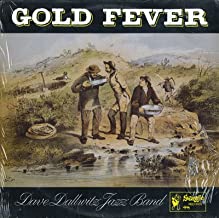
Pianist, bandleader, composer, and arranger, painter, and art teacher Dave Dallwitz, who led jazz, Dixieland and ragtime bands, passed away on March 24, 2003 in Adelaide after finishing the artwork for his album The Dave Dallwitz Big Band live at Wollongong, December 1984.
More Posts: arranger,bandleader,composer,educator,history,instrumental,jazz,music,painter,piano
Daily Dose Of Jazz…
Giorgio Gaslini was born on October 22, 1929 in Milan, Italy and began performing aged 13 and recorded with his jazz trio at 16. In the 1950s and 1960s, Gaslini performed with his own quartet. He was the first Italian musician mentioned as a “new talent” in the Down Beat poll and the first Italian officially invited to the New Orleans Jazz Festival in 1976-77. He collaborated with leading American soloists, such as Anthony Braxton, Steve Lacy, Don Cherry, Roswell Rudd, Max Roach, but also with the Argentinian Gato Barbieri and Frenchman Jean-Luc Ponty.
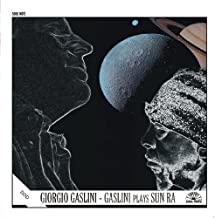
Adapting the compositions of Albert Ayler and Sun Ra for solo piano, issued on the Soul Note label, he also composed the soundtrack of Michelangelo Antonioni’s La Notte, The Night, in 1961. In the early Seventies, he was the first holder of jazz courses at the Santa Cecilia Academy of Music in Rome.
As to contemporary music, he composed symphonic works, operas and ballets represented at the Scala Theatre in Milan and other Italian theatres. In addition from 1970 to 1977 he scored nine films, including Your Hands On My Body, Cross Current, and Kleinhoff Hotel. From 1991 to 1995, Gaslini composed works for Carlo Actis Dato’s Italian Instabile Orchestra.
Pianist, composer and conductor Giorgio Gaslini passed away on July 29, 2014 at age 84 in Borgo Val di Taro, Parma, Italy, where he had been living for years together with his longtime wife and fourteen dogs and cats.
More Posts: composer,conductor,history,instrumental,jazz,music,piano
Daily Dose Of Jazz…
Bill Chase was born William Edward Chiaiese in Squantum, Massachusetts on October 20, 1934 His parents changed their name to Chase because they thought Chiaiese was difficult to pronounce. His father played trumpet in the Gillette Marching Band and encouraged his son’s musical interests, which included violin and drums. In his mid-teens, he settled on trumpet and attended his first Stan Kenton concert, which included trumpeters Conte Candoli and Maynard Ferguson.
After high school, he studied classical trumpet at the New England Conservatory but switched to the Schillinger House of Music, now Berklee College of Music. His instructors included Herb Pomeroy and Armando Ghitalla. By 1958 he was playing lead trumpet with Maynard Ferguson, Stan Kenton in 1959, and Woody Herman’s Thundering Herd during the 1960s.
One of Chase’s charts from this period, Camel Walk, was published in the 1963 Downbeat magazine yearbook. From 1966 to 1970 he freelanced in Las Vegas, Nevada working with Vic Damone and Tommy Vig. 1967 saw him leading a six~piece band at the Dunes and Riviera Hotel where he was featured in the Frederick Apcar lounge production of Vive Les Girls, for which Chase arranged the music.
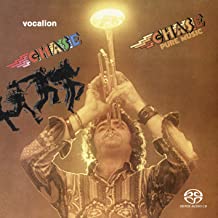
In 1971 he started a jazz~rock band that mixed pop, rock, blues, and four trumpets. The debut album Chase was released in 1971 where he was joined by Ted Piercefield, Alan Ware, and Jerry Van Blair, three jazz trumpeters who were adept at vocals and arranging. The album contains Chase’s most popular song, Get It On, which garnered them a Best New Artist Grammy nomination.
For the next three years, he released two more and was working on a fourth when Chase’s work on a fourth studio album when en route to a scheduled performance at the Jackson County Fair, trumpeter and bandleader Bill Chase passed away at the age of 39 on August 9, 1974 along with the pilot, co-pilot, keyboardist Wally Yohn, guitarist John Emma, and drummer Walter Clark in the crash of a chartered twin-engine Piper Twin Comanche in Jackson, Minnesota.
More Posts: bandleader,composer,history,instrumental,jazz,music,trumpet