


Daily Dose Of Jazz…
Masabumi Kikuchi was born on October 19, 1939 in Tokyo, Japan and lived his early life in World War II and post-war country. He studied piano and music at the Tokyo Art College High School. After graduating, he joined Lionel Hampton’s Japanese touring band.
Known for his eclectic music that ranges from vanguard classical to fusion and digital music. Not only working with Hampton, but he also performed with Sonny Rollins, Woody Herman, Mal Waldron, Joe Henderson, McCoy Tyner, Gil Evans, Elvin Jones, Miles Davis, Gary Peacock, Paul Motian, Billy Harper, and Hannibal Peterson.
As a leader and co~leader, he recorded twenty-five albums, and as a sideman or member of other groups, he recorded twenty~eight albums. Pianist and composer Masabumi Kikuchi passed away from a subdural hematoma on July 6, 2015 at a hospital in Manhasset, New York.

More Posts: bandleader,composer,history,instrumental,jazz,music,piano
Daily Dose Of Jazz…
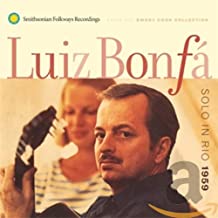
Luiz Floriano Bonfá was born on October 17, 1922 in Rio de Janeiro, Brazil. He studied with Uruguayan classical guitarist Isaías Sávio from the age of 11 and these weekly lessons entailed a long, harsh commute by train, 2 1/2 hours one way and on foot from his family home in Santa Cruz. Given his extraordinary dedication and talent for the guitar, Sávio excused the youngster’s inability to pay for his lessons.
He first gained widespread exposure in Brazil in 1947 when he was featured on Rio’s Rádio Nacional, then an important showcase for up-and-coming talent. In the late 1940s Bonfá was a member of the vocal group Quitandinha Serenaders. Some of his earliest compositions such as Ranchinho de Palha, O Vento Não Sabe, were recorded and performed by Brazilian crooner Dick Farney in the 1950s and his first hit song was De Cigarro em Cigarro recorded by Nora Ney in 1957.
Farney introduced Luiz to Antônio Carlos Jobim and Vinicius de Moraes, the leading songwriting team behind the worldwide explosion of Bossa Nova. He collaborated with them on de Moraes’ anthological play Orfeu da Conceição, which several years later gave origin to Marcel Camus’ film Black Orpheus. For the film he wrote Samba de Orfeu and Manhã de Carnaval, the latter of which Carl Sigman wrote English lyrics and titled the song A Day in the Life of a Fool, which has been among the top ten standards played worldwide, according to The Guinness Book of World Records.
As a composer and performer, Bonfá was at heart an exponent of the bold, lyrical, lushly orchestrated, and emotionally charged samba-canção style that became a highly visible ambassador of Brazilian music in the United States beginning with the famous November 1962 Bossa Nova concert at New York’s Carnegie Hall.
Bonfá worked with American musicians such as Quincy Jones, George Benson, Stan Getz, and Frank Sinatra, recording several albums while in U.S. Also of note is his “The Gentle Rain”, with lyrics by Matt Dubey, and “Sambolero”.
Composer and guitarist Luiz Bonfá, who recorded some five dozen albums, passed away from prostate cancer at 78 in Rio de Janeiro on January 12, 2001.
More Posts: bandleader,composer,guitar,history,instrumental,jazz,music
Daily Dose Of Jazz…
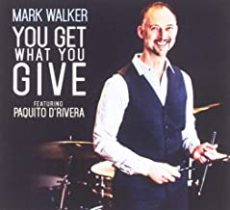
Mark Walker was born on October 16, 1961 in Chicago, Illinois and began playing drums at age ten. He played his first professional club, concert, and recording gigs barely out of high school. After studying with Roy C. Knapp, he gained valuable experience performing a wide range of styles in the Chicago, area and later became a first-call session drummer and percussionist, playing on film scores, jingles, and record dates.
Moving to New York in 1995, he easily entered the jazz culture and performed and recorded extensively with Michel Camilo, Dave Samuels, Andy Narell, WDR Big Band, NDR Big Band, Grace Kelly, Eliane Elias, Lyle Mays, Dave Liebman, Regina Carter, Joao Bosco, Dianne Reeves, Cesar Camargo Mariano, and Rosa Passos, among numerous others. He has been earned several Grammy nominations and in 2008 he was nominated for a Grammy for Best Instrumental Composition.
Walker has worked on Grammy~winning albums with Oregon, Donato Poveda, Paquito D’Rivera, the Caribbean Jazz Project and has also earned Indy and Jazz awards. He appeared on Late Night with David Letterman, The Rosie O’Donnell Show, PBS Presents, BET On Jazz, and with Paquito D’Rivera in Fernando Trueba’s Latin jazz documentary Calle 54.
As an educator, Mark is a professor in the Percussion Department at Berklee College of Music where he has taught drummers, percussionists, and ensembles since 2001. He has served on the faculty at New York City’s Drummers Collective and has conducted master classes, clinics, and workshops in South America, North America, and Europe. He has published two books, World Jazz Drumming and Killer Grooves, an instructional drum set book.
Grammy Award-winning drummer, percussionist, author, and educator Mark Walker continues to tour with Oregon and Paquito D’Rivera. He writes for and leads Rhythm of the Américas, a jazz octet incorporating Caribbean and South American rhythms.
More Posts: bandleader,composer,drums,history,instrumental,jazz,music
Daily Dose Of Jazz…
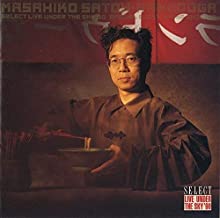
Masahiko Satoh was born on October 6, 1941 in Tokyo, Japan and the family home contained a piano. He started playing at the age of five, and twelve years later he began playing professionally accompanying singers, magicians, and strippers at a cabaret in the Ginza district.
By 1959 Satoh began playing in Georgie Kawaguchi’s band, together with alto saxophonist Sadao Watanabe and tenor saxophonist Akira Miyazawa. After graduating from Keio University, at the age of 26 he moved to the United States to study at the Berklee College of Music. During those two years of study, he read about composing and arranging, earned money working in a food shop, and played the piano in a hotel.
1968 had Masahiko writing and conducting the music for a series of pieces that were combined with dance and performed around New York City. After returning to Japan, he recorded Palladium, his first album as a leader, and appeared on a Helen Merrill album.
In the late 1960s and early 1970s, his career led him to perform in a free, percussive style. Masahiko played at the 1971 Berlin Jazz Festival as part of a trio, using at the time an unusual ring modulator to alter the sound. During that period he recorded with Attila Zoller, Karl Berger, and Albert Mangelsdorff. He wrote the psychedelic music for the 1973 anime film Belladonna of Sadness.
He went on to write arrangements for recordings led by, among others, Helen Merrill, Kimiko Itoh, and Nancy Wilson. He arranged for strings and quartet on Art Farmer’s 1983 album Maiden Voyage, formed a large group, named Rantooga, that combined various forms of folk music from around the world, and composed for film, television, and advertisements. By the early 1990s pianist, composer, and arranger Masahiko Satoh composed music for a choir of 1,000 Buddhist monks and now spends 70% of his time arranging and composing, the rest on playing and recording.
More Posts: arranger,bandleader,composer,history,instrumental,jazz,music,piano
Daily Dose Of Jazz…
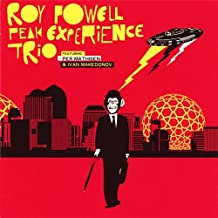
Roy Powell was born on October 2, 1965 in Langham, Rutland, England. His mother was a historian, his father a scientist who moved the family to Canada. His father had given him piano lessons and had been playing the piano for five years. Returning to England when he was ten, he attended New Mills Grammar School at the same time as Lloyd Cole.
In the 1970s, Powell was listening to Duke Ellington and Miles Davis and buying albums through the mail from America. He attended the Royal Northern College of Music, studying piano and classical composition during the day and playing in Manchester jazz clubs at night. After departing school, he started a jazz fusion band and choreographed a ballet. In 1992 he was a member of the Creative Jazz Orchestra. Three years later he moved to Norway to teach.
Powell has been a member of the group InterStatic with Jacob Young, and Jarle Vespestad, and the group Naked Truth with Lorenzo Feliciati, Pat Mastelotto, and Graham Haynes. He recorded the album Mumpbeak with Feliciati, Mastelotto, Bill Laswell, Tony Levin, and Shanir Ezra Blumenkranz. Pianist, organist, composer, and educator Roy Powell has recorded fifteen albums as a leader and continues to perform and record.
More Posts: bandleader,composer,educator,history,instrumental,jazz,music,piano