

Daily Dose Of Jazz…
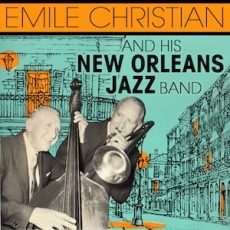
Emile Joseph Christian born April 20, 1895 in the Bywater neighborhood of New Orleans, Louisiana, was the younger brother of noted cornetist and bandleader Frank Christian. He played both cornet and trombone with the Papa Jack Laine bands. He went to Chicago, Illinois in late 1917 to play trombone with the Bert Kelly Jass Band. The following year he moved to New York City, replacing Eddie Edwards in the Original Dixieland Jass Band, touring England and making his first recordings with this band.
After a brief time in the Original Memphis Five, he returned to Europe and from 1924 into the 1930s, he played bass and trombone with various jazz bands. In Berlin, Germany he recorded, in Stockholm, Sweden he recorded with Leon Abbey’s band. In Paris, Nice and Aix-les-Bain, France he played with Tom Waltham’s Ad-Libs. In 1935 he played with Benny Peyton’s Jazz Kings in Switzerland.
Christian played in both Black and White bands in Europe and India before returning to the United States after the outbreak of World War II. The 1950s saw him moving back to New Orleans, where he played with the bands of Leon Prima, Santo Pecora, and Sharkey Bonano and his own band. In 1957 he toured with the Louis Prima Band and continued playing in New Orleans into 1969.
Trombonist and cornetist Emile Christian, who wrote a number of tunes and in his later years mostly playing string bass, died on December 3, 1973 in New Orleans at the age of 78.
More Posts: cornet,history,instrumental,jazz,music,string bass,trombone
Daily Dose Of Jazz…
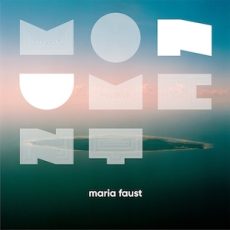
Maria Faust was born on April 18, 1979 in Kuressaare,, Estonia. Growing up under the Communist regime she was classically educated, and at the conservatory there, she didn’t feel that there was room for her, musically. Yearning for something different in Tallinn, jazz and improvisational music took hold of her, but in order to develop further, she had to leave the country. With the help of the Danish Cultural Institute, she came to the Southern Danish Music Conservatory. Even in her new surroundings, she felt she did not fit into the world of jazz.
She plays and composes in non-traditional ways, and her big breakthrough came with her album, Sacrum Facere, which is Latin for human sacrifice. It was inspired by the culture of deported orthodox Russians. With collected work songs, hymns, and lullabies she merged the material with classical music and free improvisation. The album received universally positive reviews, and received two Danish Music Awards in 2014 for Jazz Composer of the Year and Jazz Crossover Release of the Year.
She has worked with John Parish and Mark Howard. She tours western Europe, the Balkan Peninsula, South America, China, and Russia. Saxophonist Maria Faust, who has recorded nine albums as a leader, continues to push the boundaries of music.
More Posts: bandleader,bass,cornet,history,instrumental,jazz,music,trombone
Daily Dose Of Jazz…
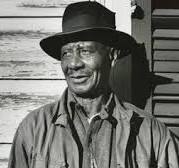
Tom “Kid” Albert was born on December 23, 1877 on a plantation field in Plaquemines Parish, Louisiana.. He later relocated to New Orleans, Lousiana sometime in his early childhood, settling in the Algiers neighborhood. Living in a run-down shack on Saux Lane, an impoverished strip near the Naval station. He initially played the guitar before learning how to play the violin and was taught basic methods for each instrument by Jimmy Palao.
In the 1890s he began working with the bands with violinist Johnny Gould, and with “Big Eye” Louis Nelson Delisle on clarinet. Soon after he mastered the cornet and the violin Albert’s first band in 1908 was his own which included Papa Celestin and Manuel Manetta. In 1920, he founded the Eureka Brass Band and during the earlier years his band played in Algiers with Henry Red Allen Sr. Band.
In his late thirties, Albert moved across the river to the French Quarter and reformed his band, branding it the Kid Albert Band. The band then began performing in several halls around the city, mostly in the Storyville and Treme sections. For a decade the Kid Albert Band played alongside jazz pioneers Louis Armstrong, Kid Thomas Valentine and other small brass bands but never recorded.
In 1949 trumpeter, violinist and bandleader Kid Albert retired from the bands and died on December 12, 1969, at the age of 91.

More Posts: bandleader,cornet,guitar,trumpet

Daily Dose Of Jazz…
John Grant Sangster was born November 17, 1928 in the Melbourne suburb of Sandringham, Victoria, Australia. He was an only child that attended primary schools in Sandringham and Vermont, and then Box Hill High School. While at high school he taught himself to play trombone and with a friend, Sid Bridle, formed a band.
In 1946 he started a civil engineering course at Melbourne Technical School. Two years later Sangster performed at the third annual Australian Jazz Convention, held in Melbourne. By the following year he led his own ensemble, John Sangster’s Jazz Six, which included Ken Evans on trombone. He provided trombone for Graeme Bell and his Australian Jazz Band, later took up the cornet and then the drums. They toured several times from 1950 to 1955, and in the late Fifties he began playing the vibraphone.
He went on to play with Don Burrows in the early 1960s, form his own quartet and experimented with group improvisatory jazz, after becoming interested in the music of Sun Ra and Archie Shepp. By the end of the Sixties his attention turned to rock musicians and he joined the expanded lineup of the Australian progressive rock group Tully, who provided the musical backing for the original Australian production of the rock musical Hair. He performed and recorded with Tully and their successors, Luke’s Walnut, throughout the two years he played in Hair. In 1970 he re-joined the Burrows group for Expo 1970 in Osaka, Japan.
In the 1970s Sangster released a series of popular The Lord of the Rings inspired albums that started with The Hobbit Suite in 1973. He was also the composer of a large number of scores for television shows, documentaries, films, and radio. In 1988, Sangster published his autobiography, Seeing the Rafters.
Trombonist John Sangster, who also plays trumpet, drums, percussion, cornet, vibraphone and is best known as a composer, died in Brisbane, Queensland, Australia on October 26, 1995 at age 66.

More Posts: bandleader,composer,cornet,drums,history,instrumental,jazz,music,trombone,trumpet,vibraphone
Daily Dose Of Jazz…
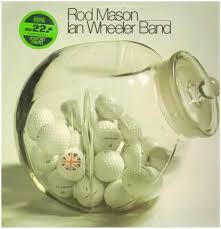
Rod Mason was born September 28, 1940 in Plymouth, England and as a young man played with the local Tamar Valley Jazz Band, in which his father, Frank “Pop” Mason, had played drums. At Kelly College, in Tavistock, England he played the bugle with the cadet corps, then the valve trombone. He played this in his father’s band until the trumpet player left, whereupon he replaced him using a brass-band style cornet.
He went on to play briefly with the Cy Laurie band from 1959 to 1960 and two years later went with Monty Sunshine who left the Chris Barber band to form his own group. Sunshine hired Mason on the recommendation of Kenny Ball. In the mid-1960s after leaving Sunshine, Rod worked in the family business and played occasionally, until a winning appearance on Hughie Green’s Opportunity Knocks TV talent show which led to a flood of offers.
A facial paralysis forced him to use other mouthpieces, which allowed him to extend the range of his instrument. In 1965, he established his own band. From 1970 he played in the Acker Bilk Paramount Jazz Band, before he founded a band together with Ian Wheeler in 1973. He recorded numerous recordings for the Reef label. The 1980s saw Mason playing in the Dutch Swing College Band. In 1985, he founded the Hot Five band and released a number of albums for Timeless Records and regularly toured Europe.
Trumpeter, cornetist, vocalist Rod Mason who recorded thirty-two albums as a leader, played his last gig in Kaarst, Germany in December 2016 and died three weeks later on January 8, 2017 after developing peritonitis and pneumonia.
 </p
</p
More Posts: bandleader,cornet,history,instrumental,jazz,music,trumpet,vocals