

Daily Dose Of Jazz…
Chris Karan was born Chrisostomos Karanikis on October 14, 1939 in Melbourne, Victoria, Australia. In the early 1960s he played in the Three Out Trio with Mike Nock and Freddy Logan in Sydney, Australia.
A move to London, England in 1962 saw him becaming the drummer in the Dudley Moore Trio. He toured and recorded with Moore for many years, including appearances on the TV series Not Only But Also and the soundtrack of the 1967 movie Bedazzled. Their association continued until Moore’s last major public appearance at Carnegie Hall in New York City in 2001.
Karan has worked with Michel Legrand, Lalo Schifrin, Charles Aznavour, the Swingle Singers, Quincy Jones, Herbie Hancock, Stanley Myers, Basil Kirchin, Tony Hatch, Jackie Trent, Jerry Goldsmith, Jerry Fielding, Pat Williams, André Previn, Richard Rodney Bennett, Barry Tuckwell, Carl Davis, Henry Mancini, the Beatles, the Seekers, Katie Melua and Roy Budd.
He toured with John Dankworth and Cleo Laine, the Bee Gees, Caterina Valente, Dusty Springfield, Lulu and the Yardbirds. He was a member of the Harry Stoneham group, which provided the musical backing for the Michael Parkinson shows on BBC-TV.
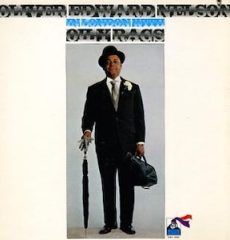
As a member of Roy Budd’s band, the Roy Love Trio, he performed on the Get Carter 1971 film soundtrack. He plays the tabla on some albums, having studied the instrument under the Indian musician Alla Rakha. He has recorded with Dudley Moore, Ronnie Scott, Teresa Brewer, Ian Carr, Ray Ellington, Stephane Grappelli, Cleo Laine, Oliver Nelson, among numerous others.
Drummer and percussionist Chris Karan, who at 84 years of age has recorded 84 albums as a sideman, continues to perform.

More Posts: drums,history,instrumental,jazz,music,percussion,tabla
Daily Dose Of Jazz…
Francisco “Chino” Pozo was born on October 4, 1915 in Havana, Cuba. An autodidact on piano and bass, he concentrated on bongos, congas, and drums before leaving his home for greener pastures. Moving to the United States in 1937, he played with Machito from 1941–43 and with the Jack Cole Dancers from 1943-1949.
In the Fifties he went on to play in numerous jazz ensembles, especially latin jazz and Afro-Cuban jazz. He performed and/or recorded with Jose Curbelo, Noro Morales, Tito Puente, Tito Rodríguez, Enric Madriguera, Perez Prado, Josephine Premice, Tadd Dameron, Charlie Parker, and Dizzy Gillespie.
He toured with Peggy Lee in 1954-55 and played with Stan Kenton in 1955, Herbie Mann in 1956, Xavier Cugat and René Touzet in 1959.
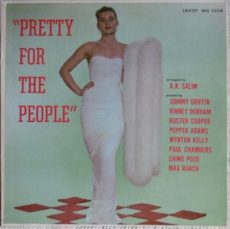
He also recorded with Illinois Jacquet, Phineas Newborn, Gábor Szabó, Paul Anka, Justo Betancourt, Harry Betts, Fats Navarro, Eddie Palmieri, Johnny Richards, A. K. Salim, Billy Taylor, Clark Terry, Chico O’Farrill, Julius Watkins and Charlie Rouse.
Drummer Chino Pozo, whose claim to be the cousin of Chano Pozo has been disputed, died on April 28, 1980 in New York City.
More Posts: bass,bongo,conga,drums,history,instrumental,jazz,music,piano
Requisites
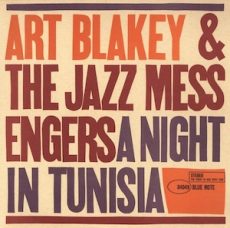
A Night In Tunisia ~ Art Blakey and The Jazz Messengers | By Eddie Carter
This morning’s record from the library is an exceptional jazz album where the musicians complement each other behind the iconic drummer Art Blakey. A Night In Tunisia (Blue Note BLP 4049/BST 84049) is a 1961 release that is not just one of the best LPs in The Jazz Messengers discography but a historical treasure that is better experienced than described. In the spotlight with Art on this date are Lee Morgan on trumpet, Wayne Shorter on tenor sax, Bobby Timmons on piano, and Jymie Merritt on bass. The 1978 King Record Company Japanese Stereo reissue is my copy (Blue Note BST 84049 – GXK 8041).
A Night In Tunisia by Dizzy Gillespie and Frank Paparelli starts swinging with Art’s lively introduction to the quintet’s brisk melody. Wayne launches into a hard-driving interpretation, showcasing his technical prowess and emotional depth. Lee continues cooking with energetic exuberance, his trumpet work adding a vibrant layer to the tune. Jymie demonstrates his skillful command of the bass, walking with authority in a short solo. Art fuels the finale with intense emotion ahead of the theme’s vigorous restatement.
The ensemble eases to a medium melody for Sincerely Diana by Wayne Shorter, stepping aside for the saxophonist’s bluesy opening statement. Morgan carries himself well in the following reading, his trumpet work adding a soulful touch. Then, Timmons delivers a delightfully relaxed performance, his piano playing adding a smooth, jazzy feel. Blakey provides a memorable exclamation point ahead of the closing chorus, his drumming adding a dynamic energy to the piece.
So Tired by Bobby Timmons starts Side Two at a medium tempo, with a boogaloo flavor for the ensemble’s theme. Wayne gives the opening solo an unmistakable melodic charm. Lee next illustrates a splendid study in soulful improvisation; then Bobby hits an ideal groove, leading to the theme’s restatement and graceful fadeout. Yama is the first of two originals by Lee Morgan, and the quintet’s melody is a model of uncomplicated beauty. Timmons is up first and shows his soloist capabilities to fine advantage here in a gentle performance. Morgan responds with a tender, tasteful presentation next. Shorter culminates the solos with an affectionately intimate reading over the trio’s lush foundation into the song’s soothing ending.
Art’s drums kick off the album closer, Kozo’s Waltz by Lee Morgan. The complete ensemble joins in for the medium-fast theme. Wayne gets things underway with a passionate opening statement. Lee responds with an exciting interpretation; Timmons follows with a few intriguing choruses. Art puts his stamp on the closing solo with a sizzling beat before the return to the theme. Alfred Lion produced the initial session, and Rudy Van Gelder was the recording engineer, both of whom were instrumental in capturing the quintet’s energy and chemistry. This King Record Company reissue has a spectacular soundstage that transports the musicians to the sweet spot in your listening room with stunning fidelity. If you’re a hard bop fan, I happily recommend A Night In Tunisia for a place in your jazz library. It’s a gem by Art Blakey and The Jazz Messengers that no jazz enthusiast should miss on their next shopping trip!
~ A Night In Tunisia – Source: JazzStandards.com
© 2024 By Edward Thomas Carter
More Posts: choice,classic,collectible,collector,drums,history,instrumental,jazz,music
Daily Dose Of Jazz…
Paul Hession was born on September 19, 1956 in Leeds, West Yorkshire, England where his parents bought him a guitar when he was seven and encouraged his musical development by getting him in the church choir. His first paid gigs were weddings. He started playing drums around fourteen and was mainly self taught working himself through the different musical genres until he reached jazz.
After several years of playing jazz he turned to free improvisation and formed Art, Bart & Fargo with saxophonists Alan Wilkinson and Peter Malham. While living in London, England he played with numerous improvisers and formed a trio with Chris Green and Roberto Bellatalla. Returning to Leeds in the mid-Eighties he continued playing and running music workshops.
By the time he turned thirty he made a solo recording and tour and continued to play and record solo. He started working with electroacoustic dimensions as a soloist. Hession went on to run the Improvised Music Workshop in the late 1980s and a decade later founded Improvised Music Leeds, a workshop that was founded to teach drumming to youth.
Paul created his next trio, Hession/Wilkinson/Fell which became his most prolific group. They recorded for the Canadian Broadcasting Corporation and broadcast on the radio program Two New Hours. He toured the United States and parts of Canada before returning to Europe and playing several cities and festivals.
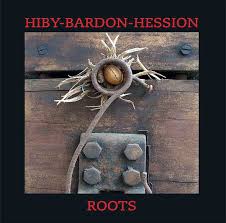
In 2018 he received his doctorate from the University of Leeds for research into augmenting solo percussion with analogue and digital electronics. Another trio later with Hans Peter Hilby and Michael Bardon, he remains active.

More Posts: bandleader,drums,history,instrumental,jazz,music
Daily Dose Of Jazz…
Art Anton was born on September 8, 1926 in New York City. In the early 40’s he was a private student of Irving Torgman, and was a music major at New York University from 1943 through 1944. He returned for further studies from 1946 through 1947. In between, the Navy grabbed him to play its own military paradiddles. From the late ’40s onward, he began working with leaders such as Herbie Fields, Sonny Dunham, Bobby Byrne, Tommy Reynolds, and Art Wall.
In 1952, he got into the combo of saxophonist Bud Freeman, moving to pianist Ralph Flanagan’s band the following year. Anton’s drumming style stuck closely to straight-ahead jazz swinging or whatever other beat was required. After gigs in 1954 with Jerry Gray and Charlie Barnet, he relocated to the west coast and began freelancing. He performed and recorded with the big band of Stan Kenton to multi-instrumentalist Jimmy Giuffre’s smaller units.
Maintaining steady employment as a jazzman on the stingy Los Angeles, California scene was difficult, and Artie looked for other types of employment. During the ’60s, he turned to selling vacuum cleaners, worked as a private detective, while remaining a highly respected West Coast percussionist.
Drummer and percussionist Art Anton, who is also listed as Artie or Arthur, died on July 27, 2003 in Yakima, Washington.
More Posts: drums,history,instrumental,jazz,music,percussion