

Daily Dose Of Jazz…
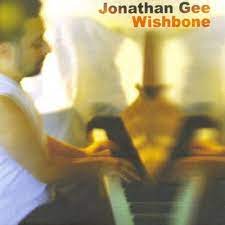
Winston Clifford was born on September 19, 1965 in Islington, England and began playing drums as a child. He studied with former Tubby Hayes drummer Bill Eyden and Trevor Tomkins at the Guildhall School of Music. His playing is free from the usual restraints of stylistic expectations and a true reflection of listening and responding in the moment.
This training has led him to become one of the most in-demand drummers in Britain. He has performed or recorded with over five dozen luminary jazz musicians from both sides of the Atlantic. To name a few one must include Bheki Mseleku, Joanne Bracken, Stanley Turrentine, Benny Golson, James Williams, Chico Freeman, Phillip Catherine, John Abercrombie, Birelli Lagrene, Joe Lovano, Eddie Henderson, Archie Sheep, Carmen Lundy, Ronnie Laws, Freddie Hubbard, Art Farmer, Gary Bartz, Joey Calderazzo, Dave Valentin, Larry Coryell, Monty Alexander, Eddie Harris, Bobby Watson, Billy Childs, Houston Person, Courtney Pine, Julian Joseph, and the list goes on.
Post bop drummer Winston Clifford continues to perform and record.

More Posts: drums,instrumental,jazz,music
Daily Dose Of Jazz…
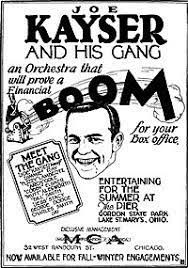
Joe Kayser was born St. Louis, Missouri on September 14, 1891 and at age 26 in 1917 he relocated to New York City to join Earl Fuller’s band, which played at a restaurant called Rector’s. He enlisted in the U.S. Navy during World War I, forming a band which included Benny Kubelsky on violin. Following the war, the Meyer Davis Organization hired him to lead a dance band which played in North and South Carolina.
Forming his own self-named dance jazz band in 1921 and shortly after he attempted to tour across the Carolinas. Three years later he relocated to Chicago, Illinois where his band performed through 1936.
During those Chicago days Joe began in 1929 to take positions as musical director of theater orchestras with the Diversey Theater in Chicago, followed by the Midland Theatre in Kansas City, Missouri. He continued to tour with his orchestra while holding these positions.
He played at the 1933 World’s Fair, accompanying Sally Rand but by 1963 had dissolved the band to work for NBC. Afterwards Kayser became an executive for MCA in 1943, remaining there until his retirement in 1955.
Drummer and bandleader Joe Kayser transitioned on October 3, 1981 in Evanston, Illinois.
More Posts: bandleader,drums,history,instrumental,jazz,music
THE JAZZ SYMBIOSIS QUINTET
More Posts: adventure,bass,club,cornet,drums,flugelhorn,flute,genius,jazz,music,piano,preserving,saxophone,travel,trombone,trumpet
Daily Dose Of Jazz…
Hal Russell was born Harold Russell Luttenbacher on August 28, 1926 in Detroit, Michigan. Raised in Chicago, Illinois from the eighth grade, he began playing drums at age four, but majored in trumpet at college. He subsequently drummed in several big bands, including those of Woody Herman and Boyd Raeburn.
As with many young players in the mid-1940s, Russell’s life was irreversibly changed by bebop. In the 1950s he worked with Miles Davis, Billie Holiday, Sonny Rollins, John Coltrane, and Duke Ellington. During this period he succumbed to drugs and was a heroin addict for ten years. In 1959, he joined the Joe Daley Trio, whose Newport’ 1963, which was mostly studio material, was reputedly one of the earliest free jazz records.
The early 1970s saw Hal as the regular percussionist for the band at the suburban Chicago Candlelight Dinner Playhouse. He played mostly drums, but occasionally vibes and keyboards. By the end of the decade he formed the NRG Ensemble, which featured saxophonist Mars Williams, multi-instrumentalist Brian Sandstrom, and percussionist Steve Hunt, among others. During this period he started playing tenor and soprano saxophone and trumpet, in addition to drums and vibes.
Issuing his first album in 1981 for the Nessa label, in the late Eighties the group began playing frequently in Europe, and began recording for ECM with The Finnish/Swiss Tour. In addition to the NRG Ensemble, Russell always maintained several bands, the rock-oriented trio NRG 3 and The Flying Luttenbachers.
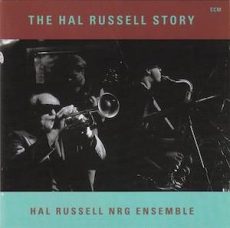
Tenor and soprano saxophonist, trumpeter, vibraphonist and drummer Hal Russell, shortly after completing the semi-autobiographical album The Hal Russell Story, transitioned from a heart attack on September 5,1992 in La Grange, Illinois.

More Posts: bandleader,drums,history,instrumental,jazz,music,saxophone,trumpet,vibraphone
Daily Dose Of Jazz…
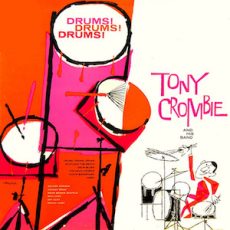
Tony Crombie was born Anthony John Kronenberg on August 27, 1925 in London, England’s East End Jewish community. A self-taught musician, he began playing the drums at the age of fourteen. He was one of a group of young men from the East End of London who ultimately formed the co-operative Club Eleven bringing modern jazz to Britain. He went to New York with his friend Ronnie Scott in 1947, witnessing the playing of Charlie Parker and Dizzy Gillespie, he and like-minded musicians such as Johnny Dankworth, and Scott and Denis Rose, brought be-bop to the UK. This group of musicians were the ones called upon if and when modern jazz gigs were available.
In 1948, Crombie toured Britain and Europe with Duke Ellington, who had been unable to bring his own musicians with him, except for Ray Nance and Kay Davis. Picking up a rhythm section in London, he chose Crombie on the recommendation of Lena Horne, with whom Crombie had worked when she appeared at the Palladium.
By 1956 Tony temporarily left jazz to set up a rock and roll band he called The Rockets, modeling themselves after Bill Haley’s Comets and Freddie Bell & the Bellboys. They released several singles for Decca and Columbia. He is credited with introducing rock and roll music to Iceland, performing there in 1957.
The next year the Rockets had become a jazz group with Scott and Tubby Hayes. During the following year, Crombie started Jazz Inc. with pianist Stan Tracey. During the Sixties he scored for television and film and established a residency at a hotel in Monte Carlo. He toured the UK with Conway Twitty, Freddy Cannon, Johnny Preston, and Wee Willie Harris.
In the early 1960s, Crombie’s friend, Victor Feldman, passed one of his compositions to Miles Davis, who recorded the piece on his album Seven Steps to Heaven. The song, “So Near, So Far”, has been recorded by players including Joe Henderson, who named a tribute album to Miles Davis using the title.
Over the next thirty years, Crombie worked with many American jazz musicians, including Ben Webster, Coleman Hawkins, Illinois Jacquet, Joe Pass, Mark Murphy and Eddie “Lockjaw” Davis.
After breaking his arm in a fall in the mid-1990s he stopped playing the drums, but continued composing until his death. Drummer, pianist, vibraphonist, bandleader and composer Tony Crombie, was regarded as one of the finest English jazz drummers and bandleaders, transitioned on October 18, 1999, aged 74.
More Posts: composer,drums,history,instrumental,jazz,music,piano,vibraphone