

Daily Dose Of Jazz…
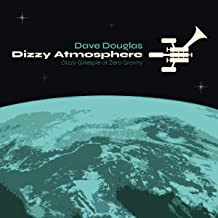
Dave Douglas was born on March 24, 1963 in Montclair, New Jersey and grew up in the New York City area, attending Phillips Exeter Academy, a private high school in New Hampshire. He was introduced to jazz by his father and as a young teen was shown jazz theory and harmony by pianist Tommy Gallant. He began performing jazz as a trumpeter during his junior year in high school while on an abroad program in Barcelona, Spain. After graduating from high school in 1981, he studied at the Berklee College of Music and New England Conservatory, both located in Boston, Massachusetts.
A move to New York City in 1984 had him studying at New York University with Carmine Caruso, and finished a degree in music. Early gigs included the experimental rock band Dr. Nerve, Jack McDuff, Vincent Herring as well as street bands around New York City. He played with a variety of ensembles and came to the attention of the jazz pianist, composer, and bandleader, Horace Silver, with whom he toured the US and Europe in 1987.
During the late 1980s, Douglas began playing with bands led by Don Byron, Tim Berne, Marty Ehrlich, Walter Thompson, and others in New York. He also played in the composer collectives Mosaic Sextet and New and Used.
Trumpeter, composer, and educator Dave Douglas has more than fifty recordings as a leader and over 500 published compositions. Has led and co-led quintets and sextets as well as electronic ensembles, won a Doris Duke Performing Artist Award, a Guggenheim Fellowship, an Aaron Copland award, and received Grammy Award nominations. As a composer, has received several commissions from among others from the Birmingham Contemporary Music Group, Essen Philharmonie, The Library of Congress, Stanford University and Monash Art Ensemble, which premiered his chamber orchestra piece Fabliaux in 2014.
He has served as artistic director of the Workshop in Jazz and Creative Music at the Banff Centre in Canada, co-founded the Festival of New Trumpet Music in New York, serving as its director. He is on the faculty at the Mannes School of Music and is a guest coach for the Juilliard Jazz Composer’s Ensemble. In 2016, he accepted a four-year appointment as the artistic director of the Bergamo Jazz Festival.
In 2005 Douglas founded Greenleaf Music, a record label for his albums, sheet music, podcasts, as well as the music of other modern jazz musicians. Greenleaf has produced over 70 albums.

More Posts: bandleader,educator,history,instrumental,jazz,music,producer,trumpet
Daily Dose Of Jazz…
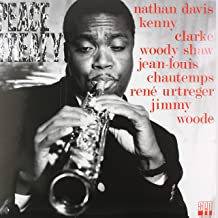
Nathan Tate Davis ws born February 15, 1937 in Kansas City, Kansas. He apprenticed in the Jay McShann band before heading off to college to receive his degree in Music Education. After being discharged from military service post World War II, he traveled extensively around Europe before settling in Paris, France in 1962.
Moving back to the States he went on to attain a Ph.D in Ethnomusicology from Wesleyan University and was a professor of music and director of jazz studies at the University of Pittsburgh from 1969, an academic program that he helped initiate. During his tenure he was founder and director of the University of Pittsburgh Annual Jazz Seminar and Concert, the first academic jazz event of its kind in the United States.
Nathan helped to found the university’s William Robinson Recording Studio as well as establish the International Academy of Jazz Hall of Fame located in the school’s William Pitt Union and the University of Pittsburgh-Sonny Rollins International Jazz Archives.
Retiring as director of the Jazz Studies Program at Pitt in 2013, Davis also served as the editor of the International Jazz Archives Journal. One of Davis’ best known musical associations was heading the Paris Reunion Band from 1985 to 1989, which at different times included Nat Adderley, Kenny Drew, Johnny Griffin, Slide Hampton, Joe Henderson, Idris Muhammad, Dizzy Reece, Woody Shaw, and Jimmy Woode.
Over the course of his career he worked with Eric Dolphy, Kenny Clarke, Ray Charles, Slide Hampton, Kenny “Klook” Clarke and Art Blakey. He toured and recorded with the post-bop ensemble leading Roots which he formed in 1991. As a composer, Nathan created various pieces, including a 2004 opera entitled Just Above My Head.
Tenor and soprano saxophonist, bass clarinetist and flutist Nathan Davis, who recorded eighteen albums as a leader, passed away on April 8, 2018 in Palm Beach, Florida, at the age of 81.

More Posts: bandleader,educator,flute,history,instrumental,jazz,music,saxophone
Daily Dose Of Jazz…
Ray Santisi was born on February 1, 1933 in Boston, Massachusetts and grew up in Jamaica Plain. He won an honors scholarship to attend Schillinger House and by the time he graduated it had been renamed Berklee School of Music, and later became Berklee College of Music..
He played as featured soloist with Charlie Parker, Stan Getz, Dexter Gordon, Mel Torme, Irene Kral, Herb Pomeroy and Natalie Cole to name a few. He performed with Buddy DeFranco, Joe Williams, Gabor Szabo, Milt Jackson, Zoot Sims & Al Cohn, Carole Sloane, Clark Terry and Bob Brookmeyer. As a leader he performed with his own ensemble, The Real Thing and in the 1960s performed with the Benny Golson Quartet.
As an educator, in 1957 Ray became a professor of piano and harmony at Berklee College of Music. His students include many notable jazz musicians, including Diana Krall, Makoto Ozone, Joe Zawinul, Keith Jarrett, Jane Ira Bloom, Jan Hammer, Alan Broadbent, Arif Mardin, Gary Burton, John Hicks, Danilo Perez and Hiromi. Fourteen of his students received Grammy awards.
He was awarded grants from the National Endowment for the Arts in composition and performance. He taught at Stan Kenton’s summer jazz clinics throughout the United States, performed in Europe, Scandinavia, and Asia. He performed at the first Jazz Workshop, and in 2008 was nominated to IAJE Jazz Education Hall of Fame.
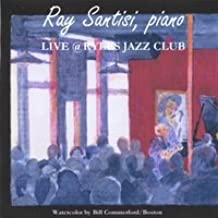
He authored two books, Berklee Jazz Piano, and his instructional book, Jazz Originals for Piano. His trio played the first Sunday of each month for eleven years at Ryles Jazz Club until the month of his death. Pianist, composer, arranger, and educator Ray Santisi passed away on October 28, 2014 in his hometown.
More Posts: arranger,bandeader,composer,educator,history,instrumental,jazz,music,piano
Daily Dose Of Jazz…
Arthur Crawford Wethington was born on January 26, 1904 in Chicago, Illinois and graduated from the Chicago College of Music. Working under pianist Lottie Hightower in the mid-1920s, he then took a position in Carroll Dickerson’s band in 1928. 1929 saw this ensemble playing with Louis Armstrong in New York City.
Between 1930 and 1936 Crawford played with the Mills Blue Rhythm Band, recording several times with the group. He recorded with Edgar Hayes in 1937 and also worked with Cab Calloway, Red Allen, and Adelaide Hall.
After 1937 Wethington quit performing full-time but was active as a music teacher, and in the 1960s he took work in New York City as a supervisor for a transit line power plant.
Saxophonist and educator Crawford Wethington, who was never recorded as a leader, passed away on September 11, 1994 in White Plains, New York.
More Posts: educator,history,instrumental,jazz,music,saxophone

Daily Dose Of Jazz…
James Otis Wyble was born on January 25, 1922 in Port Arthur, Texas and in his early years worked for a radio station in Houston. He and guitarist Cameron Hill played Western swing, an outgrowth of jazz, in a band led by Burt “Foreman” Phillips. The sound of two guitars attracted Bob Wills, another fan of Western swing, and he hired both men for his band, the Texas Playboys.
His career interrupted by World War II, he served in the Army from 1942 to 1946, but returned to music after he came home. Jimmy continued to play in Western swing bands, but his interest in jazz surfaced on his 1953 debut album, The Jimmy Wyble Quintet. He would soon work with Barney Kessel and Benny Goodman, and then played with Red Norvo for eight years, including on a tour of Australia accompanying Frank Sinatra.
During the 1960s Wyble took a job as a studio musician in Los Angeles, California working as a guitarist for movies and television, playing on movie soundtracks, including The Wild Bunch, Ocean’s Eleven, Everything You Always Wanted to Know About Sex and Kings Go Forth, and played on TV shows such as The Flip Wilson Show and Kraft Music Hall.
He became an educator after taking classical guitar lessons from Laurindo Almeida, teaching guitar to Larry Koonse, Howard Roberts, Howard Alden and Steve Lukather among others. The 1970s saw Jimmy developing a two-line contrapuntal approach to guitar and composed numerous etudes in this style, publishing Classical/Country, The Art of Two-Line Improvisation, and Concepts for the Classical and Jazz Guitar.
During the 1980s, he left the music business, returning to performance in 2005. Larry Koonse, his former student, issued the album What’s in the Box with compositions by Wyble based on his book of etudes.
Guitarist, composer, and educator Jimmy Wyble continued to perform, record and teach until his death on January 16, 2010.
More Posts: composer,educator,guitar,history,instrumental,jazz,music