

Daily Dose Of Jazz…
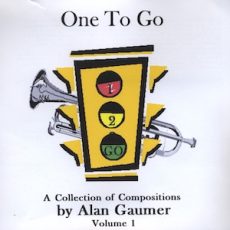
Alan Gaumer was born on July 25, 1951 in Bethelehem, Pennsylvania. He began playing the trumpet when he was eight and was a member of Kal’s Kid’s that appeared on the Ted Mack Original Amateur Hour as well as numerous other television shows. Throughout elementary, junior and high school he participated in band, orchestra, and stage bands and graduated from Freedom High School in 1969.
He studied with John Nero and Willard Schissler and performed with the Allentown Band before attending the U.S. Navy School of Music. Upon graduation he spent the next three years living in Gaeta, Italy touring Europe, Africa and Asia with the Navy Show Band. Offered the jazz trumpet position at the U.S. Naval Academy in Annapolis before his discharge, from 1973-75 he toured first as trumpeter and later as drummer with the well known group KATO.
Settling back in the Lehigh Valley, Pennsylvania he was an integral part of a popular group P.F. & the Flyers and his own A.G.Q. After attending Rutgers University, Alan spent two years touring South America and West Africa with the U.S. Navy Show Band. When he got out in 1982, he worked for several years at well known hotels and resorts.
He has performed with a long list of jazz musicians which include Randy Brecker, Phil Woods, Al Cohn, George Young, Bob Dorough, Tom Harrell, Bill Watrous, Urbie Green, Kim Parker, Vic Jurris, Charles Fambrough, Bill Washer, John Swanna, David Leonhardt, Steve Gilmore, Bill Goodwin, Bobby Routch, Tom Schuman of Spyro Gyra and others.
As an educator Gaumer has been the jazz trumpet Artist/Lecturer at Moravian College since 1994 and served as Fusion ensemble director in 1998-99, 2003-04 and 2005-06. He is Artistic Director of the Pennsylvania Jazz Collective, a Lehigh Valley based non-profit jazz organization.
Trumpeter and educator Alan Gaumer continues to perform, teach and produce jazz events.

More Posts: bandleader,educator,history,instrumental,jazz,music,trumpet
Daily Dose Of Jazz…
Adrian Tilbrook was born on July 20, 1948 in Hartlepool, Co. Durham, England. The son of a tenor saxophone/clarinet player, he studied drums for two years with Max Abrams. In 1974 he replaced Tony Hicks in the blues-influenced rock trio Back Door and toured extensively in Germany and the UK in the 70s with British blues giant Alexis Korner.
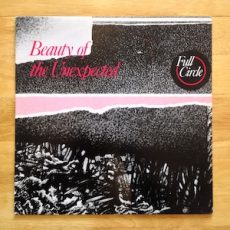
Tilbrook formed Full Circle with trombonist Rick Taylor in 1984 and ventured into jazz. Throughout his freelance career, played with many American musicians, including Eddie ‘Lockjaw’ Davis, Al Grey, James Moody, Jimmy Witherspoon and Al Casey, as well as British artists such as Ian Carr, Allan Holdsworth, Don Weller and Stan Tracey.
A powerful and tasteful technician, he has been influenced by Elvin Jones and Billy Higgins. Drummer Adrian Tilbrook, who has taught percussion for many years and since 1986 has worked with Northern Arts/Yorkshire Arts as Jazz Development Officer based at Jazz Action in Darlington, continues to perform and record.
More Posts: bandleader,drums,educator,history,instrumental,jazz,music
Daily Dose Of Jazz…
Nicole Glover was born on July 18, 1991 in Portland, Oregon. Her musical journey began when her father introduced her to improvised music at a young age. She started playing the clarinet at the age of ten, transitioning to tenor saxophone the following year. Her interest and curiosity for music blossomed in high school, becoming involved in a variety of performance groups, both within her school and in the community.
Nicole was chosen to be one of nineteen students from across the nation for the Next Generation Jazz Orchestra, who embarked on a national tour that involved performances with Bobby Watson and Julian Lage, and concluded with a performance at the Monterey Jazz Festival with Wynton Marsalis.
After studying at William Paterson University, in 2011 Nicole returned to Portland where she was invited to record on Esperanza Spaulding’s Grammy-award winning album Radio Music Society. She now performs in multiple groups with multi-instrumentalist George Colligan, as well as her own jazz trio and several other improvisational ensembles, such as, the Alan Jones Storyline Sextet, Thomas Barber’s Spiral Road, and the Kerry Politzer Quintet.
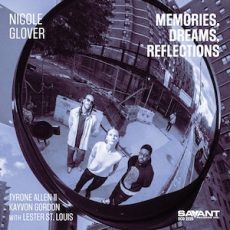
2015 saw Glover releasing her debut album First Record, featuring pianist and trumpeter George Colligan, bassist Jonathan Lakey and drummer Alan Jones. She leads her own trio with bassist Tyrone Allen II and drummer Kayvon Gordon. This was followed with the release of Plays, and HighNote-Savant Records Memories, Dreams, Reflections.
Throughout her musical career, Nicole has performed with Mulgrew Miller, Esperanza Spalding, Kenny Garrett, George Colligan, Geoffrey Keezer, Bennie Maupin, Bobby Watson, Mike Clark, Carl Allen, Kenny Washington, Al Foster, Victor Lewis, Lenny White, Joe Farnsworth, Reggie Workman, Dee Dee Bridgewater, Ben Wolfe, Bill Stewart, Essiet Essiet, Mel Brown, Julian Lage, Obo Addy, Rob Scheps, Red Holloway, Terell Stafford, Helen Sung, Dana Hall, Scotty Barnhart, and Thara Memory, to name a few.
Glover is a member of Ural Thomas and Pain, Artemis led by Renee Rosnes, Ursa Major led by Christian McBride, and has toured with Jazz at Lincoln Center Orchestra.Tenor saxophonist, bandleader, composer, and educator Nicole Glover, who is on faculty at the Manhattan School of Music and has taught masterclasses and private lessons to students around the world, continues to fit performance in her busy schedule.
More Posts: bandleader,educator,history,instrumental,jazz,music,saxophone
Daily Dose Of Jazz…
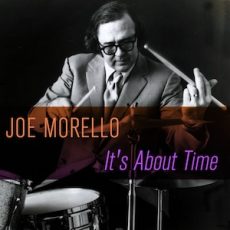
Joseph Albert Morello was born July 17, 1928 in Springfield, Massachusetts of French and Italian ancestry. Suffering from partial vision from birth, he devoted himself to indoor activities. He began studying the violin when he was six and three years later, he was a featured soloist with the Boston Symphony Orchestra, playing Mendelssohn’s Violin Concerto, and again three years later.
By fifteen he met the violinist Jascha Heifetz, decided that he would never be able to equal Heifetz’s sound and switched to drumming. He first studied with show drummer Joe Sefcik and then with educator and author George Lawrence Stone. He was so impressed with Morello’s ideas that he incorporated them into his next book. Further study led him to Radio City Music Hall percussionist, Billy Gladstone.
Moving to New York City, he worked with Johnny Smith, Tal Farlow, Stan Kenton, Phil Woods, Sal Salvador, Marian McPartland, Jay McShann, Art Pepper, and Howard McGhee. After a period of playing in McPartland’s trio, Joe declined invitations from Benny Goodman and Tommy Dorsey, favoring a two-month tour with the Dave Brubeck Quartet in 1955. This turned into a performing and recording residency that lasted for well over a decade, departing in 1967.
As an educator Morello became an in-demand clinician, teacher and bandleader, whose many of his former students went on to become well known in their chosen genres. He authored several drum books, including Master Studies, published by Modern Drummer Publications, made instructional videos and received many awards, and was inducted into several Halls of Fame.
Drummer Joe Morello, who appeared on over 120 albums, died at his home in Irvington, New Jersey on March 12, 2011 at the age of 82.
More Posts: author,bandleader,drums,educator,history,instrumental,jazz,music
Daily Dose Of Jazz…
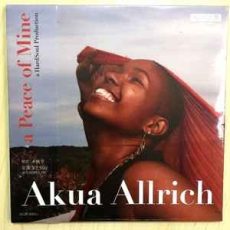
Akua Allrich was born on July 11th in Washington, D.C., the child of a musical family with a home that held such a wealth of jazz recordings that she did not buy any albums until her second year in college. One of the first jazz albums she bought was John Coltrane’s Live at the Village Vanguard: The Master Takes.
Educated at Howard University, she obtained her BM in jazz vocals and a master’s degree in social work. She was taught, coached and mentored by talented musicians such as world-renowned singer Kehembe V. Eichelberger, singer/drummer Grady Tate, and pianist Charles Covington.
Her musical roots run deeply into blues, soul and rhythm and blues, with a clear grounding in jazz and pan-African music. She launched her independently produced album A Peace of Mine in 2010, which created a significant buzz with critics and music-lovers alike. She sings in many languages including Portuguese, French, Spanish, English, Xhosa, and Twi.
Vocalist, composer and teacher, Akua Allrich continues to electrify audiences and is likened to such legendary artists as Oscar Brown, Jr., Miriam Makeba and Nina Simone.

More Posts: bandleader,composer,educator,history,instrumental,jazz,music,vocal