

Daily Dose Of Jazz…
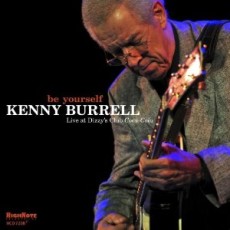
Kenneth Earl Burrell was born July 31, 1931 in Detroit, Michigan and began playing guitar at age 12. He cites his influences as Charlie Christian, Django Reinhardt and Wes Montgomery. He made his debut recording with Dizzy Gillespie’s Sextet while still matriculating Wayne State University in 1951.
After graduating Kenny went on the road with Oscar Peterson in 1955 and a year later moved to New York City. During this decade and forward Burrell has led his own groups and recorded some 40 albums and CDs, many of them well-received albums, such as, Midnight Blue, Blue Lights, Sunup to Sundown, Soft Winds, and his 75th Birthday Bash.
A consummate sideman, Burrell recorded with a wide range of prominent musicians. A highly popular performer, he has won several jazz polls in Japan, United Kingdom and the United States.
In the 1970s he began leading seminars about music, particularly “Ellingtonia”, examining the life and accomplishments of Duke Ellington. As of 1996 he has served as Director of Jazz Studies at UCLA, mentoring such notable alumni as Gretchen Parlato and Kali Wilson.
Guitarist Kenny Burrell has amassed over sixty albums as a leader and another 58 as a sideman with the likes of Jimmy smith, Lalo Schifrin, Charlie Rouse, Sonny Rollins, Ike Quebec, Wynton Kelly, Etta Jones, Milt Jackson, Coleman Hawkins and Red Garland among numerous others. He continues to perform, record and tour.
More Posts: guitar
Daily Dose Of Jazz…
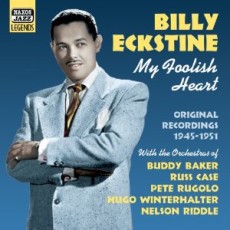
William Clarence Eckstine was born on July 8, 1914 in Pittsburgh, Pennsylvania but grew up in Washington, DC of Prussian and African American heritage. He began singing at the age of seven, entering amateur talent shows while dreaming of a football career that was sidelined when he broke his collarbone. Focusing on music he worked his way west to Chicago, joining Earl Hines’ Grand Terrace Orchestra as vocalist and occasionally trumpeter from1939 – 1943. During his tenure he made a name for himself through the Hines band’s radio shows with such jukebox hits as “Stormy Monday Blues” and his own “Jelly Jelly”.
Eckstine formed the first bop big band in 1944 making it a fountainhead for young musicians who would reshape jazz by the end of the decade, including Dizzy Gillespie, Dexter Gordon, Miles Davis, Art Blakey, Charlie Parker, Fats Navarro and Sarah Vaughn, with Tadd Dameron and Gil Fuller were among the band’s arrangers. Billy hit the charts often during the mid-’40s, with Top Ten entries including “A Cottage For Sale” and “Prisoner of Love”.
Breaking down barriers throughout the Forties as a leader of the original bop big band and as the first romantic black male in popular music, Mr. B, as he was affectionately known, went solo in 1947. His seamless transition to string-filled balladry saw him recording more than a dozen hits by the end of the decade and winning numerous awards from Esquire, Down Beat and Metronome magazines. His 1950 appearance at New York’s Paramount Theatre greatly surpassed Sinatra’s audience draw at the same venue.
Over the course of the next two decades Billy appeared on every major television variety show from Ed Sullivan to Nat King Cole, Jack Paar, Steve Allen, Joey Bishop, Flip Wilson and Playboy After Dark. After a long series of hit tunes and recordings by the 70’s Billy’s recordings came sparingly although he still performed before adoring audiences throughout the world. He made his final Grammy-nominated recording singing with Benny Carter in 1986.
Billy Eckstine, vocalist, bandleader, trumpeter, valve trombonist and guitarist passed away on March 8, 1993, at age 78, in his hometown of Pittsburgh.
More Posts: bandleader,guitar,trombone,trumpet,vocal
Daily Dose Of Jazz…
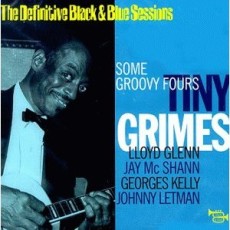
Lloyd “Tiny” Grimes was born on July 7, 1916 in Newport News, Virginia and began his career playing drums and one-fingered piano. In 1938 he took up the electric 4-string tenor guitar and two years later joined the Cats and a Fiddle as guitarist and singer. 1943 saw him as part of the Art Tatum Trio making a number of recordings and this early configuration recorded some of the more interesting early examples of Tiny Grimes’ guitar work.
After leaving Tatum, Grimes recorded with his own groups in New York and he recorded with a long list of leading musicians, including Billie Holiday. He made four recordings with Charlie Parker that are considered excellent examples of early bebop jazz: “Tiny’s Tempo”, “Red Cross”, “Romance Without Finance” and “I’ll Always Love You”. He was to become one of the 52nd Street regulars during this period.
Towards the end of the decade Tiny scored a hit on a jazzed up version of “Loch Lomond”. His band was billed as Tiny “Mac” Grimes and the Rocking Highlanders, appearing in kilts and included top tenor sax man Red Prysock and big-voiced baritone singer Screaming Jay Hawkins. Grimes continued to lead his own groups into the later 1970’s recording for Prestige in a series of strong blues-based performances with Coleman Hawkins, Illinois Jacquet, Pepper Adams, Roy Eldridge, Earl Hines and others of note.
With Paul Williams he co-headlined the first “Moondog Coronation Ball”, promoted by Alan Freed in Cleveland, Ohio on March 21, 1952, often claimed as the first rock and roll concert. It is also generally considered he played on the first rock and roll record with a group called The Crows one-hit wonder “Gee”.
Tiny Grimes, a jazz and R&B guitarist most noted for playing a four-string electric tenor guitar, passed away on March 4, 1989.
More Posts: guitar
Daily Dose Of Jazz…
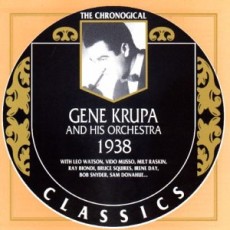
Ray Biondi was born Remo Biondi on July5, 1905 in Cicero, Illinois. As a child, he started with violin and down a road that was not supposed to lead to ditties with suggestive titles. His early training was classical at the American Conservatory of Chicago. Mandolin was a natural double at age 12 and a gateway into the world of string bands. He remained focused mostly on violin but added guitar and then trumpet into his musical arsenal as he began thinking outside the classical idiom.
In 1926 Ray began playing professionally with the Blanche Jaros Orchestra, and the following year started an eight-year period of heavy freelancing in Chicago, enjoying sets with trumpeter Wingy Manone and reedman Bud Freeman and many others. He joined Earl Burtnett’s band as a violin and trumpet double, ending up on the road gigging in Kansas City, Cincinnati, New York and distant destinations.
He played violin and trumpet with clarinetist Joe Marsala, often adding guitar when Eddie Condon double-booked himself. This relationship continued until 1938, when Gene Krupa hired Biondi to work solely as a guitarist. He left Krupa a year later and went on his own in a series of small groupings. He opened a short-lived club, rejoined Krupa on the road in the early ‘50s and became a guitar and mandolin session player outside straight jazz.
By 1961 Ray began made a serious shift to teaching all of his instruments except the trumpet, while continuing to perform with groups both large and small, including the Dick Schory orchestra and stride pianist Art Hodes in the latter. Multi-string instrumentalist Ray Biondi passed away on January 28, 1981 in Chicago, Illinois.
Daily Dose Of Jazz…
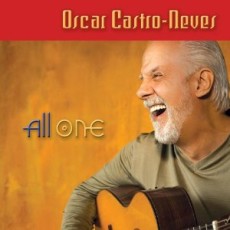
Oscar Castro-Neves was born one of triplets on May 15, 1940 in Rio de Janiero. Discovering his interest in music at an early age, by six he was playing the little viola and the cavaquinho and forming a band with his brothers. He found his musical interest in the synthesis of European classical influenced altered chords with the bittersweet samba-cancao.
He would learn from Johnny Alf who was deeply influenced by jazz, as would all musicians who chose the path to bossa nova. However it wasn’t until the 60s that it would catch on and in 1962 he was part of the historic Carnegie Hall Bossa Nova Festival.
Soon after he befriended Paul Winter and recorded his debut Oscar! on Paul’s label Living Music. That recording led to other sessions as a leader and performances with the likes of Vinicius de Moraes, Dorival Caymmi, and Quarteto em Cy. In 1966 he recorded with Tom Jobim on his Apresenta album before joining Sergio Mendes and Brazil 66 and recording Fool On The Hill. Having recorded three albums, he had already gained immediate fame blending commercially Brazilian, jazz and American pop.
As an arranger he has worked for Quincy Jones, Flora Purim, Laurindo Almeida, Joao Gilberto, played with Yo Yo Ma, Michael Jackson, Barbra Streisand, Toots Thielemans, Stevie Wonder, John Klemmer and Stan Getz and been involved in projects with Dave Grusin, Herbie Hancock and Michael Brecker.
Guitarist Oscar Castro-Neves continues to record, compose, arrange, score movies and television, perform and tour worldwide.