

Daily Dose Of Jazz…
Jerome Darr was born on December 21, 1910 in Baltimore, Maryland. His first major professional affiliation was in a jug band, the Washboard Serenaders. The guitarist was a member of this group from 1933 through 1936, a tenure that included a well-received European tour.
He had an incredibly versatile and prolific career. He showed up on sessions from blues to bebop and even strummed a few arpeggios behind Frankie Lymon & the Teenagers.
Though Jerome was not hiding in a closet during the ’40s, the guitarist simply focused on work as a studio musician during an era when the efforts of such players went largely uncredited. He was a player in the classic jazz context of Buddy Johnson’s band in the early ’50s, or was working with the much more modernistic Charlie Parker during roughly the same period.
He played on some 20 recording sessions between 1935 and 1973, though to his credit or noncredit, his playing included many other styles besides jazz. In his final years, Darr was mostly swinging in the busy band of trumpeter Jonah Jones, in a sense coming full circle with the type of playing he had started out with.
Guitarist Jerome Darr passed away on October 29, 1986 in Brooklyn, New York.
More Posts: guitar,history,instrumental,jazz,music
Daily Dose Of Jazz…
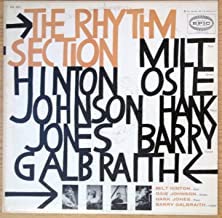
Joseph Barry Galbraith, born on December 18, 1919 in Pittsburgh, Pennsylvania.
Moving to New York City in the early 1940s he found work playing with Babe Russin, Art Tatum, Red Norvo, Hal McIntyre, and Teddy Powell. He played with Claude Thornhill in 1941–1942 and again from 1946–1949 after serving in the Army. In ‘53 he did a tour with Stan Kenton.
Having extensive work as a studio musician for NBC and CBS in the 1950s and 1960s, presented him with the opportunity to work with among others Miles Davis, Michel Legrand, Tal Farlow, Coleman Hawkins, George Barnes, John Lewis, Hal McKusick, Oscar Peterson, Max Roach, George Russell, John Carisi, and Tony Scott.
He accompanied on the recording of singers Anita O’Day, Chris Connor, Billie Holiday, Helen Merrill, Sarah Vaughan and Dinah Washington. He was a mentor to Ralph Patt.
In 1961, he appeared in the film After Hours. In 1963-1964 he played on Gil Evans’s album The Individualism of Gil Evans, and in 1965 he appeared on Stan Getz and Eddie Sauter’s soundtrack to the 1965 film Mickey One.
As an educator he taught for five years from 1970 to 1975 at CUNY (City University of New York) and published a guitar method book in 1982. From 1976–77 Galbraith taught guitar at New England Conservatory in Boston, Massachusetts.
Guitarist and bandleader Barry Galbraith passed away from cancer at the age of 63 on January 13, 1983 in Bennington, Vermont.
More Posts: bandleader,guitar,history,instrumental,jazz,music
Daily Dose Of Jazz…
John Laird Abercrombie was born in Port Chester, New York on December 16, 1944. Growing up in the 1950s in Greenwich, Connecticut he was attracted to the rock and roll of Chuck Berry, Elvis Presley, Fats Domino, and Bill Haley and the Comets. He also liked the sound of jazz guitarist Mickey Baker of the vocal duo Mickey and Silvia. He had two friends who were musicians with a large jazz collection and they listened to albums by Dave Brubeck and Miles Davis.
The first jazz guitar album he heard was by Barney Kessel, and taking guitar lessons at the age of ten, asked his teacher to show him what Kessel was playing. After high school, John went to Berklee College of Music and while there he was drawn to the music of Jim Hall, Sonny Rollins, and Wes Montgomery. He cites George Benson and Pat Martino as inspirations. His playing around Boston, Massachusetts led to his meeting the Brecker Brothers and organist Johnny Hammond Smith, who invited him to go on tour.
From Berklee in 1967 to North Texas State University to a move to New York City in 1969 where he became a popular session musician. He joined the Brecker Brothers in the jazz-rock fusion band Dreams, followed by recordings with Gato Barbieri, Barry Miles, and Gil Evans. He continued to play fusion in Billy Cobham’s band until an invitation from drummer Jack DeJohnette led to the fulfillment of Abercrombie’s desire to play in a jazz-oriented ensemble.
Around the same time, record producer Manfred Eicher, founder and president of ECM Records, invited him to record an album. He recorded his first solo album, Timeless, with DeJohnette and keyboardist Jan Hammer. who had been his roommate in the 1960s. In 1975 he formed the band Gateway with DeJohnette and bassist Dave Holland.
Between 1984 and 1990, Abercrombie experimented with a guitar synthesizer. Free jaz became a mainstay for him in the 1990s and 2000s as he formed many new associations. Drummer Adam Nussbaum, and Hammond organist Jeff Palmer became his trio and made a free-jazz album, then replaced Palmer with organist Dan Wall and released three albums between 1992 and 1997. Adding trumpeter Kenny Wheeler, violinist Mark Feldman and saxophonist Joe Lovano to the trio he recorded Open Land in 1999.).
He continued to tour and record until the end of his life. who recorded 59 as a leader, 4 with Gateway, 6 with Andy LaVerne and 93 as a sideman for the who’s who in jazz. Guitarist John Abercrombie, whose work explored jazz fusion, free jazz, and avant-garde jazz, passed away of heart failure in Cortlandt Manor, New York, at the age of 72 on August 22, 2017.
More Posts: bandleader,composer,guitar,history,instrumental,jazz,music
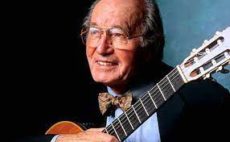
Three Wishes
Charlie Byrd told Pannonica his three wishes were:
- “I’d like to play scales like Sabicas.”
- “I’d like to get a tone like Segovia.”
- “And rhythmic drive like Wes Montgomery. And it’s an impossibility to have all that, but that’s what I wish.”
*Excerpt from Three Wishes: An Intimate Look at Jazz Greats ~ Compiled and Photographed by Pannonica de Koenigswarter

More Posts: baroness,guitar,history,instrumental,jazz,music,pannonica,three,wishes
Daily Dose Of Jazz…
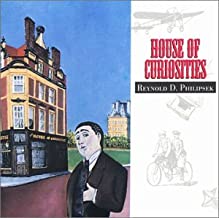
Reynold David Philipsek was born December 8, 1952 in Richmond, Minnesota and at the age nine began playing guitar and by 14 joined the American Federation of Musicians labor union. At sixteen, he wrote and recorded the single Oval Portrait with the band Cure of Ares. At 18, he was exposed, through a radio broadcast, to gypsy jazz through Django Reinhardt.
In 1975, he took a lesson and two workshops from jazz guitarist Joe Pass, studied jazz guitar and The Complete Johnny Smith Approach to Guitar with Mike Elliott.. Post Cure of Ares, he played in bands in the midwest and in 1989, Philipsek became primarily a solo act recording albums in pop, rock, jazz, and gypsy jazz on his label, Rephi Records.
He began to concentrate on gypsy jazz with All the Things You Are and Tales from the North Woods, that includes elements of gypsy jazz, bebop, Latin folk, modal jazz, and Slavic folk music informed by his burgeoning interest in his Czech and Polish heritage. Along with appearing at gypsy jazz festivals, jazz clubs, and concert venues, he composed the score for the children’s short film. St. Cloud Sleep, wrote a book of poetry Journey to the Middle Ages, and released Three Piece Suite/Munsinger Gardens on DVD.
He went on to produce Live at The Times recorded with the Twin Cities Hot Club and the documentary A Life Well Played in 2016. Guitarist, singer, songwriter, and poet Reynold Philipsek continues to explore his music.
More Posts: bandleader,guitar,history,instrumental,jazz,music,vocal