

Daily Dose Of Jazz…
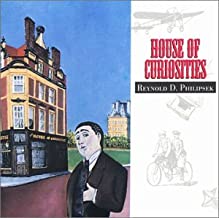
Reynold David Philipsek was born December 8, 1952 in Richmond, Minnesota and at the age nine began playing guitar and by 14 joined the American Federation of Musicians labor union. At sixteen, he wrote and recorded the single Oval Portrait with the band Cure of Ares. At 18, he was exposed, through a radio broadcast, to gypsy jazz through Django Reinhardt.
In 1975, he took a lesson and two workshops from jazz guitarist Joe Pass, studied jazz guitar and The Complete Johnny Smith Approach to Guitar with Mike Elliott.. Post Cure of Ares, he played in bands in the midwest and in 1989, Philipsek became primarily a solo act recording albums in pop, rock, jazz, and gypsy jazz on his label, Rephi Records.
He began to concentrate on gypsy jazz with All the Things You Are and Tales from the North Woods, that includes elements of gypsy jazz, bebop, Latin folk, modal jazz, and Slavic folk music informed by his burgeoning interest in his Czech and Polish heritage. Along with appearing at gypsy jazz festivals, jazz clubs, and concert venues, he composed the score for the children’s short film. St. Cloud Sleep, wrote a book of poetry Journey to the Middle Ages, and released Three Piece Suite/Munsinger Gardens on DVD.
He went on to produce Live at The Times recorded with the Twin Cities Hot Club and the documentary A Life Well Played in 2016. Guitarist, singer, songwriter, and poet Reynold Philipsek continues to explore his music.

More Posts: bandleader,guitar,history,instrumental,jazz,music,vocal
Daily Dose Of Jazz…
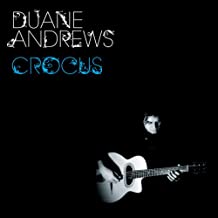
Duane Andrews was born November 30, 1972 in Carbonear, Newfoundland and Labrador and grew up exposed to the island’s mélange of cultural influences and his development as a guitarist reflects that. After graduating from the Jazz Studies program at St. Francis Xavier University with honours, he spent several years studying contemporary music composition at the Conservatoire International de Paris and at the Conservatoire National de Region in Marseille, France.
He combines traditional Newfoundland folk music with jazz similar to the way that guitarist Django Reinhardt infused jazz with Manouche influences. He is a composer for film and television, and has recorded thirteen albums as he continues to compose and explore music.
More Posts: bandleader,composer,guitar,history,instrumental,jazz,music
Daily Dose Of Jazz…
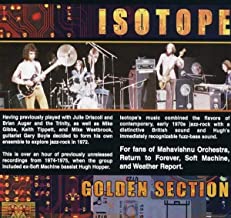
Gary Winston Boyle was born November 24, 1941 in Patna, Bihar, India. He attended the Leeds College of Music in the early 1960s and then joined the folk-rock band Eclection. He also played in The Echoes, Dusty Springfield’s band in the mid-1960s, and recorded with Brian Auger and Julie Driscoll.
In the early 1970s he worked as a session musician with musicians Keith Tippett, Mike Gibbs, Mike Westbrook, Stomu Yamashta, Bert Jansch and Norma Winstone.
In 1973, Boyle founded the jazz fusion band Isotope with bassist Jeff Clyne, keyboardist Brian Miller and drummer Nigel Morris. This line-up gigged around the United Kingdom extensively. Fusion guitarist Gary Boyle continues to perform and record.
More Posts: bandleader,guitar,history,instrumental,jazz,music
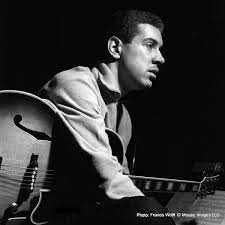
Three Wishes
The question was posed to Kenny Burrell related to three wishesand he told the Baroness Pannonica:
- “No race prejudice.”
- “Much less emphasis on materialistic values.”
- “Ample opportunity for and encouragement of individual expression of humanistic values.”
*Excerpt from Three Wishes: An Intimate Look at Jazz Greats ~ Compiled and Photographed by Pannonica de Koenigswarter

More Posts: baroness,guitar,history,instrumental,jazz,music,pannonica,three,wishes
Daily Dose Of Jazz…
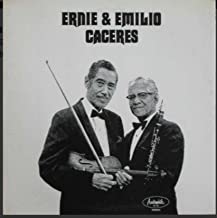
Ernesto Caceres was born on November 22, 1911 in Rockport, Texas and learned to play the clarinet, guitar, alto and baritone saxophone. He first played professionally in 1928 in local Texas ensembles. He and his brother Emilio moved to Detroit, Michigan before moving to New York City, taking work as session musicians. In 1937 they made live nationwide appearances on Benny Goodman’s popular radio series Camel Caravan which created a sensation and made them jazz stars.
In 1938 Ernesto became a member of Bobby Hackett’s band, then worked as a sideman with Jack Teagarden and Glenn Miller’s orchestra from 1940 to 1942. While with Miller, he made an appearance in the films Sun Valley Serenade and Orchestra Wives. Time with Benny Goodman, Woody Herman, and Tommy Dorsey followed later in the 1940s. In 1949 he put together his own quartet, playing at the Hickory Log in New York. He was a frequent performer with the Garry Moore Orchestra on television.
At the beginning of the 1960s he played with the Billy Butterfield Band. In 1964 he moved back to Texas and played in a band with brother Emilio from 1968 until his death. He spent some time in 1965 and 1966 at Mint Hotel in Las Vegas, Nevada and at the Holiday Hotel in Reno, Nevada with the Johnny Long Band. Saxophonist, clarinetist and guitarist Ernesto Caceres passed away from cancer on January 10, 1971.
More Posts: bandleader,clarinet,guitar,history,instrumental,jazz,music,saxophone