


Daily Dose Of Jazz…
Kirk Whalum was born July 11, 1958 in Memphis, Tennessee into a musical family, singing in his father’s church choir. He got his love of music from his piano teacher grandmother and two uncles who performed with jazz bands around the country. After graduating from Melrose High School he attended Texas Southern University where he was a member of the renowned Ocean of Soul Marching Band.
By 1986 he performed at Jean-Michel Jarre’s giant concerts Rendez-Vous Houston and Rendez-Vous Lyon. Whalum would go on to record with Jevetta Steele, Luther Vandross and tour with Whitney Houston, soloing on her single I Will Always Love You.
Kirk has worked on a number of film scores, including for The Prince of Tides, Boyz n the Hood, The Bodyguard, Grand Canyon, Cousins and contributed to the 2008 documentary film Miss HIV. As a leader he has recorded a series of well received albums and has twelve Grammy nominations and his first Grammy award in 2011 for Best Gospel Song.
He is the inaugural Jazz Legend honoree of the National Museum of African American Music in Nashville, Tennessee, joined the faculty of Visible Music College and received a Brass Note on Historic Beale Street, both in Memphis.

More Posts: bandleader,flute,history,instrumental,jazz,music,saxophone,songwriter

Daily Dose Of Jazz…
Alain Samba was born on July 10th in Pointe Noire, Congo Brazzaville. His early music experiences began with him playing different kinds of percussion native to the region such as sanza (kalimba), kikongui, marimba and drums. He was influenced by listening to both African and European music. At the age of 8 he moved to France where he studied saxophone and harmony at the American School of Modern Music in Paris.
His music is inspired mostly by the jazz of Duke Ellington, John Coltrane, Charles Parker, Wes Montgomery, Nat King Cole, Ella Fitzgerald and Wayne Shorter, and the music of his native region of Congo such as bantous’ music, lari , téké , mbochi and of course the pygmies polyrhythms and polyphonies.
Since the 90’s he has performed in Paris, France clubs, and all around Europe. He created the Art Ensemble of Africa to illuminate the struggle of world citizenship with the same love of music and sharing. In Stockholm, Sweden he teaches saxophone, harmony and polyrhythms and has played with musicians from around the world based in Sweden. such as Rene Martinez, Celso Paco, Pepe Espinosa, Tropicana se, Marianne Fuglevaag, Derrick Walker, Emilio Estrada, and Jorge Arruda to name a few.
Saxophonist, composer, pianist and percussionist Alain Samba, whose main instruments are tenor and soprano saxophones, continues to mix modern jazz with traditional African music.
More Posts: bandleader,composer,history,instrumental,jazz,music,percussion,piano,saxophone
Jazz Poems
JELLY WROTE
jelly wrote,
you should be walking on four legs
but now you’re walking on two,
you know you come directly from the
animal famulee
& you do. but dr jive
the winding boy, whose hands only work
was music & pushing
“certain ignorant light skin women” to the corner
was never animal
was never beast in storeyville, refining
a touch for ivory on pool green
with the finest of whorehouse ragtime; use even
for the “darker niggers music. rough,” jelly wrote
“but they loved it in the tenderloin.”
o the tall & chancey, the ladies’
fancy, the finest boy for miles around,
“your salty dog,” but with diamond incisors,
shooting the agate under a stetson sky
his st louis flats winked into
aaah, mr jelly
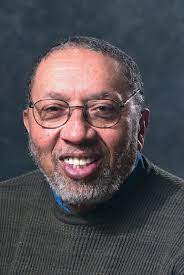
A.B. Spellman
from Jazz Poems ~ Selected and Edited by Kevin Young

More Posts: book,classic,collectible,history,jazz,library,poet

Daily Dose Of Jazz…
Sara Jacovino was born on July 9, 1983 and earned both a Bahelors and Masters degree in music from the University of North Texas. While there she studied composition with Neil Slater and Paris Rutherford and trombone with Steve Wiest and Tony Baker.
Since leaving Texas for New York City, she has entrenched herself in the jazz scene as a trombonist, composer, and arranger. who has drawn the recognition of many of her peers nationwide. She has received awards from the BMI Foundation, Downbeat Magazine, the Airmen of Note, The International Trombone Association and among others.
Sara leads her own quartet and is a member of The Birdland Big Band, The Diva Jazz Orchestra, David Berger and the Sultans of Swing, Band of Bones, The Manhattan Bridges Orchestra, and The Afro-Bop Alliance. She is an active musician in the Broadway scene performing in numerous musical productions and currently holds the tenor/bass trombone chair in “Tina, The Tina Turner Musical” at the Lunt-Fontanne Theatre.
A sought after session musician as both a lead/section trombonist and soloist. Her writing and playing is often featured by the Birdland Big Band, The Diva Jazz Orchestra, and can be heard on numerous albums by the University of North Texas One O’Clock Lab Band including: “Lab 2008,” “Lab 2007,” “Lab 2006” and “Live at Blues Alley, and by the award winning UTubes Jazz ensemble.
She enjoys working as a guest artist and clinician for University and High school jazz programs. Sara will be a guest performer and clinician at both the International Trombone Festival in 2021 and IWBC Festival in 2022.
Trombonist Sara Jacovino continues to perform, compose, arrange and continues to accept commissioned works.
More Posts: arranger,bandleader,composer,history,instrumental,jazz,music,trombone

Daily Dose Of Jazz…
Lembit Saarsalu was born July 8, 1948 in Roosna-Alliku, Estonia. He started playing jazz at an early age. He debuted at the Tallinn International Jazz Festival at the age of 16. He worked for many years in the State Philharmonic of the Estonian SSR , where as a paid musician he gave numerous concerts both at home and abroad. In the 1980s, Saarsalu devoted himself completely to jazz.
For decades, he has led local and international ensembles. He worked in a duo with Leonid Vintskevich, started a new international jazz festival Rainbow Jazz with music producer Merle Kollom and a competition for young musicians in Tartu.
As an educator Saarsalu introduced jazz in schools and has performed together with Olav Ehala and other well-known Estonian musicians for more than 40,000 students. Since the fall of 2016, he has been working as a saxophone and ensemble teacher in the rhythm music department of the Tartu Music School.
In the 1980s Eesti Televisioon made two films about Lembit, he has performed on Finnish and Spanish television and has made numerous recordings, numbering 200 recordings for Estonian Radio. His style ranges from blues and swing to free forms of jazz.
He has been repeatedly chosen as the best tenor saxophonist, awarded the annual prize of the Sound Art Endowment Fund of the Estonian Cultural Capital.
Saxophonist , bandleader and composer Lembit Saarsalu, who has been called the saxophone king and the calling card of Estonian jazz, continues to perform, compose and teach.
More Posts: bandleader,composer,history,instrumental,jazz,music,saxophone