

Requisites
Night Work ~ Sonny Stitt And The Giants | By Eddie Carter
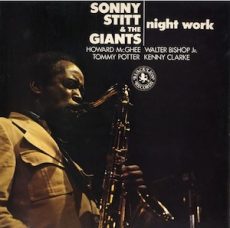
As a teenager growing up in the late sixties and early seventies, I was exposed to and enjoyed many different jazz saxophonists, thanks to my Mom and my uncles Ben, Bob, Emmanuel, and Mr. Leo Mintz. Sonny Stitt has always been one of my favorites. He enters this morning’s spotlight with Night Work (Black Lion Records BLP 30154) by Sonny Stitt and The Giants. It was initially recorded in 1967 but not released until 1974. Sonny Stitt is featured on alto sax (A1, A2, B1, B4), and the other giants are Howard McGhee (tracks: A1, A2, B3, B4) on trumpet, Walter Bishop Jr. on piano, Tommy Potter on bass, and Kenny Clarke on drums. My copy is the U.S. Stereo release (Black Lion BL-307).
The opener, Night Work by Howard McGhee, is an upbeat invitation to sit back, relax and ride the rhythm of the ensemble’s swift melody into Sonny’s opening solo. Howard has the next spot and delivers the goods with considerable agility, followed by Walter’s impeccably delivered reading. Howard and Sonny join forces to exchange a few ideas together before Kenny joins their conversation, leading to the reprise and ending. Matter Horns by the team of Eiger and Jungfrau slows the pace to mid-tempo for Stitt’s easygoing theme and relaxing opening statement. Howard comes in next with a pleasantly flowing solo. Walter continues the bluesy groove in the third reading. Tommy and Kenny add a great deal of pleasure to the next two interpretations ahead of the quintet, trading a few riffs together before the climax.
The second side starts with a gorgeous quartet rendition of Loverman by Jimmy Davis, Roger Ramirez, and Jimmy Sherman. It is a beautiful jazz standard that Sonny and the rhythm section begin with their exquisite melody. Sonny captures the standard’s delicacy and tenderness in the song’s lone interpretation preceding the foursome’s elegant conclusion. Both horns take a break for the rhythm section’s lovely version of Satin Doll by Duke Ellington, Billy Strayhorn, and Johnny Mercer. Walter shows a great deal of respect to Duke as he leads the trio through the introduction and melody. He continues making a personal impression on the song’s solo while Tommy and Kenny provide the support ahead of the theme’s restatement and close.
Howard steps into the spotlight with the rhythm section for Don’t Blame Me by Jimmy McHugh and Dorothy Fields. The trumpeter’s piercing tone penetrates the introduction before settling down for a pretty melody. Howard has an exceptionally fine spot as the song’s only soloist, complemented by the trio’s accompaniment culminating in a tender finale. Hello by Howard McGhee brings the album to a close and this song will remind listeners of Milt Jackson’s Bags’ Groove. McGhee’s muted trumpet shares the duties with Stitt during the melody. McGhee steps up first with an excellent muted solo. Bishop gets something cooking in the second statement, and then Stitt takes the spotlight next. Clarke gets the last word in an exchange with both horns ahead of the theme’s reprise and ending.
Alan Bates produced Night Work, and Helmuth Kolbe was behind the dials of the recording. The album’s sound quality is quite good with a solid soundstage that transports the listener to the studio as the musicians are playing. Sonny Stitt was one of the best jazz saxophonists, with a career lasting nearly four decades and a recorded discography of over one hundred albums. He was also proficient on the tenor sax and baritone sax. This is one of his best records, in my opinion, and if you are in the mood for a great sax album, I invite you to check out Night Work by Sonny Stitt and The Giants on your next record-shopping trip. If you’re looking to start a collection of his music, it’s worth seeking out for your library and a title I’m sure you’ll enjoy!
~ Don’t Blame Me, Loverman, Satin Doll – Source: JazzStandards.com © 2024 by Edward Thomas Carter
More Posts: choice,classic,collectible,collector,history,instrumental,jazz,music,saxophone
Daily Dose Of Jazz…
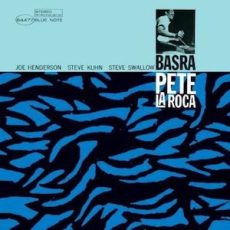
Pete La Roca was born Peter Sims on April 7, 1938 in Harlem, New York to a pianist mother and a stepfather who played trumpet. He was introduced to jazz by his uncle Kenneth Bright, a major shareholder in Circle Records and the manager of rehearsal spaces above the Lafayette Theater. He studied percussion at the High School of Music and Art and at the City College of New York, where he played tympani in the CCNY Orchestra. He adopted the name La Roca early in his musical career, when he played timbales for six years in Latin bands.
During the 1970s, after a hiatus from jazz performance, he resumed using his original surname. When he returned to jazz in the late 1970s, he usually inserted La Roca into his name in quotation marks to help audiences familiar with his early work identify him. In 1957, Max Roach became aware of him while jamming at Birdland and recommended him to Sonny Rollins. On the afternoon set at the Village Vanguard he became part of the important record A Night at the Village Vanguard. In 1959 he recorded with Jackie McLean and in a quartet with Tony Scott, Bill Evans and Jimmy Garrison.
Between the end of the 1950s and 1968, he also played and/or recorded with Slide Hampton, the John Coltrane Quartet, Marian McPartland, Art Farmer, Freddie Hubbard, Mose Allison, and Charles Lloyd, among numerous others. During this period, he led his own group and worked as the house drummer at the Jazz Workshop in Boston, Massachusetts.
In 1968 he enrolled in law school and drove a New York City taxi cab to supplement his income. He returned to jazz part-time in 1979, and recorded one new album as a leader, Swing Time in 1997.
Drummer and attorney Pete La Roca died in New York of lung cancer at the age of 74 on November 20, 2012.
More Posts: bandleader,drums,history,instrumental,jazz,music
Daily Dose Of Jazz…
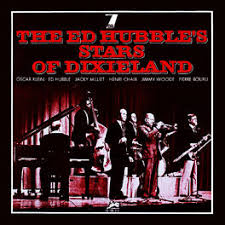
Eddie Hubble was born John Edgar Hubble II on April 6, 1928 in Santa Barbara, California and learned trombone from his father, who was also a professional trombonist in the Los Angeles, California area.
A move to New York City in 1944 and by late in the decade had played with Bob Wilber, Buddy Rich, Doc Evans, Alvino Rey, and Eddie Condon. He played with his own ensemble from the late 1940s, recording for Savoy Records in 1952.
He played with a Dixieland jazz ensemble known as The Six in 1953, and worked with Muggsy Spanier in the 1960s, playing in Ohio and Connecticut. He also worked with the World’s Greatest Jazz Band.
Despite being seriously injured in a car crash in 1979, he was soon back playing, including for international tours.
Trombonist Eddie Hubble died on March 22, 2016, at the age of 91.
More Posts: bandleader,history,instrumental,jazz,music,trombone
Daily Dose Of Jazz…
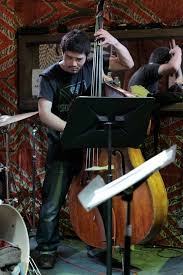
Kenji Yoshitake was born on April 5, 1985 in Sakura, Chiba, Japan on April 5, 1985 and started playing electric bass when he was 12 years old. After he graduated from high school, he entered Senzoku Gakuen College of Music in Yokohama studying acoustic bass, jazz theory, ear training, jazz arranging and ensemble.
In 2007, after receiving a scholarship he moved to Boston, Massachusetts for Berklee College of Music. During his tenure he studied with musicians such as John Lockwood, Greg Osby, Dave Santro, Victor Mendoza, Dave Samuels, Oscar Stagnaro, Marcello Pellitteri and Whit Brown.
Upon his graduation from Berklee College of Music graduation, he moved to New York. He has since been playing around the New York area. Though he hasn’t recorded as a leader at present, bassist Kenji Yoshitake has been playing with legendary singer Tony Middleton at Kitano every Sunday.
Daily Dose Of Jazz…
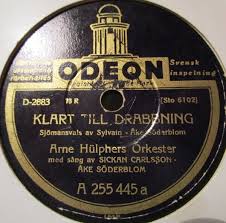
Arne Gunnar Valter Hülphers was born April 4, 1904 in Trollhättan, Sweden. Early in his career he played at the club Felix-Kronprinsen from 1924 to 1927, and played in dance bands into the early 1930s.
He founded his own ensemble in 1934 which became one of Sweden’s most important jazz big bands. They toured Europe and recorded until 1940. Sidemen in his group included Miff Görling, Zilas Görling, and Thore Jederby.
Later in his career, he concentrated more on popular musical styles; he led an orchestra in which Fred Bertelmann played. Pianist and bandleader Arne Hülphers died on July 24, 1978 in Norrköping Municipality, Sweden.
More Posts: bandleader,history,instrumental,jazz,music,piano