

Daily Dose Of Jazz…
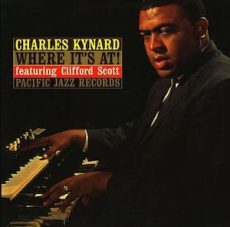
Charles Kynard was born in St. Louis, Missouri on February 20, 1933 and first played piano then switched to organ and led a trio in Kansas City. The trio included Tex Johnson on flute and saxophone, and Leroy Anderson on drums.
In 1963, he settled in Los Angeles, California and his band featured guitarists Cal Green and Ray Crawford, drummer Johnny Kirkwood. Between 1963 to 1973 Charles recorded ten albums as a leader, and ten albums as a sideman with Johnny Almond, Paul Jeffrey, Les McCann, Blue Mitchell, Howard Roberts, Clifford Scott, Sonny Stitt, and Tom Waits.
Organist Charles Kynard died on July 8, 1979.

More Posts: history,instrumental,jazz,music,organ
Daily Dose Of Jazz…
Judy Lewis was born on February 19, 1958 in Milwaukee, Wisconsin and from age seven she studied classical piano, subsequently winning competitions throughout the Midwest. Moving to New York City she continued with her studies at Columbia University, but gradually moved from music to study religion. At 20 she moved to Israel where she continued to perform while searching for spiritual meaning in her life.
Her success as a performer was overshadowed by her desire to concentrate on spiritual matters. In 1991 Lewis began playing the piano again and by 1995 she returned to a music career, in addition to teaching to support her family. Dissatisfied with the classical form, by the mid-90s she turned to jazz. The catalyst came in Los Angeles, California when she attended her first jazz concert and was soon practicing extensively the work of jazz pianists such as Chick Corea, Bill Evans, Tommy Flanagan, Red Garland and Keith Jarrett.
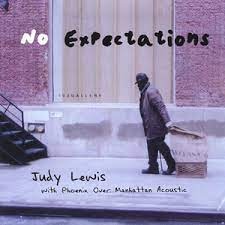
She began composing her own music, formed a group, the Back Alley Jazz Quintet, and made her jazz debut in 1996. By the following year, Judy had brought the group down to a trio. Her acclaim grew in Israel, then expanded to tours of Europe and the USA. In 2002 she released a solo set, Waiting On A New Day, and then in 2003 she formed the fusion band, Phoenix Over Manhattan which would evolve into an acoustic band, No Expectations that was greeted warmly by critics.
Energetic, enthusiastic and determined, her concept of jazz had a vibrancy that was welcomed by many for its contrast to the smooth jazz outpourings of the early century. Pianist Judy Lewis, who operates a recording company, Visionary Insomniac Records, continues to perform, compose and record.
More Posts: history,instrumental,jazz,music,piano
Requisites
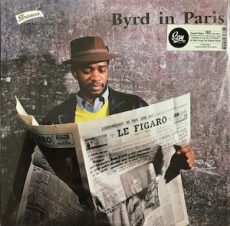
Byrd in Paris, Volume 1 ~ The Donald Byrd Quintet Featuring Bobby Jaspar | By Eddie Carter
The Donald Byrd Quintet enters this morning’s spotlight with Byrd in Paris, Volume 1 (Brunswick 87 903), the first of two albums taken from the group’s 1958 appearance at The Olympia Theatre. Its companion release is Parisian Thoroughfare, and both were recorded at the conclusion of the quintet’s tour to Europe. Byrd in Paris was initially a French release in 1958 and would make its way to the U.S. two years later. The personnel is Donald Byrd (tracks: A1, A2, B3) on trumpet, Bobby Jaspar on flute (B1) and tenor sax (A1, A2, B3), Walter Davis Jr. on piano, Doug Watkins on double bass, and Art Taylor (A1, A2, B2, B3) on drums. My copy is the 2014 Sam Records French Mono audiophile reissue, sharing the original catalog number.
The set opens with Dear Old Stockholm, and as the song begins, Donald is off in the distance behind the quintet. He brings the horn into the forefront as he walks to the microphone, and the ensemble completes the melody. Bobby opens with a marvelous first solo. Donald is equally loose and free in the following reading. Doug offers one of the song’s best musical moments in the closing statement preceding the theme’s reprise and finale. Donald introduces Paul’s Pal by Sonny Rollins next and all the remaining tunes. The group begins with a mid-tempo melody. Bobby starts the solos with an easygoing statement. Donald follows with a neatly paced reading, and then Walter greets the finale like an old friend before the group takes it out.
Side Two gets underway with Bobby Jaspar on flute for his tune, Flute Blues. Bobby and Doug introduce the song’s first chorus with a two-instrument conversation before Walter joins them. Bobby dives into the opening statement with a consummate feeling. Doug finds a few new things to say in the second solo, and then Bobby and Doug are in complete agreement in the closing interpretation, leading back to the theme. The spotlight is on the rhythm section in Ray’s Idea by Ray Brown. Donald and Bobby sit this one out, and the trio works in perfect balance on the song’s speedy melody. Walter is the first to solo and puts the piano through a vigorous workout, then he and Art share an energetic exchange into the theme’s reprise, climax and audience’s approval.
The Blues Walk by Sonny Stitt is off and running from the ensemble’s theme. Donald opens at a blistering pace; then Bobby continues blowing up a storm. Walter communicates his ideas confidently next, and then Doug makes a few quick remarks. Art generates considerable heat in an aggressive conversation with Donald and Bobby, leading to the song’s climax and a huge ovation from the audience. Bruno Coquatrix produced the original session, and the reissue was remastered from the original tapes. This Sam Records audiophile reissue was also pressed at Pallas in Germany on 180 grams of audiophile vinyl, and the front and rear covers are sturdy. The album possesses an excellent soundstage, placing the listener in the audience. Also included is an additional insert with a photo of Donald Byrd.
I thoroughly enjoyed listening to Byrd in Paris, Volume 1. After hearing this Sam Records reissue, I’m going to revisit a few other titles I have in the library and feature them in future columns. If you’re in the mood for a live hard bop album with great tunes and tight musicianship. I invite you to consider Byrd in Paris, Volume 1 by The Donald Byrd Quintet Featuring Bobby Jaspar, on your next record treasure hunt. It’s a wonderful live album that still sounds great over six decades later and shouldn’t be missed for a spot in any jazz library!
~ Parisian Thoroughfare (Brunswick 87 904) – Source: Discogs.com ~ Dear Old Stockholm – Source: Wikipedia.org © 2024 by Edward Thomas Carter

More Posts: choice,classic,collectible,collector,history,instrumental,jazz,music,trumpet
Daily Dose Of Jazz…
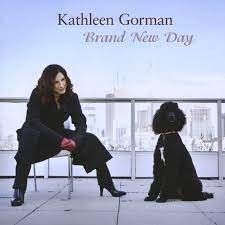
Kathleen Gorman was born on February 18, 1967 and grew up in Halifax, Nova Scotia in a musical family where creative expression was encouraged. Piano lessons started at age six, and years of classical studies gave her a solid musical foundation. She began performing and writing in her teens and after composing a theme for CTV for the Winter Olympics, she moved to Montreal, Canada to pursue jazz piano, arranging and composition studies. Completing a Bachelor of Fine Arts at Concordia University, Montreal she followed this by McGill for advanced study in composition and orchestration.
She continuously worked as a pianist/vocalist for several years in Montreal clubs before settling in Toronto, Canada where she began performing weekly, and set up a home studio, for recording projects and teaching. She is a Toronto based pianist/vocalist, as well as a composer/arranger and jazz educator, teaching jazz piano, theory and composition. She has trained with Jan Jarczyk, Jon Ballantyne, Hilario Duran, Sheila Jordan, Barry Harris, Kurt Elling, and Jeri Brown.
Pianist, vocalist and bandleader Kathleen Gorman continues to record, arrange, compose and educate, performing often in Toronto.
More Posts: arranger,composer,history,instrumental,jazz,music,piano,vocal
Daily Dose Of Jazz…
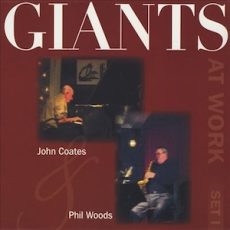
John Francis Coates Jr. was born February 17, 1938 in Trenton, New Jersey to a full-time performing musician and bandleader father, and his mother a dancer and actress. He attended Ewing High School and began his formal study in New York City at age eight with Urana Clarke at the Mannes College of Music on full scholarship. His earliest influences were credited to listening to Symphony Sid on his AM radio.
From age 11 to 14 he played clarinet with his father at the Trenton YMCA dance hall night, where he learned to improvise. His father began teaching him jazz piano at twelve and influenced by Jack Weig he joined the Trenton musicians union the same year. By 14 he was playing gigs two nights a week, as well as weekends and at sixteen he was gigging six nights a week during the summer at the Deer Head Inn where Savoy Records discovered him.
He recorded his debut Savoy album, Portrait, with bassist Wendell Marshall and drummer Kenny Clarke during his senior year of high school. He performed on the Steve Allen, Mike Douglas, and Merv Griffin tv shows in support of that album. From 1956 to 1958 he toured with Charlie Ventura, then while in college John played with Barry Miles, Eddie Gomez, Ron Carter, Woody Shaw, Harry Leahey, Al Cohn, Zoot Sims, Kai Winding, Urbie Green, and Pepper Adams.
Attending Rutgers University he graduated with a degree in romance languages in 1962. After graduating Coates returned to Deer Head where he again played six nights a week, four alone and two as bandleader. He took a position with Shawnee Press as an arranger and editor. He began performing at Henderson’s Club 50, where he had a six night per week gig and played with Coleman Hawkins, Clark Terry, Doc Severinsen, Phil Woods, Marvin Stamm and Bill Watrous among others.
Moving to Mountain Lake, New Jersey in 1966 and began working as an editor at Shawnee Press, arranged on his own time on a royalty basis, and playing at the Deer Head year round where he became an early inspiration for Keith Jarrett, who would listen and sit in occasionally. His arrangement for Amazing Grace has sold more than 750,000 copies and remains one of the publishing company’s best sellers.
John recorded nine albums for the record label Omnisound, toured briefly with bassist Paul Langosch, then began recording for Pacific St Records, including two albums with Phil Woods. In the 1990s, he became homeless and attempted suicide, then moved to Coney Island and began playing again around the year 2000.
Pianist, composer and arranger John C. Coates Jr., who occasionally played vibraphone and clarinet, died on November 22, 2017.
More Posts: arranger,composer,history,instrumental,jazz,music,piano,vibraphone