

Jazz Poems
THE BUDDY BOLDEN CYLINDER
It doesn’t exist, I know, but I lovev
to think of it, wrapped in a shawl
or bridal veil, or, less dramatically,
in an old copy of the Daily Picayune,
and like a nunstaled, unhatched egg
from which, at the right touch, like mine,
the legendary tone, sealed these long years
in the amber of neglect, would peal and re-
peal across the waters. What waters do
I have in mind? Nothing symbolic, mind you.
I meant the sinuous and filth-rich
Mississippi across which you could hear
him play from Gretna, his tone was so loud
and sweet, with a moanin it like you were
in church, and on those old, slow, low-down
blues Buddy culd make the women jump
the way they liked. But it doesn’t exist,
it never did, except as a relic
for a jazz hagiography, and all
we think we know about Bolden’s music
is, really, a melancholy gossip
and none of it sown by Bolden, who
spent his last twenty-four years in Jackson
(Insane Asylum of Louisiana)
hearing the voices of people who spooked
him before he got there. There’s more than one
kind of ghostly music in the air, all
of them like the wind: you can see it
but you can see the leaves shiver in place
as if they’d like to turn their insides out.
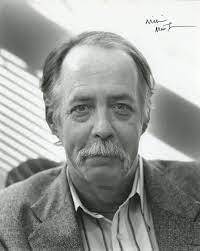
WILLIAM MATTHEWS
from Jazz Poems ~ Selected and Edited by Kevin Young

More Posts: book,classic,collectible,history,jazz,library,poet
Daily Dose Of Jazz…
Eugene Seldon Gammage was born January 30, 1931 in Atlanta, Georgia and his original influences as Max Roach, Kenny Clarke, Philly Joe Jones, Art Blakey, and Elvin Jones. He began his professional career as a drummer in 1952 after serving four years in the Air Force. In 1953 he moved to Los Angeles, California where he found a steady gig with Teddy Charles with Bill Crow on bass. Following this, in 1955 he played with leaders Buddy Collette, Hampton Hawes, and André Previn. In ‘56 he performed with Barney Kessel, Herb Geller and Jack Sheldon
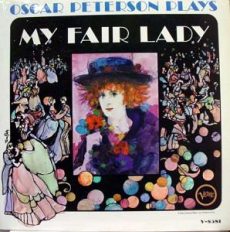
Tenor saxophonist Jack Laird hired him for an engagement at Club El Sereno in East Los Angeles along with pianist Franck Patchen. That November he was in Las Vegas, Nevada with pianist Oscar Peterson. 1957 saw him joining Beverly Kelly and Pat Moran McCoy for a quartet and trio including Scott LaFaro. They recorded and issued two albums in 1958 under the two leaders’ names. From fall 1958 to Spring 1959, he was hired again by Oscar Peterson. The trio, with Ray Brown on bass, recorded a jazz version of My Fair Lady.
Gammage went to St. Louis, Missouri in 1961 and recorded three live dates with Webster Young, Shirley Horn, and Johnny Hartman. By the late Sixties he was residing in New York City and was part of Roswell Rudd’s Primordial group, with Enrico Rava, however, there is no official recording.
The Seventies had him with Gary McFarland and writer, editor David Burnett at Club 55 in New York City, when they were served drinks filled with liquid methadone, provoking a seizure due to overdose. Gary McFarland was pronounced dead in the bar, David Burnett died just a few days later. Fortunately Gene survived after some time in the hospital.
From the mid-seventies to the early eighties, his last known regular gig was with Bobby Short at the Café Carlyle. Never a leader, drummer Gene Gammage has recorded as a sideman on nine albums, been included on seven reissues and been a part of two documentaries covering Gary McFarland and Bobby Short.

More Posts: drums,history,instrumental,jazz,music
Daily Dose Of Jazz…
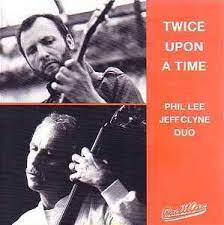
Jeffrey Ovid Clyne was born on January 29, 1937 in London, England and taught himself double bass from the age of 17. He played in the 3rd Hussars military band during his national service from 1955 to 1957, and on demobilisation found himself at the cutting edge of the British modern-jazz and bebop movement.
Clyne worked with Tubby Hayes and Ronnie Scott in their group the Jazz Couriers for a year from 1958, and was part of the group of musicians who opened Ronnie Scott’s Jazz Club in November 1959. He was a regular member of Hayes’ groups from 1961. He accompanied Blossom Dearie, Stan Tracey on his Jazz Suite Inspired by Dylan Thomas’ Under Milk Wood album, Ian Carr, and Gordon Beck on Experiments With Pops, with John McLaughlin.
Jeff would go on to perform with Dudley Moore, Zoot Sims, Norma Winstone, John Burch and Marion Montgomery. He was a member of Nucleus, Isotope, Gilgamesh, Giles Farnaby’s Dream Band and Turning Point during the 1970s. He often worked with drummer Trevor Tomkins.
Bass guitar and double bassist Jeff Clyne died on November 16, 2009 from a heart attack at the age of 72.
More Posts: bandleader,bass,bass guitar,history,instrumental,jazz,music
Requisites
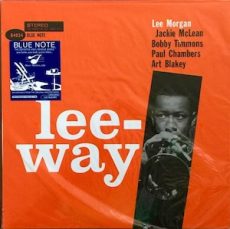
A few nights ago, I spent the evening listening to records by Howard McGhee, Freddie Hubbard and Woody Shaw and was still in the mood to hear another trumpet player, so I picked one of my favorite albums by Lee Morgan. This morning’s record submitted for your approval is Leeway (Blue Note BLP 4034/BST 84034), an excellent 1961 quintet session. I’ve always loved Lee’s tone, articulation, energy, and imagination since first hearing him on A Night In Tunisia, Blue Train, Candy, Houseparty, Introducing Wayne Shorter, The Cooker and The Sermon. An exceptional supporting cast backs Lee on this date: Jackie McLean on alto sax, Bobby Timmons on piano, Paul Chambers on bass and Art Blakey on drums. My copy is the 2016 Music Matters Stereo audiophile reissue (MMBST-84034).
These Are Soulful Days by Cal Massey opens Side One at an easy pace for the quintet’s bluesy melody. Paul leads off the solos with an immensely soothing interpretation. Bobby follows with an attractive performance. Jackie enters next with a satisfying statement, and Lee makes a brief point in the closing solo ahead of the theme’s return. Lee Morgan’s The Lion And The Wolff is his tribute to label founders Alfred Lion and Francis Wolff. The rhythm section’s introduction gets it started for the front line’s collective melody. Jackie leads the way with a relaxing solo; then Lee comes in for a carefree reading. Bobby delivers a delightful statement next, followed by Paul’s bouncy bass lines and Art’s concise comment until the closing chorus fades out slowly.
The quintet dives into Jackie McLean’s Midtown Blues to begin Side Two. The group’s leisurely-paced theme gets things off to a good start. Lee begins the opening solo in a happy vein. Jackie responds with a lightly swinging reading. Bobby keeps the ideas flowing in the third statement, and Paul puts together a satisfying conclusion preceding the ensemble’s reprise and exit. Nakatini Suite by Cal Massey was composed in 1948 and is dedicated to a columnist of The Pittsburgh Courier. The rhythm section sets the tone with their introduction to the quintet’s vibrant melody. Lee leads off the solos with a spirited statement. Bobby follows the leader and gets a chance to stretch out next. Art is right on the mark, with a brisk workout leading to the theme’s restatement.
Alfred Lion produced the original session, and Rudy Van Gelder was the recording engineer. Kevin Gray of Cohearent Audio mastered this audiophile reissue, and the album’s sound quality is simply breathtaking. If you close your eyes while listening, you’ll swear that the quintet is in your listening room playing. The record is pressed on 180 grams of audiophile vinyl and is dead silent until the music starts. The album cover is worthy of hanging on your listening room wall, and the gatefold photos from the session are gorgeous. Lee Morgan recorded thirty albums as a leader and appeared on some of the greatest jazz albums as a sideman. Leeway is sadly overlooked in his discography, but in my opinion, it’s one of his best releases of the sixties. If you’re in the mood for hard bop, I happily recommend Leeway by Lee Morgan. It’s an excellent introduction to his music and a terrific album you shouldn’t miss when record-shopping!
~ A Night In Tunisia (Blue Note BLP 4049/BST 84049), Blue Train (Blue Note BLP 1577/BST 1577), Candy (Blue Note BLP 1590/BNST 1590), Houseparty (Blue Note BLP 4002/BST 84002), Introducing Wayne Shorter (Vee Jay VJLP 3006/SR 3006), The Cooker (Blue Note BLP 1578/BST 81578), The Sermon (Blue Note BLP 4011/BST 84011) – Source: Discogs.com
© 2024 by Edward Thomas Carter
More Posts: choice,classic,collectible,collector,history,instrumental,jazz,music,trumpet
Daily Dose Of Jazz…
Bobby Sands was born January 28, 1907 in Brooklyn, New York. Learning to play the tenor and baritone saxophones he worked with bandleader Charlie Skeets in the late ’20s. By the end of the decqade his eyes were on an outfit known as the Strand Roof Orchestra under the direction of Billy Fowler. His performances during the 1930s solidified the band’s reputation, both live and recorded.
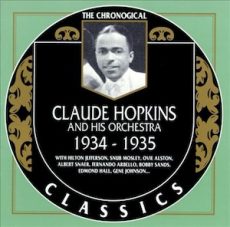
Sands joined pianist and bandleader Claude Hopkins, sharing star soloing duties with the leader as well as clarinetist Edmond Hall in his early years. The band featured a program of both high-spirited novelty songs and a serious jazz repertoire. I Can’t Dance, I’ve Got Ants in My Pants and In the Shade of the Old Apple Tree were the necessary recordings Hopkins made in order to stay attractive to label producers throughout the ’30s.
A superb arrangement of Jelly Roll Morton’s King Porter Stomp joins with Hopkins’ own Minor Mania in which Bobby is in both section and solo capacity. Tenor and baritone saxophonist Bobby Sands retired from music in the 1940s and became a printer. The date and place of his death are unknown.
More Posts: history,instrumental,jazz,music,saxophone