


Daily Dose Of Jazz…
Stanley William Tracey was born on December 30, 1926 in Denmark Hill, South London, England. The Second World War disrupted his formal education, and he became a professional musician at the age of sixteen as a member of an Entertainments National Service Association touring group playing the accordion, his first instrument. He joined Ralph Reader’s Gang Shows at the age of nineteen, while in the RAF and formed a brief acquaintance with the comedian Tony Hancock.
Later, in the early 1950s, he worked in groups on the transatlantic liners Queen Mary and Caronia and toured the UK with Cab Calloway. By the mid-1950s, he had also taken up the vibraphone, but later ceased playing it. During the decade he worked widely with leading British modernists, including drummer Tony Crombie, clarinettist Vic Ash, the saxophonist-arranger Kenny Graham and trumpeter Dizzy Reece.
1957 saw Tracey touring the United States with Ronnie Scott’s group, and then became the pianist with Ted Heath’s Orchestra for two years at the end of the Fifties, including a US tour with singer Carmen McRae. Although he disliked Heath’s music, he gained a regular income and was well featured as a soloist on both piano and vibes. He contributed compositions and arrangements that stayed in the Heath book for many years.
He first recorded in 1952 with the trumpeter Kenny Baker, then recorded his first album as leader in 1958, Showcase, for English Decca label and Little Klunk in 1959. From 1960 until about 1967 Stan was the house pianist at Ronnie Scott’s Jazz Club in Soho, London, which gave him the opportunity to accompany many of the leading musicians from the US who visited the club. It is Tracey on piano that film viewers hear behind Rollins on the soundtrack of the Michael Caine version of Alfie. At the same time, he became active in Michael Horovitz’s New Departures project, mixing poetry performances with jazz, where the musicians interacted spontaneously with the words.
The early 1970s were a bleak time for Tracey. He began to work with musicians of a later generation, who worked in a free or avant-garde style. He continued to work in this idiom with Evan Parker at the UK’s Appleby Jazz Festival for several years, but this was always more of a sideline for Tracey, lasting 18 years that the festival existed. Stan formed his own label In the mid-1970s titled Steam, and a number of commissioned suites. These included The Salisbury Suite, The Crompton Suite and The Poets Suite.
He led his own octet from 1976 to 1985 and formed a sextet in 1979 and toured widely in the Middle East and India. He had a longstanding performance partnership from 1978 with saxophonist Art Themen, and his own son, drummer Clark Tracey. He shared the billing with arranger Gil Evans, Sal Nistico and Charlie Rouse. He went on to record over four dozen albums as a leader or co~leader, thirty as a sideman and on two soundtracks over the course of his career.
Pianist and composer Stan Tracey, who received the honor of the Officer of the Order of the British Empire (OBE) and appointed Commander of the Order of the British Empire (CBE), transitioned from cancer on December 6,

More Posts: bandleader,composer,history,instrumental,jazz,music,piano
Daily Dose Of Jazz…
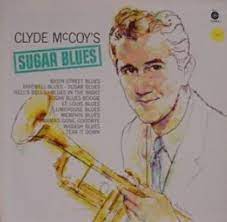
Clyde Lee McCoy was born December 29, 1903 in Ashland, Kentucky to the family that feuded with the Hatfields. He began mastering the trumpet without formal instruction, after the family moved to Portsmouth, Ohio in 1912. This led him to perform regularly at church and school affairs. Five years later he was performing on the Cincinnati riverboats, and on the Mississippi River side-wheelers the Island Queen and the Bernard McSwain. He became one of the youngest musicians on the river at age 14.
In 1920, accepting an invitation for a small band to play at a Knoxville, Tennessee resort, his Chicago Orchestra rehearsed on the train and won the approval of George Whittle and the patrons of the Whittle Springs Hotel and Spa. After a two month engagement the band officially became known as the Clyde McCoy Orchestra.
In the late 1920s McCoy developed the signature “wah-wah” sound by fluttering a Harmon mute in the bell of his trumpet. In 1967, a similar effect was made for electric guitar with the introduction of the Vox Clyde McCoy Wah-Wah Pedal. Having nothing to do with the use or development of the pedal,Clyde’s name was only used for promotion.
Over the course of a seven decade career Clyde was based at various times in New York City, Los Angeles, California and Chicago, Illinois. He is best remembered for his theme song Sugar Blues, written by Clarence Williams and Lucy Fletcher, and also as a co-founder of Down Beat magazine in 1935. The song was performed with vocals by Bob Wills and his Texas Playboys, Fats Waller and Ella Fitzgerald.
Trumpeter and bandleader Clyde McCoy, who has a star on the Holywood Walk of Fame, transitioned on June 11, 1990 in Memphis, Tennessee.
More Posts: bandleader,history,instrumental,jazz,music,trumpet
Daily Dose Of Jazz…
Al Klink was born on December 28, 1915 in Danbury, Connecticut. He began his professional career playing with Glenn Miller from 1939 to 1942 as a featured soloist, along with Tex Beneke, on the most well-known version of In the Mood. When Miller started playing in the U.S. military, he took a chair in Benny Goodman and Tommy Dorsey orchestras. He appeared in the 1941 film Sun Valley Serenade and 1942’s Orchestra Wives.
From 1952 to 1953 he played with the Sauter-Finegan Orchestra. Two years later he recorded his only session as a bandleader, performing six songs for a Bob Alexander album that won a Grammy Award. In the late 1960s to early Seventies, he was a tenor saxophone doubler on the staff of NBC’s Tonight Show Band under Doc Severinsen, where he was an occasional featured soloist.
He recorded with Mundell Lowe, Gerry Mulligan, Judy Holliday, Nelson Riddle, Phil Silvers, Cootie Williams and Rex Stewart. After a hiatus from recording and performing, he returned in 1974 when he began playing with the World’s Greatest Jazz Band. During the 1970s, he played with Glenn Zottola and George Masso, and continued playing until the mid-1980s, when he retired to Florida.
Swing tenor saxophonist Al Klink, who recorded ten albums as a sideman between 1956 and 1961, transitioned on March 7, 1991 at the age of 75 in Bradenton, Florida.
More Posts: history,instrumental,jazz,music,saxophone
Daily Dose Of Jazz…
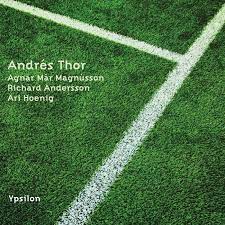
Andrés Thor was born on December 27, 1974 in Hafnarfjordur, Iceland, a little harbour town near Reykjavík, Iceland. He began his musical studies at age 12 and his initial influences were glitter and hippie rock bands such as Led Zeppelin, The Doors, Jimi Hendrix and Bon Jovi.
During his teens was when he first heard the music of John Coltrane and Pat Metheny which led him to become more fascinated with jazz. He soon started studying with some of Iceland’s finest jazz educators at the FIH music school and after graduating his musical quest brought him to study at the Koninklijk Conservatorium (The Royal Conservatory) in The Hague, The Netherlands in 2000.
Finishing his Bachelors and Masters degrees by 2006 he went on to study under the guidance of Wim Bronnenberg, Peter Nieuwerf, Eef Albers, John Ruocco and Hein v/d Geyn as his main teachers. He also attended workshops and masterclasses lead by Michael Brecker, Kurt Rosenwinkel, John Abercrombie and Avishai Cohen, as well as performing with the late Michael Brecker and the Royal Conservatory Big Band in concert.
Living and studying in the Netherlands lead to the first recording featuring Andrés as a co-leader of the organ trio Wijnen, Winter & Thor. The band featured songs by all members of the trio. Since then he has been based and working in and out of Iceland and has released five albums under his own name and a handful of albums in collaboration. He has been active in various collective projects and as a sideman with bands like ASA trio, Icewegian, The Viking Giant Show, BonSom, Andreas Dreier quartet and Music with Z to name a few.
Thor has been an active performer in Scandinavia, Europe and America, as well as a session musician in studios and educator in Iceland. He doubles on the mandolin, banjo and steel guitars. Guitarist Andrés Thor continues to record and perform blending his positively ambrosial tonal palette with the elegant harmonic substance and incisive, ornamented cross-rhythms.
More Posts: banjo,guitar,history,instrumental,jazz,mandolin,music
Jazz Poems
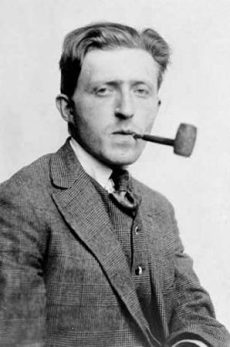
BRINGING JAZZ (Odd-numbered lines spoken slowly even -numbered ones quickly) Last night I had an oboe dream— Whistlers in a box-car madness bringing jazz Their faces stormed in a hobo-gleam, Blinding all the grinding wheels and singing jazz. The box-car gloried in its dirt— Just as hallelujah made of chanting mud. And one old bum opened up his shirt Showing wounds of music in his ranting blood. The hoboes sang with scorching notes Burning up the pain into a gale of jazz, While sadness poured in their shaking throats, Like a molten bugle in a wail of jazz. The rails were jails for death and rust— Holding up the cruel, dark blue speed of jazz— But life still stirred underneath their crust— Little hums and clicks brought by the need of jazz. Within the box-car, hoboes leaped— Fatalists and pagan in a carefree trap— And when they sang of hungers reaped, Bread and wine of sound came from a dark god’s lap! The hoboes made a fox-trot blaze— Scorning women, gliding in a sexless dance— And on their coats of ragged baize- Ghosts of orchids fluttered down and looked askance! The jungle sent a moan of sound—- Made it blend into an oathof northern grime. A music came, flaring and profound, Flayed with rapture half repelled and half sublime. And then I saw the dream’s dark spring—- Hurricanes of jazz born from the underworld. “Saint Louie Gal with a diamond ring” Danced with mobs of hoboes while the thunder swirled! MAXWELL BODENHEIMfrom Jazz Poems | Selected and edited by Kevin Young

More Posts: book,classic,collectible,history,jazz,library,poet