


Daily Dose Of Jazz…
Dee Bell was born in Fort Wayne, Indiana on July 16, 1950 and grew up in a musical family and began playing music at home. She played clarinet in the Plainfield High School band and performed in an a cappella trio from age ten through her last year of high school. She went on to enroll and graduate from Indiana University in 1972, lived on the edge of the Hoosier National Forest in a two-room cabin with a wood stove for heat, and was co-founder and head chef of the Earth Kitchen vegetarian restaurant in Bloomington, Indiana.
The late 1970s saw Bell moving to California and working at a restaurant in Sausalito. While singing Happy Birthday to a customer, she was heard by jazz guitarist Eddie Duran who invited her to sing with his band. They made a demo tape which became her first album, Let There Be Love on the Concord Jazz label, that included saxophonist Stan Getz. Their sophomore album for Concord Jazz brought in trumpeter Tom Harrell.
Bell recorded a third album, Sagacious Grace in 1990 with Houston Person and John Stowell, but was never released due to technical problems until 2011 when audio engineers fixed the problem. It reached No. 31 on the JazzWeek radio chart.
Bell left the music business and became a grade school music teacher in Mill Valley. After the death of her musical director, Al Plank, she met Marcos Silva backstage at a tribute to Merrilee Trost. This became a collaboration, merging her swing style with his Brazilian rhythms, resulting in the recording of three CDs by them.
With permission and copyrights Bell has written lyrics to Billy Strayhorn’s Isfahan, Jimmy Rowles The Peacocks, Don Sebesky’s You Can’t Go Home Again, and Ivan Lins’ Acaso (By Chance), Depois dos Temporais (After the Storm), and Choros das Aguas (Crying of the Waters).
Vocalist Dee Bell, who has released six albums and has been nominated for several awards by Down Beat, Billboard and BAM, continues to perform.

More Posts: bandleader,history,instrumental,jazz,lyricist,music,vocal
Daily Dose Of Jazz…
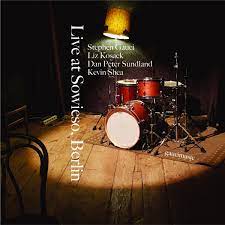
Dan Peter Sundland was born in Oslo, Norway on July 15, 1986 and grew up in Børsa, a village outside Trondheim, Norway. He started playing bass at age 14 and studied with bass players Andreas Bergsland and Mattis Kleppen. He was a member of Middle-Norwegian Youth Big Band and went on to become a member of the S. Møller big band.
Attending Sund Folk College from 2005 to 2006 he then attained a bachelor’s degree in jazz performance at NTNU Music Institute in Trondheim in 2010. He went on to get his European Jazz Masters degree (EUJAM) at NTNU Music Institute with exchange to Berlin Jazz Institute in 2012 and Rytmisk Musikkonservatorium in Copenhagen, Denmark in 2013.
Active in the jazz and improvisation scenes in Norway and Berlin, Germany he has set himself apart by his expressive, wide ranging playing techniques, including cello-like bowing and a varied palette of percussive colours. Has been featured with musicians including Jim Black, John Hollenbeck, Axel Dörner, Tobias Delius, Hans Hulbækmo, Hanna Paulsberg, Eirik Hegdal, John Pål Inderberg and Tor Haugerud.
His discography includes compositional work for his own eleven-piece Elevenette, the Berlin based improvising quartet Home Stretch and sideman work and collective groups including Lina Allemano’s Ohrenschmaus, Simon Kanzler’s hardcore opera and singer-songwriter Port Almond.
Electric bassist and composer Dan Peter Sundland, who has led Trondheim Improvisation Orchestra together with Peder Simonsen, continues to compose, perform and record.
More Posts: bandleader,bass,composer,history,instrumental,jazz,music

Daily Dose Of Jazz…
Anthony John Archer was born July 14, 1938 in Dulwich, London, England and studied cello as a schoolboy before settling on upright bass.
He joined Don Rendell’s group in 1961, then went with Roy Budd and Eddie Thompson before beginning work with Tony Lee. He collaborated with Lee for many years as part of Lee’s trio, particularly at The Bull’s Head and Ronnie Scott’s Jazz Club.
He later played with Brian Lemon, Sandy Brown, Harold McNair, John Dankworth, and in the Best of British Jazz group with Kenny Baker and Don Lusher.
Double-bassist Tony Archer, who continued to work with Lee nearly until Lee’s death in 2004, is still active in the music scene at 85 years old.
More Posts: bass,history,instrumental,jazz,music
Daily Dose Of Jazz…
Nat Janoff was born on July 13, 1970 in New Jersey and began his musical education on the piano before switching to bass. After hearing Eddie Van Halen he settled on the guitar. Growing up in the 80’s his musical interests were all things rock and metal and soon earned a reputation for being one of the best shred guitarist in the area. However, seeking a platform to improvise longer than a standard rock riff led him to jazz and hearing the Mahavishnu Orchestra’s Birds of Fire for the first time.
He pursued jazz earning his Bachelor of Music degree in Jazz Performance from William Paterson University in 1996 and set to work forging his own musical path.
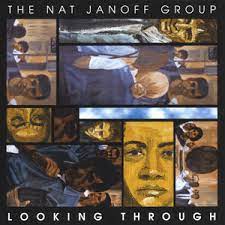
Recording his debut album, Looking Through, he enlisted the talents of electric bassist, Matthew Garrison and drummer Gene Lake, that showcased him as a player and a composer. Two more albums as a leader followed, a live acoustic date and a studio session, then contributing to the ESC tribute album Mahavishnu Redefined II.
In addition to playing with his own groups, Janoff has performed with Joe, David “Pic” Conley, Norman Simmons and drummer Victor Jones’ group Culturversy, Debelah Morgan, and Roland Clark.
Guitarist, composer and educator Nat Janoff teaches guitar privately, has been a guest instructor at the annual William Paterson University summer jazz camp, and continues to perform and record.
More Posts: bandleader,composer,educator,guitar,history,instrumental,jazz,music
Three Wishes
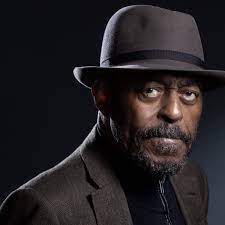
The Baroness was having a conversation with Archie Shepp when she brought up the topic of three wishes and asked him what his would be. He responded by telling her:
- “To be free of poverty.”
- “I don’t know the next.”
- “To be free.”
*Excerpt from Three Wishes: An Intimate Look at Jazz Greats ~ Compiled and Photographed by Pannonica de Koenigswarter

More Posts: baroness,history,instrumental,jazz,music,pannonica,saxophone,three,wishes