


Daily Dose Of Jazz…
Michael Stephans was born in Miami, Florida on June 9, 1945. He has performed and recorded with artists including Dave Liebman, Bennie Maupin, Joe Lovano, Bob Brookmeyer, Don Menza, and Alan Broadbent.
Stephans’ first solo recording, Om ShalOM, was critically lauded in 2007 by UK critic Tom Barlow as an album of the year in the December 2007 – January 2008 issue of Jazzwise.
He has received multiple composition grants from the National Endowment for the Arts. In 1974, this association afforded him the opportunity to write the large ensemble composition Shapes and Visions for vibraphonist Karl Berger, which was performed at the Smithsonian Museum of Natural History in Washington, D.C.
In his role as a poet Michael has been published in The Note and Inscape, and received the Rachael Sherwood Poetry Prize by the English department at Cal State Northridge. He is the author of Experiencing Jazz: A Listener’s Companion, and Experiencing Ornette Coleman: A Listener’s Companion.
He is a professor who has taught at Pasadena City College, the University of Miami, and Bloomsburg University of Pennsylvania. Drummer Michael Stephans continues to pursue his career in jazz.

More Posts: bandleader,drums,educator,history,instrumental,jazz,music,poet,writer
Daily Dose Of Jazz…
Charles Edward Smith was born on June 8, 1904 in Thomaston, Connecticut He began to collect early hot jazz records in the 1920s and worked with William Russell, Eugene Williams, John Hammond, Hugues Panassié and Charles Delaunay in the Hot Record Society. It was from this society that the jazz label HRS Records sprang in 1937 and with Steve Smith he was editor of the jazz magazine Hot Record Society Rag.
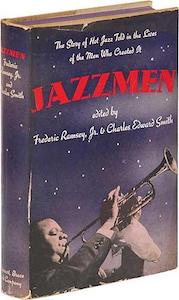
With essays in journals such as the Symposium, Daily Worker and Esquire, Charles was among the early jazz critics in the 1930s. Collaborating with Frederic Ramsey he published the book Jazzmen, and, with Wilder Hobson’s American Jazz Music, was one of America’s first jazz books. The latter book included articles on groups like the Austin High School Gang and interviews from early jazz musicians like Willie Cornish, Papa Jack Laine, Leon Roppolo and Nick LaRocca.
Smith and Ramsey argued that then-popular swing was rooted stylistically in blues and traditional jazz. In the course of the research on the book, the interviewed musicians mentioned the name Bunk Johnson again and again. This led to the then-forgotten trumpeter of New Orleans Jazz being rediscovered by Bill Russell in 1942.
With the 1942 Jazz Record Book, an attempt was made to generate a canon of important jazz records, which was later taken up by many other writers, including Marshall Stearns’s The Story of Jazz, Joachim-Ernst Berendt/Günther Huesmann’s jazz book , Barry Kernfeld’s Encyclopedia of Jazz, and Allen Lowe’s That Devilin’ Tune.
Smith also wrote for The New Republic, the magazine Jazz Information, and wrote a series of liner notes for Folkways Records that included Negro folk music, folk blues, early and modern jazz albums. He also wrote the accompaniment text for the LP edition of John Hammond’s Concert Series, From Spirituals to Swing – Carnegie Hall Concerts, 1938/39 on Vanguard Records.
In the opinion of the International Society of Jazz Research, Smith was one of the most important early serious jazz critics, alongside Hugues Panassié, Winthrop Sargeant, Wilder Hobson, Don Knowlton, and Aaron Copland. Jazz author, editor and critic Charles Edward Smith transitioned on December 16, 1970 in New York City.
More Posts: author,critic,editor,history,instrumental,jazz,music
Daily Dose Of Jazz…
Prince Robinson was born in Portsmouth, Virginia on June 7, 1902. He learned to play clarinet as a teenager and after playing locally in Virginia, he moved to New York City, New York in 1923. Once settled Robinson quickly found work both performing and recording, with the Blue Rhythm Orchestra, June Clark, Duke Ellington, Billy Fowler, the Gulf Coast Seven, Fletcher Henderson, Lionel Howard, Clara Smith, and Elmer Snowden. He went on to tour South America with Leon Abbey’s group in 1927, and the following year became a member of McKinney’s Cotton Pickers.
The Thirties saw Prince working with Lil Armstrong, Willie Bryant, Blanche Calloway, Roy Eldridge, and Teddy Wilson accompanying Billie Holiday. His career continued in the 1940s, including work with Louis Armstrong, Lucky Millinder, and Benny Morton. In 1945 he joined Claude Hopkins’s band, remaining until 1952. Later in the decade he worked with Fletcher Henderson again and with Red Allen and Freddie Washington, in addition to leading his own ensemble in 1953.
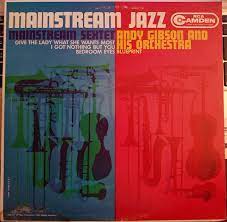
His last recording was Mainstream Jazz by Andy Gibson and His Orchestra in 1959. He played a tenor saxophone solo on the theme Blueprint. Tenor saxophonist and clarinetist Prince Robinson transitioned on July 23, 1960 in New York City.
More Posts: bandleader,clarinet,history,instrumental,jazz,music,saxophone
Three Wishes
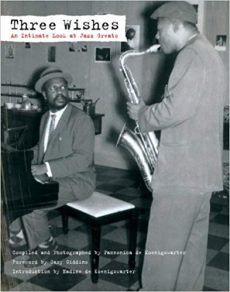
One night when they were just hanging out Nica asked George Bright what he would wish for if he was given three and he said to her:
- “That fragmentation might be resolved into a kind of unified action in the world.”
- “That men might get into a one-to-one relationship with what they are.”
- “That we realize that the challenge to make sense out of what appears to be nonsense is the only therapy that anyone can have.
*Excerpt from Three Wishes: An Intimate Look at Jazz Greats ~ Compiled and Photographed by Pannonica de Koenigswarter

More Posts: baroness,history,instrumental,jazz,music,pannonica,saxophone,three,wishes

Daily Dose Of Jazz…
Ted Lewis was born Theodore Leopold Friedman on June 6, 1890 in Circleville, Ohio. His first instrument was the piccolo, however, he also learned to play the C-melody saxophone but was known principally as a clarinetist throughout his long career.
He was one of the first Northern musicians to imitate the style of New Orleans jazz musicians who came to New York in the 1910s. He first recorded in 1917 with Earl Fuller’s Jazz Band, a band attempting to copy the sound of the Original Dixieland Jass Band.
His earliest clarinet recordings were not very good but as his career gained momentum he refined his style under the influence of the first New Orleans clarinetists Larry Shields, Alcide Nunez, and Achille Baquet who relocated to New York.
By 1919, Lewis was leading his own band, and had a recording contract with Columbia Records. At the start of the Roaring Twenties, he was being promoted as one of the leading lights of the mainstream form of jazz popular at the time. He hired musicians Benny Goodman, Jimmy Dorsey, Frank Teschemacher, and Don Murray to play clarinet in his band. Over the years he hired trumpeter Muggsy Spanier and trombonist George Brunies as he led his band to be second only to the Paul Whiteman band in popularity.
One of his most memorable songs, Me and My Shadow, had usher Eddie Chester mimicking his movements during his act. He then hired four Black shadows, the most famous being Charles “Snowball” Whittier, making Lewis one of the first prominent white entertainers to showcase Black performers, albeit in stereotypical ways, to be onstage, on film, and eventually on network television.
Remaining successful through the Great Depression, Ted adopted a battered top hat for sentimental, hard-luck tunes. He kept his band together through the 1950s and continued to make appearances in Las Vegas, Nevada and on the popular television shows of the decade. He would go on to perform in the early talkie films by Universal Studios and Columbia Pictures.
Clarinetist, bandleader, and singer Ted Lewis, transitioned in his sleep from lung failure on August 25, 1971 in New York City. He was 81. His memorabilia resides in The Ted Lewis Museum, created by his wife Adah, located across the street from where he was born in Circleville.
More Posts: bandleader,clarinet,history,instrumental,jazz,music,vocal