

Daily Dose Of Jazz…
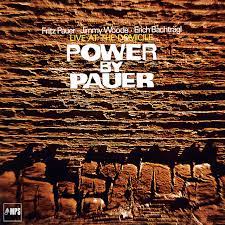
Fritz Pauer was born on October 14, 1943 in Vienna, Austria and began his professional playing career as a teenager, performing with Hans Koller for two years beginning in 1960 before leading his own ensembles in Berlin, Germany. In the 1960s he played with Don Byas, Booker Ervin, Dexter Gordon, Friedrich Gulda, Annie Ross and Art Farmer, recording three albums with the latter as a sideman.
As an educator he taught at the Vienna Municipal Conservatory from 1968-1970, after which he became a member of the ORF-Big Band. The 1970s saw Fritz recording as a leader as well as with Klaus Weiss and Peter Herbolzheimer.
By the mid-1980s Pauer was living in Peru for a brief period, then moved to Switzerland in 1986. Later in life education once again entered his life and he became a university professor. An early 2000s collaboration with Jay Clayton and Ed Neumeister was released as the album 3 for the Road.
Pianist, composer and bandleader Fritz Pauer transitioned on July 1, 2012.
More Posts: bandleader,composer,history,instrumental,jazz,music,piano
Daily Dose Of Jazz…
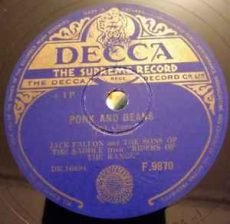
Jack Patrick Fallon was born on October 13, 1915 in London, Ontario, Canada and played violin and studied with London Symphony Orchestra founder Bruce Sharpe. In 1935 when he was 20 years old he made double bass his primary instrument.
During World War II he played in a dance band in the Royal Canadian Air Force, and settled in Britain after his discharge. Fallon joined Ted Heath’s band in 1946, and played bebop in London, England clubs in his spare time. In 1947 he played with Ronnie Scott and Tommy Whittle at the Melody Maker/Columbia Jazz Rally. Following this through the late Forties he worked with Jack Jackson, George Shearing, Duke Ellington, and Django Reinhardt.
He went on to play in a Count Basie ensemble which also included Malcolm Mitchell and Tony Crombie. Jack played with both of them after leaving Basie, working together with Hoagy Carmichael and Maxine Sullivan and touring in Sweden together with Reinhardt and Stéphane Grappelli.
Fallon worked in the 1950s as an accompanist to Mary Lou Williams, Sarah Vaughan, and Lena Horne. He served as a sideman in the ensembles of Humphrey Lyttelton, Kenny Baker, and Ralph Sharon and was the house bassist at Lansdowne Studios.
Outside of jazz he worked with blues musicians such as Big Bill Broonzy, Josh White and played with Johnny Duncan’s Blue Grass Boys. As the bass guitar became more popular, Jack became a champion of its use, and played both instruments in the latter part of his career.
Fallon was also involved in the industry as a booker/promoter, having established the booking agency Cana Variety in 1952. He booked primarily jazz artists in its early stages but expanded to rock acts in the 1960s, including The Beatles and The Rolling Stones. Because of this connection, Fallon was asked by the Beatles to play violin fiddle style on the song Don’t Pass Me By in 1968.
He continued to play jazz locally in London and in the studios into the 1990s but retired from performing in 1998 due to ill health. In 2002, he was awarded the Freedom of the City of London and published a memoir titled From the Top in 2005.
Double bassist Jack Fallon transitioned on May 22, 2006 at age 90. He was posthumously inducted into the London Music Hall of Fame in his hometown.
More Posts: bass,history,instrumental,jazz,music
Daily Dose Of Jazz…
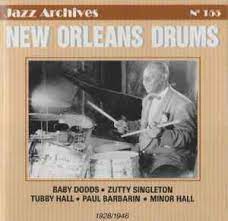
Alfred “Tubby” Hall was born October 12, 1895 in Sellers, Louisiana and his family moved to New Orleans, Louisiana in his childhood. His younger brother Minor “Ram” Hall also became a professional drummer. He played in many marching bands in New Orleans, including with Buddie Petit. His drumming style was forceful and sober, generally maintaining constant tempo on the snare.
By 1917 Hall had moved to Chicago, Illinois where he played with Sugar Johnny Smith. After two years in the United States Army, he returned to playing in Chicago mostly with New Orleans bands, joining Carroll Dickerson’s Orchestra and recording in 1927. He later played with the groups of King Oliver, Jimmie Noone, Tiny Parham, and Johnny Dodds.
He is seen in Armstrong’s Paramount movies of the early 1930s, including the live action and Betty Boop cartoon I’ll Be Glad When You’re Dead, You Rascal You and A Rhapsody in Black and Blue in 1932. Only Armstrong and Hall got closeups in the two films, and both get their faces transposed with those of racially stereotyped jungle natives in the cartoon. Hall morphs from a jazz drummer to a cannibal stirring a cooking pot with two wooden sticks.
Drummer Tubby Hall, considered one of the three greatest jazz drummers of his generation by jazz critic Hugues Panassié, along with Zutty Singleton and Baby Dodds, transitioned in Chicago, Illinois on May 13, 1945.
More Posts: drums,history,instrumental,jazz,music

Three Wishes
While having a conversation with Denis Charles the Baroness brought up the subject of three wishes and asked him if they could be granted what would he wish for and he said:
- “To be able to be playing my instrument regularly, so as to truly express myself.”
- “To be in a better position financially, so as to satisfy some of my personal wants, which I’m sure would make me much more calm inside.”
- “Lastly, to stay healthy and enjoy living.”

More Posts: baroness,drums,history,instrumental,jazz,music,pannonica,three,wishes
Daily Dose Of Jazz…
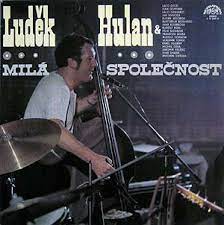
Luděk Hulan was born on October 11, 1929 in Prague, Czechoslovakia and started his career as a founder-member of the amateur Hootie Club ensemble in 1948. In the early Fifties he performed in various professional jazz ensembles and helped organize jam sessions in Prague. From 1953 to 1957 he moved to Brno and played double bass with the Gustav Brom Orchestra.
Upon his return to Prague he co-founded Studio 5, which later became a part of The Dance Orchestra of Czechoslovak Radio. Studio 5, one of the country’s most important modern jazz ensembles, disbanded in 1961. Then Hulan founded his next band, The Jazz Studio, which often performed his own short compositions. The late 1960s he still collaborated with the Jazz Orchestra of Czechoslovak Radio and actively participated in Czech musical life.
He was one of the pioneers of the Jazz and Poetry movement which focused on cross-connections between various spheres of the Arts. In his Jazz Studio, Luděk collaborated with many important jazz instrumentalists, among them tenor saxophonist Milan Ulrich and trumpeter Richard Kubernát.
Following the Soviet invasion of Czechoslovakia in 1968 he emigrated to Switzerland, but couldn’t find any work connected with music and soon returned while his wife and daughter remained abroad. Listed as politically undesirable he had to organize night-time jam sessions in the poetic wine bar Viola, founded a new band, Jazz Sanatorium with former colleagues from Jazz Studio, and helped its younger members in their careers.
He also found work – occasional at first – with the Linha Singers ensemble. In 1972 the Traditional Jazz Studio invited him to record with the New Orleans clarinetist Albert Nicholas. He also performed with the American clarinetist Tony Scott, and prepared a TV series, The Jazz Herbarium. He then organized the Jazz Quiz as part of his Jazz Sanatorium, using American films, recordings and literature.
Double bassist Luděk Hulan, an important exponent of Czech jazz in the second half of the 20th century, transitioned in Prague on February 22, 1979 under unhappy circumstances, breaking a rib in a stairway fall which pierced a lung. Unaware of the nature or extent of his injury, he went to bed as usual, not to awaken.
More Posts: bandleader,bass,history,instrumental,jazz,music