

Daily Dose Of Jazz…
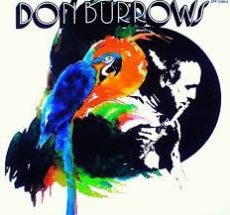
Donald Vernon Burrows was born on August 8, 1928 Marrickville, New South Wales, Australia and attended Bondi Public School. In 1937, visiting flutist and teacher Victor McMahon inspired him to start learning the flute, beginning on a B-flat flute. By 1940 he was captain of the Metropolitan Schools Flute Band and studying at the Sydney Conservatorium of Music.[2]
In 1942, Burrows had begun playing clarinet and appeared on The Youth Show, a Macquarie Radio show. In 1944 he was invited to play and record with George Trevare’s Australians. He became well-known in Sydney jazz circles and was performing in dance halls, nightclubs and radio bands.
During the 1960s and 1970s, Burrows had many engagements in Australia and the United States, including six years performing at the Wentworth Hotel in Sydney. In 1972, he was invited to perform at the Montreux Jazz Festival[4] and later the Newport Jazz Festival.
He received his first gold record in 1973 for his record Just the Beginning, instigating the first jazz studies program in the southern hemisphere, at the New South Wales Conservatorium of Music. He was appointed a Member of the Order of the British Empire (MBE) and appointed Chair of Jazz Studies at the conservatorium.
Though he mostly performed to classical music audiences through tours with Musica Viva and the Australian Broadcasting Corporation concert series, he had an extensive recording career with his groups and performed on albums by others. He also worked with Frank Sinatra, Dizzy Gillespie, Nat King Cole, Oscar Peterson, Tony Bennett, Stéphane Grappelli, Cleo Laine, and the Sydney Symphony Orchestra.
His arthritis from age 38, though making it somewhat difficult to play, never stopped him. In later years he had Alzheimer’s disease and lived in a nursing home in northern Sydney. Saxophonist, flutist and clarinetist Don Burrows transitioned on 12 March 12, 2020, aged 91.

More Posts: bandleader,clarinet,flute,history,instrumental,jazz,music,saxophone

Requisites
Cherry ~ Stanley Turrentine With Milt Jackson | By Eddie Carter
Two of my favorite musicians are the subject of this morning’s discussion, Stanley Turrentine With Milt Jackson. Cherry (CTI Records CTI 6017) hit the stores in 1972 and was Turrentine’s fourth album on CTI. On this date, the tenor saxophonist’s leading an all-star sextet. Milt Jackson on vibes, Bob James on piano (track: A2), electric piano (tracks: A1, A3, B1 to B3), Cornell Dupree on guitar, Ron Carter on bass, and Bill Cobham on drums. My copy used in this report is the original US Stereo release.
Side One starts with the rhythm section’s spirited introduction to Speedball by Lee Morgan. The ensemble’s theme leads off this happy swinger, then Stanley cruises into the opening solo. Milt gets into a bluesy groove next, and Bill exchanges the finale with Stanley, Milt, and Bob ahead of the climax.
I Remember You by Johnny Mercer and Victor Schertzinger is a beautiful 1941 ballad that was first heard in the film, The Fleet’s In, a year later. Milt and the rhythm section introduce the song discreetly, segueing into a gentle opening chorus. Jackson is up first with a tender reading, then Turrentine gives an elegant presentation leading to a serene ending. The Revs by Milt Jackson swings at a leisurely tempo with the sextet in unison during the melody. Stanley steers a nice course for everyone with a carefree, bouncy first solo. Milt follows with melodic lines that emerge effortlessly from his vibes. Bob and Cornell close out the statements with two lightly swinging readings preceding the sextet taking the song out.
Side Two starts with Sister Sanctified by Weldon Irvine Jr who also arranged this tune. The sextet starts this swinging jazz service with a funky groove on the melody that’s sure to get the listener snapping their fingers and tapping their toes. Turrentine sets the tone on the opening statement with a soulful sermon. Jackson preaches the second solo rocking all the way. Dupree hits the sweet spot on the next reading and Cobham makes a brief comment leading to the theme’s reprise and fade-out. Cherry by Ray Gilbert and Don Redman begins with the vibist setting down a subtle theme at a slow tempo. Stanley opens with a wonderful expression of incredible beauty, then Milt responds with a delicately pretty performance moving towards a gorgeous finale.
Weldon Irvine Jr. also composed and arranged the album’s closer, Introspective. This is a mid tempo jaunt of pure pleasure leading off with Turrentine’s cheerful theme and lighthearted opening solo. Jackson comes in next for a delightful interpretation. James follows with a fine reading and Cobham swings the door shut with his brushwork. Cherry was produced by Creed Taylor and the man behind the dials was Rudy Van Gelder. This is a great recording and an excellent vinyl pressing for a 1970s album with a splendid soundstage. The instruments come through your speakers vividly and surround your sweet spot with music that’s sure to make you smile. Both Stanley Turrentine and Milt Jackson are a joy to hear together with a wonderful supporting cast. If you’re a fan of either musician, I recommend and invite you to check out Cherry on your next vinyl hunt. It’s a great album that still stands up fifty years later and your ears will thank you for adding it to your library!
~ I Remember You – Source: JazzStandards.com © 2022 by Edward Thomas Carter

More Posts: choice,classic,collectible,collector,history,instrumental,jazz,music,saxophone,vibraphone
Daily Dose Of Jazz…
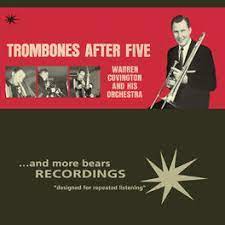
Warren Covington was born on August 7, 1921 in Philadelphia, Pennsylvania and played with Isham Jones in 1939, then with Les Brown in 1945-46 and Gene Krupa in late 1946. Following this he became a staff musician for CBS radio.
By the end of the decade he was working with Ralph Flanagan and again in the mid Fifties. He played briefly with Tommy Dorsey but by 1956 he replaced Eddie Grady as leader of the Commanders, a Decca recording and touring band which lasted until the middle of 1957. Covington recorded two albums and one single with this band.
Post Tommy Dorsey’s sudden death in 1956, the band continued under the direction of Jimmy Dorsey. However, Tommy’s estate took back his arrangements and approached Warren to form a new Tommy Dorsey band, which he led, touring and recording for Decca, into 1961. Among his hits with the Dorsey band was Tea for Two Cha Cha, which sold over one million copies and was awarded a gold disc.
A player who also occasionally played, with a variety of the baritone horn, baritone and tenor saxophone, Covington participated in the big bands of Charles Mingus, Randy Weston, Bobby Hackett, and George Benson on recordings, and also a number of film soundtracks.
Big band trombonist Warren Covington, who was also an active session player, arranger and bandleder, transitioned on August 24, 1999 in New York.
More Posts: arranger,bandleader,history,instrumental,jazz,music,trombone
Daily Dose Of Jazz…
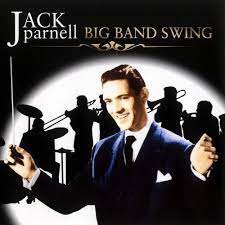
John Russell Parnell was born on August 6, 1923 in Paddington, London, England and raised in Wembley. The only son of vaudevillians, his father a ventriloquist, his mother, a gifted classical pianist, worked as her husband’s accompanist. He toured with his parents as a very young child and standing in the wings enthralled by the big bands that were often top of the bill in the late 1920s. He started piano lessons as a four-year-old and could pick up tunes easily. Sent away to boarding school from the age of six, he began to take an interest in drums, and this soon became a consuming passion.
Not much interested in academic study, Parnell bought all the jazz records he could, starting with Duke Ellington and moving on to the more informal Chicago school epitomised by trumpeter Muggsy Spanier. Armed with a Premier drum kit purchased by his mother from the window-cleaner for £15 and following six lessons from Max Abrams, at 15 he ventured north to Scarborough to start his professional career playing for the summer season at the town’s theatre.
During his military service in the 1940s he became a member of Buddy Featherstonhaugh’s Radio Rhythm Club Sextet and played drums with Vic Lewis and other servicemen who were keen on jazz. From 1944 to 1946 he recorded with the Lewis-Parnell Jazzmen’s version of Ugly Child.
During the 1940s and 1950s, Parnell was voted best drummer in the Melody Maker poll for seven years in succession. He composed many television themes, including Love Story, Father Brown, The Golden Shot and Family Fortunes. He was a regular judge on the ATV talent show New Faces and the musical director for The Benny Hill Show.
He was appointed as the musical director for ATV in 1956, a post he held until 1981, and was the conductor for The Muppet Show orchestra for the series’ entire run. Jack composed the score theme for ITC Entertainment. Throughout the 1960s, Parnell directed the pit orchestra for Sunday Night at the London Palladium.
In the 1970s, he co-founded the group The Best of British Jazz with Kenny Baker, Don Lusher, Betty Smith, Tony Lee, and Tony Archer, which performed until 1985. From 1991 on Parnell was part of the Norfolk-based Mike Capocci Trio who backed saxophonists Johnny Griffin, Ronnie Ross, and Kathy Stobart. In 1994, he took over as the leader of the London Big Band.
Drummer and musical director Jack Parnell, whose uncle was the theatrical impresario Val Parnell, transitioned from the effects of cancer at 87 on August 8, 2010 in Southwold, Suffolk, England.
More Posts: bandleader,conductor,drums,history,instrumental,jazz,music,music director
Daily Dose Of Jazz…
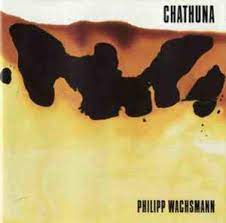
Philipp John Paul Wachsmann was born August 5, 1944 in Kampala, Uganda. Influenced greatly by the music of his country he studied violin with Isolde Menges, and music at Durham University, then received scholarships to study violin and composition at Indiana University in Bloomington. He went on to study composition with Nadia Boulanger in Paris in 1968 where he also attended courses in modern music given by Henri Pousseur, and, by Pierre Boulez in Basel. He subsequently lectured at Durham University 1969/70 and then moved to London to start a performing career.
He pioneered new sounds using the violin and electronics and can be heard on over 100 LPs/CDs on different labels including ECM, and plays worldwide. He performs with most of the musicians working in modern improvisation related music. He has performed and recorded with the Stellari String Quartet, The Imaginary String Trio but also works as a soloist.
He regularly conducts his own pieces with the London Improvisation Orchestra, including Three Draft Pistons’ for violin and electro-acoustic tape. He also works with film, dance and architecture. For many years he was Director of the Electronic Music Studio at Morley College and currently teaches courses in composition at the City Literary Institute.
Avant-garde jazz/jazz fusion violinist Philipp Wachsmann gives regular workshops in improvised music at various places and which have been a starting place for many of today’s performers, founded his own group Chamberpot, and has worked extensively in the free jazz and electronica idioms.
More Posts: bandleader,history,instrumental,jazz,piano