

Requisites
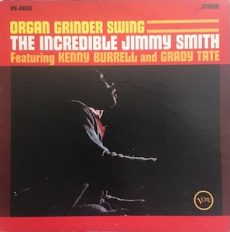
Organ Grinder Swing ~ Jimmy Smith With Kenny Burrell and Grady Tate | By Eddie Carter
This morning’s selection from the library holds a special significance to me. It was one of my mom’s favorite albums to play while enjoying her morning coffee and preparing our Sunday dinners when we were younger. Organ Grinder Swing (Verve Records V-8628/V6-8628) is a terrific trio album by Jimmy Smith, with Kenny Burrell on guitar and Grady Tate on drums. It was his second most successful album, surpassed only by Back at the Chicken Shack. The soulful character of his organ playing had a profound impact on me from the moment I first heard Houseparty and The Sermon. I quickly became a devoted fan, growing to appreciate even more the rich musicality and infectious grooves he brought to every performance. My copy of this album is the original 1965 U.S. deep groove stereo release.
The title track, The Organ Grinder’s Swing by Will Hudson, Irving Mills, and Mitchell Parish, kicks off the first side with Jimmy’s infectious enthusiasm on a swinging theme. Kenny builds the opening solo with some home-cooking. The organist steps up next with a spirited statement, and Jimmy’s vocal comments as it unfolds. Grady provides a steady beat that propels the group into the climax. Oh, No, Babe by Jimmy Smith gets this soulful blues underway with Smith’s organ and vocals, which are inserted during the introduction and melody. Burrell’s gentle touch shines in a refined, inviting opening solo. Smith brings a Southern flair to the proceedings with a down-home, tasteful delight ahead of the song’s conclusion.
Blues For J by Jimmy Smith is a bluesy mid-tempo original that opens with the trio’s joyously carefree theme in unison. Kenny takes center stage, showcasing his guitar artistry in the opening solo. Jimmy extends the happy mood with a vibrant performance, leading the group back to the ensemble’s reprise and a satisfying finish. The trio delivers a unique take on Greensleeves, the beloved English folk tune. Smith begins the melody with gospel-tinged musical ideas that give the melody a fresh sense of soulfulness. Burrell launches the opening statement with a laid-back, smooth groove. Smith then takes command, delivering an energetic and spirited interpretation that continues until the group’s theme reprise gradually dissolves, like autumn leaves drifting to the ground.
I’ll Close My Eyes by Buddy Kaye and Billy Reid is gently introduced by the trio, segueing into a graceful melody. Kenny’s opening statement radiates a comforting elegance and is one of his most beautiful moments on the album. Jimmy then guides the group toward the song’s reprise, incorporating sensitive ideas and a warm, refined tone, until the ensemble brings back the theme. Satin Doll by Duke Ellington, Johnny Mercer, and Billy Strayhorn is one of the most frequently recorded jazz standards, and picks up the beat one final time for the trio’s light-hearted theme. Burrell looks back nostalgically and sparkles with a soulful touch in the opening solo. Smith responds by gliding efficiently over the keys in a closing statement of happiness while Tate keeps the tempo lively and upbeat ahead of the finish.
Creed Taylor produced Organ Grinder Swing, and Rudy Van Gelder handled the recording. While the album’s sound quality is a strong effort, it falls short of the very best due to a harshness in the microphone placement at the organ, which is especially notable on The Organ Grinder’s Swing, Blues For J, and Greensleeves. This technical flaw, however, does not diminish from the album’s overall excellence. So, don’t let that deter you from adding this record to your library. The album’s greatest strength to me is how impeccably the trio works together. Kenny Burrell and Grady Tate perfectly complement Jimmy Smith throughout every track with a flawless sense of rhythm. If you aren’t looking at the cover, you could easily mistake this for one of the organist’s classic Blue Note recordings.
For fans of the jazz organ or those just discovering the music of Jimmy Smith, I invite you to check out Organ Grinder Swing the next time you’re visiting your favorite record shop. It perfectly captures the dynamic spirit and sophisticated musicianship that emerges when three exceptional performers unite, resulting in a memorable showcase of rhythm, style, and collaboration!
~ Back at the Chicken Shack (Blue Note BLP 4117/BST 84117), Houseparty (Blue Note BLP 4002/BST 84002), The Sermon (Blue Note BLP 4011/BST 84011) – Source: Discogs.com ~ Satin Doll – Source: JazzStandards.com ~ Greensleeves, I’ll Close My Eyes, The Organ Grinder’s Swing – Source: Wikipedia.org © 2025 by Edward Thomas Carter

More Posts: choice,classic,collectible,collector,history,instrumental,jazz,music,organ
Daily Dose Of Jazz…
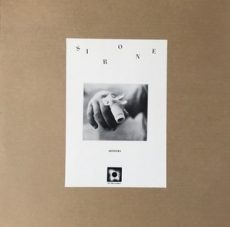
Norris Jones, better known as Sirone, was born September 28, 1940 in Atlanta, Georgia. He worked in Atlanta late in the 1950s and early in the 1960s with “The Group” alongside George Adams. He recorded with R&B musicians such as Sam Cooke and Smokey Robinson.
In 1966, in response to a call from Marion Brown, he moved to New York City, where he co-founded the Untraditional Jazz Improvisational Team with Dave Burrell. He also worked with Brown, Gato Barbieri, Pharoah Sanders, Noah Howard, Sonny Sharrock, Sunny Murray, Albert Ayler, Archie Shepp, and Sun Ra, as well as with John Coltrane when he was near the end of his career.
He co-founded the Revolutionary Ensemble with Leroy Jenkins and Frank Clayton in 1971. Jerome Cooper later replaced Clayton in the ensemble, which was active for much of the decade. The 1970s and early 1980s saw Sirone recording with Clifford Thornton, Roswell Rudd, Dewey Redman, Cecil Taylor, and Walt Dickerson.
In the 1980s, he was a member of Phalanx, a group with guitarist James “Blood” Ulmer, drummer Rashied Ali, and tenor saxophonist George Adams. From 1989, he lived in Berlin, Germany, where he was active with his group Concord with Ben Abarbanel-Wolff and Ulli Bartel.
Bassist, trombonist, and composer Sirone, who was involved in theater, film, and was a practicing Buddhist, died in Berlin, Germany on October 21, 2009, at the age of 69.
More Posts: bandleader,bass,composer,history,instrumental,jazz,music,trombone
Daily Dose Of Jazz…
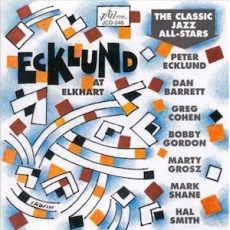
Peter Ecklund was born on September 27, 1945 in Woodbridge, Connecticut. In 1967 he received a degree from Yale University.
He went on tour with singer Paula Lockheart and started a jazz band. Additionally, he worked with many pop and rock bands in the 1970s and 1980s. He became a substitute for the Nighthawks Orchestra led by Vince Giordano and a member of the Orphan Newboys led by Marty Grosz.
He recorded six albums as a leader and another forty-five with David Bromberg, Marty Grosz, Geoff Muldaur, Leon Redbone, Paul Butterfield, Doveman, Bob Dylan, Howard Fishman, Steve Forbert, Gloria Gaynor, Steve Goodman, Hello People, Ian & Sylvia & the Great Speckled Bird, Keith Ingham, Michael Jerling, George McCrae, Martin Mull, Alex Pangman, Bonnie Raitt, Tom Sancton, Cynthia Sayer, Johnny Shines, Paul Siebel, Siegel–Schwall Band, Eric Von Schmidt, Andrea True Connection, Terry Waldo, Loudon Wainwright III, and Mitch Woods.
Cornetist Peter Ecklund died on April 8, 2020 from Parkinson’s disease.
More Posts: bandleader,cornet,history,instrumental,jazz,music
Daily Dose Of Jazz…
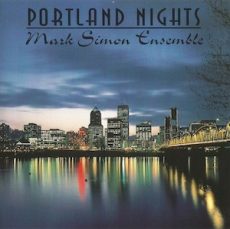
Mark Simon was born in Chicago, Illinois on September 26, 1959 and by age 13 he was listening to Lester Young, Charlie Parker, Roy Eldridge and other jazz legends, and playing along with old Jazz At The Philharmonic records from his father’s massive and eclectic record collection, which ran the gamut from early jazz master Louis Armstrong to avant-garde Cecil Taylor.
His high school jazz band director Don Owens was an important part of his jazz education. Mark soon graduated to jazz sessions, further honing his keyboard skills while beginning to play occasional jazz gigs. From sitting in with the JATP, he enrolled in a youth summer jazz camp at the University of Illinois, where he was exposed to the live side of jazz. Mark would sneak out of the dorm at night to sit in with the faculty on jam sessions,
Simon’s influences were grounded by jazz artists such as pianists Bill Evans, Keith Jarrett, McCoy Tyner, Charles Mingus, Gary Burton and Sonny Rollins. Growing up in jazz, He gained experience playing extensively with Leroy Vinnegar, Hadley Caliman, Bud Shank, Jeff Clayton, Joshua Breakstone, Julie Kelly, Teddy Edwards, Red Holloway and Herb Ellis.
Bassist Mark Simon continues to compose and perform solo piano gigs, accompanying vocalists, playing with jazz groups including his self-named trio, as well as teaching piano.
Daily Dose Of Jazz…
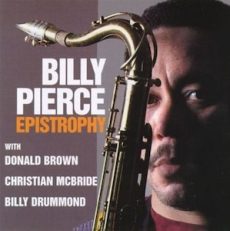
Bill Pierce, known to many as Billy Pierce, was born September 25, 1948 in Hampton, Virginia. He studied with Joe Viola and Andy McGhee at Berklee College of Music, and with Joe Allard.
In the early 1980s he was recruited by Art Blakey and the Jazz Messengers. Through the late Eighties and into the late 1990s he recorded simultaneously as a leader while also in Tony Williams’s quintet in the mid-1980s to early 1990s.
As a leader he has recorded seven albums and another 18 as a sideman with Art Blakey and the Jazz Messengers, Geoff Keezer, Kevin Eubanks, Makoto Ozone, Superblue, Tony Williams, and Lazlo Gardony.
As an educator Billy says he likes seeing music being carried on by young people developing, achieving their dreams, and being a part of history. Many of his students have made a name for themselves: Antonio Hart, Mark Gross, Javon Jackson, Walter Smith, Mark Turner, Miguel Zenon.
Saxophonist Billy Pierce, who is the former chair of the Berklee woodwind department, continues to perform, tour and educate.
More Posts: bandleader,educator,history,instrumental,jazz,music,saxophone