

Requisites
‘Four’ & More ~ Miles Davis | By Eddie Carter
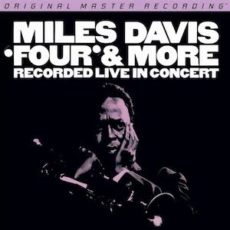
I begin this morning’s column with a fantastic live album by Miles Davis. ‘Four’ & More (Columbia CL 2453/CS 9253) hit the stores in 1966, following My Funny Valentine, a year earlier. Both records document a benefit performance at Philharmonic Hall for black voter registration in Louisiana and Mississippi. The sold-out concert was sponsored by the NAACP Defense Fund, Congress for Racial Equality, and Student Nonviolent Coordinating Committee. It emphasized Davis’s solidarity with these organizations and the people fighting racism in the south. Miles decided the quintet wouldn’t accept payment for their appearance. This angered his bandmates, but they responded with ferocious, kick-ass solos! George Coleman on tenor sax, Herbie Hancock on piano, Ron Carter on bass, and Tony Williams on drums complete the quintet. My copy used in this report is the 2013 Stereo Audiophile reissue (Mobile Fidelity Sound Lab MFSL 1-376)!
Side One begins with a speedy rendition of Miles’s signature song, So What. Ron and the rhythm section start quickly on the opening chorus segueing into the ensemble’s brisk theme. Miles launches a fierce attack on the first solo, then George moves with equal swiftness on the next statement. Herbie produces plenty of heat on the third reading while Ron and Tony provide the support structure into the finale. There’s only a second to breathe because the group jumps right into Walkin’ by Richard Carpenter. A brisk introduction by Miles leads to a blistering collective melody. Davis takes the reins first for a wild ride at a dangerously high speed. Williams gives a fine example of his brushwork next, then Coleman romps through the third solo with exuberant vitality, and Hancock swings vigorously on the final performance.
Joshua by Victor Feldman begins with the quintet’s heated theme. Miles takes off first on a furious flight. George fuels the next interpretation with a high-octane performance, then Herbie infuses the closer with youthful energy and enthusiasm anchored by Ron and Tony’s searing supplement into the song’s climax. Go-Go, the quintet’s theme follows as Master of Ceremonies, Mort Fega addresses the crowd and reintroduces the band accompanied by the audience’s ovation.
Four, a Miles Davis original begins Side Two with an uptempo melody. The leader kicks off the solos with rapid acceleration. Coleman matches the adrenaline rush on the second solo with brisk momentum. Hancock charges into the third reading swinging up a storm and Williams makes a brief comment preceding the ensemble’s exit.
Seven Steps To Heaven by Miles Davis and Victor Feldman starts with a brief introduction by the trio ahead of the quintet’s zesty theme. Miles blazes into the opening statement with unbridled energy. Tony offers a considerable comment next, then George turns up the temperature on a torrid performance that slows down as he concludes. Herbie crafts an upbeat closing statement leading to the group’s out-chorus. The finale is There Is No Greater Love by Isham Jones and Marty Symes. The quintet starts at a medium beat with Miles stating the melody using a mute. He continues with a casual first chorus with only Carter anchoring a few verses. Coleman gives a marvelous interpretation also featuring the bassist prominently. Hancock takes the final spot to give a charmingly cheerful statement before Miles and the trio ends the song gently.
Miles states the melody of Go-Go on the mute, then goes to the open horn as the quintet ends the night behind Mr. Fega’s closing remarks acknowledging the members a final time. ‘Four’ & More was originally produced by Teo Macero, and Kreig Wunderlich of Mobile Fidelity Sound Lab utilized the Gain 2 System for the reissue’s half-speed remastering from the original Stereo tapes. The record was pressed on 180-gram virgin vinyl. The sound quality is stellar, the vinyl is flat and absolutely silent until the music starts. The stereo separation is also mesmerizing, Miles is on both channels, Herbie’s on the left, George, Ron, and Tony are on the right. If you’re in the mood for some live jazz, I submit for your consideration, ‘Four’ & More by Miles Davis. It’s nearly an hour of swinging music that rewards its owner every time it’s on the turntable!
~ My Funny Valentine (Columbia CL 2306/CS 9106) – Source: Discogs.com ~ There Is No Greater Love – Source: JazzStandards.com ~ So What, Four, Seven Steps To Heaven – Source: Wikipedia.org © 2021 by Edward Thomas Carter

More Posts: choice,classic,collectible,collector,history,instrumental,jazz,music
Daily Dose Of Jazz…
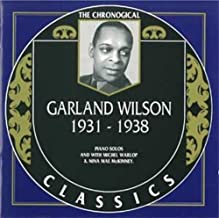
Born Garland Lorenzo Wilson on June 13, 1909 in Martinsburg, West Virginia. He attended Howard University in Washington, D.C. and in the 1930s worked in New York City nightclubs.
In 1932 the pianist joined Nina Mae McKinney on a European tour, worked extensively in England with local groups, and recorded with trumpeter Nat Gonella.
In the liner notes of the CD box l’intégrale Django Reinhardt ~ Vol 2 he is quoted as being accompanist of French singer Jean Sablon together with guitarist Django Reinhardt on two sides recorded on November 1, 1935 in Paris, France.
Returning to the United States in 1939, he remained there until 1951, when he moved to Paris, France. Pianist Garland Wilson remained in Paris until he passed away on May 31, 1954.
More Posts: bandleader,history,instrumental,jazz,music,piano
Daily Dose Of Jazz…
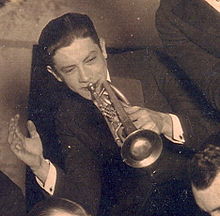
Emmett Louis Hardy was born in Gretna, Louisiana on June 12, 1903 and lived much of his life in the Algiers neighborhood on the west bank of New Orleans, Louisiana. A child prodigy, he was playing marvelously in his early teens. A musical highlight was a 1919 cutting contest where, after long and intense struggle, he succeeded in outplaying Louis Armstrong.
In his early teens he was a member of the Papa Jack Laine band, then worked in the Carlisle Evans Band and Norman Brownlee’s Orchestra of New Orleans. He belonged to a small band that worked with singer Bee Palmer. After moving to Chicago, Illinois he became a member of the New Orleans Rhythm Kings. After returning to New Orleans he led his own band and played in the band of Norman Brownlee.
Hardy did not appear on any of the Rhythm Kings recording sessions, and never made any commercial recordings before his early death. He did metal work, made his own mouthpieces for his horn, and modified his cornet to add an additional spit-valve. When advancing tuberculosis started to make his breathing difficult, Hardy taught himself banjo so he could continue playing music.
Hardy and some of his musician friends made some home recordings on wax phonograph cylinders for their own amusement. As Hardy’s tuberculosis worsened and his death seemed inevitable, the friends decided to preserve the cylinders as a memento of Hardy’s playing. At least one cylinder survived to the start of the 1950s, however when Tulane University’s Jazz Archive was established in the late 1950s, however, a diligent search failed to turn up any of these recordings, which are, alas, presumed lost forever.
After returning to New Orleans he led his own band and played in the band of Norman Brownlee. Though he never recorded with Brownlee, he was a big influence on his replacement, Sharkey Bonano. Cornetist Emmett Hardy passed away from tuberculosis in New Orleans, just four days after his 22nd birthday on June 16, 1925. He was buried in Gretna.
More Posts: bandleader,cornet,history,instrumental,jazz,music
Daily Dose Of Jazz…
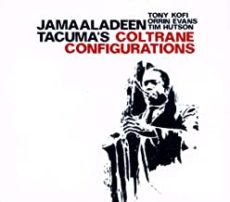
Jamaaladeen Tacuma was born Rudy McDaniel on June 11, 1956 in Hempstead, New York. Raised in Philadelphia, Pennsylvania he showed interest in music at a young age, taking up the electric bass and performing with the organist Charles Earland in his teens.
Through Earland, he came to know the record producer Reggie Lucas, who introduced Jamaaladeen to Ornette Coleman in 1975 at age 19. As the electric bassist for Coleman’s funky harmolodic Prime Time group, he rose to prominence quickly. During the 1980s he was playing a Steinberger bass that helped him create his readily identifiable sound.
His work with Prime Time got him an appearance with the band on Saturday Night Live in 1979. He went on to work with James “Blood” Ulmer, Walt Dickerson, Chuck Hammer, David Murray, and collaborated with The Golden Palominos in 1983. Tacuma recorded his first solo album as a leader, Show Stopper, that same year.
During the 1980s Jamaaladeen started to perform in a relatively straightforward funk/R&B setting with his group Cosmetic. He received the highest number of votes ever for an electric bassist in the “talent deserving wider recognition” category of the Down Beat magazine critics poll.
Though maintaining a low profile since the early 1990s, he has remained active but has maintained a lower profile. He has made numerous solo and collaborative recordings, returning to the jazz spotlight with an appearance on the World Saxophone Quartet’s Political Blues.
In 2007, he joined with Grant Calvin Weston and guitarist Vernon Reidto form the power trio Free Form Funky Freqs. He recorded two albums with Basso Nouveau. He has received numerous awards and fellowships and since 2015 he has presented the annual Outsiders Improvised & Creative Music Festival in Philadelphia. Bassist Jamaaladeen Tacuma continues to tour, produce and record worldwide.
More Posts: bandleader,bass,history,instrumental,jazz,music
Daily Dose Of Jazz…
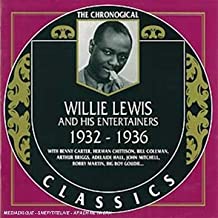
William T. Lewis, born Willie Meria Tawlton Lewis on June 10, 1905 in Cleburne, Texas. Growing up in Dallas, Texas and played in variety shows as a teen. He attended the New England Conservatory of Music, then played in Will Marion Cook’s orchestra. When Cook’s band was taken over by Sam Wooding, he traveled with him on his tours of Europe, South America, and North Africa, remaining until Wooding disbanded the orchestra in 1931.
Following this he put together his own band, Willie Lewis and His Entertainers. They featured some of Wooding’s old players and played to great success in Europe. Among those who played in his band were Herman Chittison, Benny Carter, Bill Coleman, Garnet Clark, Bobby Martin, and June Cole. His Entertainers recorded for French label Disques Swing.
In 1941 Willie disbanded the Entertainers and returned to New York City. He played sparsely after this but found some work as an actor, but took up bartending as his fortunes declined.
Clarinetist and bandleader Willie Lewis passed away on January 13, 1971 in New York City, at age 65.
More Posts: bandleader,clarinet,history,instrumental,music