


Daily Dose Of Jazz…
Sanford Gold was born on June 9, 1911 in Cleveland, Ohio and played locally in Cleveland and led regional bands. Moving to New York City in the 1930s he collaborated with Babe Russin and Raymond Scott in 1935, and formed a trio with Dave Barbour in 1941.
In 1942 he worked as a studio musician for CBS before serving in World War II until 1946. After being discharged Sanford worked with Don Byas, Mary Osborne and others before he went to work for CBS rival NBC, from 1949-1954. An album was recorded under his name on the Prestige label in 1955 titled Piano d’Or.
A sideman, Gold worked with Johnny Smith, Al Cohn, Vic Dickenson, Coleman Hawkins and Sally Blair. He was one of the premier jazz piano teachers of his time. He self-published a book, A Modern Approach to Keyboard Harmony and Piano Techniques. Pianist Sanford Gold passed away on May 29, 1984.

More Posts: bandleader,history,instrumental,jazz,music,piano
Three Wishes
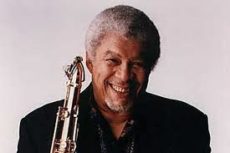
Frank Foster replied to the question the Baroness posed of his three wishes by telling her:
1. “Enlightenment! You know what I mean when I say that?”
2. “The absolute love of one person.”
3. “To see the whole world.”
*Excerpt from Three Wishes: An Intimate Look at Jazz Greats ~ Compiled and Photographed by Pannonica de Koenigswarter

More Posts: baroness,history,instrumental,jazz,music,pannonica,saxophone,three,wishes
Daily Dose Of Jazz…
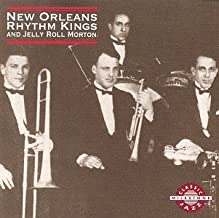
Louis Thomas Black was born on June 8, 1901 in Rock Island, Illinois and began playing banjo during early childhood. He became a professional musician in 1917.
By 1921 he had joined the famous New Orleans Rhythm Kings at Friar’s Inn in Chicago, Illinois. With this band, he participated to the first-ever interracial recording session with pianist Jelly Roll Morton.
Leaving the band in 1923, Lou went on to play with other bands. From 1925 until 1931, he was a staff musician for radio station WHO in Des Moines, Iowa. He left music in the early 1930s, but came back and began playing in 1961. He sat in with several bands during a brief stay in New York City, then played gigs in Moline, Illinois from the fall of 1963.
An automobile accident landed him in a Rock Island hospital and while recovering from his injuries, he suffered a fatal heart attack. Lou Black, who often went by Lew or Louie and was one of the foremost banjo players of the Jazz Era, passed away on November 18, 1965.
More Posts: banjo,history,instrumental,jazz,music
Daily Dose Of Jazz…
Edward Emerson Cuffee was born on June 7, 1902 in Norfolk, Virginia. He moved to New York in the 1920s, where he recorded with Clarence Williams from 1927 to 1929 and played with Bingie Madison.
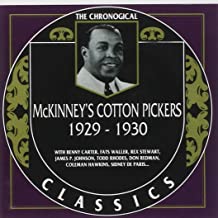
Playing in McKinney’s Cotton Pickers from 1929 to 1934, he moved to Fletcher Henderson’s band for three years beginning in 1935. Ed went on to play with Leon Abbey in 1940 and subsequently through the decade with Count Basie, Chris Columbus and Bunk Johnson.
He quit playing professionally after the late 1940s. Trombonist Ed Cuffee passed away on January 3, 1959 in New York City.
More Posts: history,instrumental,jazz,music,trombone
Requisites
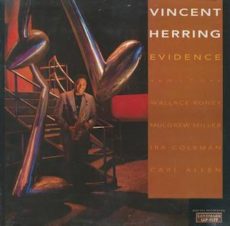
Evidence ~ Vincent Herring | By Eddie CarterThis next choice from the library is by alto saxophonist Vincent Herring who I first heard at the 1992 Atlanta Jazz Festival as a member of The Nat Adderley Quintet. Their performance was a highlight of the AJF, and Herring’s solos were breathtaking throughout the set, mesmerizing the crowd. Evidence (Landmark Records LLP-1527) is his second album as a leader, and accompanying him are Wallace Roney on trumpet, Mulgrew Miller on piano, Ira Coleman on bass, and Carl Allen on drums. My copy used in this report is the 1991 Swiss Digital Stereo pressing.
Side One opens with Mr. Wizard by Vincent and Larry Willis, swinging from the outset with an invigorating theme statement. Wallace takes off first driven by jet propulsion, followed by an energetic workout by Vincent. Mulgrew speaks last with a fierce intensity preceding an exuberant closing chorus and abrupt ending. The mood moves to a slower tempo for a beautiful rendition of I Sing a Song by Tex Allen. This tune opens showing grace and politeness with a Bossa-Nova beat on the melody. Roney begins with a seductively appealing performance, the altoist delivers a sublimely beautiful reading next. Miller’s closing presentation is an equal mix of elegance, poignancy, and warmth. Stars Fell on Alabama, the 1934 jazz standard by Frank Perkins and Mitchell Parish is a touching tribute to Cannonball Adderley who recorded it on Cannonball Adderley Quintet in Chicago (1959). Vincent opens the soloing with a sweet lyricism like a rare vintage wine that’s mellowed with age. Mulgrew adds a richly evocative romanticism to the finale matched by Ira and Carl’s tender interplay.
Voyage by Kenny Barron is the Side One finale with a lively, uptempo beat by the quintet on the opening chorus. Herring solos first with a captivating interpretation. Roney bursts into the next reading with a blazingly hot attack of electrically charged energy. Miller takes the final spot for an effervescent statement into the reprise and ending. Never Forget is Herring’s second contribution to the album and a very pretty ballad by Vincent expressing a voluptuous richness on the opening chorus and affectionate intimacy on the lead solo. Mulgrew gives a vivid example of his ability to communicate something special by caressing each phrase of the closing reading, making it truly distinctive and memorable for a deeply satisfying performance.
Evidence was written by Thelonious Monk in 1948, this jazz standard was first recorded as a single, and later on Milt Jackson and The Thelonious Monk Quintet (1955). The quintet starts with a happy groove exhibited in the opening statement by Herring showing a remarkable maturity beyond his age. Roney takes over in fine spirits and exceptional form on the second solo. Miller comes in next for an equally inspired reading. Carl shares the finale with all three soloists before the ensemble’s exit. Soul-Leo by Mulgrew Miller begins with a joyous medium theme. Wallace delivers tremendous excitement on the first solo. Vincent continues with an infectious groove next, then Mulgrew provides the summation ahead of a few closing comments by Vincent into the close.
The engineer on Evidence is Paul Goodman who has a large discography of notable jazz albums for Atlantic, Cobblestone, Elektra Musician, MPS Records, Muse Records, Onyx Records, Prestige, RCA Victor, and Xanadu. The digital mastering is by George Horn who also has a lengthy resume of albums at Fantasy Studios, and his own company, George Horn Mastering. The quality of this digital recording is splendid with a natural soundstage surrounding your listening chair with sweet sounds. In his closing remarks of the liner notes, producer Orrin Keepnews described Vincent Herring as “a force to be reckoned with in the world of jazz”. I agree with his statement and will only add that Vincent’s playing is indeed a satisfying experience supporting the Evidence found in the seven selections on this album!
~ Cannonball Adderley Quintet in Chicago (Mercury Records MG 20449/SR 60134), Evidence (Blue Note 549), Milt Jackson and The Thelonious Monk Quintet (Blue Note BLP 1509/BST 81509) – Source: Discogs.com ~ Stars Fell on Alabama – Source: JazzStandards.com © 2021 by Edward Thomas Carter

More Posts: choice,classic,collectible,collector,history,instrumental,jazz,music,saxophone