

Daily Dose Of Jazz…
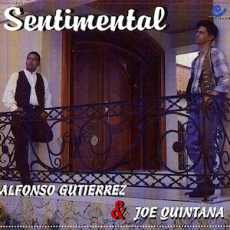
Joe Quintana was born in Aguadilla, Puerto Rico on August 21, 1969 and raised in a bicultural environment as a military brat. It was a blessing for a young musician to absorb so many influences that come with international travel. His parents, being appreciative of all musical genres and styles, made sure that he and his brothers were exposed to music at home.
After his formative early years, by 1995 Joe had set up his own band and began playing in Rincon, Puerto Rico as the house band at the Calypso Café. This led to other gigs and many mutations of his bands over the years. He is still very active in the area.
Joe’s guitar styling is very much in synchronization with just the right nuance in relation to the mood he wants to portray. Adept on the acoustic as an accompanist, and is at home unplugged as he is in the electric blues setting or showcased on Latin jazz/rock numbers.
He is either a sideman for live performances or studio recordings, but usually as the leader of his own outfit. His association and collaborations with his brothers has been the catalyst for his own forays into exploring his individual direction as well.
Guitarist Joe Quintana, who is the quintessential journeyman, continues to play every weekend and many week nights and plays a full repertoire for the locals.

More Posts: bandleader,guitar,history,instrumental,jazz,music
On The Bookshelf
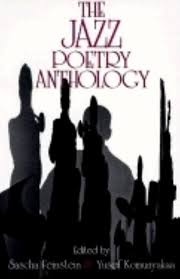
The Jazz Poetry Anthology
Since the turn of the century, poets have responded to jazz in all its musical and cultural overtones. The poems here cover the range of jazz itself: from early blues to free jazz and experimental music. Among the 132 poets included are James Baldwin, Lawrence Ferlinghetti, Langston Hughes, Jack Kerouac, Mina Loy, Ishmael Reed, Sonia Sanchez, Amiri Baraka, Carol Bergé, Sterling A. Brown, Alice Fulton, and Carl Sandburg.
The poems give the reader a sense of jazz imagery through the history of the music, yet have been lost to so many jazz enthusiasts and aficionados of the 20th century. Many of the names in this publication will be familiar but most one will discover anew.
Each poet has heard, felt the emotion of and experienced the music from a different perspective, writing in that voice. This makes for a pleasurable journey through time for the reader, especially those familiar with the music and the musicians.
This anthology represents the broad appreciation for jazz as poetic inspiration, not only from the Beat movement but from writers across the decades and around the world.
The Jazz Poetry Anthology: 1991 | Sasha Feinstein & Yusef Komunyakaa
Indiana University Press

Daily Dose Of Jazz…
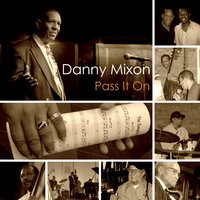
Daniel Asbury Mixon was born August 19, 1949 in Harlem, New York City. He started off as a tap dancer, attending the Ruth Williams Dance Studio. Later, he attended the High School of Performing Arts with Dance as his major but soon switched to playing the piano after being inspired by visits with his grandfather to see jazz artists playing at the Apollo Theater.
In 1966, at the age of 17, Danny was invited to play with the trumpet player Sam Brown’s band backing Patti LaBelle & the Blue Bells in Atlantic City at Reggie’s Cocktail Lounge. After working with Joe Lee Wilsonfor three years beginning in 1967 then started to play regularly with Betty Carter during the years 1971–72.
Formed his own jazz trio, he recorded with the Piano Choir and worked with a variety of important jazz musicians including Kenny Dorham, Cecil Payne, Art Blakey’s Jazz Messengers, Frank Foster, Grant Green, Pharoah Sanders, and singers Joe Williams, Eddie Jefferson and Dee Dee Bridgewater.
1976 saw Mixon playing in Charles Mingus’ band. He then played with Dannie Richmond in the late 1970s, toured the U.S. with Yusef Lateef and played a few years with the Lionel Hampton Big Band. Since his twenties Mixon has worked continuously with Frank Foster as a pianist for the Big Band; Frank Foster’s Loud Minority, and his quartet the Non-Electric Company.
He plays piano on many recordings. He appears with Hank Crawford on Tight and After Dark and has also recorded with The Danny Mixon Trio and has recorded On My Way. In 2004 he was awarded as a legendary pianist by the National Jazz Museum in Harlem during their series Harlem Speaks honoring Harlem Heroes. He was also the musical director of the Lenox Lounge in Harlem, where he also regularly played with his trio, until it closed in 2012.
Pianist Danny Mixon, at 76, continues to perform and record.
More Posts: bandleader,history,instrumental,jazz,music,piano
Daily Dose Of Jazz…
Frank Parker was born on August 18, 1919 in New Orleans, Louisiana and began drumming at the start of his career in show business at the age of 5. He gained experience playing with various bands in New Orleans, including The Gin Bandits. He performed as a member of Kid Clayton’s band before relocating to Los Angeles, California. There he hooked up with Teddy Buckner at the Beverly Caverns and the Johnny Otis Band.
Returning home in 1949, Parker played alongside such notables as Fats Domino, Joe Phillips, Roy “Good Rocking” Brown, and Paul Gayten. Nearly ten years later he went on the road with Ray Charles, which was followed up by a spot with the Louis Jordan Band. In 1959 he was back in Los Angeles working with Lou Rawls among others.
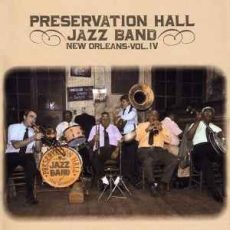
By 1970, Parker was working once more on Bourbon Street with Thomas Jefferson, George Finola, Papa French, Santo Pecora, and Wallace Davenport. During his later years, he performed with Laverne Smith at Marriot and Fairmont hotels, toured with One Mo’ Time in 1979, a stage hit about black vaudeville in the early days of jazz. A year later he was playing drums for Percy Humphrey and the Preservation Hall Band.
He ultimately retired in 1990 after suffering a stroke. Just a few months after The Louisiana Jazz Federation presented him with a lifetime achievement award, drummer Frank Parker died on January 23, 2001 in his hometown.
More Posts: drums,history,instrumental,jazz,music
Requisites
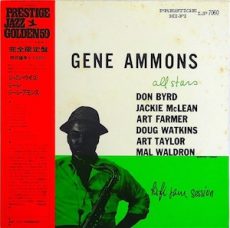
Jammin’ With Gene ~ Gene Ammons All-Stars | By Eddie Carter
A few evenings ago, after dinner, I was enjoying a good book when I suddenly craved some jazz with a tenor sax. That decision led me to today’s discussion. Upon going to the shelf, I rediscovered one of my favorite records by the Gene Ammons All-Stars. “Jammin’ With Gene” (Prestige PRLP 7060) was the tenor saxophonist’s third release as a leader when it hit the stores in 1956. It was also the second of seven blowing session albums he recorded forthe label. The personnel for this date is a stellar supporting cast: Art Farmer and Donald Byrd on trumpet, Jackie McLean on alto sax, Mal Waldron on piano, Doug Watkins on bass, and Arthur Taylor on drums. My copy of this album is the 1977 Victor Musical Industries Japanese mono reissue (Prestige VIJ-5039).
The first side opens with the title tune, Jammin’ With Gene, by Gene Ammons. From the start, the septet establishes a cohesive atmosphere, with the front line delivering the melody in tight, harmonious unison. Gene takes the lead solo, slipping into a soulful groove that floats effortlessly over the rich foundation provided by his fellow musicians. Donald steps in next, his interpretation unfolding with increasing intensity, from a gentle warmth to a robust climax, also with the front line shadowing him. Art and Jackie then state their cases in the subsequent two readings, each presentation adding a fresh layer of expression. Mal wraps things up with a laid-back performance, which is followed by the group circling back to their unified closing chorus.
The album’s only standard, We’ll Be Together Again, by Carl Fischer and Frankie Laine, opens gently as Gene, Mal, and Doug’s introduction segues into a subtle, slow-moving melody by Ammons. Gene then steps forward, launching the opening statement with a smooth, relaxed swing. Art follows, infusing the second reading with vivacious energy, and then Jackie picks up the rhythm with lively, enthusiastic lines. Donald delivers the goods on the following interpretation, after which Mal ushers in a flowing groove leading into Gene’s closing passage back into a ballad tempo for the group’s graceful finish.
The album’s finale, Not Really The Blues by Johnny Mandel, is a lively, up-tempo tune that takes off with a brisk melody from the whole ensemble. Donald leads off, delivering a spirited statement that sets the pace, then Jackie adds some bite with sharp, energetic phrasing. Art keeps the momentum high with his vigorous contribution, while Gene steps in with high-octane in the next solo. Mal keeps things simmering with his smooth piano work, paving the way for a rapid-fire exchange among Farmer, Byrd, McLean, and Ammons. The excitement builds as Donald, Jackie, Art, and Gene trade choruses in a heated musical conversation, driving the group toward a swift and exhilarating exit.
Bob Weinstock supervised the session, and Rudy Van Gelder was responsible for the recording duties. This reissue’s sound quality is a delight to hear, with a vivid soundstage that transports the musicians to the sweet spot in your listening room. If you’re a Gene Ammons fan and appreciate a good bop album, I happily recommend “Jammin’ With Gene” by the Gene Ammons All-Stars for a spot in your library. It’s an underrated, but excellent album that every tenor sax enthusiast should seek out on their next record-shopping trip!
~ We’ll Be Together Again – Source: JazzStandards.com
© 2025 by Edward Thomas Carter
More Posts: choice,classic,collectible,collector,history,instrumental,jazz,music,saxophone