

On The Bookshelf
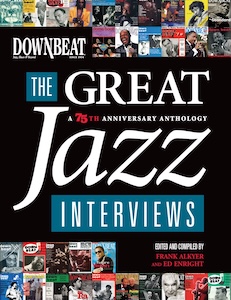
Downbeat: The Great Jazz Interiews: 2009 | Frank Alkyer & Ed Enright
In honor of its 75th anniversary, publisher Frank Alkyer, with the assistance of the magazine’s editors past and present, has combed through the vast DownBeat archives and assembled a compendium of the magazine’s most celebrated, historical, and groundbreaking features, in-depth interviews, insights, classic photographs and magazine covers from the illustrious history of the world’s top jazz magazine, DownBeat.
This anthology includes the greatest of DownBeat‘s Jazz Hall of Famers: from early legends like Jelly Roll Morton, Louis Armstrong, Count Basie, Duke Ellington, and Benny Goodman; to bebop heroes like Charlie Parker, Dizzy Gillespie, John Coltrane, Sonny Rollins, and Miles Davis; to truly unique voices like Ornette Coleman, Cecil Taylor, Thelonious Monk, and Rahsaan Roland Kirk; to the pioneers of the electric scene like Chick Corea, Herbie Hancock, Pat Metheny, and Joe Zawinul.
The Great Jazz Interviews delivers the legends of jazz, talking about America’s music and America itself, in their own words. At times this collection reads less like a book and more like a conversation about jazz among the artists themselves.


Daily Dose Of Jazz…
Andrew James Quin was born August 12, 1960 in London, England. Not from a musical family, he was offered a scholarship to study classical piano at the Royal College of Music, but turned down the place in order to pursue his growing interests in improvisation, composition and music technology.
He works in TV and film and his music has appeared in Hollywood movies, advertising campaigns, and television programs. His work has appeared in British TV shows such as Coronation Street and Holby City.
Pianist, theatre organist and composer Andy Quin, who has well over one thousand published tracks, continues to perform, compose and record.

More Posts: bandleader,composer,history,instrumental,jazz,music,organ,piano
Daily Dose Of Jazz…
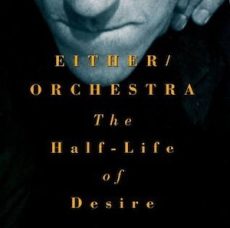
Russ Gershon was born on August 11, 1959 and grew up in Westport, Connecticut. He attended Harvard University where he received a degree in philosophy and was a disc jockey, jazz director and station manager at Harvard’s WHRB radio station. He attended Berklee College of Music for a year in 1984 and the following year the Either/Orchestra played its first live show at the Cambridge Public Library.
Founding Accurate Records he has released albums by Morphine, Medeski Martin & Wood, the Alloy Orchestra, Ghost Train Orchestra, the Either/Orchestra, Dominique Eade, and Garrison Fewell. He has been a member of rock bands and has worked as a studio musician as well as performing in Boston, Massachusetts.
In 1997 Russ played arrangements of Ethiopian popular music with the Either/Orchestra. This drew the attention of Francis Falceto, who produced the “Éthiopiques” series of albums to document 20th century Ethiopian music. Through Falceto’s connections his band were invited to Addis Ababa in 2004 and became the first American big band to perform in Ethiopia since Duke Ellington’s in 1973.Their principal concert was released as the album Ethiopiques 20: Live in Addis and led to working with Ethiopian musicians such as Mahmoud Ahmed, and appeared with Ahmed’s band at Carnegie Hall in 2016.
Saxophonist, flutist, composer, and arranger Russ Gershon continues to perform with the Either/Orchestra.
More Posts: arranger,bandleader,composer,flute,history,instrumental,jazz,music,saxophone
Requisites
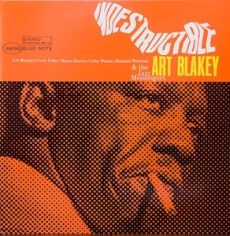
Indestructible! ~ Art Blakey and The Jazz Messengers | By Eddie Carter
For over three decades, Art Blakey made an indelible mark on jazz, both as a dynamic drummer and a visionary band leader. His creative drive propelled The Jazz Messengers to the forefront of the jazz world, earning them international acclaim as one of the genre’s premier ensembles. By 1964, the group was facing a turning point: Wayne Shorter was preparing to leave for the Miles Davis Quintet, and both Cedar Walton and Reggie Workman were set to embark on solo careers. This week’s featured album from the library is Indestructible (Blue Note BLP 4193/BST84193), Blakey’s final session for Blue Note. Intriguingly, the album wasn’t released until 1966, making its debut with a powerful, unforgettable presence.
Art is accompanied by Lee Morgan on trumpet, Curtis Fuller on trombone, Wayne Shorter on tenor sax, Cedar Walton on piano, and Reggie Workman on bass. My copy of the album is the 1985 Toshiba-EMI Limited Japanese stereo reissue utilizing the original catalog number. The Egyptian, by Curtis Fuller, which opens the first side, sets the tone with a relaxed, mid-tempo beat. The trio’s lengthy conversation leads to the front line’s irresistibly catchy melody. Curtis goes to work first, establishing a laid-back mood, then Wayne provides the song’s most dventurous solo, which nearly steals the spotlight. Lee injects a burst of energy into a swinging improvisation next. Finally, Cedar wraps up things with a superb statement, leading to the ensemble’s ending theme and fadeout.
Curtis Fuller’s Sortie opens with a blues-inspired introduction, drawing the ensemble into a smooth, medium-tempo melody. Lee begins the opening solo impressively, then Wayne executes a soulful, down-home statement. Curtis steps in with a lively, toe-tapping reading next, after which Cedar presents his ideas on the final performance perfectly until the group comes to a graceful closing chorus and gentle fade. On the second side, Calling Miss Khadija by Lee Morgan starts with Reggie, Cedar, and Art, setting the lively mood for the track’s vivacious theme. Lee ignites the opening statement with his energetic playing. Wayne continues the momentum with swinging, expressive lines. Curtis then delivers a solo rooted in blues, leading into Cedar’s scintillating reading, followed by Art’s brief but memorable presentation, before the ensemble’s closing chorus softly dissolves.
When Love Is New by Cedar Walton is a gorgeous ballad that begins with the ensemble’s unified introduction, then gives way for Wayne to shape the beautiful melody and a sprightly, breezy lead solo. Lee follows with an easy swing in his tone and a steady sureness until the saxophonist returns to pilot the group back to the closing chorus and a soft summation. Mr. Jin by Wayne Shorter showcases his knack for weaving an intricate, adventurous melody with an
Oriental flavor. Art sets the tone for the ensemble’s precise interplay, then Wayne steps up first with ample room to stretch out on the opening statement. Lee responds to the saxophonist with bright, lively phrases, leading back to the sextet’s theme reprise and the trio’s slow fadeout.
The chemistry among the musicians on Indestructible is truly remarkable. Art Blakey created a space where creativity flourishes and daring improvisation thrives. This approach yields performances with vibrant energy, yet remains disciplined and refined. Every member of the ensemble is given room to shine individually without ever losing their unmistakable coherence. Lee Morgan’s trumpet stands out with vibrant flair, while Curtis Fuller’s trombone adds a rich, soulful layer. Wayne Shorter’s tenor saxophone brings an alluring, mysterious edge. At the heart of the ensemble, Cedar Walton and Reggie Workman provide a steadfast and fluid foundation of rhythms and harmonies, completing what stands as one of the finest incarnations of the Jazz Messengers under Art’s leadership.
Alfred Lion produced the album, and Rudy Van Gelder was behind the recording console. The sound quality of this Toshiba-EMI reissue is absolutely stunning, with a superb soundstage that transports the listener to the studio as the musicians play. If you’re already a fan of Art Blakey and The Jazz Messengers, or simply in the mood for some hard bop to unwind after a long day, I highly recommend checking out Indestructible on your next record-shopping trip. It’s an outstanding album that promises countless hours of rewarding listening. Additionally, as Art Blakey’s swan song for the label and the three departing members, it is sure to be cherished by both newcomers and seasoned fans alike!
© 2025 by Edward Thomas Carter
More Posts: choice,classic,collectible,collector,drums,history,instrumental,jazz,music
Daily Dose Of Jazz…
Marguerita Page was born on August 10, 1950 in Clarksville, Tennessee and first sang in church. At the same time, absorbing the sounds of the blues and R&B, her saxophonist father introduced her to jazz.
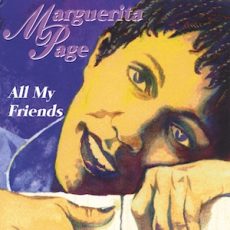
Marguerita’s mature style blends her gospel and blues roots with jazz in an elegant original way. She has written lyrics to the works of Charlie Parker and Wes Montgomery. Her 1995 debut release All My Friends features saxophonist Charles McPherson.
Moving to California, Page performed as soloist and director of the One Human Family Community Choir, at the Idyllwyld Jazz Festival and at On Broadway in San Diego. She has been featured on television, is writing music to some of the sacred scriptures of the Baha’i Faith and recording a soundtrack for an interactive autobiography titled The Dawn At My Back by San Diego State University professor Carroll Blue.
Back in Tennessee, Marguerita’s current projects and performances feature pianist/songwriter Will Barrow. Vocalist, composer, voice teacher, and choir director Marguerita Page continues to perform and record.
More Posts: bandleader,history,instrumental,jazz,music,vocal