

On The Bookshelf
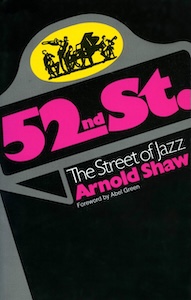
52nd St. The Street of Jazz | Arnold Shaw
Back in the thirties and forties, when New York City was the capital of the jazz world-you could hail a cab, ask the driver to take you to “The Street,” and find yourself on 52nd Street between Fifth and Sixth Avenues. Musicians, jazz lovers, college students, big businessmen, everybody knew that this was “The Street that Never Slept,” the Street where every night was New Year’s Eve, the Street that Variety editor Abel Green so aptly dubbed “America’s Montmartre.”
Here, for the price of a drink or two, you could walk through the whole history of jazz. Hot jazz was born and raised on The Street, as were the big swing bands of the thirties and the modern “cool” jazz combos of the forties. Comics like Alan King and Joey Adams got their start on the Street, as did musicians like Erroll Garner, Jack Teagarden, and Coleman Hawkins. Bessie Smith performed on the Street, and so did Count Basie, Charlie “Bird” Parker, Dizzy Gillespie, Billie Holiday, Art Tatum, Sarah Vaughn, the Dorsey Brothers, Artie Shaw, and other jazz greats.
Arnold Shaw was there as musician, composer, PR man, and just plain listener. He recreates for us the three swinging decades that were the history of the Street: its birth in Prohibition-era speakeasies, where musicians jammed for gin or just for the fun of it; its post-Repeal blossoming as the center of the jazz universe, lined up and down on both sides with tiny, smoke-filled rooms where black and white musicians played to capacity crowds; its postwar decline as the Street became a tawdry tenderloin of strip and clip joints.

Daily Dose Of Jazz…
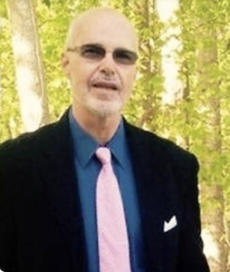
John Cusick was born on July 1, 1949 in Washington, D.C. He studied percussion with former drummer of the Charlie Byrd Trio, Bill Reichenbach. He has gone on to perform with other jazz greats that call Washington home, such as legendary pianist John Malachi and Keter Betts.
He has entertained DC area jazz audiences for more than 30 years, and has performed at the John F. Kennedy Center for the Performing Arts.
Drummer John Cusick leads the area’s finest jazz performers, in trios, quartets, quintets and larger ensembles for night club, concert and private engagements.

More Posts: bandleader,drums,history,instrumental,jazz,music
Daily Dose Of Jazz…
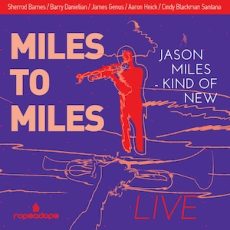
Jason Miles was born June 30, 1951 in Brooklyn, New York. He went to Indiana State University and when jazz fusion was becoming popular in the 1970s he was in New York creating innovative techniques in synthesizer programming and electronic music.
In 1979 he recorded his debut album Cozmopolitan with Michael Brecker and Marcus Miller, although it was never released. During the 1980s he was a session musician who worked with Miles Davis, Aretha Franklin, Whitney Houston, Michael Jackson, Chaka Khan, Diana Ross, David Sanborn, and Luther Vandross.
The 1990s had him playing keyboards and writing music for the animated film The Snow Queen and People: A Musical Celebration of Diversity on the Disney Channel. He and his wife Kathy Byalick composed Visionary Path, a New Age album with narration by Diana Krall, Roberta Flack, and F. Murray Abraham.
In 2000 Miles released The Music of Weather Report, the first of several tribute albums. During the next year he won a Grammy Award for producing A Love Affair: The Music of Ivan Lins with appearances by Sting and Brenda Russell. His next solo album To Grover, with Love, was a tribute to Grover Washington Jr. that was nominated for Record of the Year by the National Smooth Jazz Awards. He also recorded tributes to Miles Davis and Marvin Gaye.
Keyboardist, composer and record producer Jason Miles, who has a discography of nineteen albums, continues to compose and perform.

More Posts: bandleader,composer,history,instrumental,jazz,keyboards,music,record producer
Requisites
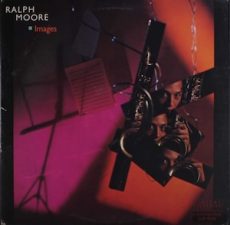
Images ~ Ralph Moore | By Eddie Carter
Ralph Moore enters this morning’s spotlight with Images (Landmark Records LLP-1520). He was born in Brixton in South London, England, and took up the trumpet and various instruments at the age of fourteen before deciding on the tenor saxophone. In the early 1970s, he relocated to Santa Maria, California, and later to Boston, Massachusetts, where he began performing locally while studying at Berklee College of Music. Unfortunately, his studies were interrupted by a home invasion that left him seriously injured and unable to complete his degree. Joining him on this date are Terence Blanchard on trumpet (tracks: A1, A3, B1, B3), Benny Green on piano, Peter Washington on bass, Kenny Washington on drums, and Victor See-Yuen on congas (A3). My copy of the album is the 1988 U.S. stereo release.
Side One commences with an energetic trip on the Freeway by Ralph Moore. From the rhythm section’s introduction, the quintet swings with an invigorating theme. Ralph has the first solo spot and swiftly navigates the trio’s interplay to a satisfying conclusion. Terence follows with an energetic interpretation, then Benny dives into a jubilant performance, culminating in the exuberant closing chorus and climax. The mood shifts to a slower tempo for a beautiful quartet rendition of Enigma by J.J. Johnson. Moore exudes grace and politeness in the opening melody, then proceeds with a richly detailed and tender presentation. Green’s short solo is filled with melodious sweetness, like the taste of a well-aged vintage wine before the close.
The trio’s infectious Latin-influenced introduction begins with Episode From a Village Dance by Donald Brown. The quintet’s danceable theme gets things off to a good start. Ralph leads the way with a happy groove. Terence steps up to give a jaunty reading, then Benny adds to the festive mood in the closing interpretation, ahead of the ensemble’s theme reprise and climax. The quintet takes the beat upward to begin the second side with This I Dig of You by Hank Mobley. The rhythm section’s introduction sets up the ensemble’s rhythmic attack in the melody. Blanchard opens the door with a spirited solo, then Moore brings the heat in the second reading. Green soars ahead next, and the front line mixes it up with Washington preceding the quintet’s closing chorus and exit.
Ralph Moore’s Blues For John is his upbeat tribute to John Coltrane. A spirited two-instrument dialogue between Moore and Washington segues into the quartet’s brisk melody. Benny rolls out the opening statement effortlessly, then the leader soars through the following interpretation with terrific momentum. Peter takes his first solo of the date and delivers an inspired reading, leading to a short theme restatement and abrupt stop. The quintet returns to begin Punjab by Joe Henderson with a bluesy introduction and melody. Peter goes for a leisurely stroll in the opening statement. Ralph follows with a delightful interpretation, then Terence steps for a well-crafted solo that’s marvelously executed. Benny has the last word, then hands it over to the ensemble, who close the song as they began.
Elmo Hope’s One Second, Please, raises the intensity one final time for the trio’s introduction, leading to the quartet’s rapid melody. Ralph launches into the opening statement with electrifying energy. Benny succeeds him with a series of exhilarating ideas that flow seamlessly. Ralph and Kenny add a vigorous footnote before the ensemble wraps up the song. Orrin Keepnews produced Images, with Rudy Van Gelder as the recording engineer. George Horn mastered this release, utilizing a Mitsubishi X-80 digital tape recorder, which enabled direct recording and mastering from two-track digital tape. The album’s sound quality is splendid, with a crystal-clear soundstage that not only allows each instrument to shine but also makes it feel as though the musicians are playing right in front of you.
Ralph Moore is a tenor saxophonist whose music, deeply influenced by John Coltrane, is both personal and easily recognizable. His professional journey began with a 1979 tour of Scandinavia. After moving to New York City a year later, he collaborated with numerous musicians, including as a member of Kevin Eubanks’ band on “The Tonight Show.” “Images” is Moore’s fourth album as a leader, and despite his relatively small discography as both a leader and sideman, each album reveals his energetic and vibrant style. For fans of the tenor saxophone, I invite you to consider “Images” by Ralph Moore for a spot in your library on your next record hunt. It’s a terrific album that showcases Moore’s growing mastery and passion for hard bop, and it should not be missed!
© 2025 by Edward Thomas Carter
More Posts: choice,classic,collectible,collector,history,instrumental,jazz,music,saxophone
Daily Dose Of Jazz…
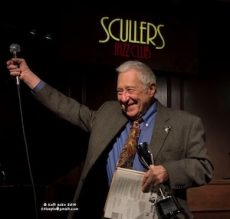
Fred Taylor was born in Boston, Massachusetts on June 29, 1929 and was raised in nearby Newton, Massachusetts. He studied piano as a youth and played drums but it was jazz where he found his calling. Captivated by bebop in the 1940s and ’50s, he got a degree from Boston University, with jazz as his major area of study, seeing live shows, collecting albums, listening to the radio, and simply hanging out. While gaining his jazz legs he worked at his parents’ mattress and upholstery business.
Taylor first started promoting a mix of jazz and folk acts around Boston in 1961. In 1965 he and his business partner Tony Mauriello bought two nightclubs, and renamed them Paul’s Mall and the Jazz Workshop, where the who’s-who of modern jazz, from legends of the bebop generation to young innovators of the fusion era.
When the two venues closed in 1978 the partners bought a movie theater and ran it for eight years. During that period Miles Davis came out of retirement with a new band and asked Taylor to promote his comeback gigs, and his coming-out party in Boston became international news, and the material recorded at Kix was later released on the album We Want Miles, named after the chants that greeted Davis and the group at those first shows.
In 1990 he took over the lounge at the Embassy Suites Hotel which eventually became a full-fledged jazz venue called Scullers. Under his leadership, the club became an essential part of the local music landscape.
Fred then took a young saxophonist named Grace Kelly under his wing, whom he met when she was just 13 years old. He became both Kelly’s mentor and advocate, recommending her to everyone and anyone in the jazz community. Their relationship reflects a lifelong pattern of seeking out new artists, presenting them as performers, and then working to raise both the industry and the public’s awareness of their importance.
In a move that was widely unpopular in Boston and even drew national criticism, Hilton Hotels, the owner of Scullers, terminated its relationship with Taylor in 2016. This ended his reign of more than a quarter-century at the club. At 87 years old, he continued to promote Kelly and other artists he believed in. During his last few years, he finished his autobiography and fought the cancer that would eventually end his life. Jazz impressario Fred Taylor died on October 26, 2023.
More Posts: history,impresario,instrumental,jazz,music