

Daily Dose Of Jazz…
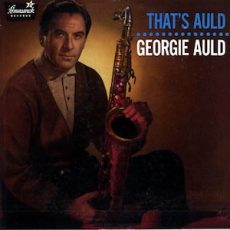
Karl Kiffe, born July 6, 1925 in Los Angeles, California first attracted attention as winner of the annual Gene Krupa Contest in 1943. Succeeding Chuck Falkner as leader of the Hollywood Canteen Kids he was featured in novelty numbers in several feature films before working as a single in Ken Murray’s Blackouts.
1945 saaw him hired by Jimmy Dorsey, with whom he worked for about a year, and then again from 1950 through 1953. Over the next decade, Kiffe worked with Stan Getz, Zoot Sims, Charlie Shavers, Red Norvo and Woody Herman, as well as singers Andy Williams, June Christy, and Ella Fitzgerald.
Speaking in 1946, when asked which drummer he most admired, Kiffe cited the solos of Buddy Rich, while praising the big band work of Don Lamond and Jo Jones.
Drummer Karl Kiffe, who was great friends with saxophonist Warne Marsh, died on May 10, 2004 at the age of 76 in Las Vegas, Nevada
More Posts: drums,history,instrumental,jazz,music
Daily Dose Of Jazz…
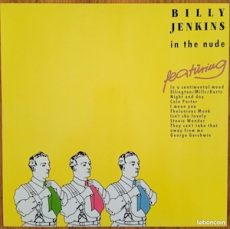
Charles William Jenkins was born July 5, 1956 in Bromley, Kent, England and was known to the jazz and blues worlds as Billy. He began learning the violin from the age of nine and two years later added piano and choir. By twelve he taught himself to play the guitar.
As a young teenager, Billy started regular jam sessions in the basement of the bohemian twenty-three room former hotel where he grew up. This jam session attracted many local contemporaries, his best friend at the time, Bill Broad, who the world came to know as Billy Idol and Steven Bailey, later to become Steven Severin.
During those teen years he performed in local church halls, USAF Bases in East Anglia, riverside pubs, local colleges and clubs under various names 1970-72. Jenkins toured and recorded for Arista Record’s Clive Davis with art rock band Burlesque from 1972-77, performed as a young adult with ‘alternative musical comedy’ duo The Fantastic Trimmer & Jenkins from 1979-82 and drummer Ginger Baker before founding the VOGC, the Voice of God Collective.
From 1983 – 93 he lived and worked at Wood Wharf Rehearsal Studios in Greenwich, England. Since then Billy has produced a large body of over 40 recorded albums including Scratches of Spain, Motorway At Night, Entertainment USA and Music For Two Cassette Machines. Some of his recordings are about his SE London environs and include Sounds Like Bromley, Greenwich, Still Sounds Like Bromley and Suburbia.
Guitarist, composer and bandleader Billy Jenkins, who is immersed in improvisation as ell as standards, continues to pursue his love of jazz and blues.
More Posts: bandleader,composer,guitar,history,instrumental,jazz,music
Daily Dose Of Jazz…
Maria Speight was born in Savannah, Georgia on July 4, 1958 and got a head start in the world of jazz, as her birthplace is the home of kindred brother, lyricist Johnny Mercer. The oldest of five siblings, her mother thrust her onstage at her local church when she was six. From that moment on she was hooked.
Her dad was exposed to everything from opera to jazz and her mother taught Maria about Gospel music, and was exposed to so many influences of music, and have found they are part of her style. In college she studied operatic voice for four years, however, after her last recital she realized opera wasn’t for her. It was at this point six years later that she found jazz.
Touring professionally fourteen years with a gospel band and paid her dues for her life in jazz. Her style is in the vein of Ella Fitzgerald, Sarah Vaughan and Peggy Lee and the standards she performs endure.
Now based in Perth, Scotland she is new on the jazz scene. She weaves rich colours and textures into every swinging note with the Maria Speight Quintet.
More Posts: bandleader,history,instrumental,jazz,music,vocal

Daily Dose Of Jazz…
Bruce Adams was born on July 3, 1951 in Glasgow, Scotland and was brought up in a musical family. His father Bob was a guitarist whose career extended back to the British dance bands of the 1930s and his mother was a dancer. His first real musical interest was the music of Django Reinhardt and Stephane Grappelli at the age of seven. His first instrument was the guitar but switched to trumpet on his eleventh birthday. Within five months he played his first gig on trumpet.
By twelve, Bruce was working three to four nights a week in the Glasgow area playing in small dance band residencies and performing in a cabaret act with his father. When he was fourteen he was sponsored on Hughie Green’s Opportunity Knocks by British trumpet legend Nat Gonella. The following year he left school and went on the road with his father playing theatres. They continued until 1973 when his father’s health led to disbanding the act.
From 1973 onwards Adams immersed himself in the Glasgow jazz scene by forming a jazz quintet with alto saxophonist Bill Fanning. Together they formed a big band. During this period he also played the Mecca Ballrooms, with Benny Daniels in the Plaza and Bill Patrick in Tiffany’s.
In the mid-eighties, Bruce worked with Harry Sweets Edison, Warren Vache, and Spanky Davis. Buddy Tate, Al Cohn, Benny Waters, Danny Moss, Bruce Turner, John Barnes, Bob Wilbur. Dan Barrett, Roy Williams, George Chisholm, Bill Allred. Dave McKenna, Ray Bryant, Dick Hyman, Art Hodes, Johnny Parker, and Stan Greig.Milt Hinton, Ronnie Rae, Len Skeat, and Dave Green. Jake Hanna and Gus Johnson.
Adams played with Pete Long’s Echoes of Ellington, the BBC Big Band, and freelanced with Lennie Niehaus, Gerald Wilson, Patti Austin, and the Cuban Fire Concert with Horatio el Negra Hernandez and Giovanni Hidalgo.
He is a multiple British Jazz Awards Winner, with among his more than twenty nominations has received awards for Best Trumpet, Oustanding Soloist, and Trumpet Soloist. Trumpeter Bruce Adams continues to ply his trade encompassing jazz styles ranging from Louis Armstrong to the modern-day.
More Posts: bandleader,history,instrumental,jazz,music,trumpet
Daily Dose Of Jazz…
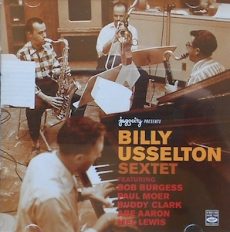
William “Billy” Usselton was born on July 2, 1926 in New Castle, Pennsylvania. He began playing professionally in high school with Bubbles Becker. Although his parents wanted him to attend college in Pennsylvania, he wanted to play for a living.
Usselton went on to play with Sonny Dunham in the 1940s before joining Ray Anthony in 1948–1949 and again in 1951–1952. Between those two gigs he joined Tommy Dorsey’s band and recommended Mel Lewis after Buddy Rich was fired. After his second stint with Anthony, he played with Bill Harris in Florida.
1954 saw Usselton joining Les Brown’s band, and played with him for decades. He played on nearly all of Brown’s records released on Coral Records and Capitol Records, and toured with him worldwide as part of Bob Hope’s United Service Organizations Tours.
His only album as a leader was the 1957 release His First Album, issued on Kapp Records. He married, moved to Chicago, Illinois where he was a jazz clinician for the Conn Corporation.
Reedist Billy Usselton, who played saxophone, clarinet and oboe, moved to Phoenix, Arizona and died on September 5, 1994 in Phoenix.
More Posts: bandleader,clarinet,history,instrumental,jazz,music,oboe,saxophone