

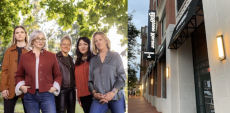
ARTEMIS
ARTEMIS is a powerful ensemble of modern jazz masters, founded in 2017 by pianist and musical director Renee Rosnes. Each musician is a bandleader and composer and every performance encompasses inspired arrangements of classics and originals. Performances across North America and Europe at major venues and festivals have garnered high praise from audiences and critics alike.
It is no wonder that ARTEMIS has been awarded #1 Group of the Year in the Annual Downbeat Readers Poll in 2023, 2024 and 2025! Their third recording “Arboresque” was released February 28, 2025. The album is testament to the group’s evolving musical landscape featuring stellar arrangements and riveting originals contributed by all members of the band. Come hear ARTEMIS perform with joy, passion, and high-wire intensity – there’s no other band like it!
Renee Rosnes – piano & keyboard
Ingrid Jensen – trumpet
Nicole Glover – tenor saxophone
Noriko Ueda – bass
Allison Miller – drums
Tickets: $35.00 ~ $45.00 +fee | Streaming: $15.00 +fee
More Posts: adventure,bandleader,bass,club,drums,genius,instrumental,jazz,music,piano,preserving,saxophone,travel,trumpet
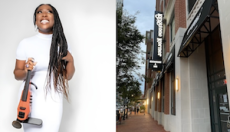
KERSTEN STEVENS
Kersten Stevens — Queen of the Violin, is a genre-defying artist and composer whose electrifying, luminous performances turn every stage into a sanctuary. A Yale alumna and six-time winner of Amateur Night and Showtime at The Apollo, her sound is a bold fusion of jazz, gospel, soul, and storytelling that leaves audiences moved, seen, and electrified.
Her latest album, Queen Rising, co-written and produced by 8x Grammy winner Christian McBride, debuted in the JazzWeek Top 40. She’s been featured in Vogue, WBGO 88.3FM, and All About Jazz, and has shared the stage with Keyon Harrold, Kamasi Washington, Faith Evans, and Trombone Shorty. She’s performed for icons like Usher, Babyface, Barack Obama, Kamala Harris, and Dionne Warwick.
Tickets: Streaming ~ $15.00 +fee | GA ~ $35.00 – $45.00 +fee
More Posts: adventure,bandleader,club,genius,instrumental,jazz,music,preserving,travel,violin
Requisites
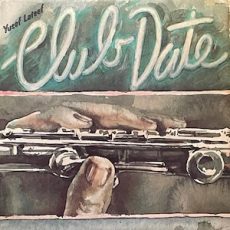
Club Date ~ Yusef Lateef | By Eddie Carter
A few nights ago, I spent time with an album I hadn’t listened to in a while and thought it deserved discussing. Club Date (ABC Impulse ASD-9310), by multi-instrumentalist Yusef Lateef, was released in 1976 and showcases his live performance at Pep’s Lounge on June 29, 1964, first heard on Live at Pep’s. My introduction to Lateef’s artistry came through his work on Cannonball Adderley Sextet in New York, Nippon Soul, and Jazz Workshop Revisited. The tracks on Club Date were not available before this release. The group includes Richard Williams on trumpet; Yusef Lateef on flute (tracks B1, B3), oboe (track B1), and tenor saxophone (tracks A1 to A3, B2); Mike Nock on piano; Ernie Farrow on bass; and James Black on drums. The copy I own is the 1976 U.S. Stereo release.
The set opens with Oscarlypso by Oscar Pettiford, a lively tune featuring a Caribbean groove from the start of Ernie’s introduction to the quintet’s theme. Yusef takes the opening solo, as smooth as velvet. Richard follows with a cheerfully festive performance. Mike enters the spotlight last, with a relaxing reading, before both horns share a short exchange leading to the reprise and a vibrant finish. Gee Sam Gee by Yusef Lateef is a slow-moving ballad that begins with the saxophonist stating a hauntingly dreamy theme and opening solo. Williams and Nock follow with two delicately gentle statements preceding Lateef’s return for the closing chorus.
Richard Williams’ Rogi brings the beat way up to end the first side with the group’s collective melody. Yusef steps up first with a spirited performance, then Richard vigorously launches into the following solo. Mike has the last word with an energetic statement ahead of the theme’s return and climax. Brother John, Yusef Lateef’s tribute to John Coltrane, opens the second side with the rhythm section’s trio to Lateef’s switching to oboe for the melody and adventurous opening statement. Williams takes flight next in a scintillating solo. Nock keeps the listener captivated, sailing smoothly until the final note, while Yusef’s flute comments shadow him, before the quintet returns to take the song out.
Yusef Lateef introduces P-Bouk, a speedy original by the saxophonist that the ensemble takes out of the gate at a vigorous pace. Yusef soars upward into the sky on the opening solo with joyful exhilaration. Richard comes in cooking hard next, then Mike meets the challenge with a robust reading, leading to the theme’s restatement and the introduction of Nu-Bouk, also by Yusef Lateef, which he describes as a new blues. He’s back on the flute as he glides over the rhythm section for the soulful melody and lead solo. Williams makes his case in a short statement, returning to the theme and the group’s down-home ending.
Bob Thiele produced the initial session for Club Date, and Esmond Edwards supervised this release, but the identity of the engineer who recorded it remains unknown. The sound quality is very good for a ‘60s live date, with an excellent soundstage that transports the listener to the club’s audience. If you’re new to the music of Yusef Lateef, or are in the mood for a wonderful live album to listen to after a long day or week, I offer for your consideration Club Date by Yusef Lateef. It gives a glimpse into an incredible musician who transcended hard bop through music inspired by exotic locales. While the recording’s live atmosphere adds raw authenticity, it’s the interplay among the players that truly shines, making this record a rewarding listen for both longtime fans and newcomers to Lateef’s work!
~ Cannonball Adderley Sextet in New York (Riverside RLP-404/RLP-9404), Jazz Workshop Revisited (Riverside RM 444/RS 9444), Live at Pep’s (Impulse! A-69/AS-69), Nippon Soul (Riverside RM 477/RS 9477) – Source: JazzStandards.com
© 2026 by Edward Thomas Carter

More Posts: choice,classic,collectible,collector,history,instrumental,jazz,music,saxophone
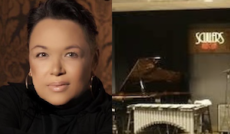
SHAWNN MONTEIRO
Shawnn Monteiro who has jazz in her blood, jazz in her soul and jazz in her history. Her father was bassist Jimmy Woode, her godmother was Sarah Vaughan and her godfather was Clark Terry.
Having toured all over the world singing jazz with so many of the greats, many of whom are gone now, Shawnn remembers and comes to Scullers with many stories to share.
She is one of the few of jazz royalty left who is still sharing her incredible voice and dynamic performance with jazz lovers of all ages.
Cover: $42.45 ~ $59.25
More Posts: adventure,bandleader,club,genius,instrumental,jazz,music,preserving,travel,vocal
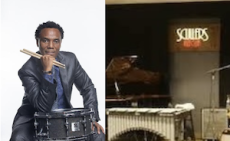
YORON ISRAEL
Yoron Dael Israel was born on November 24, 1963, in Chicago, Illinois. The jazz drummer learned to play organ and trumpet as a child, then switched to drums. As a high school student, he played in an R&B group led by his uncle. He took his bachelor’s degree at Roosevelt University and his master’s degree at Rutgers, then became the drummer in a house band for a Chicago jazz club and worked with Hank Crawford, David Friedman, Von Freeman, and Ira Sullivan.
He relocated to New York City in 1989 and played that year with Henry Threadgill, Kenny Burrell, and Jay Hoggard. In the 1990s he worked with Charles Fambrough, Art Farmer, Jim Hall, Roy Hargrove, Tom Harrell, Ahmad Jamal, Abbey Lincoln, Joe Lovano, Russell Malone, Sonny Rollins, Vanessa Rubin, Horace Silver, Ronald Muldrow and James Williams.
He also toured with Tony Bennett and with Steve Coleman in 1995. He taught at Rutgers from 1995 and is now an assistant professor at Berklee College of Music.
Tickets: $42.45 ~ $64.85 fee included
More Posts: bandleader,club,drums,genius,instrumental,jazz,music,preserving,travel