


Daily Dose Of Jazz…
Steve Elmer was born on October 6, 1941 in Brooklyn, New York. He began his musical training as a drummer in a Brooklyn junior high school when he was thirteen years old. He briefly attended Manhattan School of Music before he became the featured jazz drummer with the All American Big Brass Band’s 16-country three-month tour of Africa.
On his return, he spent the next two years playing drums with the Pepe Morreale Trio and cornetist Bobby Hackett. Elmer then earned his B.S in Music Education from Hofstra University and took a job teaching music in a Passaic, New Jersey elementary school followed by a year-and-a-half at Manhattan Vocational- Technical High School.
At age 25, Steve took the first of many formal piano lessons with the brilliant jazz pianist and teacher Lennie Tristano. After six years of intense training, Elmer decided to move away from the Tristano influence and follow his own musical instincts.
In 1969 Steve attended Queens College where he received a Master’s degree in Music Composition, and accepted an invitation to become an assistant professor. He developed a BA in Jazz Studies program where he and Count Basie alumnus Frank Foster served as the faculty.
Elmer stopped playing professionally from 1976-1991 until he met a young drummer named Myles Weinstein and discovered they were both on the same musical wavelength. He and Myles formed a group called The Jazz Mentality Chris Potter on saxophones and Ralph Hamperian on bass. The group recorded two CDs, Maxwell’s Torment and Show Business Is My Life featuring many of Steve’s original compositions.
In 2006, Steve recorded I Used To Be Anonymous, featuring nine original compositions. The trio toured Japan, recorded Fire Down Below, their second CD, in 2008 featuring ten more of his original compositions and a lot of classic jazz playing. Pianist and drummer Steve Elmer is looking forward to a return to Japan and recording his first solo piano album.

More Posts: bandleader,composer,drums,history,instrumental,jazz,music
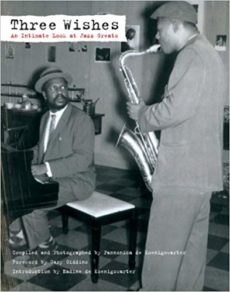
Three Wishes
Nica asked Khalil if given what would his three wishes be and he told her to his would be:
-
- “To live longer.”
- “And learn more.”
- “Let me see. I can’t put it into words, what I want. I know what it is, but I can’t put it into words.”

More Posts: baroness,history,instrumental,jazz,music,pannonica,three,wishes

Daily Dose Of Jazz…
Tord Gustavsen was born on October 5, 1970 in Oslo, Norway and raised in rural Hurdal, Akershus where he grew up playing church music. He attended the University of Oslo with a degree in psychology before going to the Trondheim Musikkonsevatorium studying jazz for three years. Graduate school saw him with a degree in musicology at the University of Oslo, where he was a guest teacher of jazz piano and theory.
Signed to ECM Records, between 2003 and 2007 the Tord Gustavsen Trio released three albums and in 2005 won the Nattjazz prize. A later ensemble released the album Restored, Returned was recorded in 2009, which was awarded with Spellemannsprisen, the Norwegian Grammy. The quartet went on to release The Well, Extended Circle and play the Montreal Jazz Festival in several different configurations.
He has recorded as a session musician, and guested on friends’ albums, as well as collaborative projects. Pianist Tord Gustavsen continues to be highly interested in psychology and has written a lengthy thesis on the paradoxes of improvisation. He continues to express his music through performance and recordings.
More Posts: bandleader,educator,history,instrumental,jazz,music,piano
Daily Dose Of Jazz…
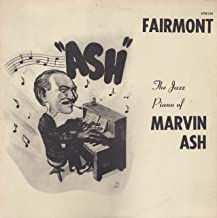
Marvin Ash was born Marvin E. Ashbaugh was born on October 4, 1914 in Lamar, Colorado. Growing up in Junction City and Emporia, Kansas he started playing with bands during high school. He worked with Count Basie, Wallie Stoeffer, Con Conrad, Herman Waldman and Jack Crawford. On a visit to Abilene, Texas in 1931 he found inspiration when he heard pianist Earl Hines perform. A fortunate encounter at Jenkins’ Music Store afforded him the opportunity to hear Joe Sullivan play his Little Rock Getaway for Fats Waller and Arthur Schutt, seated at two other pianos. He adapted his style similar to the three of them.
Moving to Tulsa, Oklahoma at 22 he worked in radio as a studio pianist, musical director, and announcer at KVOO-FM. This allowed him to learn about different piano styles, his favorite musicians being stride pianists James P. Johnson and Waller, Pete Johnson, Earl Hines, Art Tatum, Teddy Wilson, and long-time friend Bob Zurke.
1942 saw Marvin in the Army, assigned to Fort Sill in Oklahoma, where he remained for six months after the end of the war. After the end of his service he moved to Los Angeles, California where found work with trumpeter Wingy Manone’s band. This resulted in some of his earliest ensemble recordings, performances at Club 47 led to sessions with Clive Acker’s Jump Records as a soloist in late 1947, and with Rosy McHargue’s Memphis Five.
Ash’s playing caught the attention of Capitol Records producer and A&R man Lou Busch who hired him to record a few more sides in 1949 with a small ensemble. In the 1950s, he played in cocktail lounges in Los Angeles but had few recording dates as a soloist, instead working as a sideman with Jack Teagarden, Matty Matlock, Pud Brown and Pete Daily. Ash’s sessions resulted in a suite for Decca Records entitled New Orleans at Midnight.
He found employment at Walt Disney Studios music department as a performer on movie and television soundtracks, and acting as the resident arranger and pianist for the Mickey Mouse Club. Marvin frequently performed with George Bruns’ group or with his own small ensemble at Disneyland.
Retiring in the mid Sixties, Ash spent his last few years playing vintage jazz, stride, and ragtime in the cocktail lounge of a large bowling alley in Los Angeles. He continued to be hired for special appearances until his death. Pianist Marvin Ash passed away on August 21, 1974 in Los Angeles, California at the age of 59.
More Posts: arranger,bandleader,history,instrumental,jazz,music,piano
Requisites
The Wes Montgomery Trio | By Eddie Carter
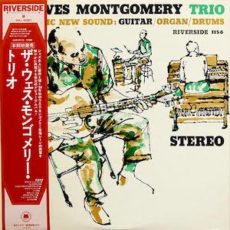
“It wouldn’t be easy,” I thought to myself. Other reviewers have been crafty, cunning, and just as resourceful when writing about Wes Montgomery. “What could I say, that hasn’t already been said about one of the true innovators on the guitar?” Staring at the blank page and flashing pointer on the computer screen, I anxiously awaited an answer that never came. I took one of my favorite albums down from the shelf to listen to after writing a review, placed the record on the turntable, and began to listen. The Wes Montgomery Trio (Riverside RLP 12-310/RLP 1156) was recorded and released during that magical year of 1959 shortly after he relocated from Indianapolis, Indiana to New York City. The other members of his trio are Melvin Rhyme on guitar and Paul Parker on drums. My copy used in this report is the 1975 Riverside Original Recording Series Japanese Stereo reissue (SMJ-6080) by Victor Musical Industries, Inc.
Side One opens with one of the greatest jazz standards ever recorded, ‘Round Midnight by Thelonious Monk, Cootie Williams, and Bernie Hanighen. The trio begins with an elegantly tender introduction by Wes that flows softly into a graceful theme with Melvin and Paul trailing him ever so gently. Montgomery is the only soloist and gives a mesmerizing interpretation with the delicacy of fine porcelain figurines preceding the ensemble’s heartwarming finale. Yesterdays by Jerome Kern and Otto Harbach was an instant hit after the Broadway musical, Roberta (1933), and remains an enduring standard to this day. The trio starts with a beautifully constructed, bluesy melody. The guitarist takes the reins again for the song’s only interpretation and unfolds an infectious performance that’ll have the listener snapping their fingers and tapping their toes.
The End of a Love Affair is from the pen of Edward C. Redding and was written in 1950. It’s a marvelous song that hasn’t been over-recorded. Wes would revisit it a few years later on Goin’ Out of My Head (1966) backed by The Oliver Nelson Orchestra. The group’s rendition is uptempo with Wes in front on the melody, then making use of his octaves and chords for an effervescent first solo. Melvin dances over the pedals on the next reading leading to the exit. Benny Golson wrote Whisper Not in 1956 while he was with The Dizzy Gillespie Big Band. It’s one of his most recorded compositions and the trio starts with a warm and mellow theme. Wes starts the soloing at a low glow and Melvin adds a modest comment before the close. Ecorah by Horace Silver is also taken at midtempo, and one can’t help but marvel at the trio’s collective improvisation during the first and final choruses.
The inspiration for Satin Doll by Duke Ellington, Billy Strayhorn, and Johnny Mercer comes from a famous black stripper who used the song’s title as her stage name. The trio pays homage to the standard with a happy theme and closing chorus that’s sure to put a smile on your face with its catchy beat. Melvin shows off a wonderful articulation on the first reading, followed by Wes who keeps things swinging with some relaxed cooking on the closer. Missle Blues, the first of two tunes by Montgomery, is named after the Indianapolis club he played in. This mid-tempo original begins with a compelling swing that the ensemble states proficiently in the melody. Melvin and Wes are the featured soloists and the organist opens with a velvety smooth interpretation. Wes strolls into the closing performance at a casual flow punctuated by Paul’s brushwork.
Too Late Now by Burton Lane and Alan Jay Lerner is a very lovely standard beginning with a collective, wistful opening chorus. Montgomery refreshes this chestnut with a breathtaking lead solo tinged with melancholy. Melvin expresses a remorseful answer to the guitarist ahead of the trio’s elegant closing thoughts culminating with a delicate climax. Wes’ Jingles ends the album allowing each member solo space beginning with Rhyme who cruises happily on the melody and first solo. Wes gets into a swinging groove on the second statement, and Paul has a quick exchange with Melvin and Wes leading to the reprise and finale. Jack Higgins engineered the original recording and Victor’s remastering of the tapes is nearly perfect. The sound quality is excellent, but on Jingles, both the guitar and organ are miked too strongly and there’s a bit of harshness on both solos and the out-chorus.
In fairness to Victor, I think this miking error may have happened during the original recording. That issue aside, the rest of the album’s sound is superb and worth auditioning for a spot in your jazz library. Wes Montgomery influenced countless guitarists with his creativity, innovation, and outstanding technique. Many have paid homage to him with original songs and tribute albums and whether working with big bands, small groups, or strings, his playing showed he could converse musically in any setting. He passed away from a heart attack on June 15, 1968. If you’re a fan of Wes Montgomery and enjoy jazz guitar, The Wes Montgomery Trio is a great album for any enthusiast and perfect for listening any time of the day or night!
~ Dizzy Gillespie and His Orchestra (Fanfare N 46 146); Goin’ Out of My Head (Verve Records V-8642/V6-8642) – Source: Discogs.com ~ Dizzy Gillespie and His Orchestra – Source: JazzDisco.org ~ ‘Round Midnight, Yesterdays, The End of a Love Affair, Whisper Not, Satin Doll, Too Late Now – Source: JazzStandards.com ~ Wes Montgomery – Source: Wikipedia.org © 2021 by Edward Thomas Carter
More Posts: choice,classic,collectible,collector,guitar,history,instrumental,jazz,music