

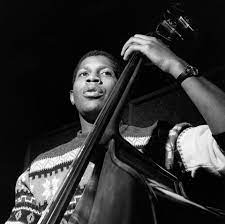
Three Wishes
When Pannonica inquired what his three wishes would be Bob Cranshaw replied with these three answers:
- “That Barry Harris would go to Chicago with us for two weeks.”
- “That I might learn how to play the bass!”
- “That my family will be proud of me.”

More Posts: baroness,bass,history,instrumental,jazz,music,pannonica,three,wishes
Daily Dose Of Jazz…
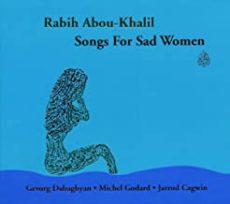
Rabih Abou-Khalil ربيع أبو خليل, was born August 17, 1957 in Beirut, Lebanon and studied the oud at the Beirut Conservatory with oudist Georges Farah. After moving to Munich, Germany at 21, he studied classical flute at the Academy of Music under Walther Theurer.
Combining elements of Arabic music with jazz, rock, or classical music, he has earned praise as a world musician years before the phrase became a label. Along with Tunisian oud virtuosos Anouar Brahem and Dhafer Youssef, he has helped establish the oud as an important instrument of Ethno jazz and world fusion.
Among other musicians, Abou-Khalil has worked with ARTE Quartett, Alexander Bălănescu, Luciano Biondini, Milton Cardona, Sonny Fortune, Michel Godard, Joachim Kühn, Howard Levy, Charlie Mariano, Ricardo Ribeiro, Steve Swallow, Kenny Wheeler. He has recorded for ECM, Enja, MMP, Granit, and World Village record labels.
Rabih has hosted the 13 part documentary television series Visions of Music, that explores the blending of jazz with different music styles of the world. The music of the TV-series was released on the album Visions of Music – World Jazz by Enja Records.
Oudist Rabih Abou~Khalil continues to be active in music, composing, recording and performing worldwide.
More Posts: bandleader,composer,instrumental,music,oud
Daily Dose Of Jazz…
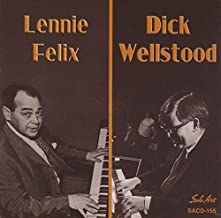
Lennie Felix was born in Stamford Hill, London, England on August 16, 1920. He learned piano from the age of ten and his playing style reflected the influence of Fats Waller, Art Tatum and Earl Hines. His later influences drew from Keith Jarrett, Charlie Parker and Vladimir Horovitz.
From the 1960s, Lennie performed increasingly more as a solo pianist and appeared regularly at the PizzaExpress Jazz Club, where he also accompanied US visitors like Bud Freeman and Buddy Tate.
He worked in the bands of Nat Gonella, Harry Gold, and Sid Philips, and enjoyed a 20-year association with trumpeter Freddy Randall. Pianist Lennie Felix passed away on December 29, 1980 in a hospital after he was hit by a speeding car near to the 606 Club in Fulham, West London.
More Posts: bandleader,history,instrumental,jazz,music,piano
Requisites
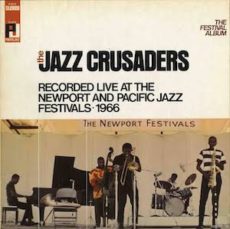
The Festival Album ~ The Jazz Crusaders | By Eddie Carter
This morning’s discussion is a 1966 live album by four friends from Houston, Texas who began performing locally in 1956. After moving to Los Angeles in 1961, they became The Jazz Crusaders, one of the best West Coast jazz groups. I became a fan of their music listening to Chuck Lansing of Cleveland’s jazz station, WCUY 92.3 FM. His opening theme was The Young Rabbits, taken from their second LP, Lookin’ Ahead (1962). The Festival Album (World Pacific Jazz ST-20115) contains two performances from The Pacific Jazz Festival and The Newport Jazz Festival. The quartet consists of Wayne Henderson on trombone, Wilton Felder on tenor sax, Joe Sample on piano, and Stix Hooper on drums. Jimmy Bond (tracks: A1, A2) and Herbie Lewis (tracks: B1, B2) on bass, complete the group. My copy used in this report is the 1967 Stereo reissue (Pacific Jazz ST-20115).
Trance Dance by Kenny Cox opens Side One with a collective soulful theme. Wayne goes first with a noteworthy contribution offering a relaxing informality. Wynton follows with an excellent solo of his own, then Joe gives a spirited closing reading ahead of the ensemble’s reprise and ending. A Summer Madness is the collaborative creation of Sample, Henderson, and Felder. Wayne leads the quintet on the mid-tempo melody, then entices the listener with a captivating first statement. Wilton builds a satisfying groove with inspired lines next. Joe unfolds the next reading with a mellow tone effortlessly, and Jimmy makes a brief remark into the finale and crowd’s ovation.
Henderson’s Young Rabbits is off to the races from the intensely hot opening notes of the melody. Felder takes the first solo at breakneck speed with electrically charged excitement. Sample steps up next for a high-octane statement. Stix provides an energetic interpretation leading to the vigorous ending. Sample’s Freedom Sound was the title tune of their debut album (1961). The trio begins this midtempo swinger with a march-like introduction developing into the quintet’s theme. Felder takes the lead with a cheerfully, light-hearted reading. Henderson swings comfortably into the next statement, and Joe wraps the album with a leisurely-paced performance powered by Herbie and Stix’s excellent groundwork.
This was The Jazz Crusaders’ twelfth LP for World Pacific Jazz and Pacific Jazz Records. *They were extremely popular and well known on the West Coast, but their first trip to The Newport Jazz Festival was significant because it introduced them to a whole new group of fans and brought them to the attention of the New York City jazz clubs. I only wish it would have been released as a two-record set with each festival highlighted on one LP. The Festival Album was produced by Richard Bock, and the sound quality of each session is quite good with an exquisite soundstage. For those fans that only know of The Crusaders’ music from the seventies and eighties, The Festival Album shows the group in excellent form live and gives a snapshot of the Hard-Bop sound they created when Jazz was their middle name! ~ *AllMusic Review by Thom Jarek – Source: AllMusic.com
~ Freedom Sound (Pacific Jazz PJ-27/ST-27), Lookin’ Ahead (Pacific Jazz PJ-43/ST-43) – Source: Discogs.com © 2021 by Edward Thomas Carter

More Posts: bass,choice,classic,collectible,collector,drums,history,instrumental,jazz,music,piano,saxophone,trombone
Daily Dose Of Jazz…
Bobby Orr was born Robert on August 15, 1928 in Cambuslang, Scotland and began playing drums at the age of three, encouraged by his father, a drum major. From the age of 16 he started playing the trumpet, as a member of Basil Kirchin’s band; however, he had difficulties with his embouchure and returned to the drums.
In the 1950s and 1960s, Orr was a fixture on the London jazz scene, including as a founder member of Joe Harriott’s quintet, which he left and subsequently rejoined, and played for Tubby Hayes among others. He also served as a house drummer at Ronnie Scott’s Club, backing top American visitors such as Zoot Sims, Al Cohn, Milt Jackson, and Dizzy Gillespie.
He had three tours with Benny Goodman, then as a freelance musician from 1970, he also toured with Billy Eckstine and Sammy Davis Jr., as well as Tommy Whittle and Don Lusher. In the 1990s, Bobby toured extensively with the UK Glenn Miller Tribute Band.
Over the course of his career he recorded with Sandy Brown, George Chisholm, Digby Fairweather, and Shake Keane. Drummer and session musician Bobby Orr, who played on many recording sessions for pop and rock artists such as Donovan and Dusty Springfield, passed away on March 12, 2020.
More Posts: drums,history,instrumental,music