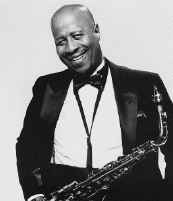
Three Wishes
The Baroness asked Clifford Jordan of his three wishes and he said:- “I think I’d like to be you asking me that question.”
- “I wish I was on intermission.”
- “I wish to be a success.”
More Posts: baroness,history,instrumental,jazz,musician,pannonica,three,wishes

Requisites
Pianist Phineas Newborn Jr. gathered an elite group of players in 1961 to comprise two distinct trios rendering two distinct sounds for two recording sessions. Bassist Paul Chambers and drummer Philly Joe Jones came into the Contemporary studio and recorded tracks 1–4 on October 16th, while on November 21st bassist Sam Jones and drummer Louis Hayes laid down tracks 5–8.
The album, A World of Piano! was released in 1962 by Contemporary Records and had a total of eight compositions for a total playing time of 39:34. Featured on Side 1 was Cheryl, Manteca, Lush Life and Daahoud and on Side 2 – Oleo, Juicy Lucy, For Carl and Cabu.
The cover was designed by George Kershawn and Robert Guidi who utilized bold, luminously colored fonts to create a distinctive style to the jazz covers of the Los Angeles based label. What Tri-Arts succeeded in doing time and time again as to create a distinguishable yet highly complimentary design to an often lush photograph, in this case provided by the inimitable William Claxton. Below is the complete album with separate Side 1 & 2 for your listening pleasure.
More Posts: choice,classic,collectible,collector,history,instrumental,jazz,music,piano

Three Wishes
Blue Mitchell told Pannonica only two of the three wishes to her question were:- “That I can play simply and understandably, and know what I doing musically.”
- “To have enough to live comfortably. Sorry, Nica, but this cat’s waiting for me.”
More Posts: baroness,history,instrumental,jazz,musician,pannonica,three,trumpet,wishes

Hollywood On 52nd Street
Return to Paradise is a jazz standard that was written by Dimitri Tiomkin and Ned Washington for the movie of the same name. The film was set and principal photography was shot in Samoa and released by United Artists in 1953. It starred Gary Cooper, Barry Jones and Roberta Haynes and the screenplay by Charles Kaufman was based on the 1951 short story Mr. Morgan by James Michener in his short story collection Return to Paradise, his sequel to Tales of the South Pacific.
The Story
During the 1920s, itinerant American beachcomber Mr. Morgan (Cooper) is deposited on the island of Matareva in the South Pacific. Deciding to stay, he is confronted by Pastor Cobbett (Jones), who lost both his father and his wife as a young missionary on the island and rules the island as a Puritanical despot, using local bullies as wardens to enforce his rules. Morgan wins the support of the natives after defeating the wardens with the aid of an empty shotgun.
Morgan has an illegitimate child with an island girl who dies in childbirth. Leaving his daughter with her grandmother he leaves the island, only to return during World War II. Cobbett has changed, his daughter Turia is now grown and in love with a stranded Navy pilot and Morgan now has to face the inevitable possibility of a repeat of his indiscretion with his daughter. Forcing the split by making the pilot and his crew leave the island, Turia is upset but reconciles with her father who decides to stay on with her on the island.

Requisites
2-3-4 is an album by drummer Shelly Manne features performances that were recorded in 1962 for the Impulse! Label. The name of the album is derived from its inclusion of a duet (“2”), two trio performances (“3”), and three tunes played by a quartet (“4”). Unusually, the standards “Take the “A” Train” and “Cherokee” were played in two tempos simultaneously, with Manne playing in double time consistently throughout “Cherokee”.
Not a typical album for the drummer, then primarily associated with West Coast jazz, he flew from Los Angeles to New York City on February 5, 1962, arranged by producer Bob Thiele. He was reunited with pioneering tenor saxophonist Coleman Hawkins and pianist Hank Jones, both of whom he had recorded with at different times in the 1940s.
The recording sessions took place at the Fine Recording Ballroom Studio A recording tracks 1, 3, 5, 6 & 8 on February 5 and tracks 2, 4 & 7 on February 8, 1962. In an unusual session lasting through the wee hours of the morning, he ended by recording one tune as a duet with Hawkins, who for the first time in his career was recorded also playing the piano.
The album also includes a second recording session at the same studio a few days later. Bassist George Duvivier stayed on with Manne, and they were joined by rising star Eddie Costa for two trio tracks. “The Sicks of Us” has Costa on vibes for a largely spontaneous trio number; on “Lean on Me”, Costa switches to piano.
The tracks on the original release are: Take the “A” Train, The Sicks of Us, Slowly, Lean on Me, Cherokee, and Me and Some Drums.
A fourth tune recorded by the quartet at the first session, “Avalon“, was released at first only in the Impulse! collection The Definitive Jazz Scene, Volume 1. Some thirty years later, it was included along with an alternative version of Lean On Me on the first CD reissue of 2-3-4 as bonus tracks.
Personnel: tenor saxophonist Coleman Hawkins on tracks 1, 3, 5, 6 & 8, pianist Hank Jones on tracks 1, 3, 5 & 8, pianist and vibraphonist Eddie Costa on tracks 2, 4 & 7, bassist George Duvivier on tracks 1–5, 7 & 8 and drummer Shelly Manne.
The cover design was created by Robert Flynn and the photograph was taken by Bob Gomel.
More Posts: choice,classic,collectible,collector,drums,history,instrumental,jazz,music