

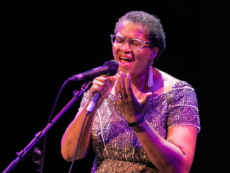
YVETTE NORWOOD-TIGER: CELEBRATION OF LIFE IN JAZZ TOUR
International jazz vocalist, recording artist, songwriter, vocal coach, Recording Academy voting member, and founder/director of the Palm Beach International Jazz Festival, Yvette Norwood-Tiger is a Detroit, Michigan native who hails from a family of musicians, including a father who played guitar and a mother who played drums. Her CDs, A’LA ELLA! and whY NoT… Love, Peace, Joy, Jazz feature music from great composers such as Cole Porter, Duke Ellington, and the Gershwins. Yvette’s latest released CD, LOVE IS, is a wonderful compilation of great jazz standards and original songs and music to celebrate the works of musical geniuses John Coltrane and Duke Ellington. LOVE IS stayed on JAZZWEEK’S charts for over twelve weeks. Yvette performs with vocally clean and pure interpretations of the great American Songbook, while emphasizing intonation and storytelling. Many of her audience members worldwide have commented that watching Yvette perform is like being in her living room. Her vocal styling and texture is often compared to that of Ella Fitzgerald and Billie Holiday. In addition to jazz standards, her repertoire includes gospel, bebop, Latin jazz, classic songs from popular music, and arias of the great composers such as Puccini. She also performs songs in other languages which includes French, Italian, Spanish, Portuguese, Xhosa, and Mandarin. After going through extensive treatment and a tedious recovery from a benign brain tumor in 2012, Yvette’s mission has evolved into not only entertaining her audience, but uplifting, inspiring, and encouraging them as well.
Yvette performs internationally at historic jazz venues and has sat in several times with jazz orchestra The Cotton Club All Stars at the famous Cotton Club in Harlem, NY. She has also sat in with the late saxophonist David Fathead Newman, guitarist Bucky Pizzarelli, family members of Celine Dion, Tito Puente, Jr., and Jay Beckenstein and Tom Schuman of Spyro Gyra. Many musicians, worldwide, find it an honor and joy to perform with Yvette.
Yvette resides in south Florida where she performs extensively, including performances at the Raymond F. Kravis Center in West Palm Beach, the Arts Garage in Delray Beach, and the Cultural Council for Palm Beach County. Yvette has performed sold out/standing room only concerts at Royal Albert Hall in London, England; Cape Town, South Africa; Berlin, Germany; Brussels, Belgium; Buenos Aires, Argentina; Havana, Cuba, as well as various venues in New Jersey, New York (Birdland), Florida and Michigan (Cliff Bells).
Yvette is a recipient of the 2022 Cultural Council of Palm Beach County Artist Innovation Fellowship Program Award. In 2021, Yvette was interviewed and featured in the PBS South Florida “On The Town – Black Voices” segment. She was also featured in a short film titled “Art Meets Jazz on J Street”. A film produced and directed by south Florida film maker, James Venable. Art Meets Jazz on J Street was presented at the Boynton Beach Short Film Festival and at the Northeast Film Festival in Teaneck, New Jersey and is the winner of the 2018 Wavelengths Awards. Yvette was also nominated for the South Florida Indie Awards 2022 – Best Jazz Vocalist.
Yvette is a true vocal natural in any setting from jazz festivals to intimate jazz clubs. She captivates the audience whether she’s singing with an ensemble featuring piano, bass, drums, trumpet, and saxophone; with a piano or guitar accompanist; or with a full orchestra. Her CDs are great compilations of popular jazz standards that lends the mind back to the days of the original recordings. Close your eyes while listening to her music and let the sultry sounds of Yvette Norwood-Tiger take you to a place where jazz was the most celebrated American music genre. According to press clippings from the Two River Times, “the swingin’ and groovin’ singer’s career is on the fast track. Whether she is backed with a full jazz ensemble or with a piano accompanist, she sets an authentic jazzy mood for true jazz listeners.”
BAND MEMBERS
Yvette Norwood-Tiger – Vocals
Nevada Hadary – Pianist
Frederick Cleveland – Contrabassist
Jose Roman Duque – Drummer
More Posts: adventure,album,club,festival,genius,jazz,museum,music,preserving,restaurant,travel,vocal
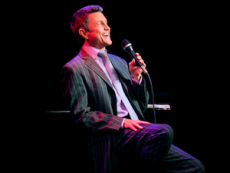
JEFF HARNAR
I KNOW THINGS NOW: MY LIFE IN SONDHEIM’S WORDS
Jeff Harnar is an award-winning cabaret, concert and recording artist. His Carnegie Hall appearances include both the Cole Porter and Noel Coward Centennial Galas. Jeff’s televised PBS concerts include “The 1959 Broadway Songbook” with Music Director Alex Rybeck and “American Songbook: Stephen Sondheim” co-starring KT Sullivan. Jeff tours with Broadway’s Shauna Hicks in their Symphony Pops Concert “I Got Rhythm: Mickey & Judy’s Hollywood.” Jeff has won multiple MAC, Bistro and BroadwayWorld Cabaret Awards and The Noel Coward Foundation Cabaret Award. Together with Music Director Alex Rybeck he has released four solo albums. This month marks 38 years since Jeff and Alex made their New York cabaret debut together. Their musical partnership has taken them across the country, aboard cruise ships across the high seas and to London, Paris, Oslo. Most recently they won the 2020 BroadwayWorld Cabaret Award for Best Show for the 30th Anniversary encore engagement of “Carried Away,” their tribute to Betty Comden & Adolph Green.
Together with Music Director Jazz virtuoso Jon Weber and Broadway legend Sondra Lee, Jeff has been performing “I Know Things Now” in New York, LA, Chicago, St. Louis and London. PS Classics has recorded the music along with a 20 piece orchestra for a June 17, 2022 release worldwide.
Jeff recently received The Chicago Cabaret Professionals National Honoree Award and The Mabel Mercer Award at The Annual Mabel Mercer Foundation Cabaret Convention at Lincoln Center.
BAND MEMBERS
Jon Weber – Piano/Conductor
Paul Shewchuk – Bass
George Mazzeo – Drums
More Posts: adventure,album,club,festival,genius,jazz,museum,music,preserving,restaurant,travel,vocal
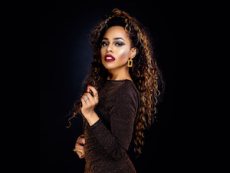
LAUREN HENDERSON
Described as “somewhere between a comforting whisper and a cogent declaration” by The New York Times, Lauren Henderson’s music resonates with listeners around the world.
Recently featured in the Financial Times, breaking the Jazz Charts Top 5, and the Year End Jazz Week Top 50 (2020), Henderson’s eclectic vocal influences spread across genres producing a distinct yet versatile sound.
Her music is featured in the Netflix hit series, Sky Rojo, The Drowning, starring Julia Stiles, Avan Jogia, and Josh Charles, El Juego de Las Llaves, starring Ela Velden, Maite Perroni, and Marimar Vega, and Romeo y Julieta starring Lupita Nyong’o and Juan Castano, scored by one of Lauren’s musical partners, Michael Thurber.
Henderson uncovers the layers of her diverse background in English and Spanish. Her compositions paint stories reflecting journeys imposed through the African Diaspora in connection to Henderson’s Panamanian, Montserratian, and vast Caribbean roots as they interplay with her North American upbringing.
Jazz, Latin jazz, flamenco, R&B and soul roots aid in an exploration of culture, society, race relations and the complexities encountered as we navigate life’s obstacles.
BAND MEMBERS:
Lauren Henderson – Vocals
Nick Tannura – Guitar
TBA – Bass
TBA – Drums
More Posts: adventure,album,club,festival,genius,jazz,museum,music,preserving,restaurant,travel,vocal
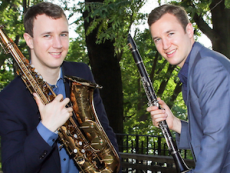
ANDERSON BROTHERS PLAY BENNY GOODMAN
Hailed as “virtuosos on clarinet and saxophone” by the New York Times, Peter & Will Anderson have performed concerts together since the age of 9. They’re Juilliard graduates, and have performed on Broadway, Carnegie Hall, The Kennedy Center, the New Orleans Jazz Festival, can be heard on the Grammy winning soundtrack to HBO’s Boardwalk Empire with Vince Giordano’s Nighthawks, and received a Drama Desk Nomination for their Off-Broadway Production “Le Jazz Hot” in 2012. They can be seen and heard as saxophonists in the upcoming Martin Scorsese film, “Killers of the Flower Moon.” Aside from leading performances in over 45 U.S. States, Japan, Brazil, Canada, and the United Kingdom, they’ve lectured at over a dozen Universities across the country.
BAND MEMBERS:
Peter Anderson – Tenor Saxophone, Clarinet
Will Anderson – Alto Saxophone, Clarinet, Flute
More Posts: adventure,album,clarinet,club,festival,flute,genius,jazz,museum,music,preserving,restaurant,saxophone,travel
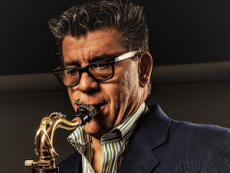
THE JEFF RUPERT QUARTET WITH LUCY YEGHIAZARYAN
Jeff Rupert’s performing and recording credits include over 50 albums, and associations with Diane Schuur, Mel Tormé, Kevin Mahogany, Ernestine Anderson, and Benny Carter’s Grammy winning Harlem Renaissance. Jeff Rupert toured for fifteen years with Sam Rivers; four albums ensued, and from 1997- 2002 he toured and recorded with Maynard Ferguson. Jeff Rupert’s eleven recordings as a leader all charted on JazzWeek.
Performance venues include the Blue Note, Birdland, Carnegie Hall, Lincoln Center, the Kennedy Center, the Tokyo Forum, the National Concert Hall of Taipei, Taiwan, and jazz festivals in Europe, Israel, Australia, New Zealand and Japan. Rupert’s release Let’s Sail Away with Veronica Swift, Richard Drexler and Marty Morell was #1 on the jazz charts, and his most current album The Ripple with George Garzone has been on the JazzWeek chart for 35 weeks.
As a composer and arranger, Rupert has arranged for Bob Berg, James Moody, Maynard Ferguson, Judy Carmichael, Kenny Drew jr, and Kevin Mahogany. Rupert has produced 6 big band albums for the Flying Horse Big Band, all featuring original compositions and Arrangements.
Jeff Rupert is Pegasus Distinguished Professor, Trustee Endowed Chair, and Director of Jazz Studies at the University of Central Florida (UCF), and founder of Flying Horse Records. The Bat Swings!, music from the 60’s T.V Show, Batman, charted on RMR, JazzWeek, and NACC, and was the #1 album of the week in the U.S. on two of these charts, simultaneously. The Flying Horse Big band’s latest release is Good News! and was #1 on the RMR charts. Rupert’s most recent album as producer is The Flying Horse Big Band album Florida Rays celebrating the music of Ray Charles.
BAND MEMBERS:
Jeff Rupert – Tenor Sax
Lucy Yeghiazaryan – Vocalist
Richard Drexler – Piano
Marty Morell – Drums
Ben Kramer – Bass
More Posts: adventure,album,club,festival,genius,jazz,museum,music,preserving,restaurant,saxophone,travel,vocal